Faculty Accomplishments
Page 59 of 61
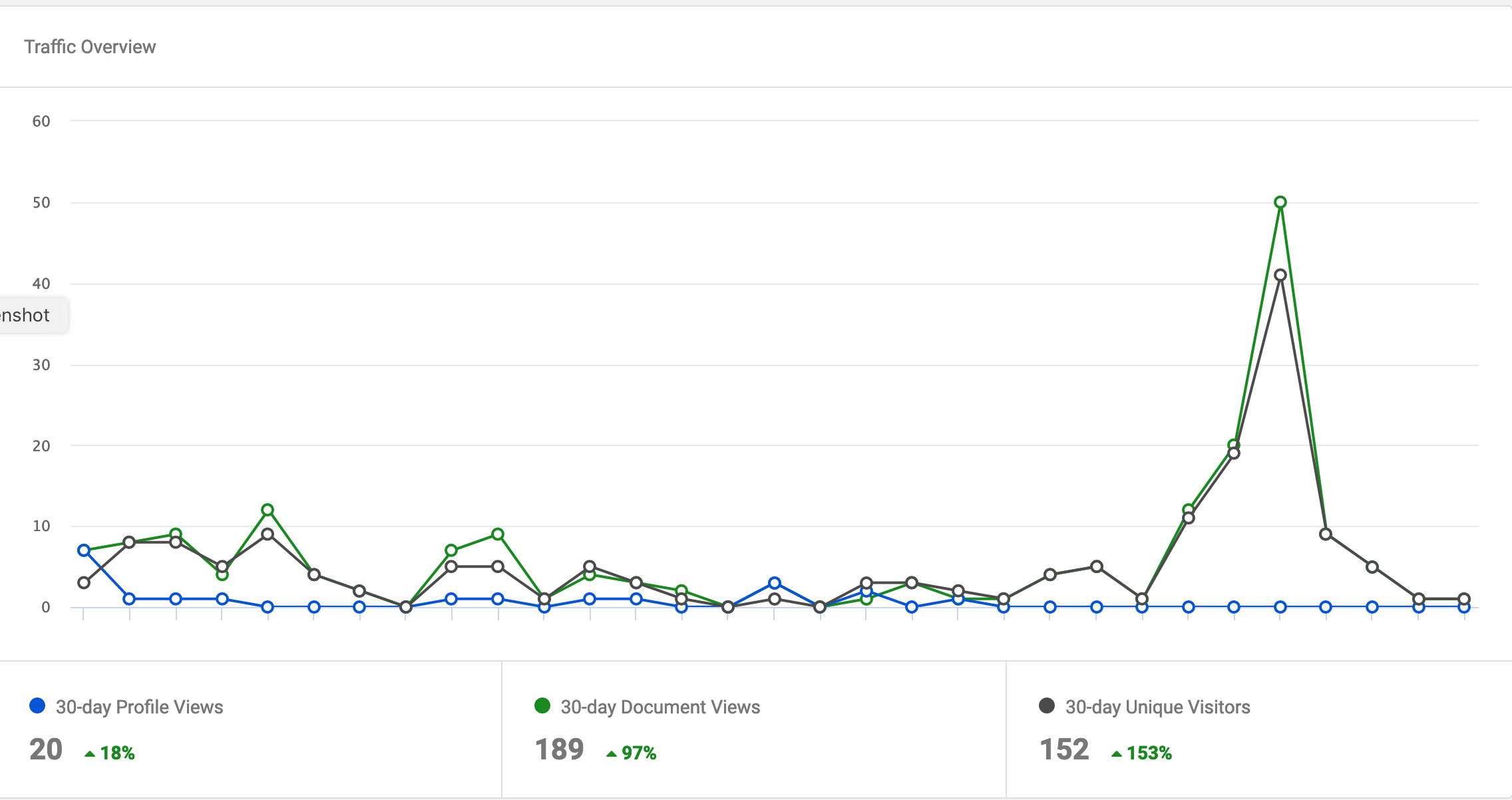
In the days leading up to the 75th anniversary of D-Day, a 2004 article by James Fleming, the Charles A. Dana Professor of Science, Technology, and Society, saw an uptick in page views. Fleming's article, "Sverre Petterssen and the contentious (and momentous) weather forecasts for D-Day," saw a 97-percent increase in page views, according to academia.edu.
Assistant Professor of Biology Josh Martin coauthored the paper "Predatory behavior changes with satiety or increased insulin levels in the praying mantis (Tenodera sinensis)" published June 3 in the Journal of Experimental Biology. The paper discusses how animal behavior is controlled "by a combination of external stimuli and an animal's internal state," the abstract says. The authors describe how "sensory responsiveness and motor activity of a praying mantis (Tenodera sinensis) are changed as the insect feeds, leading to an altered hunting strategy. We further show that these changes can be induced by injection of insulin, which likely functions as a metabotropic indicator."
To learn more about Martin's work, read the Colby Magazine story From Bugs to Robotics.
Associate Professor of Music Natalie Zelensky has a new book out. Performing Tsarist Russia in New York: Music, Émigrés, and the American Imagination (Indiana University Press, 2019) offers a "rare look at the musical life of Russia abroad as it unfolded in New York City" by examining "the popular music culture of the post-Bolshevik Russian emigration and the impact made by this group on American culture and politics," according to Indiana University Press. Zelensky, an ethnomusicologist, conducts research on the popular musical cultures of the Russian diaspora in the United States.
Professor of Art Véronique Plesch was active off campus during the spring semester. On Feb. 15 she was the organizer, chair, and respondent of the session “Beyond the Mirror: Specularity and Its Uses” at the 107th CAA Annual Conference in New York City. And in April she was invited to conduct a review of Trinity College's Art History Program, which she undertook April 4-5.
Professor of Art Véronique Plesch delivered a public lecture at Bates College May 15. Her lecture, “’Desiring Italy’ and Taking Her Home,” took place in the context of the short-term course "Desiring Italy," taught by Rebecca Corrie, the Phillips Professor of Art and Visual Culture.
Professor of Psychology Martha Arterberry was profiled by the psychology journal Infant Behavior & Development, at which she serves as editor-in-chief. The profile shows how her path from undergraduate work at Pomona College, to an exchange program at Swarthmore College, to graduate work at the University of Minnesota kept her research focused on infant perception. Arterberry finds "working with babies and trying to figure out what they can see and what they know a really fascinating puzzle, and she enjoyed the questions, methods and new discoveries," the article reports.
Arterberry is the journal's second female editor-in-chief and is moving the journal forward in several ways, including a renewed focus on special issues, introducing new formats for articles, and ensuring the journal "stays with its history and remains interdisciplinary and international." A supportive, nurturing approach is essential. “My hope is that people come away from their engagement with the journal feeling it had been worth their time, even if they don’t get the acceptance,” she told the journal.
Christian A. Johnson Professor of Liberal Integrated Study Joe Reisert just completed his term as president of the New England Political Science Association by chairing the group's 2019 annual meeting in Portland. Political scientists have gathered annually under the NEPSA banner since 1949, and this year's NEPSA gathering broke the association's record for attendance and conference papers.
Longtime members of the NEPSA report that two presidents, Reisert and Cal Mackenzie—the Goldfarb Family Distinguished Professor of American Government, emeritus, who was president in 1987-88—have had more of a positive impact on the development of the association than have any of the other 70 or so leaders. Reisert, as longtime treasurer, then vice president, president-elect, and president, has shepherded the steady growth that this year's gathering exemplified.
Associate Professor of Art Tanya Sheehan coauthored the latest installment in the Smithsonian’s “Double Exposure” book series. Pictures with Purpose: Early African American Photography (2019) examines photographs from the National Museum of African American History and Culture. Sheehan’s contribution to the book focuses on vernacular, or everyday, photos and what they can tell us about the African-American experience before and after Emancipation. Through case studies from the museum, she outlines the many motivations that shaped the creation, dissemination, and consumption of such images. While most aimed to preserve likenesses and memories, honor individuals, and uplift the Black race, others reinforced racial stereotypes and challenged Black agency.
The book has been reviewed by the Wall Street Journal and at Buzzfeed, among others.
Professor of Education Adam Howard has been awarded a visiting fellowship in the Department of Sociology at University of Copenhagen for the fall 2019 term. The fellowship is designed to "attract world-leading social scientists who spend three months collaborating with members of the faculty" according to the university.
During the fellowship, Howard will mainly work with Claire Maxwell, professor of sociology, on a book that they're coauthoring. He will also work with doctoral students, give lectures, and collaborate with scholars involved in the Sino-Danish Center at the university on the development of a new research project on elite schools in China.
Associate Professor of English Adrian Blevins has a poem in Bounty Everlasting, a new collection of poetry by Southern Cultures. "Semantic Relations" comes from Blevins's collection of poems Live from the Homesick Jamboree. “My people are not killers—they are romantics—they like to sit around on porches and tell false stories…,” the poem begins.