External Posts
Page 172 of 178
Rabbi Rachel Isaacs wrote a letter titled "Small Town Jewish Life Takes Center Stage" printed in the "Readers Forum" section of eJewish Philanthropy June 11, 2019. In it, she chronicles how she came to settle in Waterville and create Colby's Center for Small Town Jewish Life. "Our core values of economic accessibility, dynamic learning, and collaboration across institutional and generational lines have animated all of the center’s programs since its inception," she writes.
Communities like Waterville are the future of Jewish life, she continues. "Small town Jewish communities have always demanded elbow grease, innovative solutions, and a determined entrepreneurial spirit. If you look at who is leading major Jewish organizations today, you would be surprised by how many of them come from towns like Waterville, bringing their determination and hard-won Jewish knowledge back to the centers of Jewish life."
In an article titled "Are Historians Doing Enough to Address Climate Change?," the author, Walter G. Moss, cited a 1998 book by Jim Fleming, the Charles A. Dana Professor of Science, Technology, and Society. After citing the opinions of others on the dearth of historical writing on climate change, Moss writes, "Fleming’s words of 1998—'Since the mid-1980s, the dominant concern has been global warming from rising concentrations of CO2 and other greenhouse gases'—[this] remains true today."
However, Fleming replied in a comment: "I think we need to look beyond the American Historical Association for our sample of historians addressing climate change. I know that History of Science Society, the Society for the Social Study of Science, and the Society for the History of Technology, to name just three societies, have paid considerable attention to the subject. I, for one, have written three books and edited an issue of Osiris on 'Klima' since publishing my 1998 book. I have been engaged with IPCC (AR4 and AR5) and with the U.S. National Academies in study groups on climate intervention (2 vols. 2015). So dig deeper, and don't accept anyone's opinion without further reading."
Waterville's Alfond Youth Center honored Gail Carlson with its Romeo and Martha Paganucci Volunteerism Award at the center's Annual Appeal event June 12. Carlson, assistant professor of environmental studies, was given the award for her "great work in coordinating volunteer services for our youth in the Growing Dome and beyond." Carlson was instrumental in starting Colby students volunteering in the AYC greenhouse, but she acknowledges that the award also goes to students who gave their time and passion as part of the "Food For Thought" civic engagement project, led by Julia Nelson '19 and Bronya Lechtman '20.
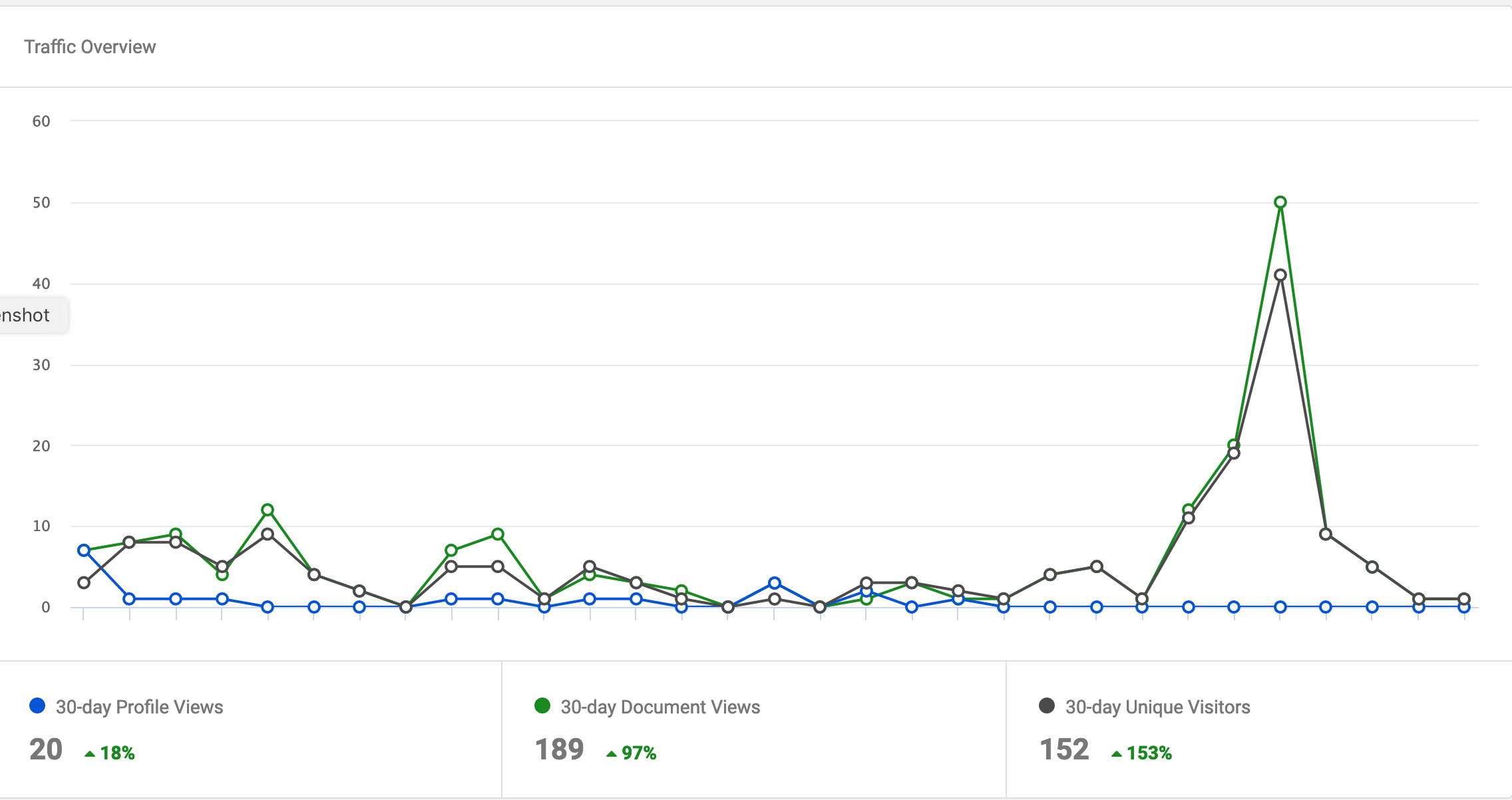
In the days leading up to the 75th anniversary of D-Day, a 2004 article by James Fleming, the Charles A. Dana Professor of Science, Technology, and Society, saw an uptick in page views. Fleming's article, "Sverre Petterssen and the contentious (and momentous) weather forecasts for D-Day," saw a 97-percent increase in page views, according to academia.edu.
Assistant Professor of Biology Josh Martin coauthored the paper "Predatory behavior changes with satiety or increased insulin levels in the praying mantis (Tenodera sinensis)" published June 3 in the Journal of Experimental Biology. The paper discusses how animal behavior is controlled "by a combination of external stimuli and an animal's internal state," the abstract says. The authors describe how "sensory responsiveness and motor activity of a praying mantis (Tenodera sinensis) are changed as the insect feeds, leading to an altered hunting strategy. We further show that these changes can be induced by injection of insulin, which likely functions as a metabotropic indicator."
To learn more about Martin's work, read the Colby Magazine story From Bugs to Robotics.
Associate Professor of Music Natalie Zelensky has a new book out. Performing Tsarist Russia in New York: Music, Émigrés, and the American Imagination (Indiana University Press, 2019) offers a "rare look at the musical life of Russia abroad as it unfolded in New York City" by examining "the popular music culture of the post-Bolshevik Russian emigration and the impact made by this group on American culture and politics," according to Indiana University Press. Zelensky, an ethnomusicologist, conducts research on the popular musical cultures of the Russian diaspora in the United States.
Sandy Maisel, the Goldfarb Family Distinguished Professor of American Government, was quoted in the article "Calling all challengers" in Pine Tree Watch. As speculation on whether or not Susan Collins will be re-elected builds, pundits are weighing in. “I think there is more dissatisfaction than at any other time," Maisel told Pine Tree Watch. "Certainly from Progressives, especially women, but also from conservative Republicans who are angry about her votes on healthcare and the (immigration) emergency.”
Professor of Art Véronique Plesch was active off campus during the spring semester. On Feb. 15 she was the organizer, chair, and respondent of the session “Beyond the Mirror: Specularity and Its Uses” at the 107th CAA Annual Conference in New York City. And in April she was invited to conduct a review of Trinity College's Art History Program, which she undertook April 4-5.
An article by Assistant Professor of Government Lindsay Mayka and government and economics major Andrés Lovón '21 was published in the May 23 Washington Post. Titled "How one company’s deep web of corruption took down governments across Latin America," the article breaks down a large bribery scandal that played out across several Latin American countries, including Peru, Brazil, Ecuador, and Mexico. "Prosecutors have investigated and/or charged hundreds of high-level public officials for receiving Odebrecht kickbacks," Mayka and Lovón wrote about the Brazilian construction company. "After investigating Odebrecht’s bribery payments funneled through Swiss and U.S. banks, the U.S. Department of Justice called it 'the largest foreign bribery case in history.'”
Julia Nelson '19 and Catherine Fraser '19, students in the class Environment and Human Health, had letters to the editor published in Waterville's Morning Sentinel. Both letters urged support for L.D. 1433, “An Act to Protect the Environment and Public Health by Further Reducing Toxic Chemicals in Packaging,” a bill currently before the Maine Legislature.
Nelson's letter, printed May 20, wrote that the bill "aligns with Gov. Janet Mills’ commitment to a healthy environment and healthy people in Maine as it would ban the unnecessary addition of a variety of chemicals that are used in packaging materials and have understood human health impacts."
Fraser's letter ran May 19 and pointed out that "Maine is a leader in creating safer chemicals policy, regulating BPA in 2011 and 2013 under the Kid-Safe Products Act and flame-retardant chemicals in 2017. We need to regulate PFAS chemicals to reduce the body burdens and adverse health impacts associated with these harmful chemicals."