External Posts
Page 177 of 178
A book by Melvin Croft, an instructor in the Department of Geology, was recently published in the University of Nebraska's Outward Odyssey: A People's History of Spaceflight Series. Come Fly With Us: NASA’s Payload Specialist Program details "an elite group of space travelers who flew as members of many space shuttle crews from pre-Challenger days to Columbia in 2003. Not part of the regular NASA astronaut corps, these professionals, known as 'payload specialists,' came from a wide variety of backgrounds and were chosen for an equally wide variety of scientific, political, and national security reasons," according to the University of Nebraska Press.
Croft is a retired geoscientist, having worked for Chevron around the globe, and joined Colby's ranks 10 years ago. An avid scientist, he has used his "retirement" to move from the terrestrial to the extraterrestrial and examine the history of U.S. spaceflight, culminating in the release of this book.
Professor of Education Adam Howard's article "Making Class: Children's Perceptions of Social Class Through Illustration" was published by Teachers College Record and was the topic of discussion on TCR's "The Voice" Jan. 23. Howard cowrote the article with his former student Karlyn Adler '11, now a lead kindergarten teacher at The School at Columbia University, and Katy Swalwell (Iowa State University).
New fiction by Sarah Braunstein, assistant professor of English, was recently published in Playboy magazine (Winter 2019, the 65th Anniversary issue). "The Modern Era," a short story set during future impeachment hearings, dramatizes a difficult break-up from the point of view of a young male comedy writer. Playboy describes it as "Fear and Loving in Los Angeles."
Professor of Education Adam Howard was interviewed Jan. 28 by Askia Muhammad on WPFW's "Monday Morning QB" show. Howard discussed his research on what lessons students at elite schools are taught about themselves and others, focused particularly on all-boy schools. Listen to the interview starting about 28 minutes into the show. WPFW-FM Pacifica is a Washington, D.C., station, dedicated to programming that reflects progressive social change and democracy, according to its website.
An article by Aaron Hanlon, assistant professor of English, was recently published by history blog Age of Revolutions. Titled “Finding Genres of Revolution in the Classroom,” the Jan. 21 article details a new course Hanlon created at Colby and the challenges he and his students faced discussing global revolutions “within a liberal framework.” Comparative exercises helped Hanlon and his students overcome this obstacle, allowing them to find “a history of revolution in forms, of voices, of proclamations, of concerns, of fears, and of legacies.” he wrote.
Dan Shea, professor of government, wrote an opinion piece in the Portland Press Herald titled "Can average citizens rise to the occasion in response to Mueller’s findings?" The Jan. 18 piece questions if average citizens are still able to see their role as fundamental in a democracy, or if they're swayed by partisan identification. "Can we break from our partisan filters to find pragmatic policy solutions, as was routine throughout much of our nation’s history?" Shea writes. "Can we set aside our partisan impulses, turn away from the talking heads on television and radio and steer clear of social media to objectively assess Mueller’s findings?"
The FiveThirtyEight data journalism site recently featured an interactive personality test developed by Associate Professor of Psychology Christopher Soto and collaborator Oliver John. The test, known as the BFI-2, measures the Big Five personality traits: extraversion, agreeableness, conscientiousness, negative emotionality, and open-mindedness. The FiveThirtyEight feature shows how your personality compares with the average American adult. You can take the test and see your results at projects.fivethirtyeight.com/personality-quiz.
"Bugs in our Backyard," a citizen science project by Associate Professor of Biology Dave Angelini and Biology Research Technician Josh Steele, was named one of the Top 18 projects for 2018 on the CitSci aggregator site SciStarter. The project encourages K-12 students to take surveys of bugs in their backyards, schoolyards, and neighborhoods; the surveys are then used to help find answers to biological questions. Bugs in our Backyard is part of an NSF-funded research program at Colby, which will also provide students with insight into the practice of science, according to the project's website.
The article "Science and Culture: Journal entries, maps, and photos help ecologists reconstruct ecosystems of the past" recently posted by PNAS, includes the work of Loren McClenachan, the Elizabeth and Lee Ainslie Assistant Professor of Environmental Studies. The article mentions her 2017 study, in which "her team used 18th-century British nautical charts to estimate changes in the coral reef area in the Florida Keys," and a project where her students "asked historical societies in Maine for images of a seaweed called rockweed but came back empty-handed." McClenachan advised her students to ask for tourists pictures instead, and noted, "When going to archivists, ecologists need to be careful how they frame the question," PNAS said.
[caption id="attachment_41974" align="alignright" width="104"]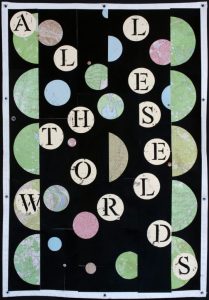 Photo courtesy of Garry Mitchell[/caption]
Garry Mitchell, deemed “an excellent painter,” was included in a Portland Press Herald art review about Maine's 2018 arts scene. Mitchell, associate professor of art, topped the list for what reviewer Daniel Kany called "his elegant and poignant show at Speedwell Projects." The show "was a lesson in how to begin to take on political subjects," he wrote. "It was impressive on many levels."
Photo courtesy of Garry Mitchell[/caption]
Garry Mitchell, deemed “an excellent painter,” was included in a Portland Press Herald art review about Maine's 2018 arts scene. Mitchell, associate professor of art, topped the list for what reviewer Daniel Kany called "his elegant and poignant show at Speedwell Projects." The show "was a lesson in how to begin to take on political subjects," he wrote. "It was impressive on many levels."
Photo courtesy of Garry Mitchell[/caption]
Garry Mitchell, deemed “an excellent painter,” was included in a Portland Press Herald art review about Maine's 2018 arts scene. Mitchell, associate professor of art, topped the list for what reviewer Daniel Kany called "his elegant and poignant show at Speedwell Projects." The show "was a lesson in how to begin to take on political subjects," he wrote. "It was impressive on many levels."