Davis Institute for AI to Participate in Major NSF Grant
Colby researchers will work to improve the reliability of AI chatbots related to mental health

Colby will participate in a $100-million investment by the National Science Foundation in support of newly created National Artificial Intelligence Research Institutes.
Colby is among a select group of colleges and universities that won one of five awards. As part of the grant, Colby will work in collaboration with Brown University, University of California Berkeley, University of California San Diego, Dartmouth College, University of New Mexico, Santa Fe Institute, Data & Society Research Institute, New York University, and Carnegie Mellon University.
These institutes will drive breakthroughs in high-impact areas such as materials discovery, STEM education, mental health, human-AI collaboration, and drug development. The Colby cohort, formally named the AI Research Institute on Interaction for AI Assistants (ARIA) and funded at $20 million over five years, will be led by Brown. Colby is the only liberal arts college selected to participate, noted President David A. Greene.
“These national competitions for ‘hubs’ in various fields, such as quantum, battery and energy storage, and now AI, are a huge deal,” Greene said. “The competitions bring out the very best academic and research institutions in the country.”
The NSF ARIA will accelerate the development of next-generation AI assistants, especially in the education and mental health fields, that understand context and can respond in socially and emotionally smart ways. It aims to build cognitively informed systems that understand human reasoning, adapt to different user needs, and communicate in a respectful, responsive way.
‘This groundbreaking research on context-aware AI assistants is exemplary of the kind of human-centered, interdisciplinary, and trustworthy AI that Colby’s Davis AI Institute promotes. Transparent AI systems that understand context and respect human values are essential to providing value in areas such as mental and behavioral health.’
David Watts, Director of the Davis Institute for Artificial Intelligence
Principal investigators for Colby are the Davis Institute for Artificial Intelligence, Assistant Professor of Psychology and recent Davis AI Fellow Veronica Romero ’09, and Assistant Professor of Computer Science Isaac Lage, who specializes in human-AI interactions.
Human-centered AI
“This groundbreaking research on context-aware AI assistants is exemplary of the kind of human-centered, interdisciplinary, and trustworthy AI that Colby’s Davis AI Institute promotes,” said David Watts, director of the Davis Institute for Artificial Intelligence. “Transparent AI systems that understand context and respect human values are essential to providing value in areas such as mental and behavioral health.”
With this grant, Colby distinguished itself among the esteemed research universities and institutes awarded funding, said Watts, a nationally recognized leader in emerging technology and artificial intelligence, who recently joined Colby after a long career at IBM. “This underscores Colby’s leadership and the unique value of advancing AI within a liberal arts framework, bringing together a wide range of experts across science, technology, arts, and humanities for comprehensive solutions that improve the human condition.”
In creating the National Artificial Intelligence Research Institutes, the NSF is investing in the country’s long-term AI leadership, turning open research into real-world impact, and helping build the workforce to power the United States’ AI future.
In addition to faculty, Colby students will participate in research associated with the grant, and the grant will involve Colby-supported education outreach with other institutions of higher education in the region that train students to work in the mental health field.
A better, more responsive chatbot
For Romero, a cognitive scientist who has worked with people with autism, the grant will allow her to work in her field of expertise while improving the fast-moving world of artificial intelligence. She and other psychologists who study human cognition are fearful about the harmful impact of AI chatbots dispensing information lacking context to vulnerable people. There have been numerous media reports of people committing suicide or entering a delusional spiral because of their AI interactions.
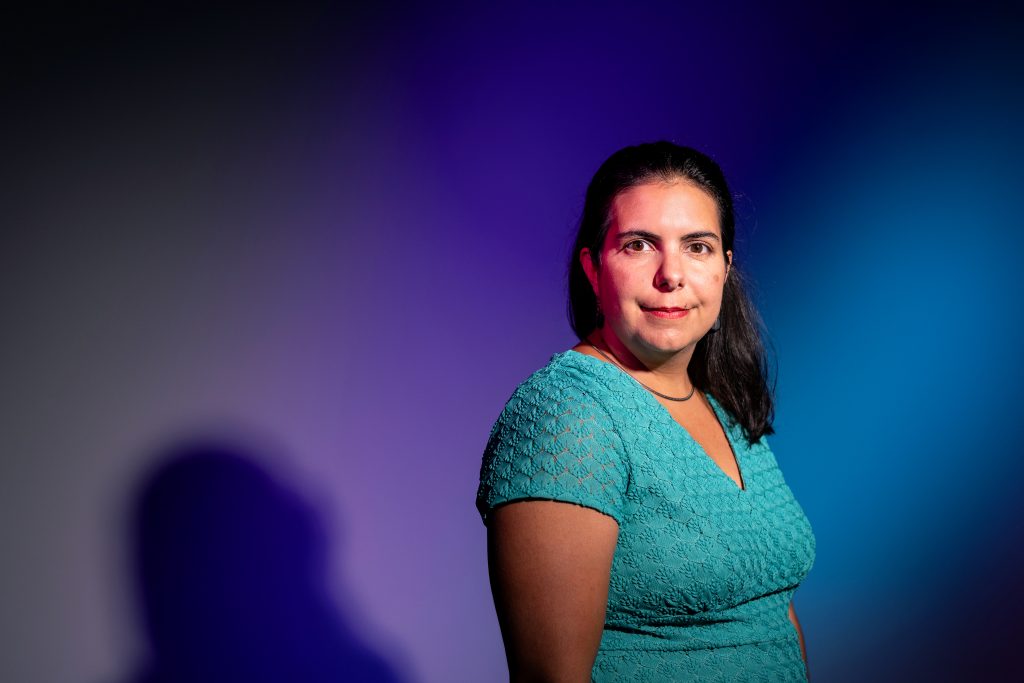
“The idea of the grant is to figure out how AI can design better assistants and chatbots for behavioral and mental health that are actually informed by science and research,” Romero said. “We want to get ahead of this and try to do this in a way that can be scientifically informed and therefore lead to better interactions, as opposed to maybe not knowing what’s going to happen and then having to deal with the consequences.”
In her work, Romero focuses on how cognition is embedded and embodied in individuals in nuanced ways. Data used to train AI assistants lack that essential nuance, including vocabulary and tone, which can lead to harmful outcomes. Romero and Lage aim to train chatbots with information that is based on the understanding of individual human behavior.
“I’m excited to be part of this specific group where we are really thinking about how AI chatbots are supposed to be a collaboration with a human, what that means, and how that has maybe not been studied enough and not deployed in a way that makes it possible to be used as a tool for situations that are very delicate, like mental health,” Romero said.
Lage, whose research involves human-AI interactions, specializes in human-in-the-loop machine learning, which integrates human expertise into machine learning to improve accuracy and reliability. For this project, Lage will focus on devising ways to instruct AI assistants to respond in a manner that aligns with the recommendations of the mental health and medical communities.
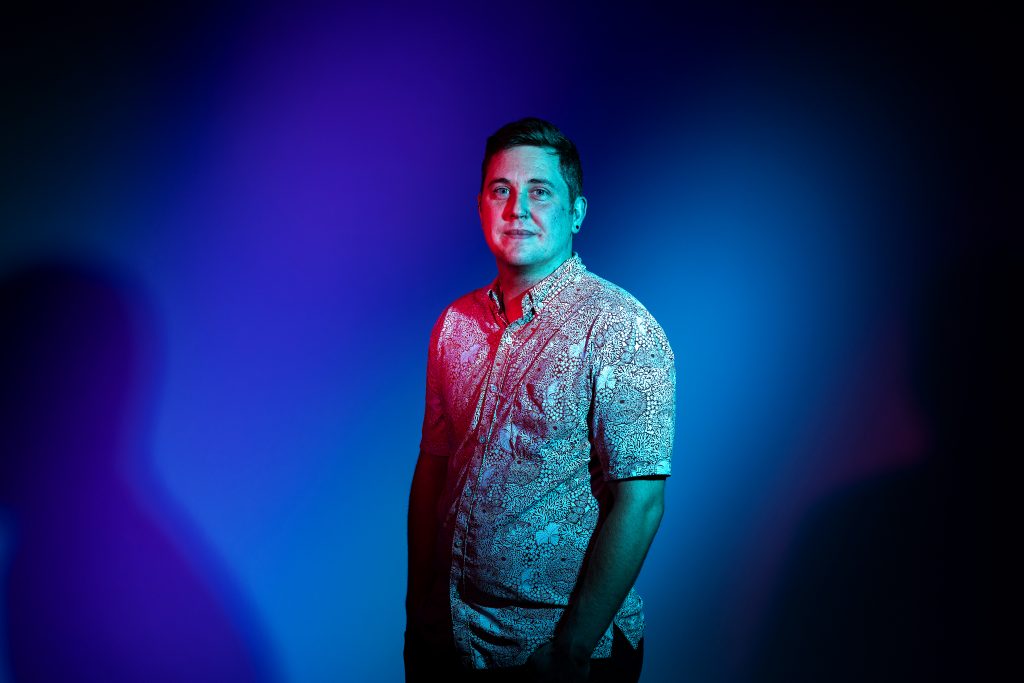
Lage came to Colby after completing his Ph.D. in computer science at Harvard. The prospect of doing important work around the future of AI appealed to him and attracted him to Colby, he said.
“Davis AI was a huge reason I came here,” he said. “All the energy around AI on campus is unique to Colby. I am really excited personally, and I am also excited that students will be integrated with this big group of researchers across these other institutions. The opportunity to collaborate with Brown, Dartmouth, and the other schools, and to be a part of this big project with a lot of really interesting people, is very special.”
Michael Donihue, the Herbert E. Wadsworth Professor of Economics and recent interim director of the Davis Institute for AI, oversaw the grant process, including an NSF site visit in the fall that was crucial to securing Colby’s participation in the grant. He is eager to see what comes out of the work.
“This is an example of the human-centered approach to AI that we talk about at Colby,” he said. “And this is an opportunity for Davis AI and for Colby to participate on a much broader scale in a very important public health issue.”