The Stories Behind the Charlie Bassett and Igarashi Houses
A beloved professor and an inspirational alumnus are namesakes in Colby’s newest residential complex
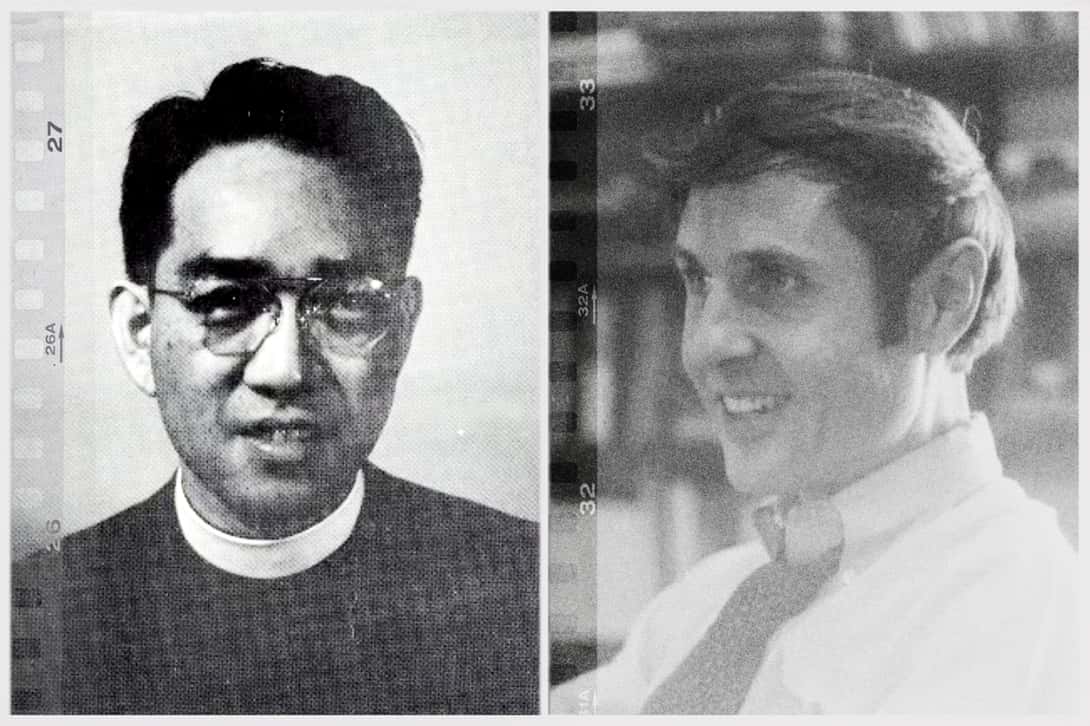
Two men who left an indelible mark on Colby and helped shape the College’s history have been honored as namesakes of buildings in the new residential community on campus. One represents the lasting power of transformative teaching, while the other represents perseverance during turbulent times.
The Charlie Bassett House honors the late Lee Family Professor of American Studies and English, Emeritus, and the Igarashi House remembers Peter Igarashi, the first American-born person of Japanese descent to graduate from Colby, in 1944. Their names and legacies of resilience, intellect, and inspiring leadership will endure as part of Colby’s rich history.
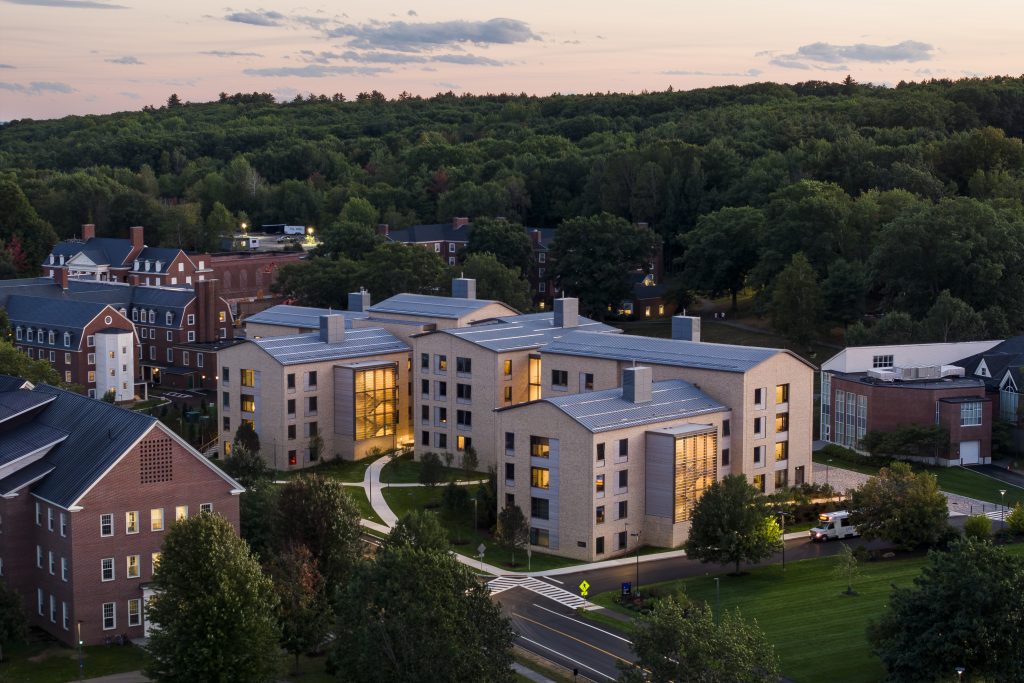
Bassett and Igarashi join a growing list of recent namings, including residential halls for four influential women; rooms in the presidential suite for Frank Apantaku ’71 and Sheila Ratte; the president’s house for Samuel Osborne; and an administrative suite in the Harold Alfond Athletics and Recreation Center for Marjorie Bither.
The College dedicated the Charlie Bassett and Igarashi houses, along with the entire residential complex, on Oct. 15, 2026.
‘He challenged you all the time’
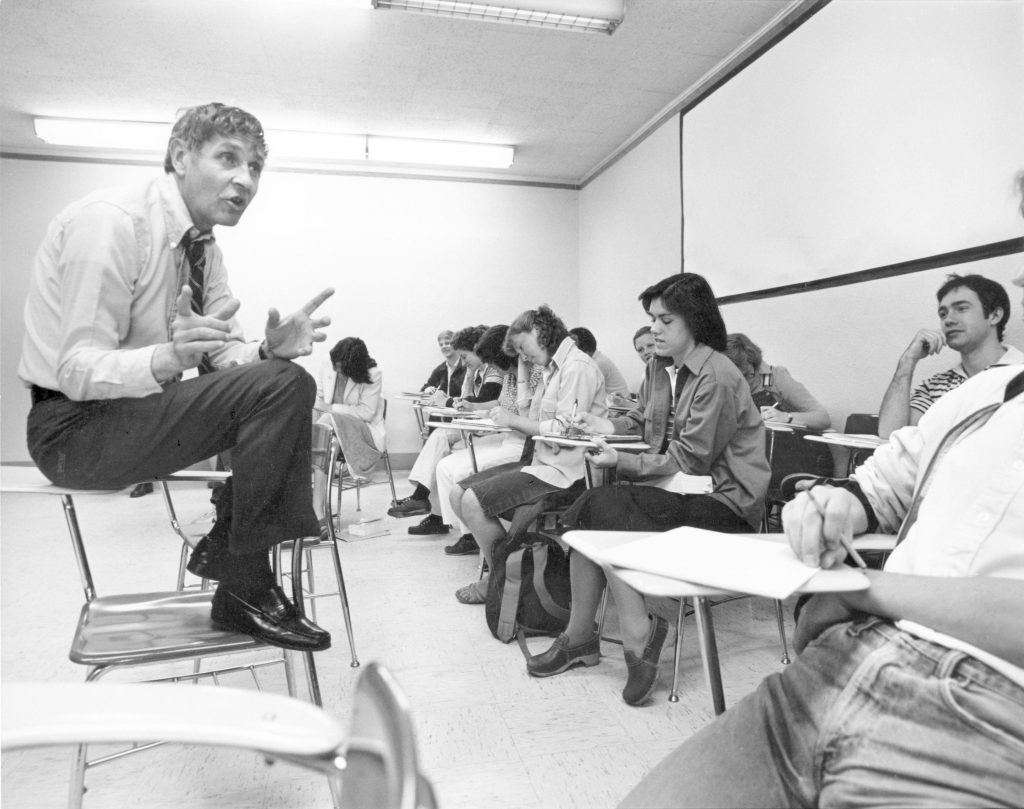
When Sandy Buck ’78 was a freshman at Colby, he took a course with Charlie Bassett, and a world of possibilities, thought, and laughter suddenly opened up. Bassett shared his passion for reading and writing with his students and assigned them major nonfiction books on current events during the tumultuous 1970s. He encouraged them to do more than they ever thought they could.
“He didn’t let his foot off the gas. He was challenging you all the time, and he was a stickler for writing,” Buck, a longtime trustee for the College, said. “He was an inspirational teacher, and he did it with a sense of humor, which I so value. He’s responsible, I think, in large part for helping me figure out that what I wanted to do in my life was teach.”
Many students over the years were equally challenged and inspired by Bassett, a larger-than-life personality who taught at Colby for three decades and was considered the father of American studies at the College. The professor, who died in 2010, remains woven into the fabric of Colby life. The Class of 1993 established the annual Charles Bassett Teaching Award to honor a distinguished member of the Colby faculty. The senior class votes on the recipient, who presents what is known as the Last Lecture after spring semester exams.
When Buck considered how to name one of the buildings in the newly opened residential community on Mayflower Hill, it didn’t take him long to decide on the Charlie Bassett House.
“Colby is a teaching college, and I value the teachers,” he said. “We need to honor our teachers because they make the difference for students. We have amazing facilities now. We’ve got these new residence halls that are just off the charts. But nothing really happens unless you’ve got teachers who are going to challenge you and inspire you.”
Teachers, that is, who are like Charlie Bassett.
Courage and community
Igarashi’s story is one of courage and community.
When he arrived on the Colby campus in downtown Waterville in late fall 1942, less than a year after the bombing of Pearl Harbor, Igarashi had no winter coat and had never seen snow. As an American citizen of Japanese descent, he had spent the previous six months incarcerated with his family at the Tule Lake Segregation Center in California, the largest site for holding Japanese Americans during World War II.
“Even in his later years, my father acknowledged that he received an excellent education at Colby. They taught him how to think critically and analytically,” wrote his daughter Gerri Igarashi Yoshida in a post for the Our Debt of Gratitude Project. “Outside of the classroom, my father was shown kindness, acceptance, generosity, and hospitality.”
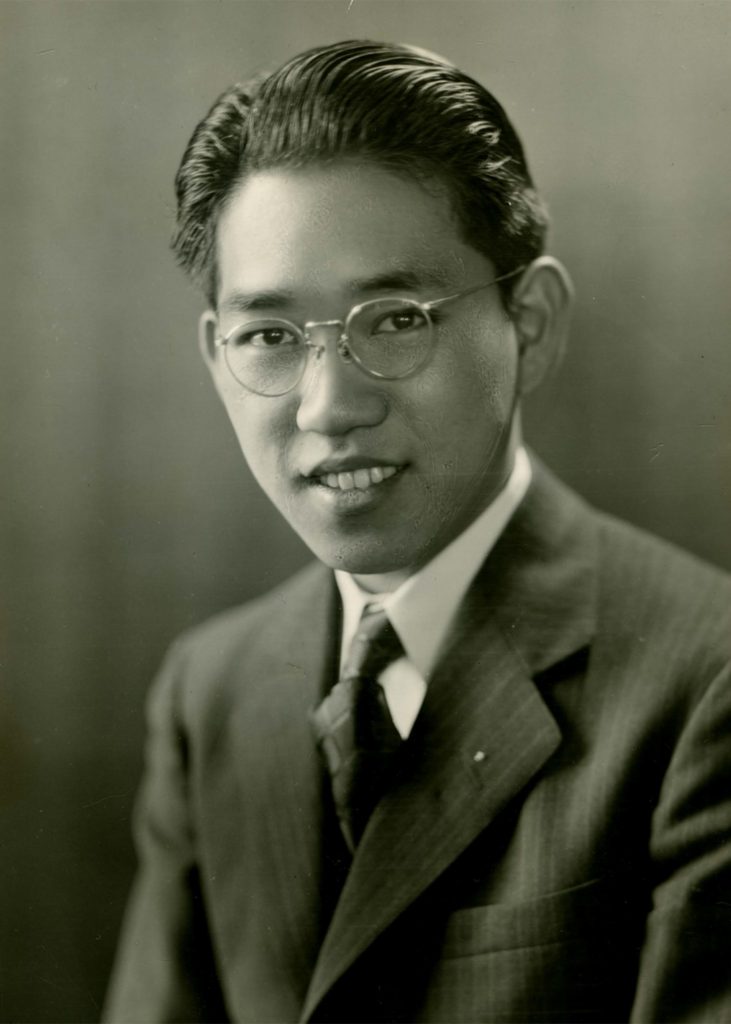
Born Jan. 11, 1923, in Sacramento, Calif., Igarashi graduated from Sacramento High School in 1940 and enrolled that fall at Sacramento Junior College. His studies were interrupted when Japan bombed the U.S. Naval Base at Pearl Harbor on Dec. 7, 1941.
In April the following year, Igarashi and his family were forced into the Tule Lake Segregation Center. They were among the 120,000 people of Japanese ancestry on the West Coast placed into one of 10 internment camps, also called War Relocation Centers. Most lost their jobs, homes, and civil rights.
However, because Igarashi was a college student when Pearl Harbor was bombed, he qualified to relocate to one of 600 colleges in the Midwest and on the East Coast to continue his studies. With help from the National Japanese American Student Relocation Council, a Quaker-led organization, Igarashi applied to attend Colby and resettle in Waterville.
At Colby, when then-President Franklin Johnson received Igarashi’s application, he held an assembly with the entire student body, as Yoshida retells her father’s story. Johnson told students “how and why the Japanese Americans were being unjustly incarcerated and asked them if they would be willing to accept and welcome Japanese American students,” she said.
“They must have voted yes, because my father was accepted.”
At Colby, Igarashi recalled being graciously welcomed by most students and faculty, who accepted his presence, according to a biography of Igarashi in Colby’s Special Collections & Archives. He expressed surprise at how warm the Colby community was to him, mentioning, “On several occasions, students invited me to their homes for visits, an experience new to me at that time.”
After graduating from Colby with a degree in religion and philosophy, Igarashi became a Fulbright Scholar, a respected professor and New Testament scholar, and a minister, concluding his career ministering to parishes in Pennsylvania and Maine, his last being St. Mark’s Episcopal Church in Waterville.
He retired in 1988 and moved with his wife, Kimi, to a retirement community in Philadelphia, where he lived until his death on April 15, 2016, at 93.
He never forgot the opportunities he had in Waterville. Said Yoshida, “My father loved Colby.”
Now, in addition to the people he touched through his life, Colby students can be inspired by Peter Igarashi’s ability to overcome adversity and persevere despite the odds.