A Good Growing Season
2 Feet 2 Bedrock, Colby’s organic garden, blooms anew for the benefit of students and the community
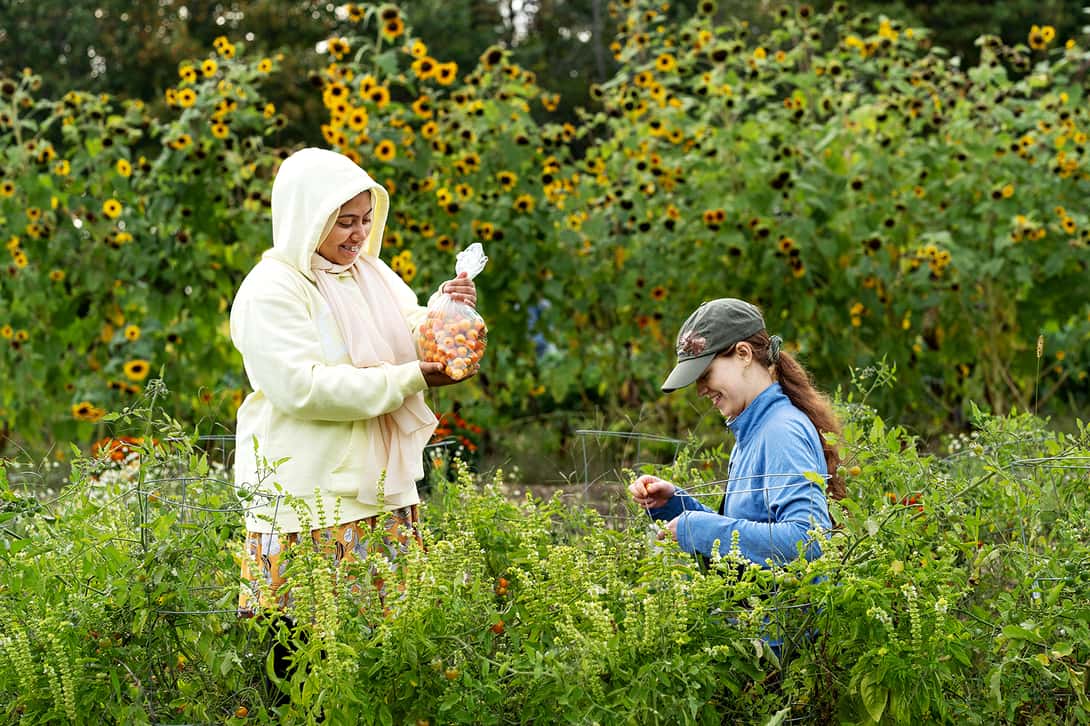
On a golden September afternoon, tall sunflowers stretched toward a cerulean sky and rows of plump cherry tomatoes glowed in the sunshine. Bees buzzed by the neat rows of Brussels sprouts, kale, and basil, floating on a breeze perfumed with the delicate fragrance of chamomile flowers.
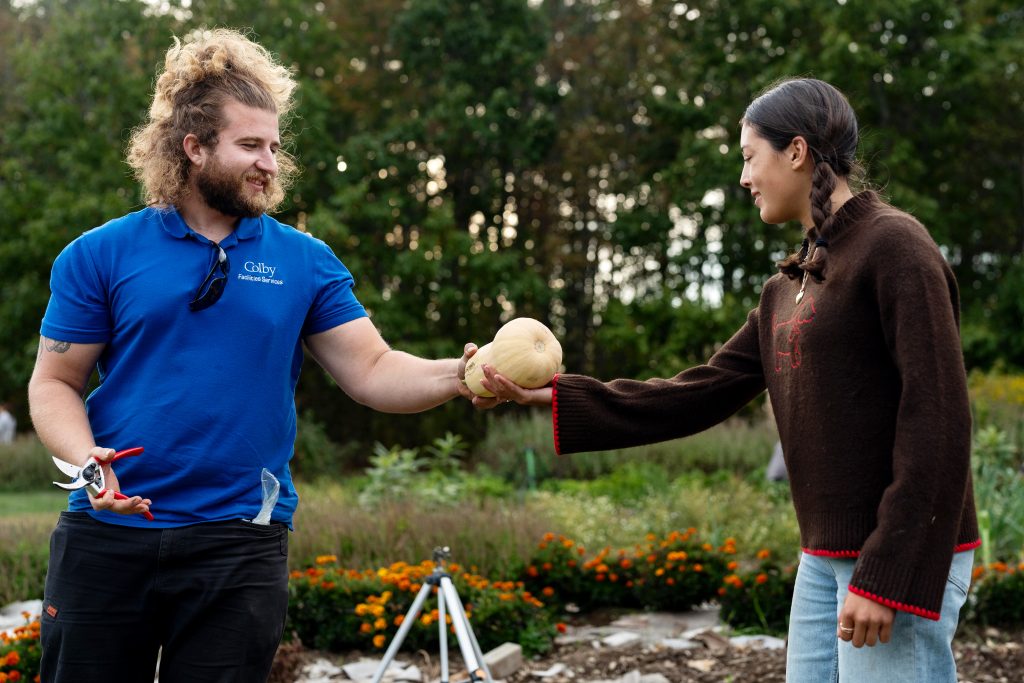
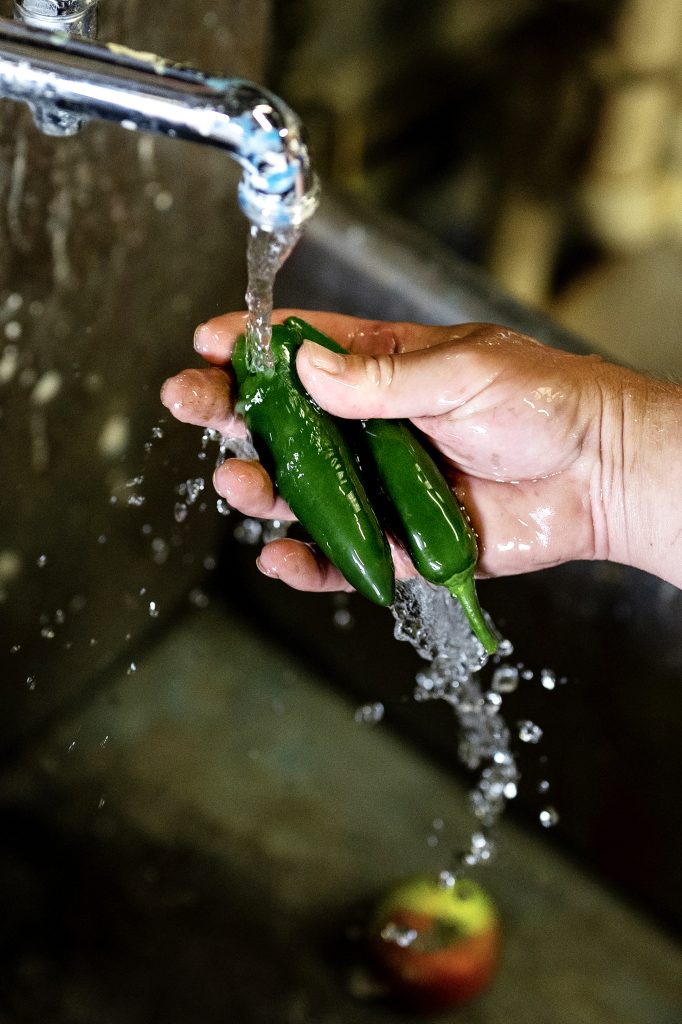
This Edenic spot is Colby’s organic garden, 2 Feet 2 Bedrock, atop Runnals Hill. The garden, which was planted nearly 20 years ago, had a bountiful growing season this year. So much so that most weeks in the height of the season, Hunter Shultz, the organic garden manager and a Colby groundskeeper, was able to donate a pickup truckload of fresh produce to the Waterville Food Bank.
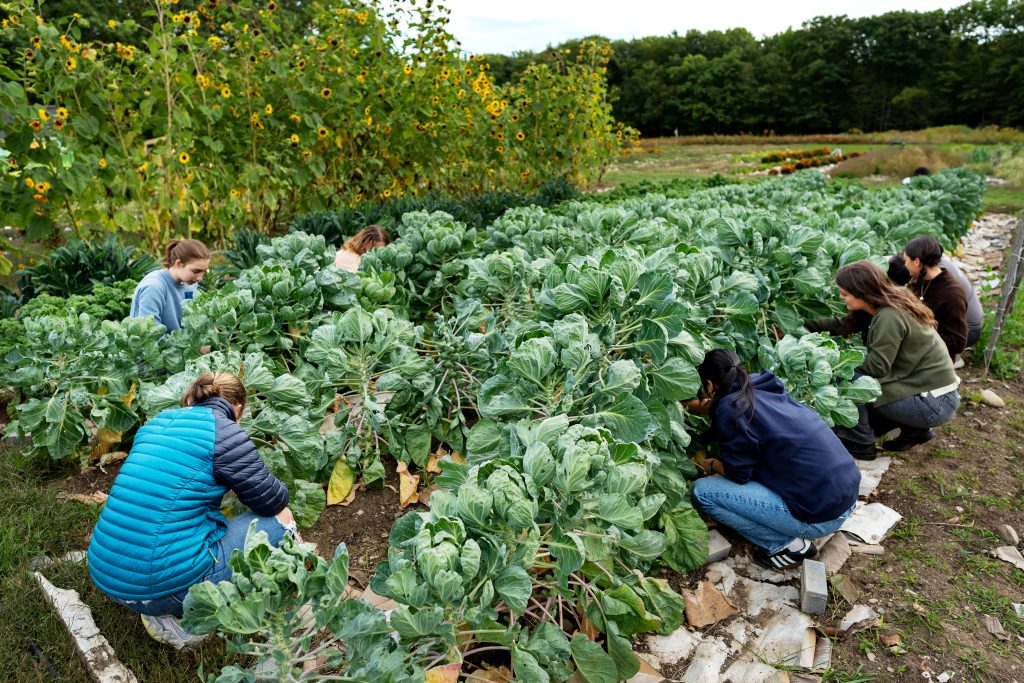
He and others involved in the garden’s renaissance are excited thinking about the great season that’s behind them—and about the future possibilities the garden has for both permaculture and education.
“The reason why I love working here at Colby is because we really emphasize using the campus as a living laboratory,” said Maddie LoDico, the College’s director of sustainability. “I think the garden has a ton of potential for that. I think there’s a lot of opportunity here for professors to reach out and get students out of the classroom into, quite literally, their backyard, so that they can do hands-on stuff.”
Many helping hands
Over the years, many different members of the community have tilled, planted, weeded, harvested, and otherwise tended the garden, including the students who are part of the Colby Organic Farmers and Gardeners Association, or COFGA. This spring, the Operations and Maintenance Department stepped in to take charge of the garden with a lot of assistance from past COFGA President Ella Carlson ’25 and other students.
They started seeds in the early spring in one of the campus greenhouses, and then planted the seedlings in the garden when the soil was warm enough to work. When the students left for the summer, Shultz maintained the three plots mostly on his own. It was a labor of love for Shultz, who moved to Maine from Utah in part because of the robust farming and gardening culture here.
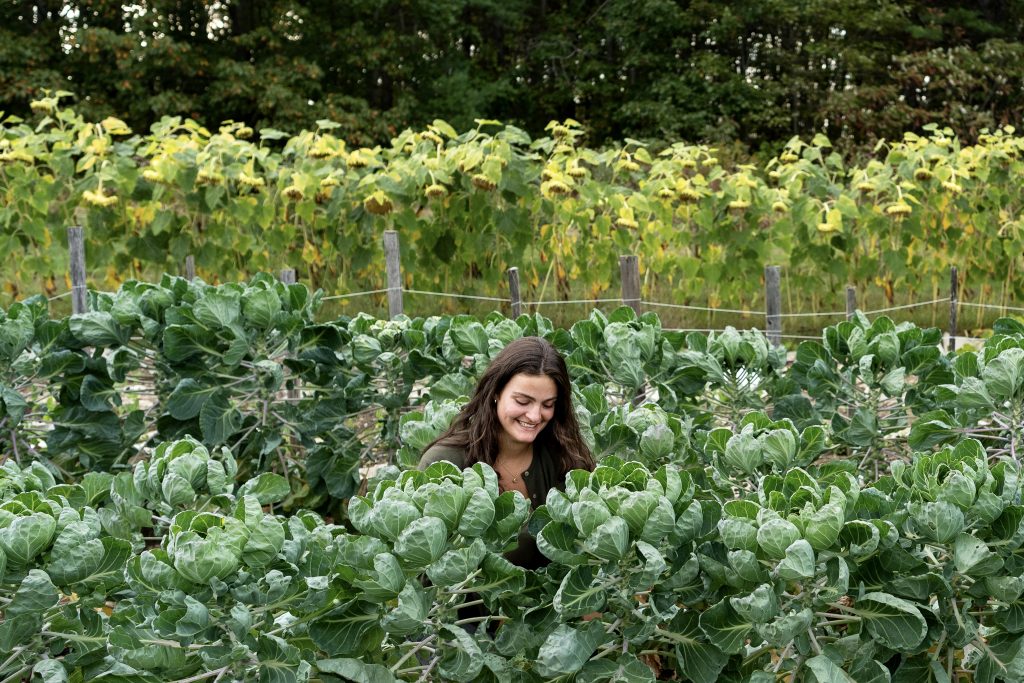
At Colby, Shultz has become interested in permaculture, an approach to designing sustainable agricultural systems that aims to regenerate soil fertility, biodiversity, and the overall health of the ecosystem. He instituted some permaculture practices in the garden, including planting marigolds to keep deer away from crops and hand-picking pests from plants every day in the early part of the season. He’s looking forward to trying more, such as incorporating no-till garden beds, using mulch liberally, and otherwise focusing on improving soil health.
“I’ve learned that having a good biodiversity is one of the things that will help reduce pests and disease, which I see as a primary thing we have to do,” he said. “If we’re going to do organic, we have to be working with nature and not against it. That’s my perspective.”
A community effort
Shultz is strongly supported in his garden work by his supervisor, Matthew TenEyck, the grounds supervisor and landscape manager, who spoke enthusiastically about what is happening at the top of the hill.
Over the course of the growing season, crops such as high-bush blueberries, herbs, carrots, peppers, zucchini, and winter squash all took their turn in the limelight, and the garden crew successfully contended with challenges, including the sixth driest summer in recorded Maine history.


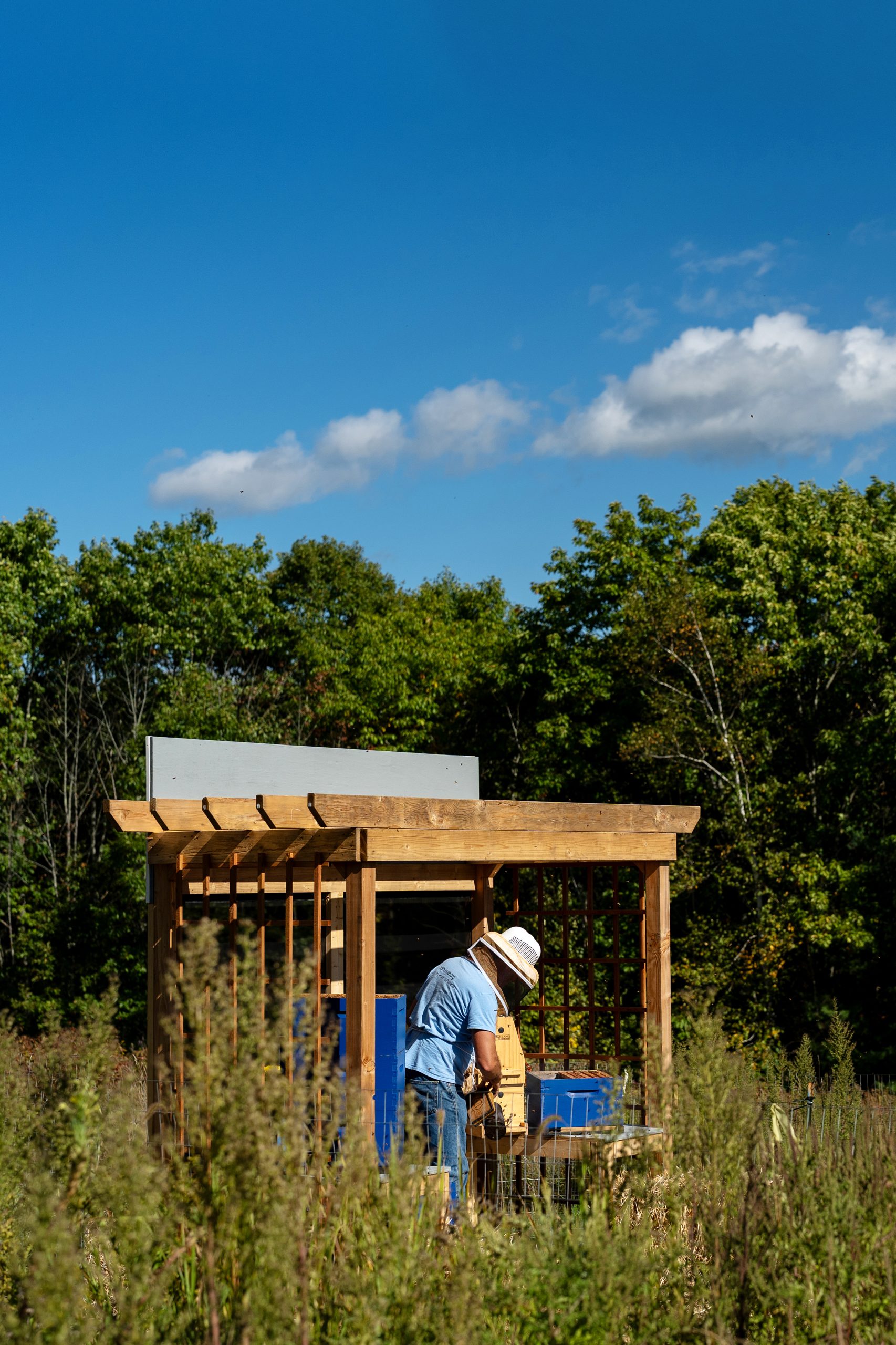
As well, the College invited beekeeper Andrew MacDonald, better known as the “Bee Huggah,” to bring his beehives and expertise to the garden to assist with pollination and educate the Colby community about bees. MacDonald is passionate about helping honeybees and other pollinators, which are declining globally because of factors such as habitat loss, pesticide use, drought and other extreme weather, and disease.
In September, he met with about 30 students and professors, showing them the hives and other pollinator boxes he placed around campus in an effort to find the federally endangered Rusty Patched Bumble Bee, which has not been seen in Maine since 2009 but which experts hope is still here.
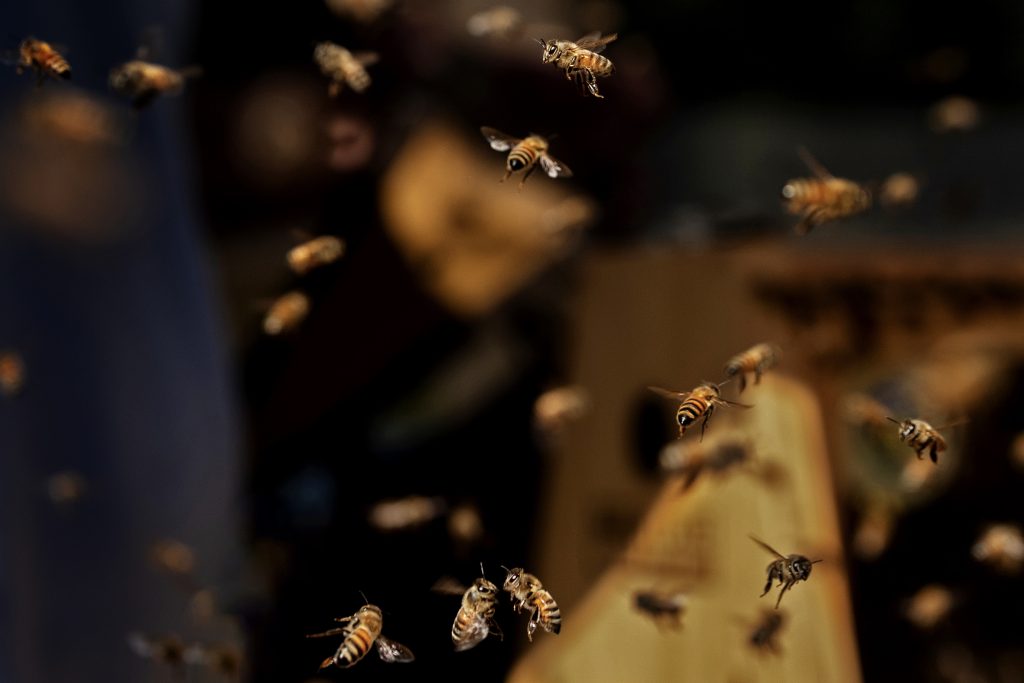
“We’re hoping to maybe have some of these bumblebees populate those boxes,” MacDonald said. “I’m determined to see if we can find that Rusty Patched Bumble Bee in Maine.”
It’s just one of the possibilities that could arise from 2 Feet 2 Bedrock.
“This is like a big test spot, so we can see what works and what we can do,” TenEyck said. “I would love to have the students realize that they can plant a seed and harvest their own produce. Rather than go to the grocery store, people could grow a tomato plant in their own backyard and get the joy from it.”

A labor of love
The crew is looking forward to having more activity and visibility at the garden, so that more students and community members will learn about what’s happening there, and hopefully be inspired to get involved.
“This is sort of out of the way, and not a lot of people see it unless you’re actively seeking it out,” LoDico said. “And a lot of the work that we do is over the summer, when students aren’t here to see it. So being able to get students back out here and get the garden club reinvigorated makes me excited for the future.”


The garden meant a lot, too, to the Waterville Food Bank. Beth Thomas, the food bank’s volunteer coordinator, said Colby’s donations from the garden have helped address an uptick in need.
“Our clients are always very excited to get fresh food from the garden,” she said. “Whenever there’s fresh produce, it’s always a good day.”