A Look Inside Colby’s Sound-and-Lightproof Creative Hub
The Landay Cinema Studies Production Studio is revolutionizing how film and media are taught on campus
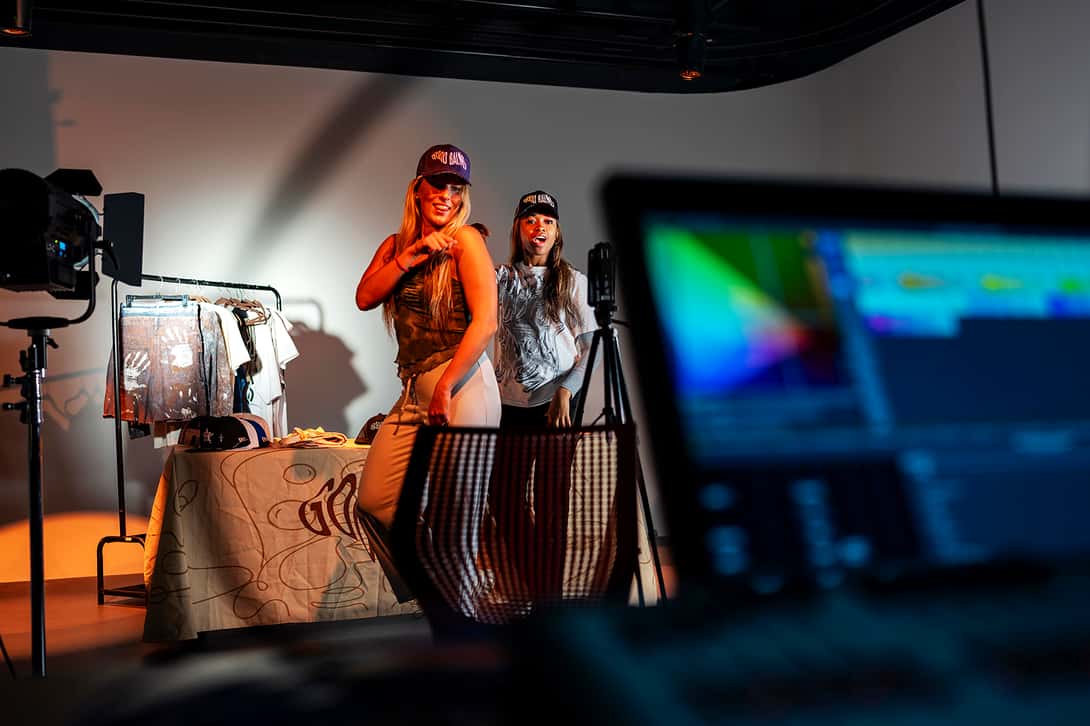
Behind a heavy door in the Gordon Center for Creative and Performing Arts is a space that might look unassuming at first glance. In reality, it is where the creative visions of students and faculty can take flight.
It’s the Roger Landay ’56 and Myrna K. Landay Cinema Studies Production Studio, one of the few places on campus that is completely sound-and-lightproof. Among its features are a professional lighting grid and a range of backdrops designed for photography and video production, including a white cyclorama and a green screen.
Within this studio, members of the Colby community are limited only by their imaginations.
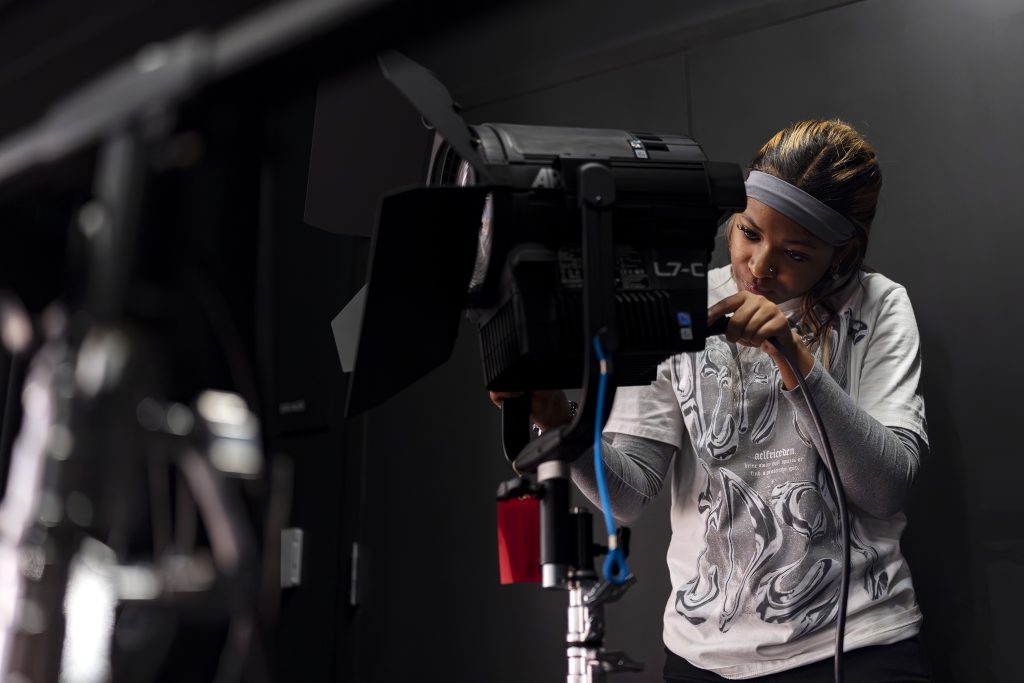
“I would say that it’s like a black box with the right equipment so that people can find the potential and dream up what they want to do,” said Marjorie Gallant, associate director of operations at the Gordon Center. “I don’t think there was a space like this on campus before.”
A new era
When the center opened in the fall of 2023, it marked a new era for the College’s arts programs. It was designed for teaching, performing, and creating, and it offered a unique combination of highly flexible, multipurpose performance areas and studios to provide transformational opportunities for Colby students and the broader community.
The Landay Cinema Studies Production Studio is one of those spaces, and more and more faculty, students, and staff members have been learning about the possibilities found within its walls. Jim Thurston, associate professor of performance, theater, and dance, has used it as a light lab for one of his courses, and the Communications Department has also used it for photography and video.
“I think it symbolizes a shift in moving to the practical,” Gallant said of the studio.
Erin Murphy, instructor of cinema studies, has been using the studio to teach the students in her Fundamentals of Video Production course how to light interviews and more. This is the first semester she’s taught the course, and the first time she’s used the space. Having access to the studio, where both light and sound can be completely controlled, allowed her to offer the course in the first place, she said.
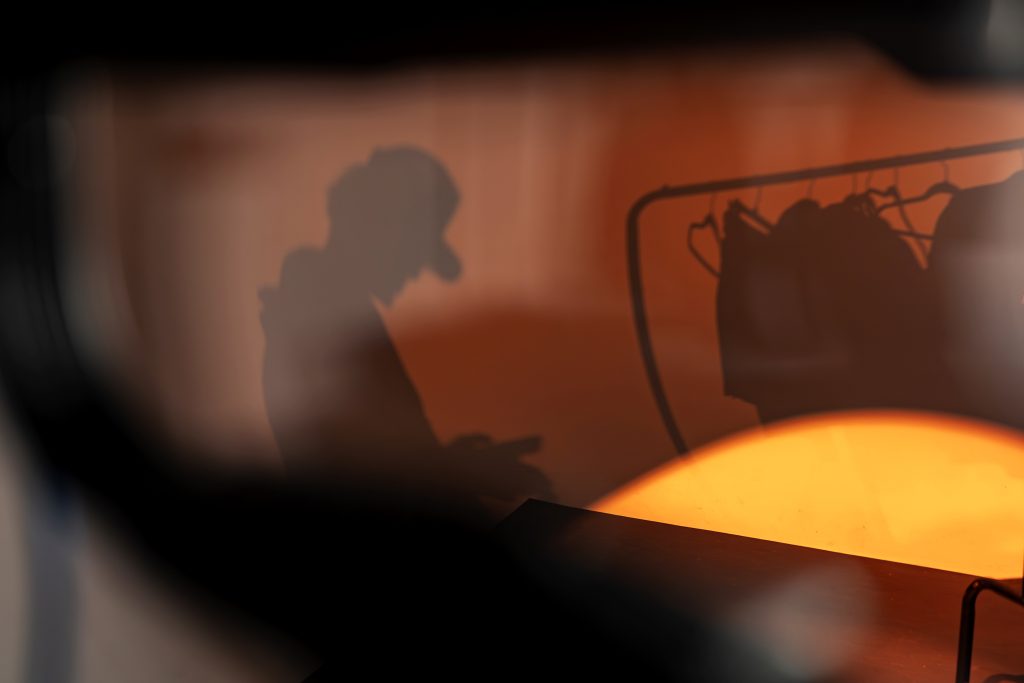
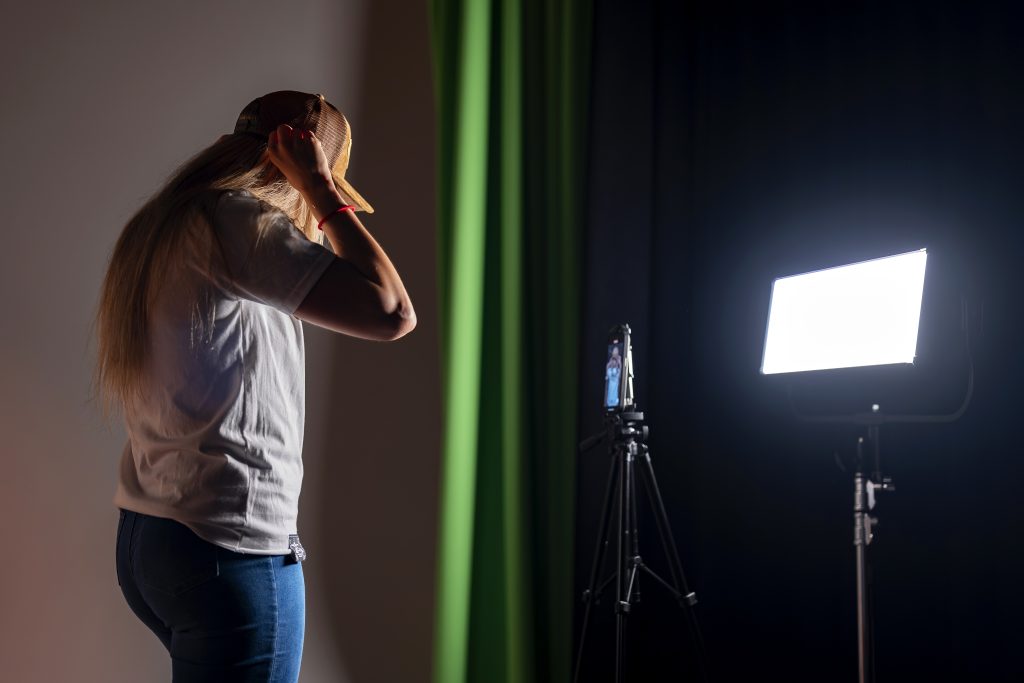
“The space and the lights made it possible to teach this class,” Murphy said.
One of her students, Eliot Pitchenik ’29, was enthusiastic about the mock interviews he had filmed there. The space supports three-point lighting, a setup that includes a key light, a fill light, and a backlight to help the subject stand out from the background.
“I love what we shot. I think they came out great,” he said, adding that he could imagine using the studio for his campus job, shooting videos for the Office of Admissions and Financial Aid. “I don’t think there’s anywhere else on campus where you can get a professional lighting setup and control all the elements of lighting. It’s completely blacked out, and then you’ve got three-point lighting so you get a super great image.”
Beyond traditional filmmaking
But the studio’s impact reaches far beyond traditional filmmaking. Because the environment offers control over visual data, it has become a laboratory for cross-disciplinary research that blends art with high-tech analysis.
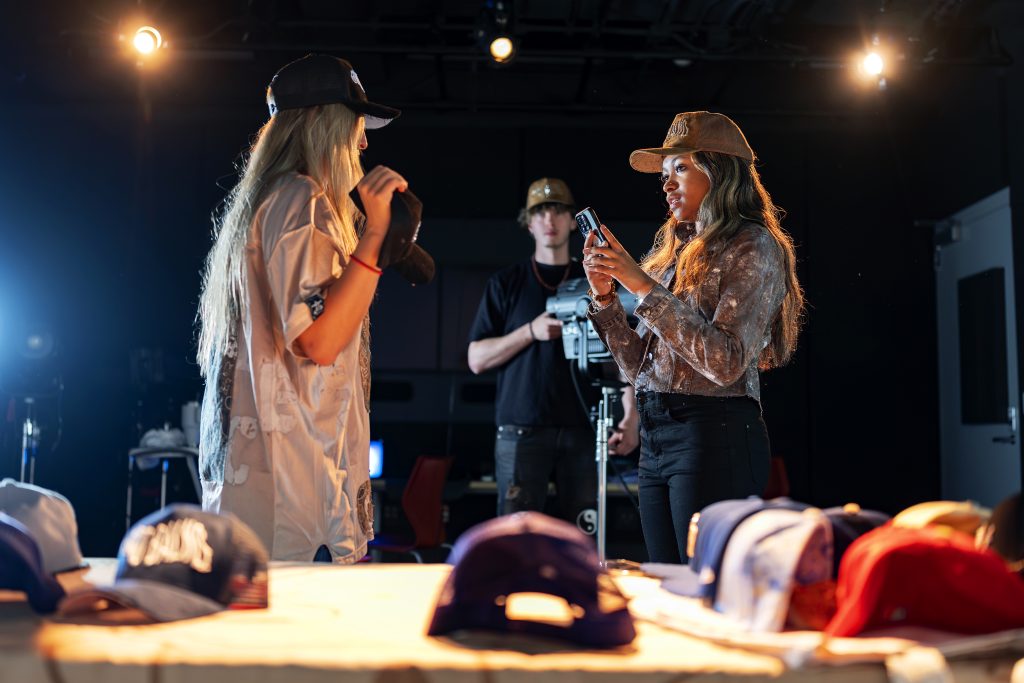
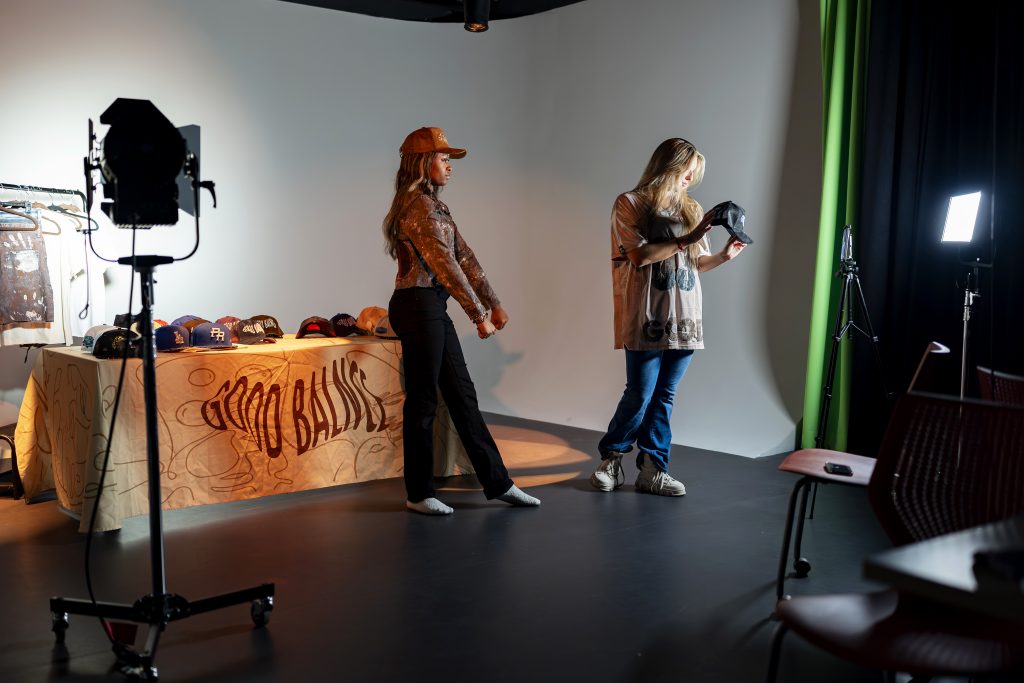
Assistant Professor of Philosophy Ben Baker has been using synchronized cameras and computer vision tools to construct and analyze 3D models of dancers in motion. In the past, to obtain this kind of visualization of motion, researchers needed special suits with sensors or visual markers on the joints. Those kinds of markers aren’t necessary here, Baker said. He then uses machine learning on the 3D movement data to study the kinematics, or motion, of different dance styles and levels of ability.
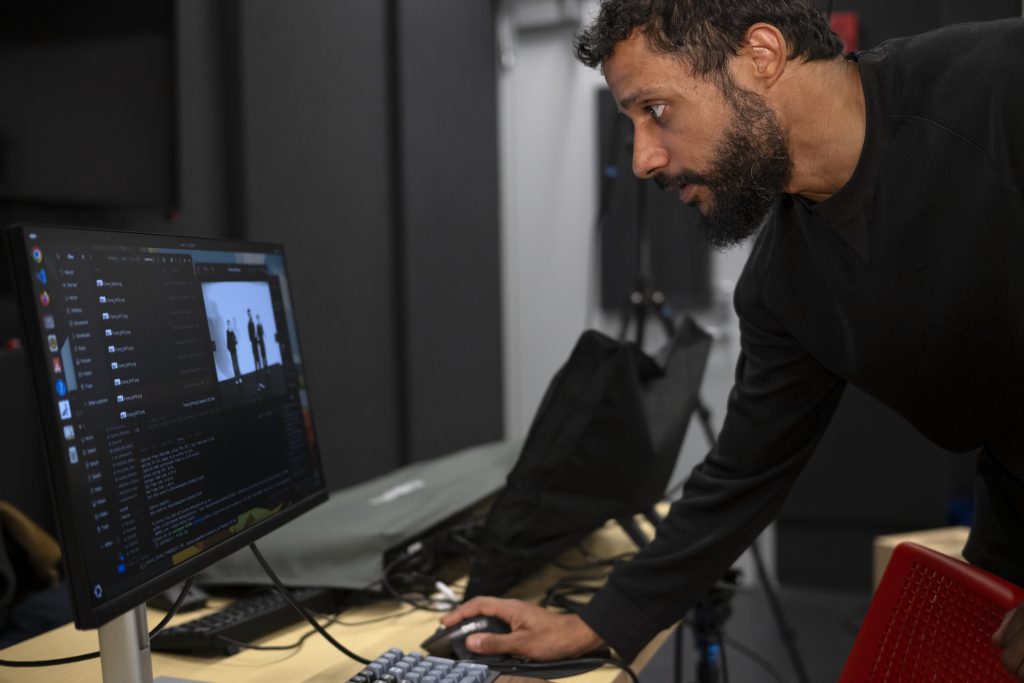
In one of the videos, the cameras captured Baker doing a cartwheel in front of the cyclorama screen, whose curved, seamless design produces an illusion of infinite space. It’s a good backdrop for his work, which studies how the mind works through the lens of dance.
“I feel very lucky to have had the level of access to the space that I do,” he said. “Getting to just try, and test, and then immediately come over here and sit at the computer to see what’s worked, what I need to change, and then try some more movement—it’s been amazing.”