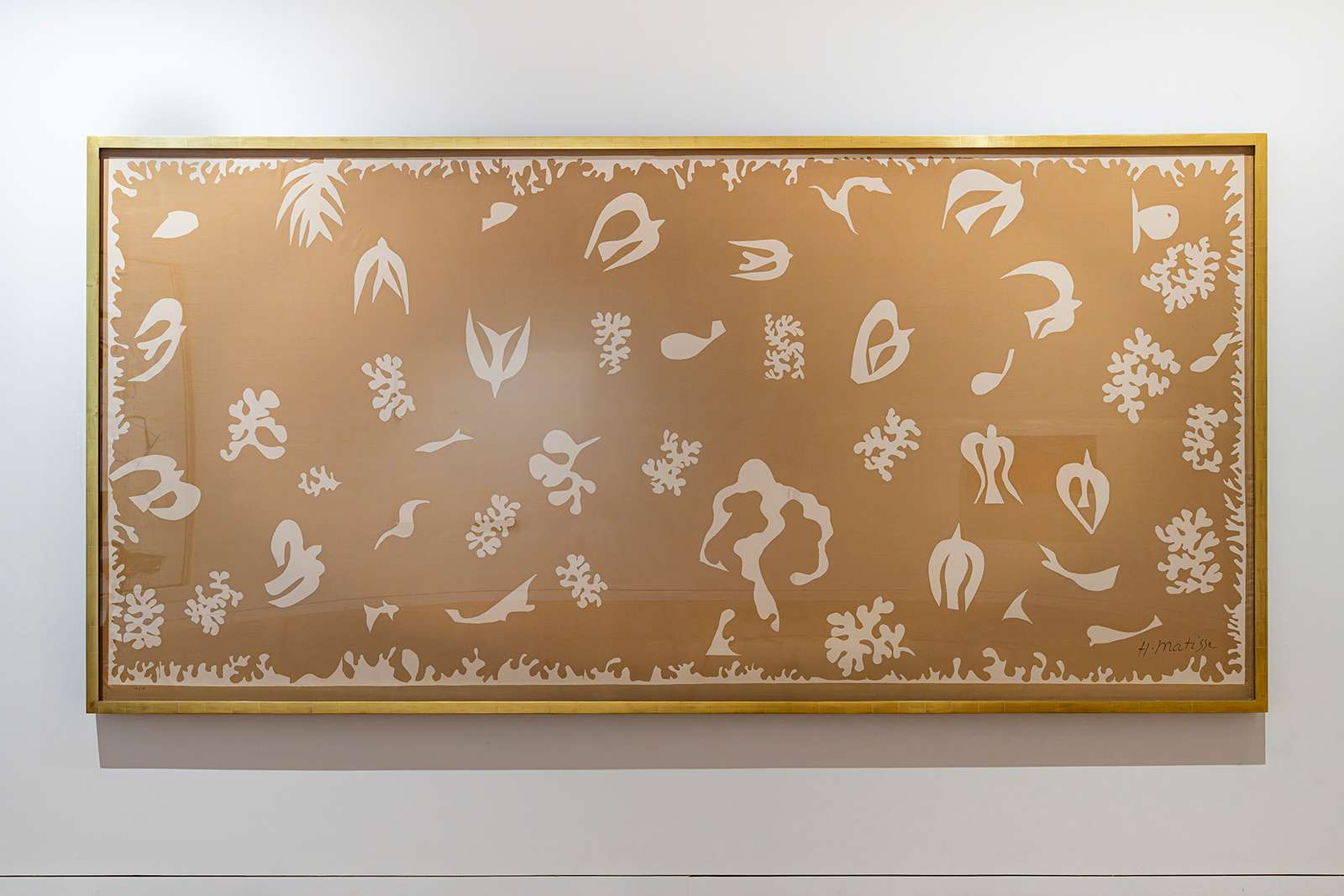
New Exhibitions Unveil the Worlds of Betsy Wyeth
Colby helps lead a new project that offers a first look at her genius and legacy as a designer
After spending decades behind the scenes promoting and managing her husband’s painting career, Betsy Wyeth is getting overdue attention for her work as an environmental designer and curator of landscapes, characterized by what one observer described as her “austere Yankee minimalism.”
In partnership with the Brandywine and Farnsworth art museums in Chadds Ford, Pa., and Rockland, Maine, respectively, the Colby College Museum of Art recently opened the exhibition By Design: The Worlds of Betsy James Wyeth. Colby’s presentation is on view through Nov. 2 in the museum’s Joan Dignam Schmaltz Gallery of Art at the Paul J. Schupf Art Center in downtown Waterville.
Betsy Wyeth, who died in 2020, declined credit for her husband Andrew Wyeth’s success, though it is well understood that she was his loyal muse, fierce advocate, demanding critic, and shrewd business manager. Presented in association with the Wyeth Foundation for American Art, these linked exhibitions are the first to examine her wide-ranging practice as a designer of complex environments—sculpting the landscapes and environments in Maine and Pennsylvania that defined the painter’s palette, sharpened his vision, and expanded his imagination.
So tangible was her influence, some say she could have cosigned her husband’s paintings.
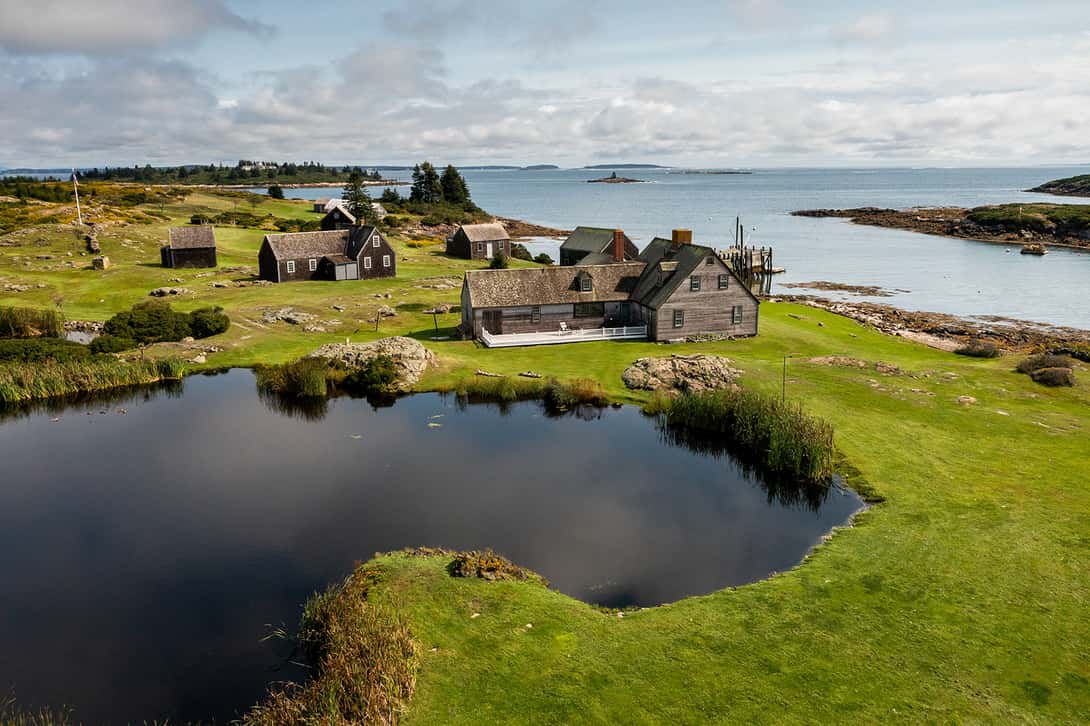
The Colby Museum portion of the project explores the multilayered sites of Allen and Benner islands in Muscongus Bay, Maine. Betsy Wyeth purchased Allen in 1979 and Benner in 1990, and shaped them over the decades with her vision for architecture, landscape design, and interior design. The College acquired the islands in 2022 and operates them as the Island Campus, a year-round multidisciplinary hub for scientific research, arts, and creative inspiration.
The Colby exhibition spotlights artwork by contemporary artists Mandy Lamb, Linda Nguyen Lopez, Elaine K. Ng, and Claire Pentecost, who created work in response to time in residence on the islands. Their work is complemented and contextualized by Betsy Wyeth’s archival and ephemeral materials, including a childhood journal and handwritten sticky notes that she left for herself, as well as watercolors that Andrew Wyeth painted on the islands.
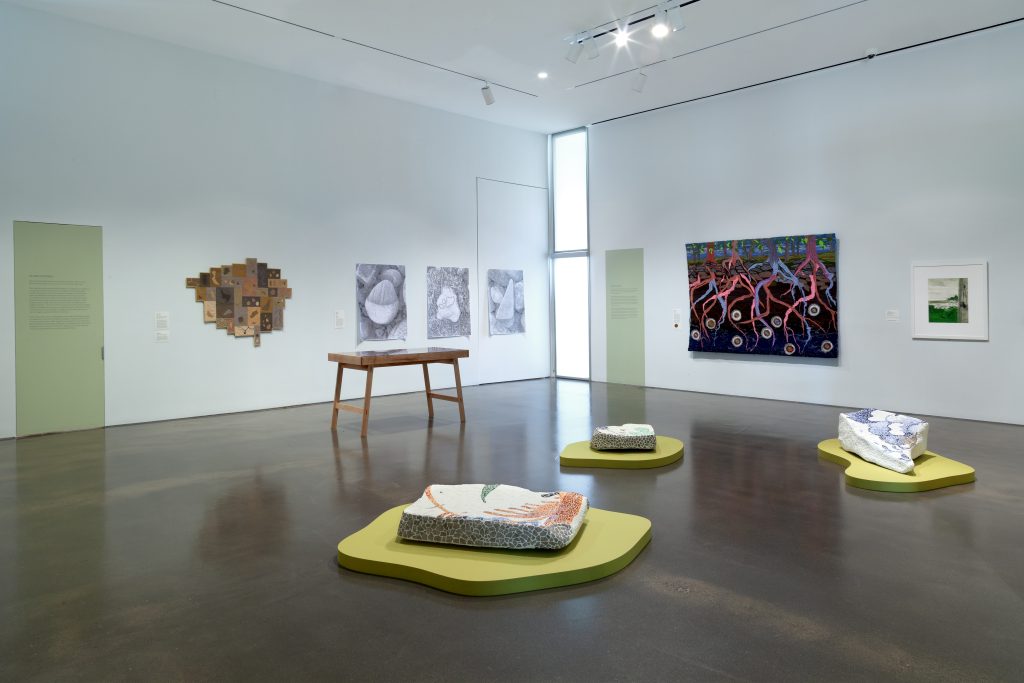
Taken together, the contemporary work, watercolors, and other materials demonstrate how people and places can transform each other, across time and place, said Kendall DeBoer, assistant curator of modern and contemporary art for the Colby Museum.
Determining how to reflect the atmosphere of the islands and translate Betsy Wyeth’s personal and aesthetic vision on her own terms was the challenge, particularly given that she shied away from the spotlight and created environments that were experiential, immersive, and closely associated with the widely recognized legacy of her husband.
“It’s an interesting puzzle, because there is no way for the College to be able to take every single person out on the islands, but we wanted to bring what it feels like to be in that atmosphere here to Waterville,” DeBoer said. “When these islands are associated with an artist who is larger than life, like Andrew Wyeth, there is the challenge of getting people to look at the islands themselves and how these islands and Betsy Wyeth worked in tandem to create a beautiful, special, and collaborative world.”
The exhibitions are on view simultaneously, each specific to prominent spaces within the Wyeth world. The Brandywine Museum of Art in Chadds Ford focuses on Betsy Wyeth’s vision of restoring the historic Brinton’s Mill, a grist mill where the Wyeths resided for many years in Pennsylvania. The Farnsworth Art Museum in Rockland highlights her achievements at Broad Cove Farm in Cushing and Southern Island off the coast of Tenants Harbor in St. George, Maine.
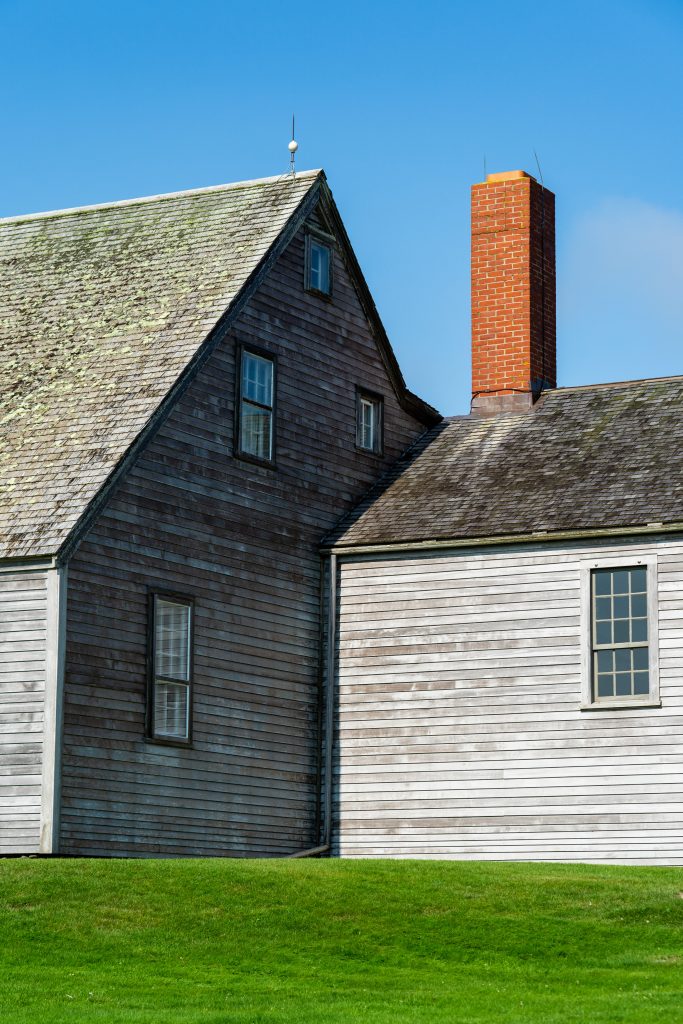
But it was on Allen and Benner islands off the coast of nearby Port Clyde where Betsy Wyeth flourished. The islands are considered her magnum opus—her masterwork.
And she knew it. She once described her island work as “my tempera,” a reference to the painting medium of her husband’s most-loved masterpieces. On the gallery wall is a quote she gave the Island Journal in 2001: “After over forty years of strictly adhering to the Wyeth rule that only a location where one grew up was worthy of deep significance, I broke away and created my own world on my islands.”
Shared sensibilities
Ensconced on the islands, Betsy Wyeth delved into their cultural histories and planned their futures. She adapted existing structures, transported historic buildings from the mainland, and built new buildings with salvaged materials.
On Benner, she created private domestic spaces. On Allen, which is much larger and more vast, she built roads, dug ponds, and cleared meadows. She commissioned archaeological excavations to better understand the history and created infrastructure for farming, livestock grazing, and fishing.
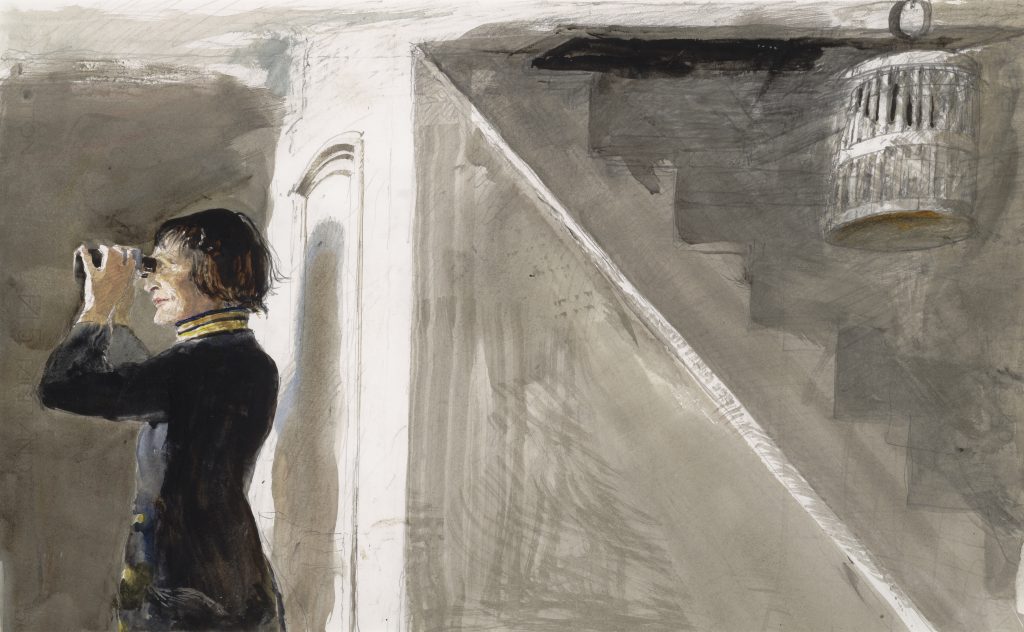
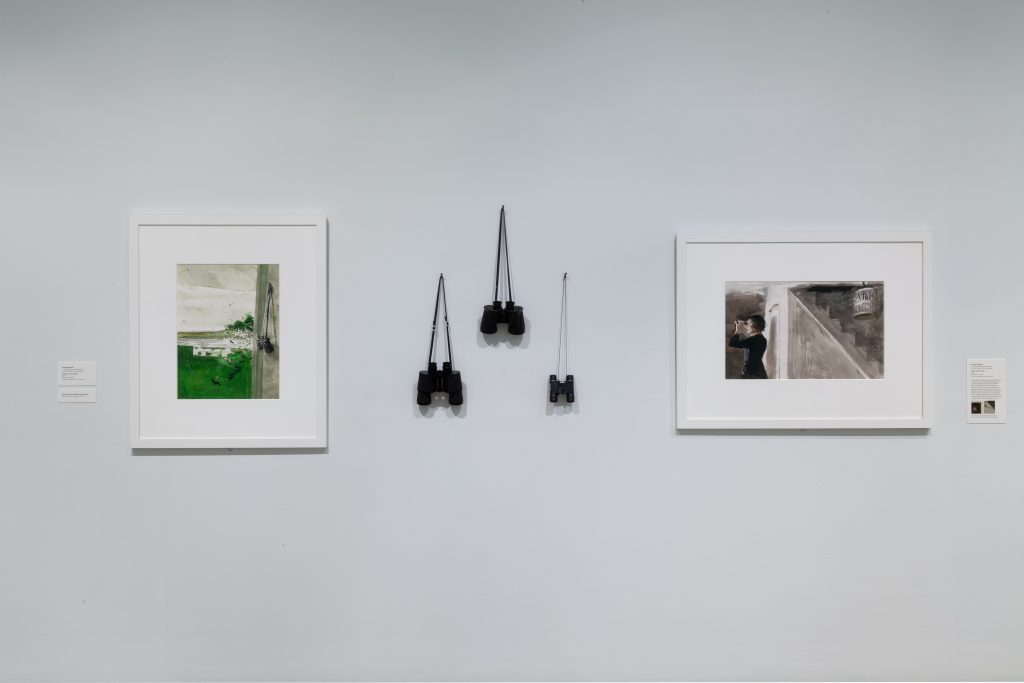
The two islands are linked by geography and Betsy Wyeth’s vision. DeBoer described Betsy’s work on the islands as the creation of “desire paths”—literal paths that she made to traverse the landscape and conceptual paths that she created and followed throughout her time on the islands.
DeBoer described a desire path as a route that deviates from an established path. Metaphorically, it means choosing to pursue ambitions or dreams that go against what is expected or what has been done before. The four contemporary artists followed in Betsy Wyeth’s footsteps while treading their own desire paths.
“In order for a desire path to become a real path, people have to take care of it. I often think of this project as Betsy following her desire path, and then people who are invested in the Wyeth legacy or the Wyeths themselves are maintaining and taking care of this desire path. When we visit, we are able to see what she left behind and maybe create our own desire paths.”
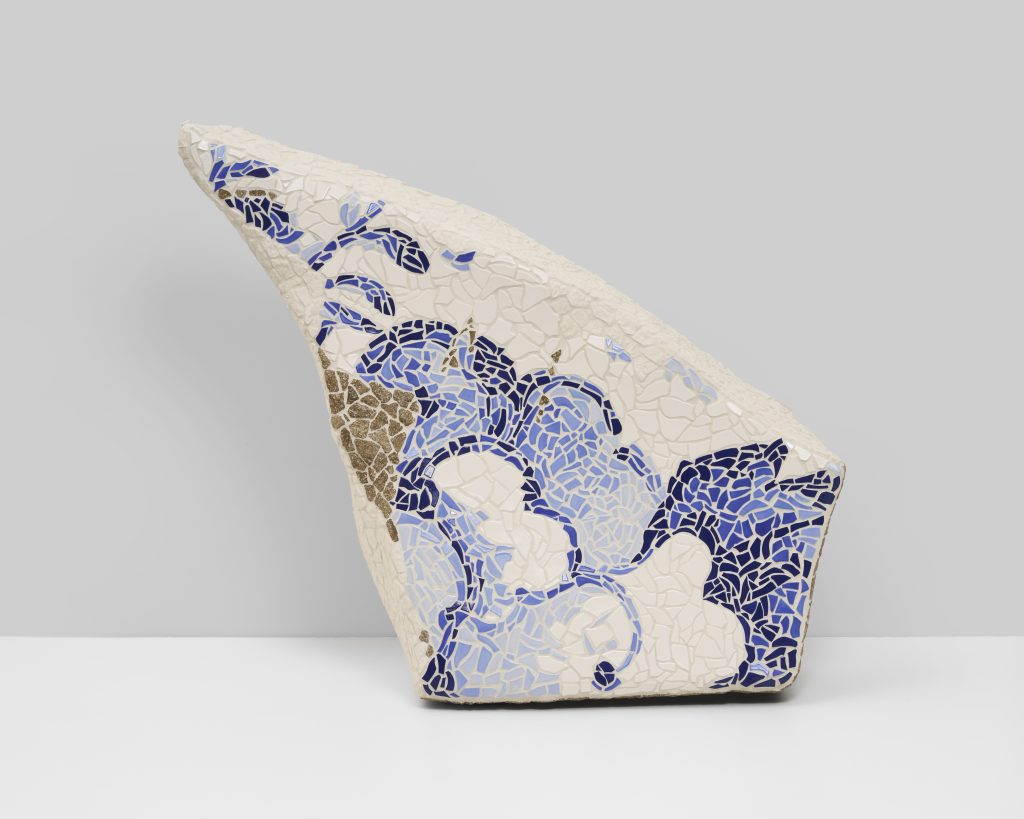
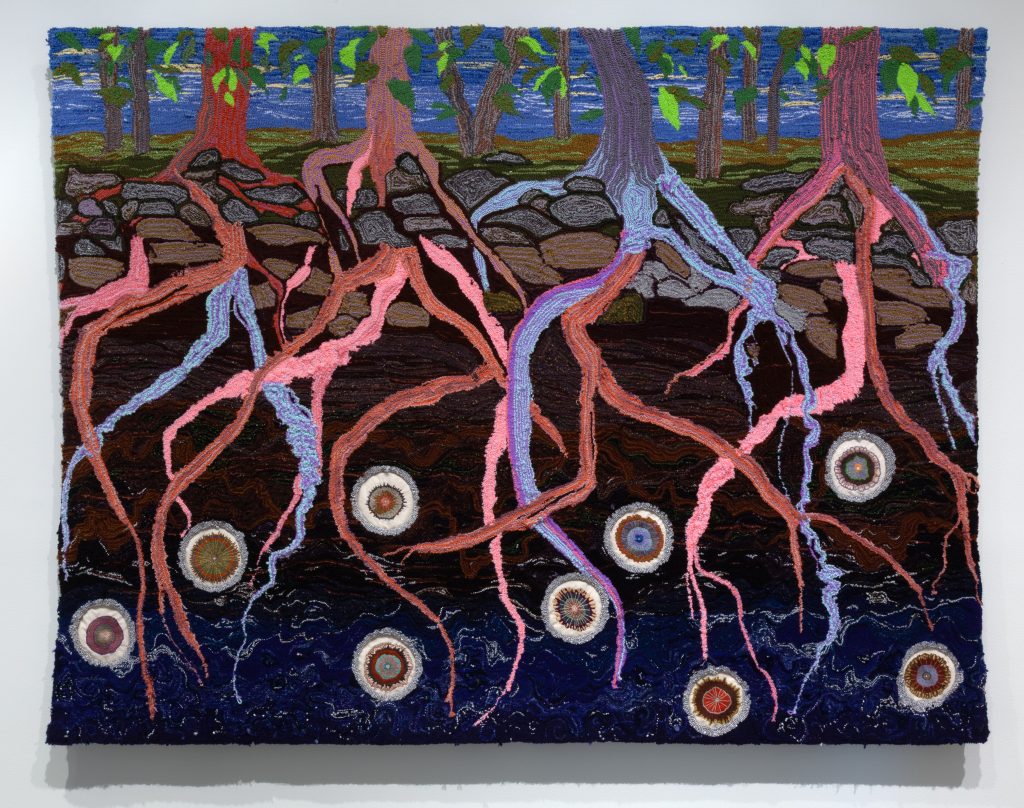
During their residencies, the Colby-commissioned artists sought out and incorporated traces of Betsy Wyeth in their new work, which tells a range of island stories. Lamb created a photographic series of vignettes. Lopez used small shards of pottery collected by Betsy Wyeth to inspire large-scale ceramic sculptures. Pentecost embroidered island soil samples on a monumental textile, referencing Wyeth’s fiber arts practice and the old-growth birch forests on Allen Island. For her hand-sewn textile wall hanging, titled Here Be Sheep, Ng used the natural landmarks of the islands to inspire her shapes and form, and gathered materials such as bayberry, fern, and goldenrod to create dyes for her color palette.
Responding to place
DeBoer’s invitation to spend immersive time on the islands appealed to Ng, who lives on six acres of rural landscape in Hope, Maine, and has dedicated part of her artistic practice to responding to environments.
“The ability to respond to a place is a dream for somebody who works like me,” said Ng, who has returned to the islands during all seasons over two years and continues to create new work based on her time in residence there. “I am somebody who needs to watch a thing for a long time in order to understand it.”
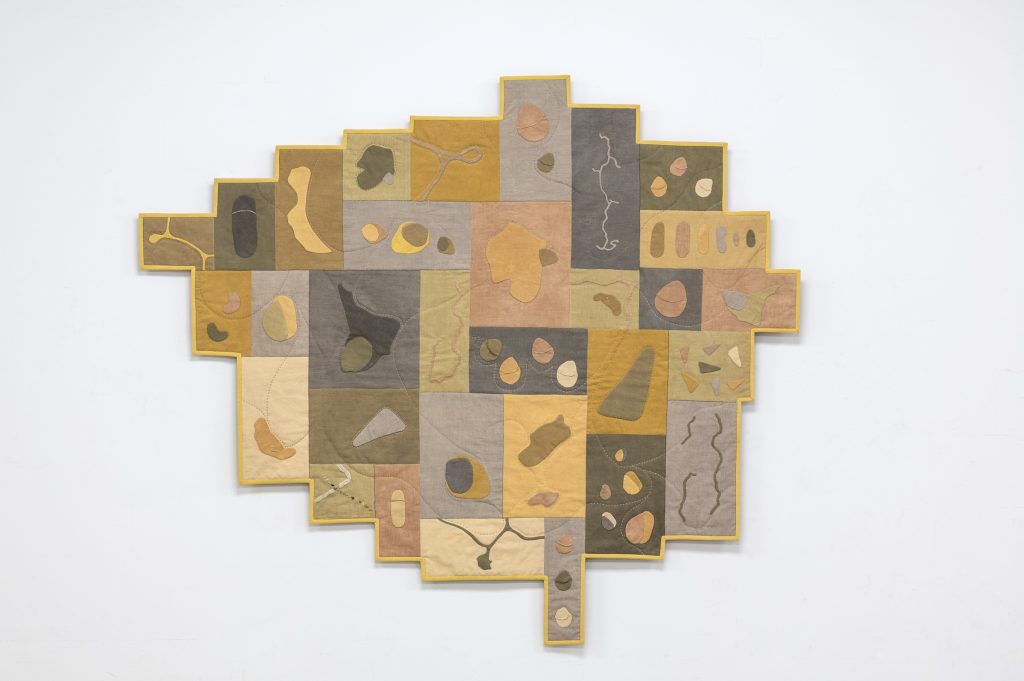
For her contribution to the exhibition, Ng created a quilt-like wall hanging resembling a map, sewn from individual textiles dyed with island plants, with each piece telling its own visual story. The forms she chose reflect the environment she encountered. Some represent rocks or outcroppings. Others are aerial views of trails, ponds, ledges, and other features.
During her research, Ng interviewed people who knew Betsy Wyeth well and worked alongside her for many years. She wanted to hear their stories and learn about their favorite or meaningful locations on the island.
‘That is a question we were all wondering—would Betsy approve? I think she would certainly respect what I am doing, because I am approaching the islands with similar interests that she might have had in studying the place. Just really trying to get to know it and respond to it.’
Artist Elaine K. Ng
Ng’s piece feels like a visual narration of the island’s natural histories and stories as she understood them through her experiences. “I like the idea of fabric holding stories and of patterns holding stories,” she said.
Her colors, drawn from the island environment by the plants she selected to use for her dyes, mirror the island itself. DeBoer noted the similarities between the colors of Ng’s textile piece and the Andrew Wyeth watercolors hanging on the opposite side of the gallery. “They are the same colors,” she said. “The artists are looking at the same islands, responding to the same environment.”
As she settled in, Ng began to feel a sense of understanding about Betsy Wyeth and her relationship with the islands. Betsy Wyeth studied the islands, observed them deeply, and then responded to them with her own artistic flair. Ng and her colleagues did the same.
They often wondered, what would Betsy think about this project?
“That is a question we were all wondering—would Betsy approve? I think she would certainly respect what I am doing, because I am approaching the islands with similar interests that she might have had in studying the place. Just really trying to get to know it and respond to it.”
‘A homecoming for me’
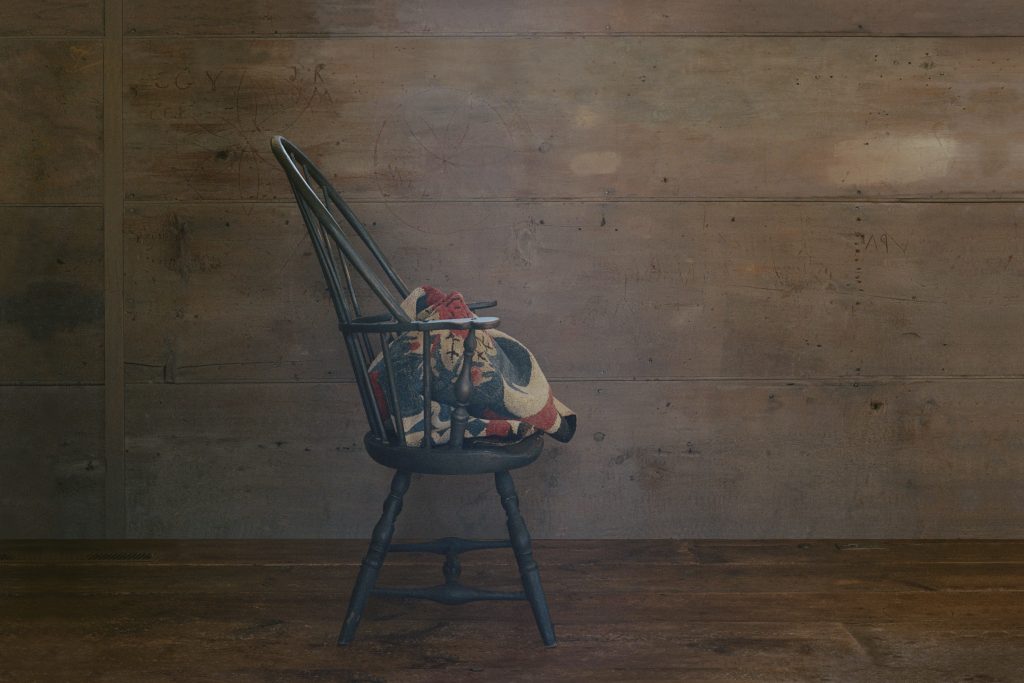
Lamb grew up in a Shaker community northwest of Boston, where her family made Colonial reproduction furniture and collected antiques. She admired the paintings of Andrew Wyeth from a young age and related to his subject matter. “Andrew Wyeth was the first artist I was ever aware of as a child,” she said. “My parents were big fans.”
So when Lamb experienced the environments that Betsy Wyeth created—when she ate from her dishes, looked out her windows, walked on her footpaths—she felt at ease. “It was a homecoming for me. The buildings, the landscape, they were all reminiscent of my childhood. All the bowls and ceramics that Betsy collected were the same things my mom collected. It was eerie for me, honestly. It was like walking into one of my family homes. It was incredible.”
She felt kinship in another way. Lamb purchased and restored a former hydroelectric plant in Norridgewock, Maine, and has repurposed it as a comfortable, contemporary living space. It was an ambitious, bold project. On Allen and Benner islands, she appreciated the scope of the projects that Betsy Wyeth tackled, including disassembling and moving massive structures from the mainland and repurposing them on the islands.
Spending time in the lingering presence of the Wyeths helped Lamb realize, in tangible ways, Betsy Wyeth’s direct influence not just on her husband’s career and business affairs but also, often, on the decisions he made about what to paint. “I always knew she was a muse, and her presence was in his paintings. But the extent to which she created these environments and her love of preserving and rebuilding these structures was a revelation,” Lamb said. “Her attention to detail was astounding. I appreciate everything she did out there.”
An eerie presence
Prior to arriving on the islands, Lamb had noticed and taken an interest in the amount of cobalt blue and aquamarine that Andrew Wyeth used in his paintings. She first noticed the color in a series of abstract watercolors she had seen at a previous exhibition at the Farnsworth.
“Then I started noticing it everywhere,” she said. “I became fascinated with it, finding these blues where you did not expect to see blue.”
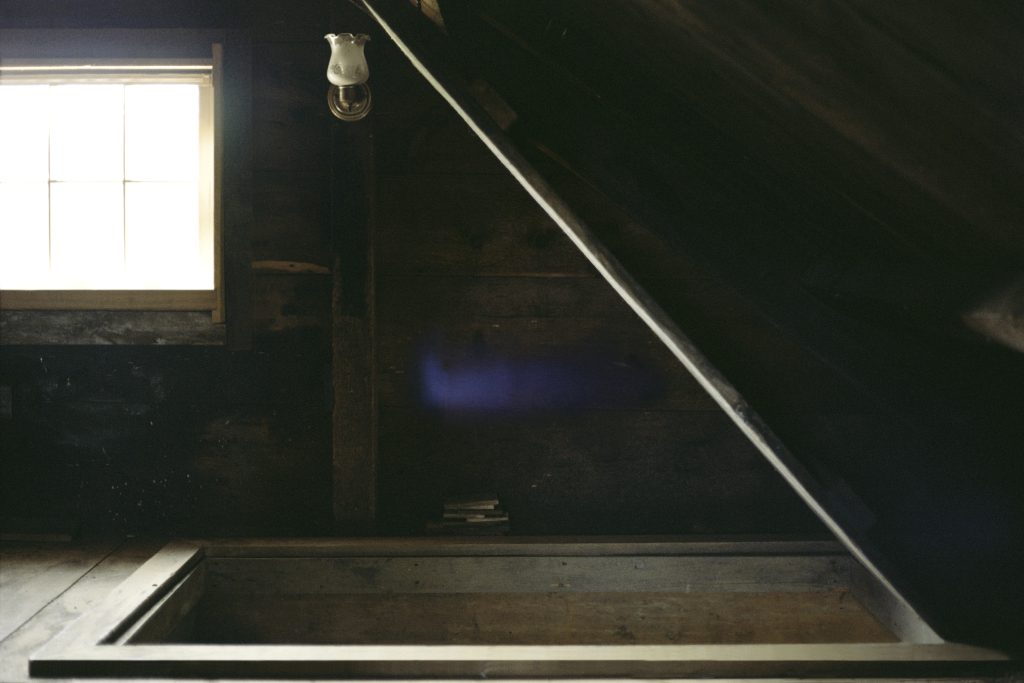
Inspired, Lamb asked permission to place subtle hints of blue in the island landscape for her photographs. She deployed temporary, eco-friendly, and nontoxic blue paints, a blue fishing net, and blue mussel shells, and photographed them with 35-mm film.
She also spent time in the attic of Andrew Wyeth’s studio on Benner Island, named the Wharf House. The studio was a historic building on the island that Betsy Wyeth salvaged for use as a studio. When Lamb developed her film back in Norridgewock, she noticed a mysterious splash of blue light floating in the center of the image.
It was perfect Wyeth-blue and used the way he might have. Which is to say, in an unexpected place.
A ghost from the past?
“I am sure it was a lens flare,” Lamb said. “But it was amazing. It stopped me in my tracks. It floored me to see it there, and it felt like an honor. I do not believe in ghosts, but it felt special. Like a gift of some sort.”