With Deep Colby Connections, a Whistler Retrospective is a ‘Luscious, Seductive Blockbuster’
The Colby Museum and Lunder Collection are featured in a landmark exhibition in London
LONDON—As it often does, the love affair started with a beautiful picture.
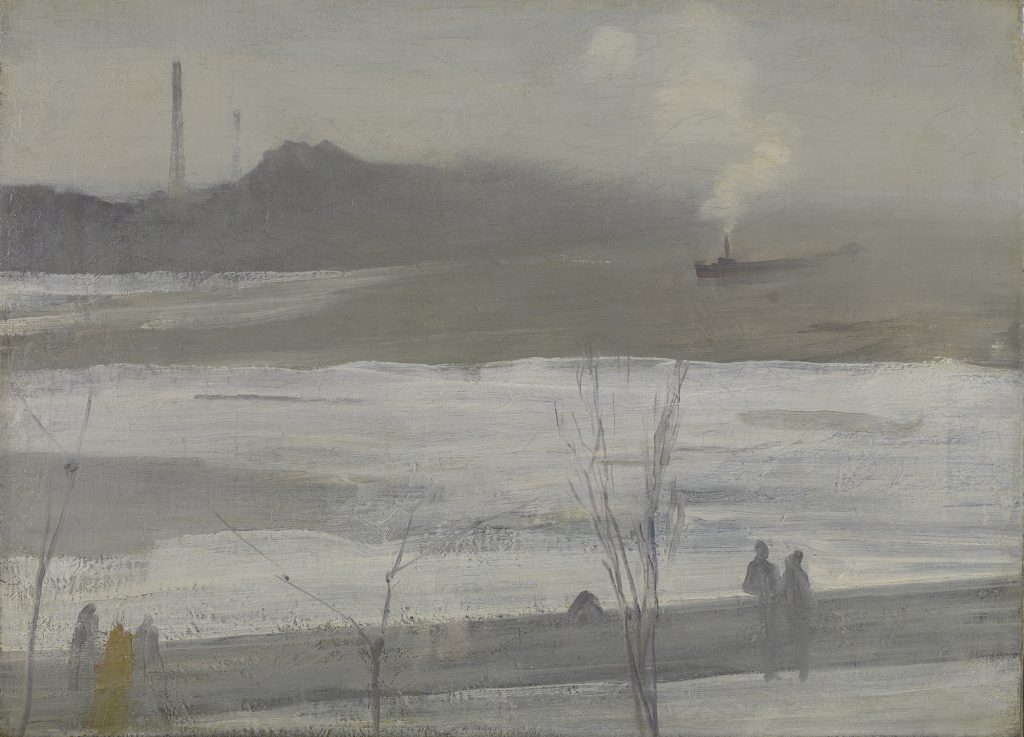
During the early stages of building their art collection, Peter and Paula Lunder had the opportunity to purchase the oil painting Chelsea in Ice by James McNeill Whistler during an auction. In the atmospheric painting, Whistler captures a frigid day on the River Thames in London, emphasizing the gray and white tones of the icy water and distant factories.
“There were just a couple of bids, and Peter said, ‘That’s a beautiful painting. Let’s buy it.’ And we did,” Paula Lunder recalled. “We had been collecting art before then, but with that painting, we took a step up. Way up. It meant that we were buying things that were recognized.”
The painting hung in the Lunders’ home for years for their personal enjoyment before being included in their promised gift of art in 2007 that established the Lunder Collection at the Colby College Museum of Art. The Lunder Collection now includes nearly 400 works of art by Whistler, spanning the artist’s entire career.
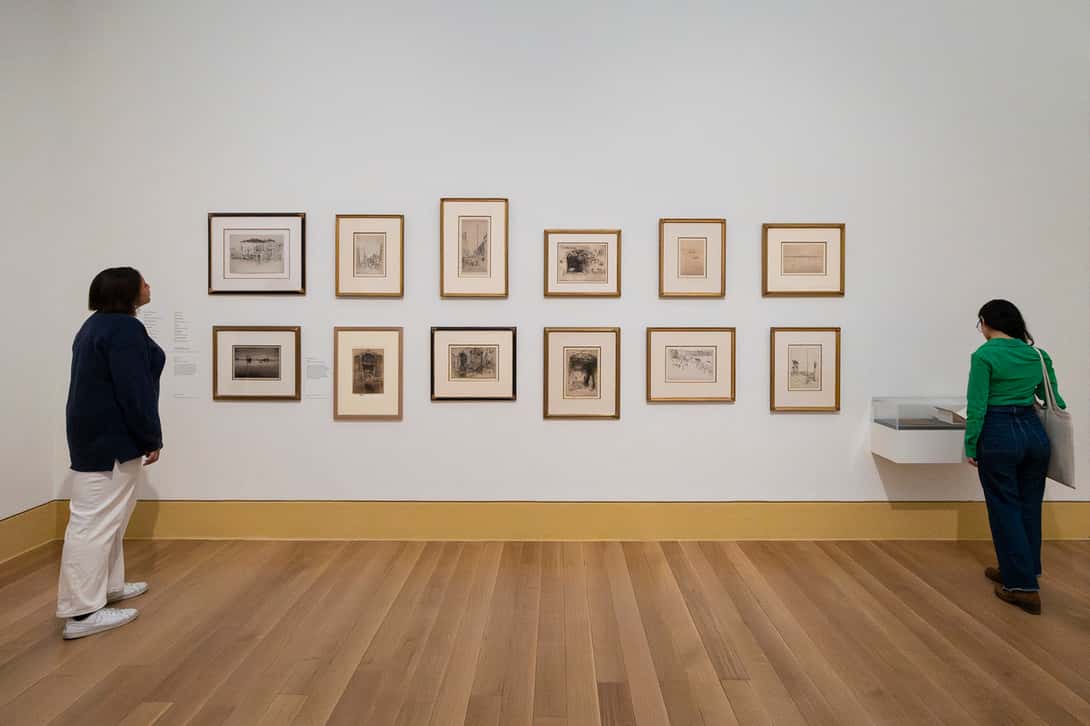
The Lunders’ enchantment with Whistler led to Colby’s emergence as a center of Whistler scholarship, most recently culminating in the inclusion of 13 paintings, drawings, and prints from Colby’s Lunder Collection in the newly opened landmark exhibition James McNeill Whistler at Tate Britain in London. Chelsea in Ice, which Whistler painted in 1864, is among the paintings from the Colby Museum in the exhibition, which has received widespread international attention in both the mainstream media and the art-world press since its mid-May opening.
The exhibition is dramatic, evocative, and revealing. The Guardian called it a “luscious, seductive blockbuster.” The New York Times noted Whistler’s “gauzy paintings and some of the provocative ideas that drove him,” while the art critic for the Telegraph of London was left “spellbound.”
Elisa Germán, Colby’s Lunder Curator of Works on Paper and Whistler Studies, curated the opening section of the London exhibition dedicated to Whistler’s origin story. She contributed a catalog essay focusing on Whistler’s upbringing in America and his formative years as a cadet at West Point, where an art instructor later described his student as a “gentleman of the nocturnes in blue and silver” with “a fine eye for color.”
Scheduled to travel this autumn to the Van Gogh Museum in Amsterdam, which co-organized the retrospective with the Tate, the exhibition spotlights the Lunder Foundation’s critical role in the conservation and technical study of several paintings in the exhibition through a two-year project known as “Whistler’s Finish.” A collaboration between Tate Britain, Colby Museum, and the Hunterian at the University of Glasgow, Whistler’s Finish is the first in-depth technical examination of Whistler’s mid-career paintings, drawn from these collections.
The project’s name refers to the painted surface, or finish, of Whistler’s work. His finish has been a central issue in the writing and critical reception for more than a century. This project draws on evidence from the paintings themselves, examining Whistler’s use of materials and techniques, addressing underlying condition issues, and seeking new insights into his process to inform future conservation efforts.
This effort, in tandem with Tate Britain curators’ success in securing loans of key paintings from multiple international museums and private collections, elevates this exhibition from a summer blockbuster to one with generational impact. The first Whistler retrospective in 30 years moves beyond presenting beautiful paintings to provide important new insights into Whistler’s role and techniques as an innovator, supported by films documenting the restoration process and open-access convenings that encourage shared scholarship. Following the opening, Colby’s Lunder Institute for American Art hosted a program at Tate Britain about the artist’s brief but pivotal time in Chile.
Julian Raby, director emeritus of the National Museum of Asian Art of the Smithsonian Institution and a key collaborator with Colby in establishing the Lunder Consortium for Whistler Studies in 2010, credited the collective momentum of global partners over many years, led by the Lunders and Colby Museum, for the scholarship and research that ultimately resulted in what he described as the “transformative” restoration of several monumental paintings in the James McNeill Whistler exhibition.
From 2010 to 2024, the Lunder Consortium for Whistler Studies—a multi-institute partnership of the Colby Museum, the Art Institute of Chicago, the Smithsonian Institution’s National Museum of Asian Art (formerly Freer/Sackler Galleries), and the Hunterian at the University of Glasgow—generated foundational research that led to the current exhibition at Tate Britain and the Whistler’s Finish project. In 2024, this initiative shifted to a project-based approach for Whistler’s studies, with Colby’s collaboration with Tate as the first major example.
“It’s just wonderful to see how Colby has developed into an epicenter of Whistler studies,” said Raby, who attended the opening.
‘Art for art’s sake’
Tate Britain welcomed Peter Lunder ’56, D.F.A. ’98, and Paula Lunder D.F.A. ’98 to the opening, along with multiple generations of their family, Colby President David A. Greene, Jacqueline Terrassa, the Carolyn Muzzy Director of the Colby College Museum of Art, and many others.
“We’re so incredibly grateful to Colby and the Lunders, and we are honored they made the trip,” said Carol Jacobi of Tate Britain, the show’s curator. “They’re absolutely amazing, and they’ve been amazing to work with. I think one of the things that’s been lovely about this exhibition is that the community of Whistler enthusiasts is such a lovely group of people. And that’s what our fundamental bond is: We love Whistler. We all love Whistler.”
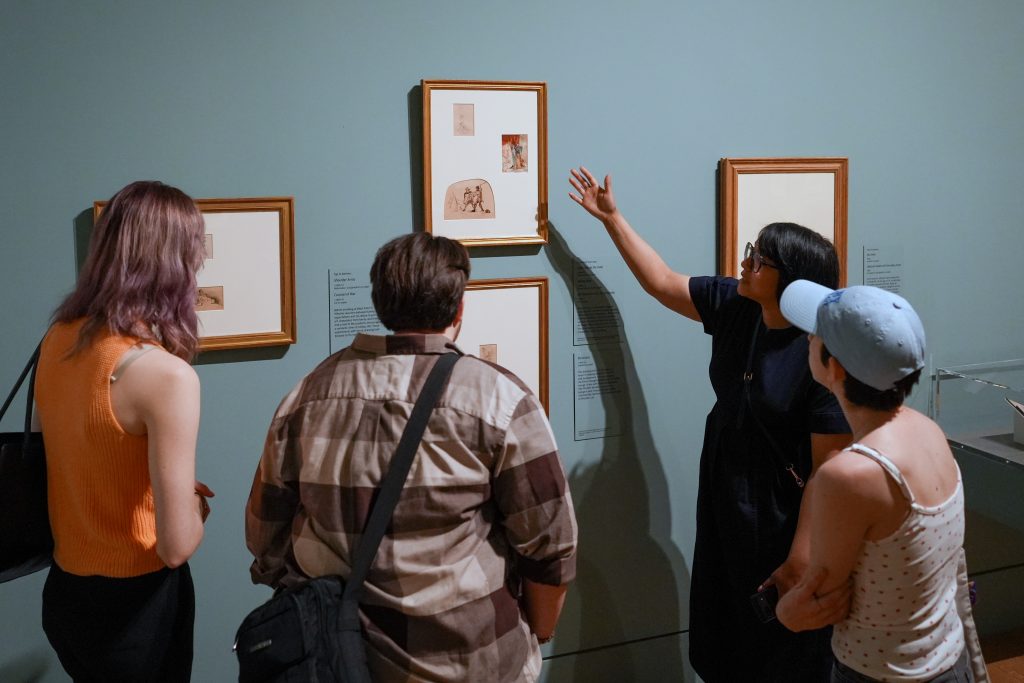
Colby is the third-largest institutional contributor to the exhibition, affirming the significance of its Whistler holdings.
“For more than 15 years, the Colby Museum has been a global leader in collecting, studying, and opening public access to the art of James McNeill Whistler, thanks to the visionary support of Peter and Paula Lunder,” Terrassa said. “Tate’s exhibition and the related conservation research project provided an occasion to further strengthen our role in the field, while also offering an ideal set of circumstances to advance our mission of research, education, and access. It has allowed the Colby Museum to create multi-year educational pathways for Colby students, professional development opportunities for Colby Museum staff, and the kind of top-level museological partnership that is so essential for our own curators to develop path-breaking research.”
‘I think one of the things that’s been lovely about this exhibition is that the community of Whistler enthusiasts is such a lovely group of people. And that’s what our fundamental bond is: We love Whistler. We all love Whistler.’
Carol Jacobi, Tate Britain curator
Born in Lowell, Mass., in 1834, Whistler and his family lived in Russia and Europe before Whistler went off on his own and settled permanently in Paris and London. Whistler believed in “art for art’s sake,” and the Tate exhibition focuses on what Jacobi described as “his fearless pursuit of beauty.” There is a gallery dedicated to his hazy Nocturne landscapes, with each painting from the series eliciting its own mood. There’s another gallery dedicated to large-scale portraits, and many more featuring scenes and imagery from his travels and residencies across Europe.
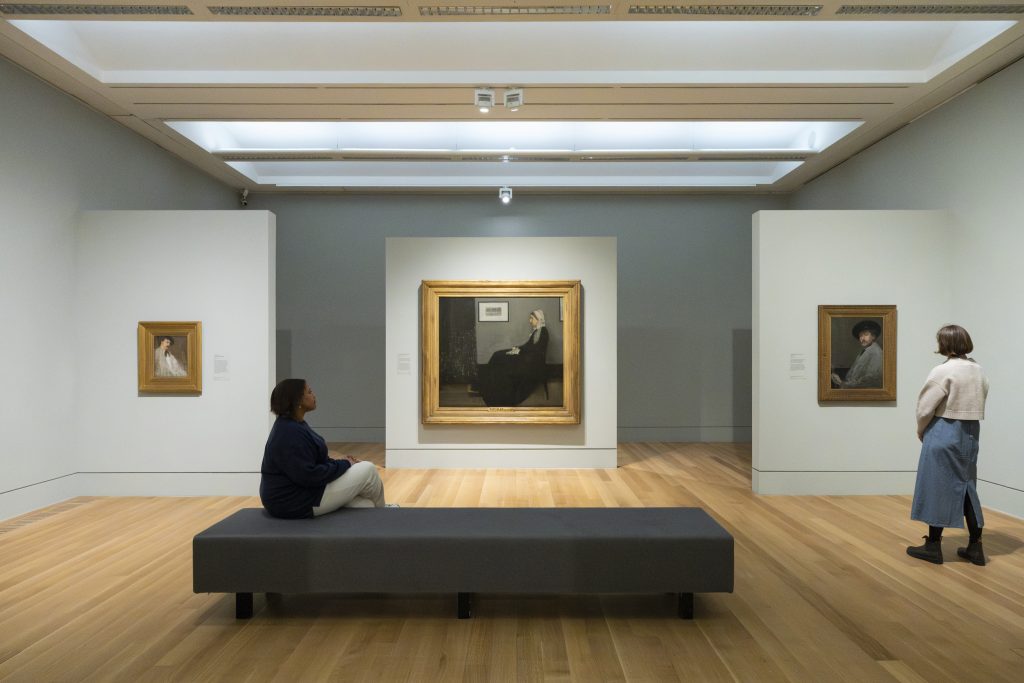
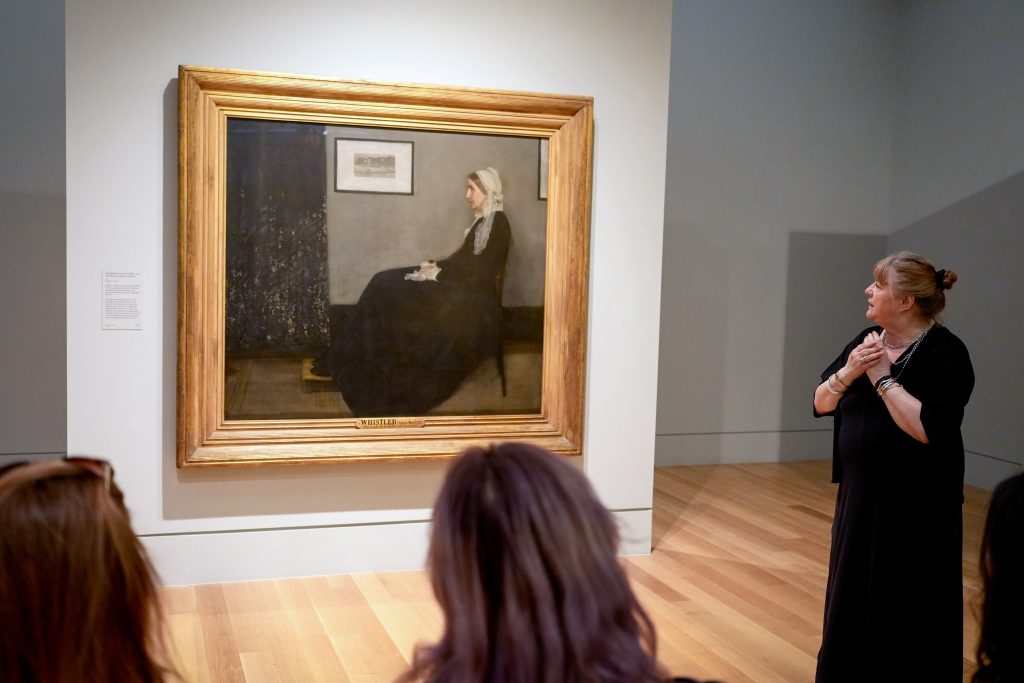
A highlight of the show is Arrangement in Grey and Black No. 1 (Portrait of the Artist’s Mother), a rare loan from the Musée d’Orsay in Paris, and hanging nearby is Chelsea in Ice in conversation with other key works created by the artist during this critical period in Europe.
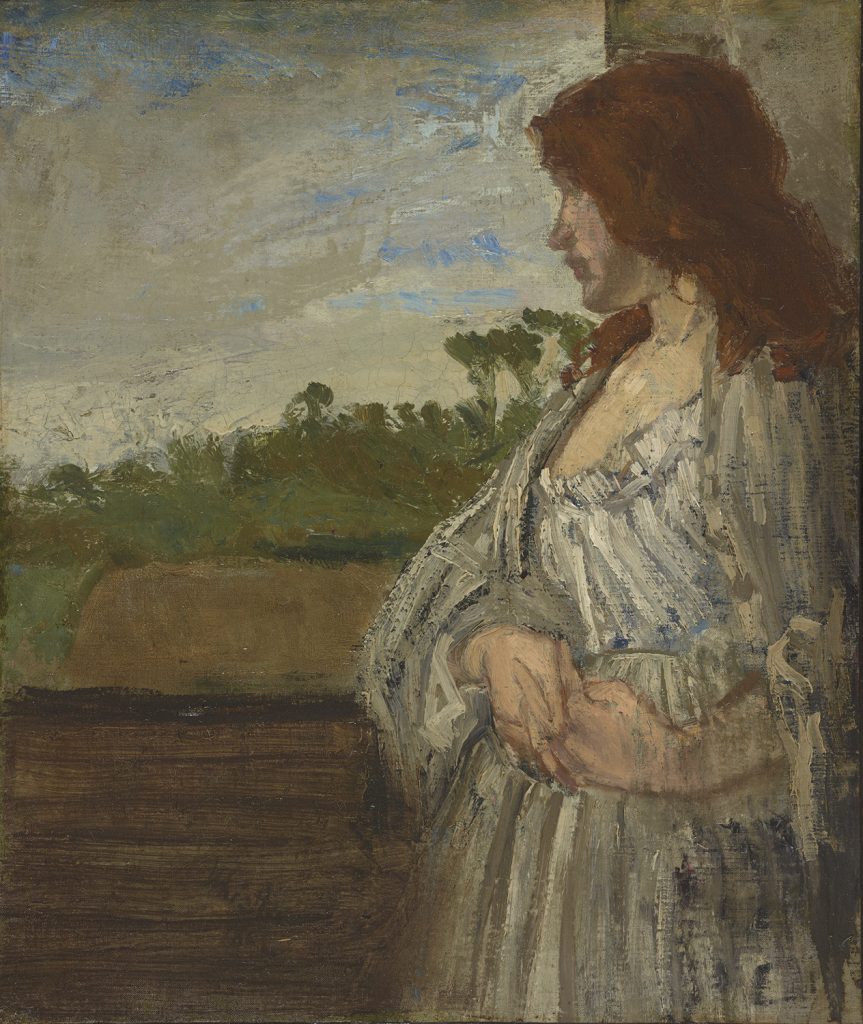
Whistler was a meticulous and innovative painter who used musical terms to name his paintings and conjure moods. A White Note (1862), another Colby painting in the exhibition that was part of Whistler’s Finish, is a three-quarter-length portrait of Joanna Hiffernan, the artist’s model and partner, standing in profile, glancing out a window. Whistler focuses on color, mood, and tonal harmony as he explores the visual variations of white tones.
Groundbreaking research
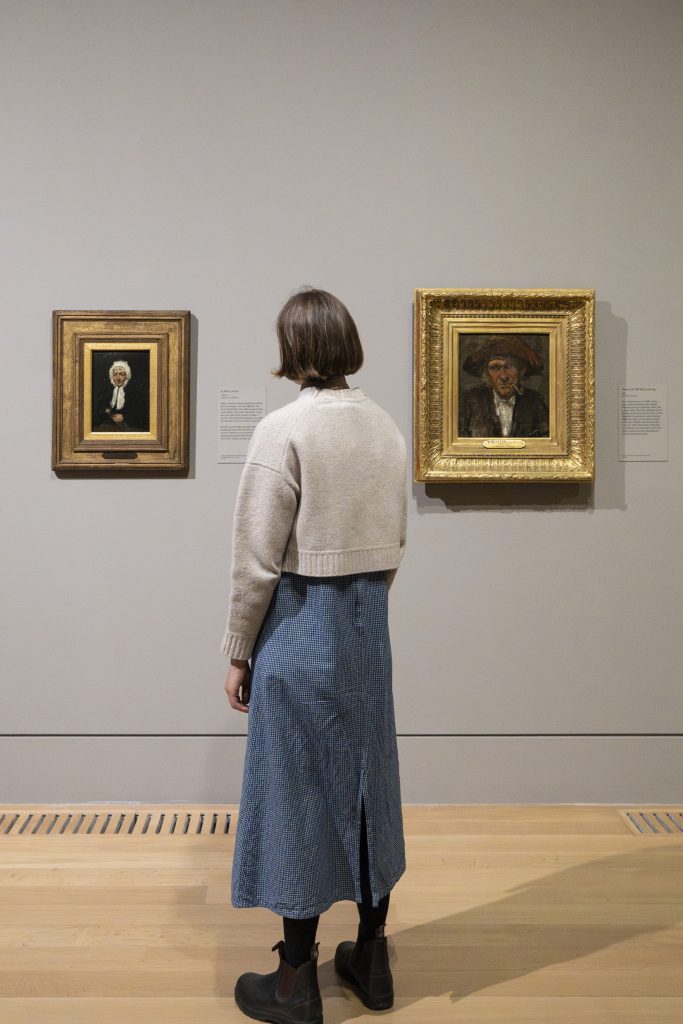
The exhibition has garnered international attention because of its lush beauty, and rightly so. But the lasting impact will be the groundbreaking research made possible by Whistler’s Finish. As an example, the Colby painting La Mère Gérard, created in 1858 when Whistler was in Paris, was instrumental in helping researchers verify his earliest known oil portrait, Head of a Peasant Woman, painted just a few years before.
This was during a time of great experimentation in his early 20s, when Whistler was moving from draftsman and etcher to painter. Conservators compared Whistler’s techniques in Head of a Peasant Woman to the brushwork and textures in La Mère Gérard, and identified Head of a Peasant Woman as the earliest surviving painting from Whistler’s Paris years, said Jane McCree, conservation manager at Tate Britain, who served as dedicated conservator for technical study on La Mère Gérard.
The two are grouped together in a series of portraits from the same period, reunited for the first time since their creation. These portraits demonstrate the artist’s transition into brushwork and color. Owned by the Hunterian at the University of Glasgow, Head of a Peasant Woman has been in storage for many years because of doubts about its authenticity. Now, because of the infrared analysis and research conducted as part of Whistler’s Finish, it’s on view, side by side with its companion and other similar paintings.
Part of the Lunders 2013 gift to Colby, La Mère Gérard is a revealing, intimate portrait of a woman casting a level gaze, “one eye sightless, the other penetrating,” according to the wall text. The yellow pansy she holds represents the flowers she sells on the street.
And then there is Chelsea in Ice, painted in 1864 and among the most important paintings in the Lunder Collection and in the exhibition. It captures a fleeting winter freeze on the Thames, with a gray-and-white palette that mirrors the gloomy conditions and the looming factories on the distant Battersea shore, as seen from Whistler’s perspective in Chelsea.
The painting was a milestone not only for the Lunder Collection, but in Whistler’s career—marking his transition from French realism toward an atmospheric style. By prioritizing color harmony and tonality over narrative detail, Chelsea in Ice laid the foundation for an aesthetic that would define his iconic nocturnes and his radical “art for art’s sake” philosophy, Jacobi said.
‘What has been especially heartening—and genuinely delightful—is seeing how beautifully the works on loan from the Lunder Collection integrate into the narrative of the exhibition.’
Elisa Germán, Colby’s Lunder Curator of Works on Paper and Whistler Studies
Germán said it was a “revelation” to witness early masterpieces like La Mère Gérard and the striking atmosphere of Chelsea in Ice hanging alongside Whistler’s earliest European paintings, as well as to see his masterful graphic works from the Lunder Collection recontextualized within a larger global dialogue.
“What has been especially heartening—and genuinely delightful—is seeing how beautifully the works on loan from the Lunder Collection integrate into the narrative of the exhibition. Spanning across a vast array of media, these pieces serve as critical touchstones for key moments in James McNeill Whistler’s trajectory,” Germán said. “Beyond their visual impact, it is thrilling to see these works play such a vital role in advancing critical scholarship and technical conservation study, offering both the public and scholars alike a deeper understanding of Whistler’s revolutionary creative process.”
Student involvement
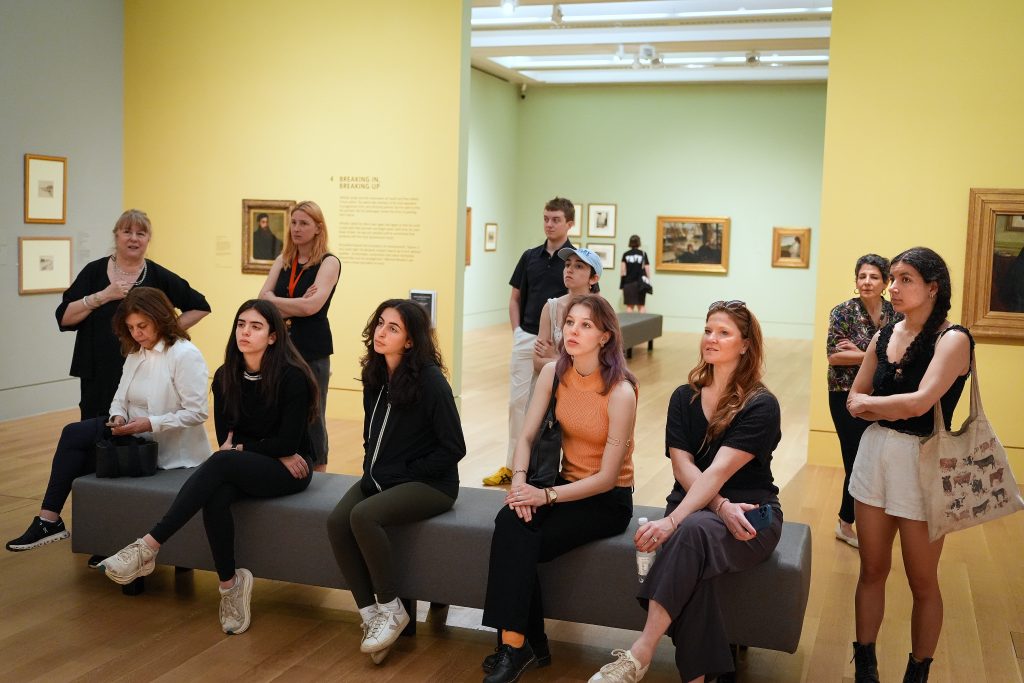
Five Colby students and the museum’s curatorial fellow participated in the London activities.
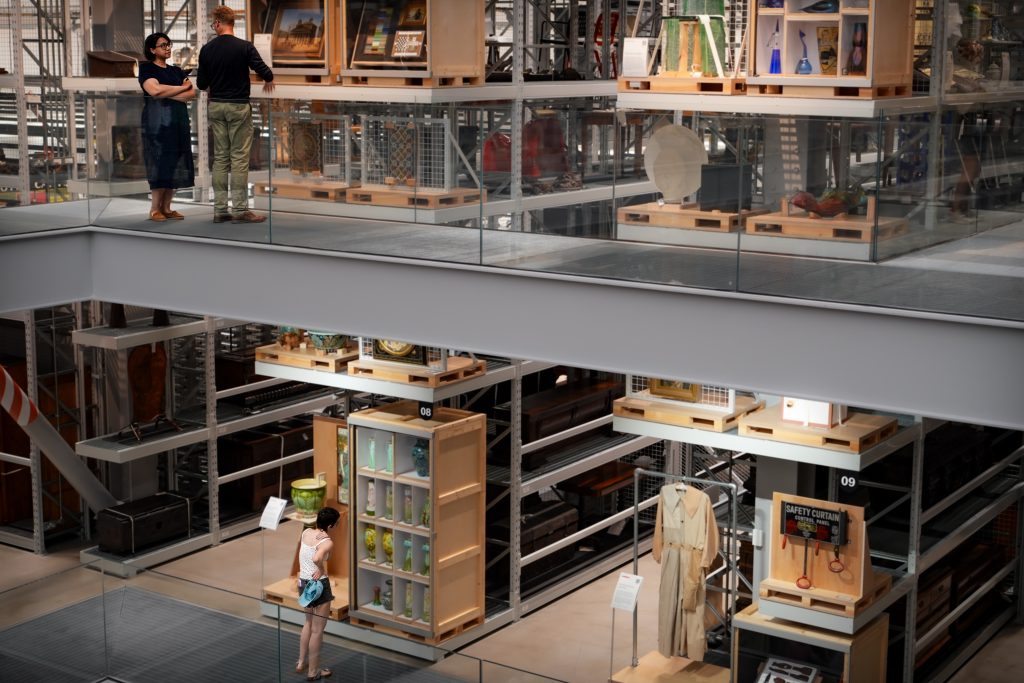
Coordinated after commencement, Colby’s academic itinerary in London, made possible through the Lyons Arts Lab in addition to the Lunder Foundation, was anchored by Lunder Institute for American Art events at Tate Britain and the Royal Academy of Arts. Students had a curator-led tour of the exhibition and received a behind-the-scenes look at the V&A East Storehouse, a massive, revolutionary art-storage facility. They also attended a performance of the play Mother Courage at the historic Globe Theatre.
The momentum behind Whistler studies at Colby continues. Following this year’s international exhibition, the Colby Museum is organizing an exhibition and publication on Whistler’s early life and artistic development in the United States. It will open in Waterville in summer 2027.
Curated by Germán, this will be the first major exhibition to explore this period, including the artist’s adolescence and early adulthood in New England and the Mid-Atlantic region, his education and artistic training at West Point and exposure to Hudson River School painters, and his eventual move overseas.
The timing of the Colby Museum exhibition coincides with the 20th anniversary of the Lunder’s first promised gift of the Lunder Collection and the 10th anniversaries of both the Lunder Institute for American Art and the second major Lunder Collection gift, which added more than 1,100 artworks to the museum.
The Colby exhibition will also present the museum’s foundational Whistler paintings in a fresh context after they return from their European tour.
“The Colby exhibition will feature dynamic components that bring the public directly into the conservation study,” Germán said. “Visitors will get to see exactly what the Whistler’s Finish study uncovered beneath the surface of the paint, offering an immersive, firsthand look at the technical secrets and creative evolution of a young artist on the brink of changing modern art history.”