A Watson Fellowship: An Investment in One’s Future
Students vie for national fellowships to transform personal interests into global, independent travel
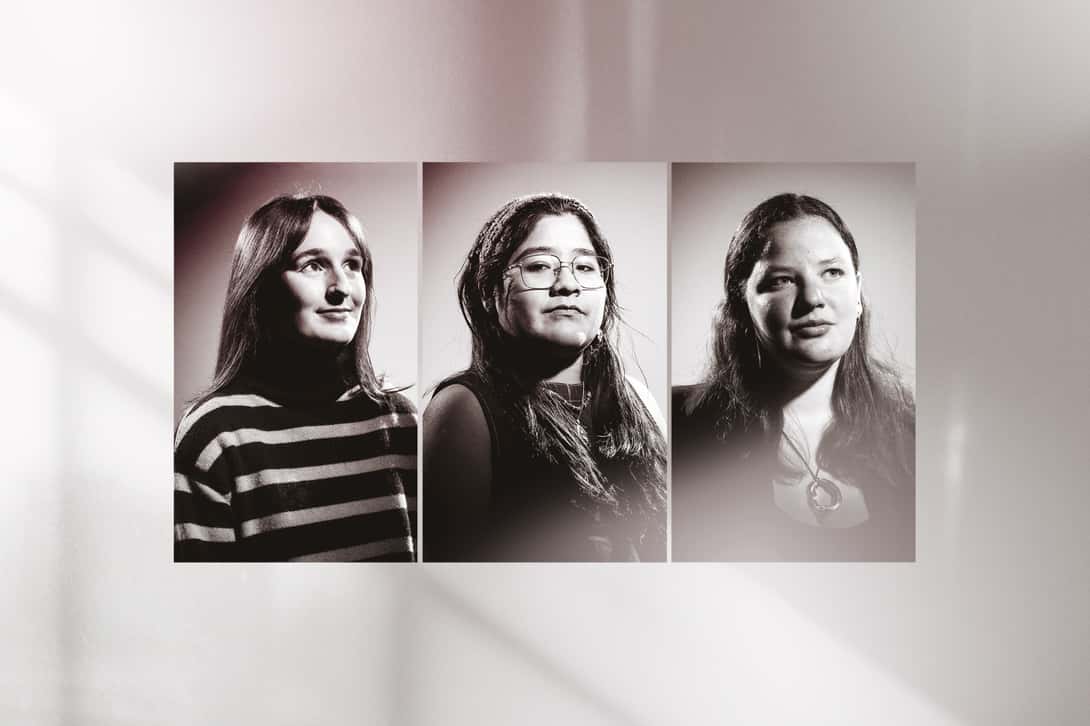
The Watson Fellowship asks a beautiful question. If you could design a year of your life with no constraints, what would you want to do?
It’s a question that not many people get to ask themselves.
Those who do have a chance at winning a Watson Fellowship, a one-year, $40,000 grant available to graduating seniors from select colleges. The fellowship allows for the pursuit of a personal project through independent travel outside the United States.
Ines Benjelloun ’26, Ana Cris Carhuavilca Álvarez ’26, and Rachel Nicholas ’26 asked themselves the question and are now Colby’s 2026 Watson Fellowship finalists. The finalists compete nationally with candidates representing all 41 of the Watson Foundation’s partner colleges. On March 13, they will learn whether they are one of 40 national candidates selected to receive the prestigious fellowship.
“The fellowship empowers seniors to transform their deepest interests into a year of purposeful, independent exploration,” said Véronique Plesch, the James M. Gillespie Professor of Art and chair of Colby’s Watson Selection Committee. “By navigating the world on their own terms, students test their potential and gain the confidence and perspective necessary to become the humane and effective leaders our world needs today,” Plesch said.
Colby’s finalists were chosen from a pool of 10 applicants by a committee that included Plesch; Gail Carlson, associate professor of environmental studies; Flavien Falantin, assistant professor of French; and Carrie LeVan, Montgoris Family Associate Professor of Government.
This year’s finalists are international students who attended one of the 18 United World College schools during high school. UWC’s international experience, coupled with global experiences at Colby, prepared the finalists for the rigors of a Watson Fellowship.
“It’s a non-traditional path, and I think Colby has taught us so much about trying different things before you carve yourself into one specific place,” said Benjelloun. “It feels like a Watson is a continuation of the liberal arts experience offered at Colby.”
Even if the students are not selected, the application process is transformative.
“The process of distilling one’s life experiences and passions into a viable year of independent travel is, in itself, a profound act of self-discovery, one that has long-lasting effects as they prepare to graduate from college,” said Plesch.
“I had never heard of another kind of opportunity like this, where the end product is yourself,” said Nicholas. “It’s an investment in you and your future.”
Colby has participated in the program since 1971, winning 67 fellowships. For a complete list of former Colby Watson Fellows, their projects, and the countries they visited, click here.
INES BENJELLOUN ’26
Watson Project: Crossroads of Care: Music as the Universal Drug
Countries: South Africa, Peru, Brazil, New Zealand, and Nepal
From an early age, Ines Benjelloun has been drawn to both the arts and the sciences. As a pianist in a family of physicians, music and medicine shaped her upbringing and initiated a lifelong quest to tie them together.
Finding a way to correlate the arts and the sciences wasn’t easy.
“For me, they’ve always been so separate and very distinct parts of my life,” said Benjelloun, a native of Casablanca, Morocco, who had someone close to anchor her artistic aspirations and give them meaning in a family immersed in science. “I think there have been a lot of instances where they’ve combined, but I’ve never truly thought that I could build a whole project about this duality and this intersection.”

Benjelloun found a way, drawing on her diverse academic and personal experiences at Colby and abroad. The result is Crossroads of Care: Music as the Universal Drug, her Watson project that examines how music is used for healing processes across cultures.
“Music as care sits exactly where my training and inheritance meet, and it challenges both to grow,” Benjelloun wrote in her application. “There’s something universal about how music is woven into the fabric of our being. [My project] … will map where clinic and ceremony can work together and where they should remain apart. My approach to ‘health’ is holistic and weaves physical, functional, emotional, spiritual, and social well-being, and not just the mere absence of illness.”
During her time at Colby, as a biology major concentrating in neuroscience who has studied piano through individual lessons, Benjelloun has developed a “rare ability to bridge neuroscience, music, and cultural anthropology with both intellectual rigor and emotional depth,” wrote Plesch. “Her project combines scientific knowledge and artistic expression,” Plesch continued, revealing “a steadfast sense of direction and refusal to compromise on her passions.”
During her Watson year, Benjelloun plans to set aside the Western framework she’s been “trained to trust” and uncover a wider sense of what “treatment” means. She hopes to learn in settings where care is measured not only in symptoms, but also in belonging, regulation, and relationship.
Crossroads of Care moves beyond clinical music therapy to the practices, rituals, and ceremonies found in Indigenous communities or in communities that incorporate traditional healing. Seeking a diversity of experiences, Benjelloun selected South Africa, Peru, Brazil, New Zealand, and Nepal as the countries she would visit if selected as a Watson Fellow.
In South Africa, she will study clinic–tradition collaborations to understand partnerships with traditional Zulu healers that honor culture while meeting medical standards. In Peru, Benjelloun will shadow clinicians to observe how Amazonian practices are interwoven into addiction care. And in New Zealand, she will witness the “thriving modern music-therapy field that remains inseparable from te ao Māori, a relational, holistic view of health of Māori people.”
In each location, Benjelloun will practice “unmastery,” a concept she learned during a Jan Plan course in India. Unmastery, she explained, asks us to stop performing competence and sit with not knowing; to find meaning in the process, regardless of its outcome; and to center consent, context, and reciprocity in any real learning.
“I am traveling to be changed, not to teach ‘better’ practices. This year is about presence, apprenticeship, and ethical listening, so any later academic work is humbler and more context-aware. I am a prepared traveler, but a willing beginner whose goal is to become more fluent across ways of knowing.”
A takeaway from her previous travels is an understanding of the level of discomfort in being overseas and trying to be present in another place. Learning comes from discomfort, she said.
“I think the Watson forces you to stay long enough in that discomfort that it changes you.”
ANA CRIS CARHUAVILCA ALVAREZ ’26
Watson Project: Exploring the Language of Textiles
Countries: Ecuador, Argentina, Jordan, India, Japan, and Indonesia
In certain Indigenous Peruvian families, textiles and their traditions are passed from woman to woman. As the only daughter in her family, Ana Cris Carhuavilca Alvarez bears the responsibility of safeguarding her family’s most precious textiles and upholding their meaning and cultural relevance.
This includes inheriting her grandmother’s sacred mantle, a type of cloak made from brown alpaca wool with a colorful design along the edge. It carries the weight of her ancestors, who repaired it when it tore and kept it safe for future generations, as she will do.
“I grew up understanding that textiles are stories, stories we tell, preserve, and eventually learn to speak ourselves,” she wrote in her Watson application.
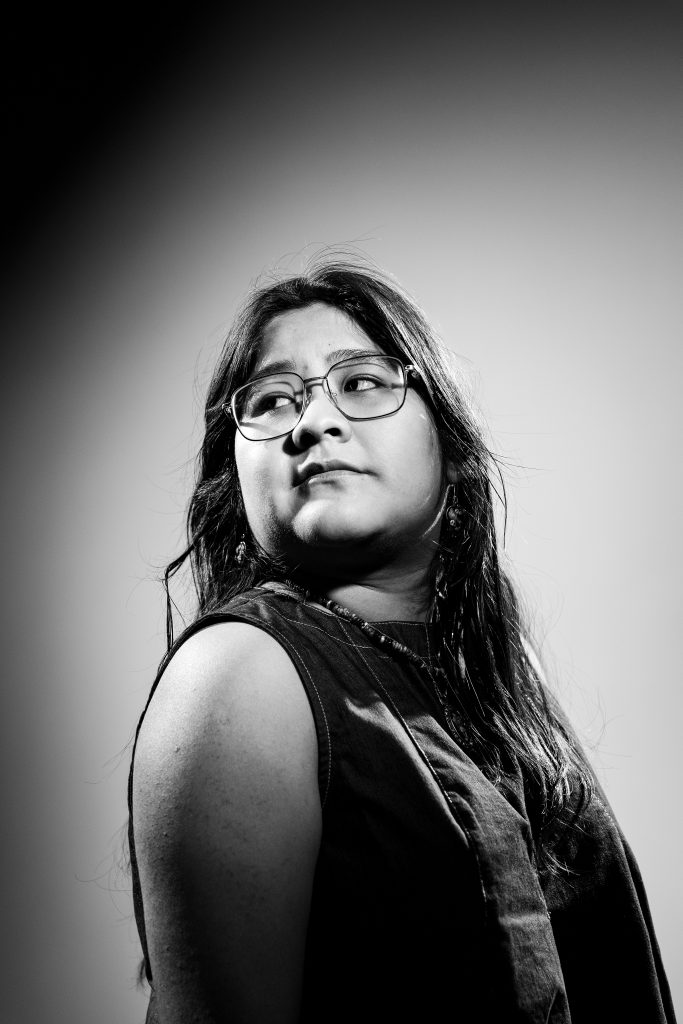
Through her Watson project, Exploring the Language of Textiles, Carhuavilca Alvarez will embed herself in communities in six countries to learn how others imbue their textiles with meaning. She hopes to learn more about traditional and native textiles techniques and discover how textile-making is a language for individuals, their communities, and the wider world, she said.
Carhuavilca Alvarez comes from an immigrant family from Huarochiri, a small community nestled in the Andes west of Lima, where she was raised. As an Indigenous Peruvian fiber artist, she expresses emotions using textures, colors, and patterns in her creations. “In every visual story I create, whether through a costume, a woven bracelet, or a knitted scarf, I try to translate feelings into form. These stories do not simply decorate life; they preserve it. And I want to learn from other stories that have been preserved around the world,” she said.
If she wins a Watson Fellowship, Carhuavilca Alvarez will travel to Ecuador, Argentina, Jordan, India, Japan, and Indonesia to explore a range of textile techniques, including weaving, embroidery, dyeing, and braiding. In some instances, she’ll participate in the same technique in different countries, such as embroidery in Japan and India, and dyeing in Ecuador and Indonesia. This will allow her to contrast how the same technique can have different meanings.
To select her countries, Carhuavilca Alvarez drew on a network of international friends she established while attending the United World College in Maastricht, The Netherlands, during high school. Through a series of text messages, she gathered contacts of people around the world who are engaged in textiles.
“That process already felt like community-building,” she said. “Everyone was asking their moms, their grandmas, ‘Do you know somebody who knows somebody?’” Carhuavilca Alvarez narrowed her options based on techniques, personal interest, and the care with which she believes communities approach textiles. The process also identified a connection in each community she can lean on for support and safety.
“The depth of her inquiry reflects a profound respect for the worlds she enters, approaching each culture not as a researcher collecting data, but as a guest who hopes to learn to mend what history has torn,” said Plesch. Carhuavilca Alvarez is not an outsider, “visiting foreign places to extract, exploit, or appropriate. Instead, she is a kindred spirit who would bring a shared lived experience.”
Her grandmother’s alpaca mantle will travel with her, and she will show it to others as an icebreaker, she said. Sharing something so personal is an act of reciprocity, of saying, “I don’t just want you to let me into your life, but I’m letting you into my life first.”
Before she leaves each community, Carhuavilca Alvarez hopes to create something from cloth, yarn, or local fiber using a technique she learned while there. A small piece from her own hands for the people who taught her, as a way of exchange.
“I don’t want to go as a tourist,” she said. “I want to go as somebody who is actually going to interact with a culture. I don’t want to be a passive actor in this project.”
RACHEL NICHOLAS ’26
Watson Project: Cofio Cymru: Memory Preservation in the Welsh Diaspora
Countries: Argentina, Australia, Canada, and South Africa
As an international student from Wales, Rachel Nicholas has spent her undergraduate years living abroad—three years in Waterville and one in Paris. To help process her experiences, she began journaling, a first step toward creating an archive of her life.
She calls it memory preservation.
As a history major, she’s been fascinated by other people’s personal accounts of history. As a French studies major, she’s found inspiration in French historian Pierre Nora’s Les Lieux de mémoire, or Places of Memory, which uncovers and explores various means of memory preservation important to the French.
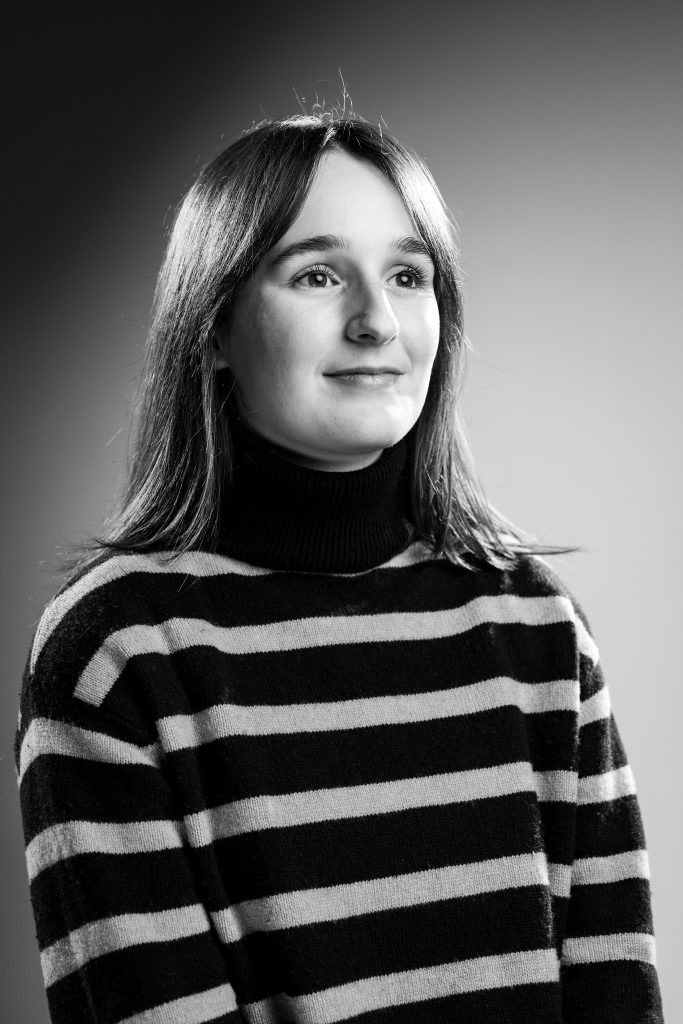
It all made her wonder, how does one craft a meaningful experience for oneself abroad? More specifically, how do people in the Welsh diaspora understand, identify, and engage with their heritage?
“For more than 150 years, Welsh communities have taken up new roots across the world,” Nicholas wrote in her application. “Given the vastly different circumstances upon which Welsh emigrants have moved, set up their lives, and passed on their heritage, my Watson, Cofio Cymru (Remembering Wales), explores how memory is celebrated and preserved in the Welsh diaspora.”
The project draws on her personal experience of leaving her homeland.
“Living out my full childhood in Wales, and holding a continued love for my small farming village, coupled with my adult formation taking place in the United States, gives me a rich reference frame for undertaking this project,” she said.
If she secures a Watson Fellowship, Nicholas will explore everyday qualities of identity in four countries with longstanding Welsh communities: Australia, South Africa, Canada, and Argentina. In selecting her countries, she was seeking areas with “real roots, where the Welsh diaspora has been established and is still thriving today,” she said.
Her project begins in Australia with an Australian-Welsh homestay and time at the Australian National Eisteddfod, a competitive Welsh music and poetry festival. In South Africa, she will explore Welsh choral societies, an important part of Welsh culture, through interactions with the Johannesburg Welsh Male Voice Choir and the Cape Welsh Choir. In Canada, with more than 450,000 people of Welsh ancestry, her ambitious schedule includes the century-old Calgary Welsh Society, Ottawa Welsh Choral Society, and Ontario Welsh Festival.
Nicholas will end her journey with five months in the Patagonia region of Argentina, where Cambrians settled in 1865 to escape English suppression of the Welsh language and identity. There, they founded Y Wladfa (The Colony), a “little Wales beyond Wales,” with upwards of 50,000 members, Welsh towns, and Welsh-Spanish bilingual schools, where Nicholas hopes to contribute meaningfully.
She saved Patagonia for last to allow time to improve her Welsh and Spanish. Originally from Cowbridge in southern Wales, where Welsh is less prevalent, Nicholas has only an elementary command of the language and is eager to improve it.
“It’s a beautiful language,” she said. “The poetry, the music, the Welsh culture are so rich through the medium of Welsh.”
Nicholas hopes to build trust with people first through shared experiences and then through personal conversations. She is open to sharing herself as part of the exchange.
“Rachel is graced with a natural gift to put her interlocutors at ease and to make each encounter feel special,” said Véronique Plesch, chair of Colby Watson’s Selection Committee. “At the heart of Rachel’s intellectual and personal journey lies a genuine curiosity for others, a sensitivity to the human condition, and a philosophical drive to make sense of experience—qualities that illuminate and give purpose to her Watson project.”
The process of applying for a Watson Fellowship reaffirmed Nicholas’s sense of adventure and community. “It would be a year of human connection,” she said. “Learning about people’s life stories and garnering that wisdom.”
A Watson year will also be an exciting chapter in the archive of her life.
“With the great flexibility of a Watson project, I hope that my journals will be filled with reflections on the personal testimonies from the Welsh diaspora, across generations old and new.”


