Colby Bids Farewell to Four Professors
Admired and engaged faculty members retire from classroom teaching following distinguished careers
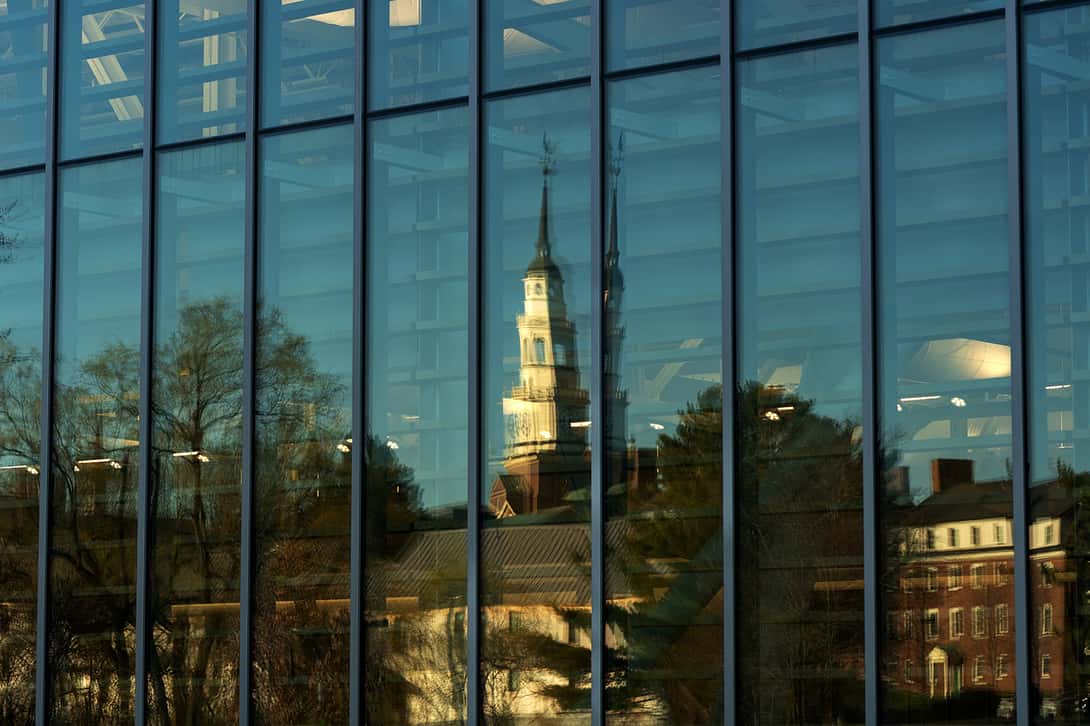
After long and productive careers as innovative scholars, influential teachers, and good-natured colleagues, four Colby professors are retiring and leaving Mayflower Hill.
Effective Sept. 1, professors retiring and receiving emeritus status are Francis F. Bartlett and Ruth K. Bartlett Professor of Anthropology Catherine Besteman, Associate Professor of Music Yuri “Lily” Funahashi, Professor of Art Gary Green, and Associate Professor of Biology and the Charles C. and Pamela W. Leighton Research Fellow in Biology Lynn Hannum.
The College community extends best wishes and thanks them for their service as they end this phase of their professional lives and embrace the opportunities retirement brings.
Colby News asked each professor to reflect on their scholarly achievements, impact, and favorite Colby memory. Here are their responses.
Catherine Besteman
Catherine Besteman, the Francis F. Bartlett and Ruth K. Bartlett Professor of Anthropology, is an ethnographer and abolitionist anthropologist self-described as “dedicated to the public humanities, liberatory education, and changing narratives about incarceration and justice.” The focus of her research includes carcerality, care, security, militarism, displacement, and community-based activism and transformation.
Besteman has explored these topics through fieldwork and fellowships in Somalia, South Africa, the United States, England, and Italy; in the classroom; and with the public, creating forums for dialogue and education across Maine.
A prolific author, award-winning scholar, and generous collaborator, Besteman joined Colby’s faculty in 1994 after earning her Ph.D. in anthropology from the University of Arizona. She was awarded tenure in 2005 and named the Francis F. Bartlett and Ruth K. Bartlett Professor of Anthropology in 2012.
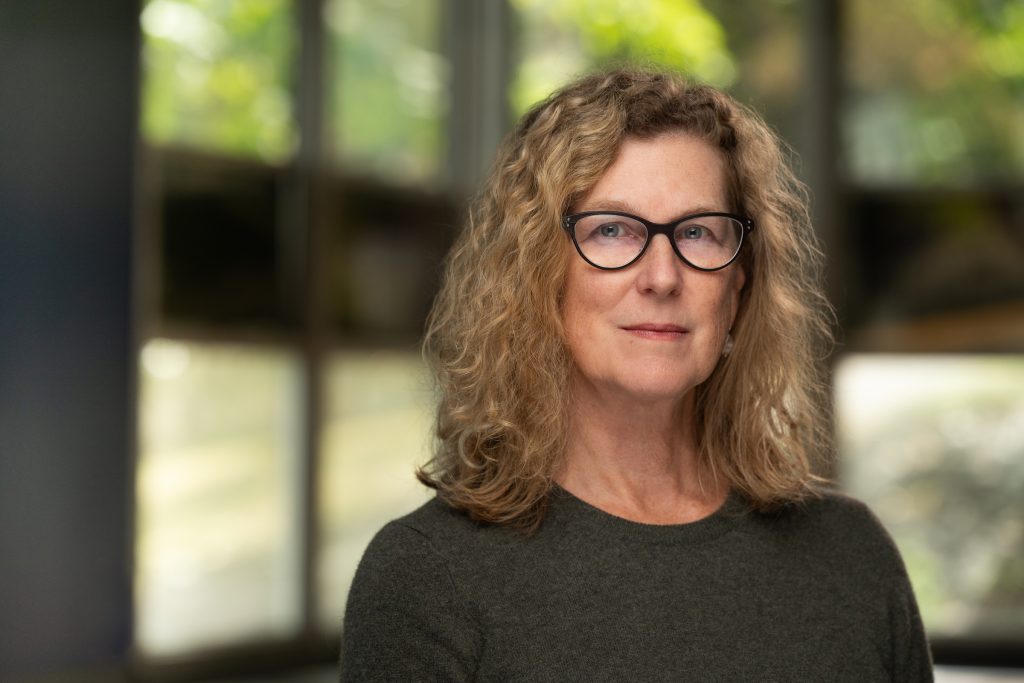
During her time at Colby, Besteman said she has felt supported in her research goals while being dedicated to working with students, in and out of the classroom.
“My intellectual home is the liberal arts, and over the past 32 years I have benefited from Colby’s support for innovative pedagogy and for faculty research,” she said. Highlights of her “innovative and alternative” pedagogy include co-teaching courses on incarceration and decarceration with an incarcerated professor (the first such partnership in the country) and offering a course titled the Anthropology of Slowness.
In her teaching and research more broadly, she “roamed throughout the curriculum,” finding “welcoming spaces” such as the Colby College Museum of Art, Colby’s Digital Archives and Special Collections, the Oak Institute, the Goldfarb Center for Public Affairs, and the Center for the Arts and Humanities.
“Such intellectual stimulation,” she said. “And such wonderful people to work with!”
Besteman expressed gratitude to the College for the opportunity to develop a writing practice, which had been her initial reason for becoming a professor. To date, she has published nine books and three edited journal collections, in addition to writing articles, websites, podcasts, films, and for exhibitions.
Her most recent book, Militarized Global Apartheid (2020), received the Public Anthropologist Prize for 2022.
“To have such support for a writing life has been a gift,” said Besteman. “I am particularly proud of my collaborative work coauthoring and co-editing books with wonderful colleagues. There is nothing more fun than bouncing ideas, insights, challenges, and provocations with others who care about the same things you do. I mean this literally.”
That sentiment extends to students, with whom Besteman worked over the summers on intensive research projects, creating some of her favorite Colby memories. Among their projects were building websites, researching the history of incarceration in Maine, making a film (The ABCs of Abolition), and building the Freedom & Captivity Archive of carceral experience at Colby and the Maine Historical Society.
“Each of these experiences has been marked by the enthusiasm and commitment that students have brought with their fresh perspectives and excitement about digging into something they feel is really meaningful work,” the professor said.
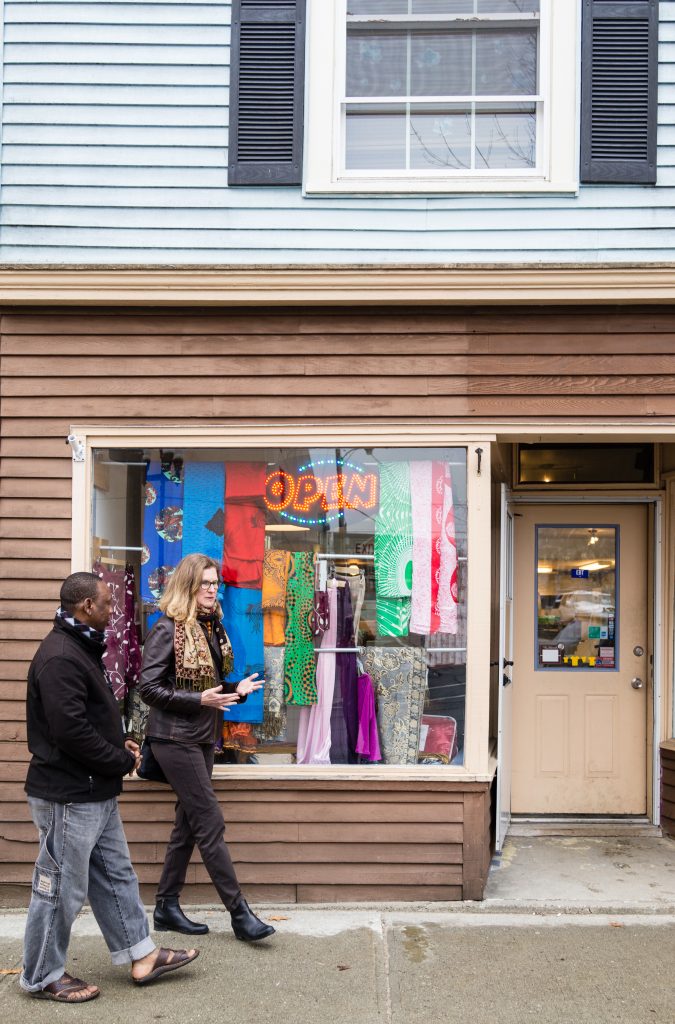
To bring her scholarship into the public realm, Besteman founded, curated, and coordinated two statewide initiatives. In 2018, Making Migration Visible launched in partnership with the Maine College of Art + Design to change the conversation about migration. Three years later, she launched Freedom & Captivity, a project in abolitionist visioning. Both projects involved more than 50 partner organizations across Maine, included statewide events, were tied to courses, and created opportunities for student involvement.
Part of the legacy Besteman leaves is Colby Across the Walls, a prison education program she built in 2021 that brings incarcerated and non-incarcerated students and faculty together in the same classroom. Taught by a variety of faculty across campus, the CATW courses have been “transformative” for students on campus as well as those with justice histories, she said.
Besteman plans to continue her intellectual practice in retirement while also slowing down, drawing on the Anthropology of Slowness. “More meditation and slow walking, less busyness and acceleration,” she said, while expressing appreciation for a fulfilling career.
“I feel so much gratitude to the faculty, staff, and students I’ve loved working with for over three decades.”
Yuri “Lily” Funahashi
Yuri “Lily” Funahashi, associate professor of music, is an accomplished pianist who has performed extensively in Europe, Japan, Canada, and Australia, as well as in major halls in the United States, including the Kennedy Center for the Performing Arts in Washington, D.C., Orchestra Hall in Chicago, the Music Center in Los Angeles, Jones Hall in Houston, and the 92nd Street Y in New York City.
An active chamber musician, Funahashi has collaborated with the Verdehr Trio, the Brentano String Quartet, the Cassatt String Quartet, and the Daedalus Quartet, and she performed with the Festival Chamber Music Society of New York City for more than 20 years. Along with her husband, Steven Pane, she formed the acclaimed Pane-Funahashi Piano Duo.
Funahashi brought her love of music and performance to Colby when she joined the Music Department in 2009. She was promoted to associate professor in 2020.
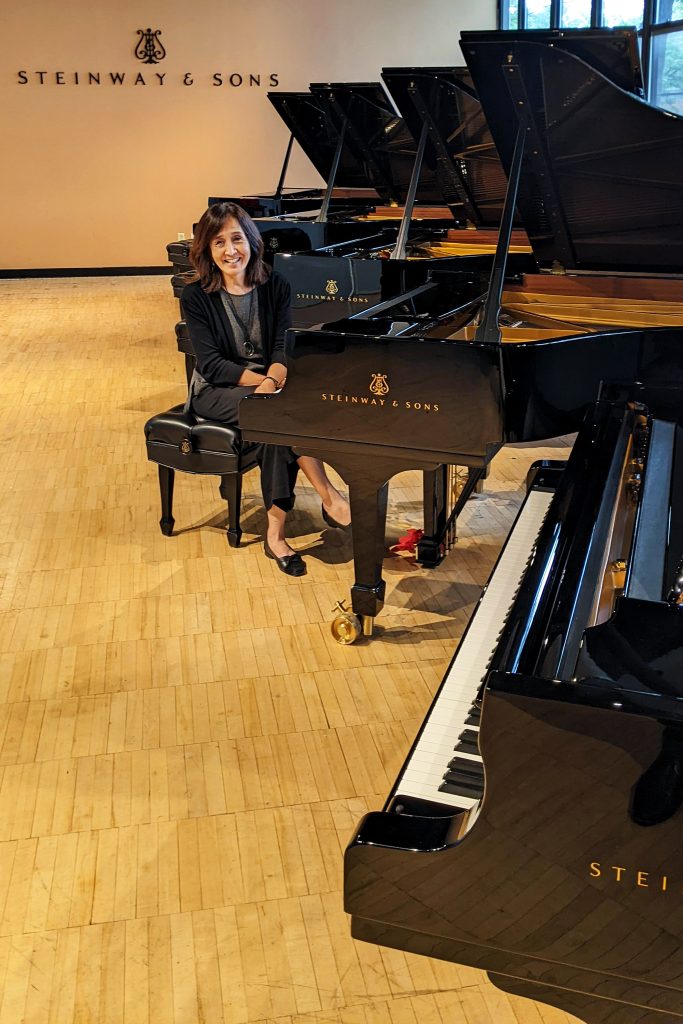
Born in Fukuoka, Japan, Funahashi was 3 when her parents started her on the piano. She completed her bachelor’s degree in piano performance in three years at the University of Wisconsin-Madison, then pursued her master’s at the University of Southern California, where she discovered a passion for chamber music. That passion matured at the Juilliard School, where she earned her doctorate.
In addition to teaching, performance and collaboration have defined Funahashi’s time at Colby, creating a symphony of accomplishments.
“Although it would be difficult to choose a single concert as the most memorable, it’s always a great joy to champion works of living composers, and it’s been an honor to have participated in premieres of new works,” she said. “Some of the most meaningful concerts have been those where I’ve shared the stage with my amazing department colleagues.”
As a Music Department representative on the planning committee for the Gordon Center of Creative and Performing Arts, Funahashi shared in the role that helped define many aspects of the center. It was an opportunity for which she was most grateful.
“As anticipated, the center has had a huge impact on the campus and the surrounding communities. For the music students, the change to their Colby experience has been dramatic,” she said, noting the center’s first-rate performance spaces, state-of-the-art recording studio, and sound-insulated practice and rehearsal rooms. “Having access to these stellar facilities opens so many possibilities that can be life-changing.”
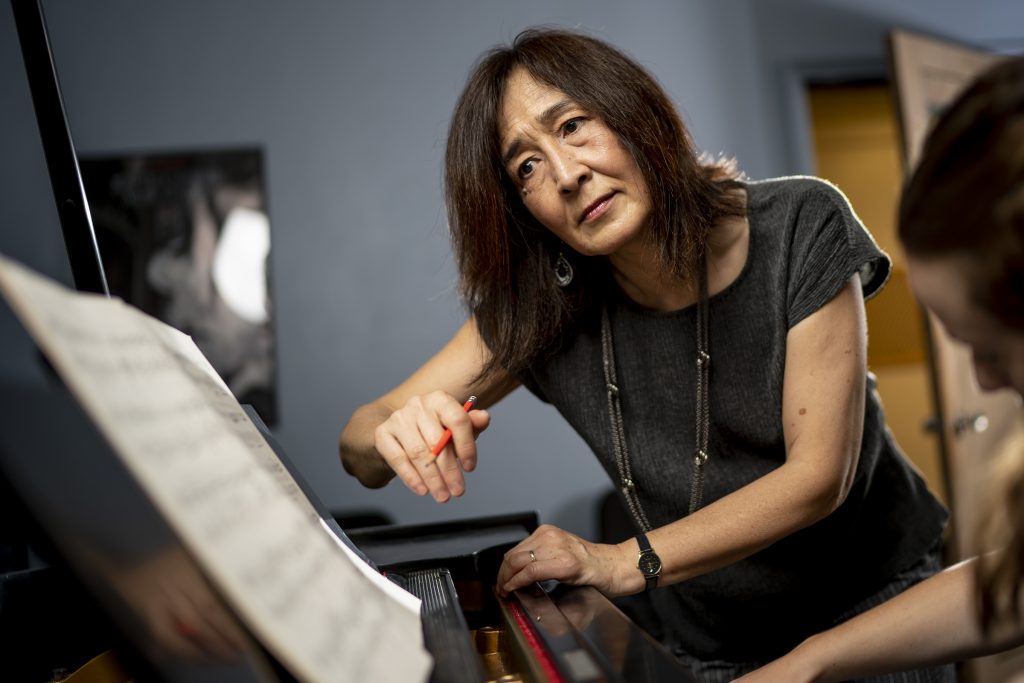
As she looks back on her time at Colby, her fondest memory is the end-of-the-year buzz of excitement when students present their music in recitals and concerts.
“Among these activities, senior recitals were always the highlights of the year for me. It was incredibly moving to see the students set ambitious plans for their programs, achieve their goals after years of intense practice and preparation, and play their hearts out in their performances.”
Funahashi will carry that spirit into retirement as she learns new music and continues to collaborate and perform with other musicians, including many of the extraordinary artists she met through Colby. And she’ll be eager to hear about the “creative inspirations from the generations of students who will walk through the halls of the Gordon Center,” she said.
“It’s been a privilege to work on a vibrant campus with such inspiring students and colleagues.”
Gary Green
Gary Green, professor of art, is a prolific photographer who works primarily in black and white, using both traditional film and digital processes. His work is held in numerous collections, including at the Colby College Museum of Art, the Portland (Maine) Museum of Art, the RISD Museum in Rhode Island, and the Amon Carter Museum in Texas.
Green joined Colby’s faculty in 2007, became associate professor in 2014, and earned full professor status in 2022. He holds an M.F.A. from the Milton Avery Graduate School of the Arts at Bard College and a B.S. from the State University of New York.
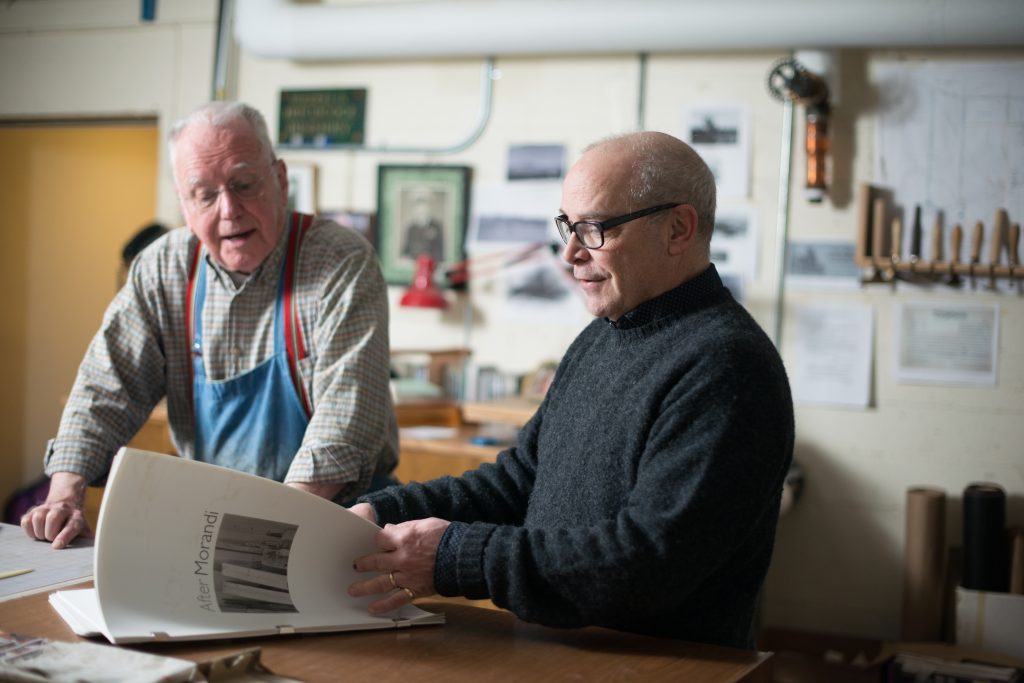
Since 2010, Green has published six photobooks, five of them monographs, including his latest, Almost Home, as well as After Morandi and When Midnight Comes Around, which received significant media attention. His sixth photobook, Obelisks, was a collaborative project that paired his photographs with poetry by Gianluca Rizzo, the Paul D. and Marilyn Paganucci Associate Professor of Italian. Green called the book “a gem of fine poetry and pictures.”
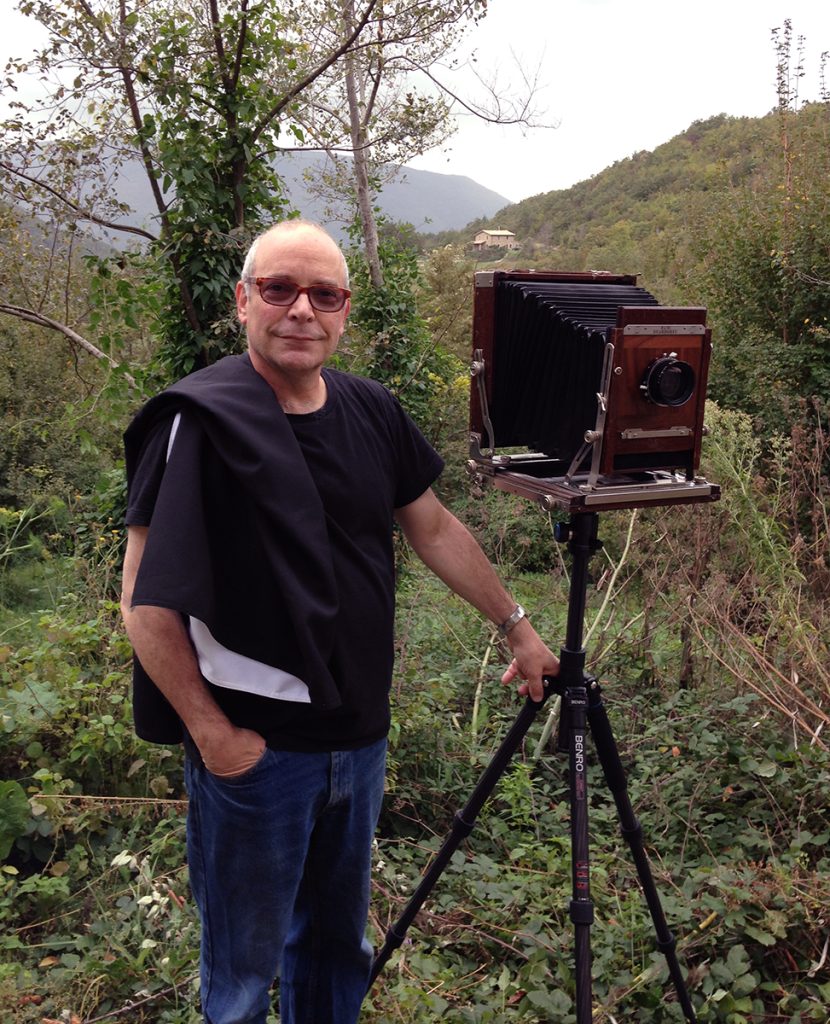
Shortly after arriving at Colby, Green began growing and building the Art Department’s photography program. He turned the program, which offered just two photography courses, into a complete and rigorous curriculum. He also worked with architects to design and incorporate contemporary photography practices into the College’s current photography classroom/studio. It is Colby’s first photo studio to have both full analog and digital laboratories in one space. His colleague Véronique Plesch, the Ellerton M. and Edith K. Jetté Professor of Art, wrote this article about Green’s career for the Spring 2026 Maine Arts Journal.
In addition, Green was deeply involved in the rewriting of the department’s studio art curriculum, “making it leaner but at the same time adding a full-year capstone experience for studio majors,” he said. The capstone subsequently included an annual exhibition at the Colby Museum and an accompanying catalog, he said, noting that his original 2017 catalog design remains the basic template.
Green also takes pride in helping to establish a trip to New York or another “art city” for both studio and art history majors. Affectionately known as the Mirken Trip, the annual experience is generously arranged by the Colby Museum with funds from one of its benefactors, the late Alan Mirken ’51.
Reflecting, Green recalls the people he brought to campus, both for his students and the broader community.
“For nearly every year I taught at Colby, I brought in photographers to speak and meet with my classes. Most notable were 10 or a dozen with extensive national and international success, such as, most notably, Mitch Epstein, Emmett Gowin, Andrea Modica, An-My Lê, Mark Steinmetz, and Elle Pérez.”
During the 2015-16 academic year, Green and Associate Professor of Cinema Studies Steve Wurtzler ran programming for the Human/Nature humanities theme, the first to include scientists, he said. “With many courses attached and a major guest speaker, Bill McKibben, it also coincided with and included a symposium with a reading and talk by Terry Tempest Williams, along with other guest artists.”
From nearly 20 years of memories, Green chose his very last class as his favorite. “It took me a while to realize that something was kind of funny,” he recounted. One student was uncharacteristically wearing glasses, others wore sports coats or chore jackets, and they all toted takeout coffee cups and wore baseball caps.
“After some prodding, I finally realized that they had all secretly planned to dress like me for the last class. I found it to be one of the sweetest gestures I could imagine. It made me laugh, but writing it now makes me a little tearful. It’s both a wonderful way to end a teaching career, but another doubt, making you wonder if you could spend the rest of your life working with smart and funny students like these.”
Green’s leave-taking is “bittersweet.” He’ll miss the students, he said, but “never stop or retire from being a photographer and artist. The extra time I’m now afforded to pursue that feels like a gift, an ongoing sabbatical on a fixed-income budget. I plan to make new work, exhibit, and continue to publish photobooks,” he said. More reading and a little travel are also part of his plan.
“But I have promised myself permission to spend some of that extra time just daydreaming about one thing or another.”
Lynn Hannum
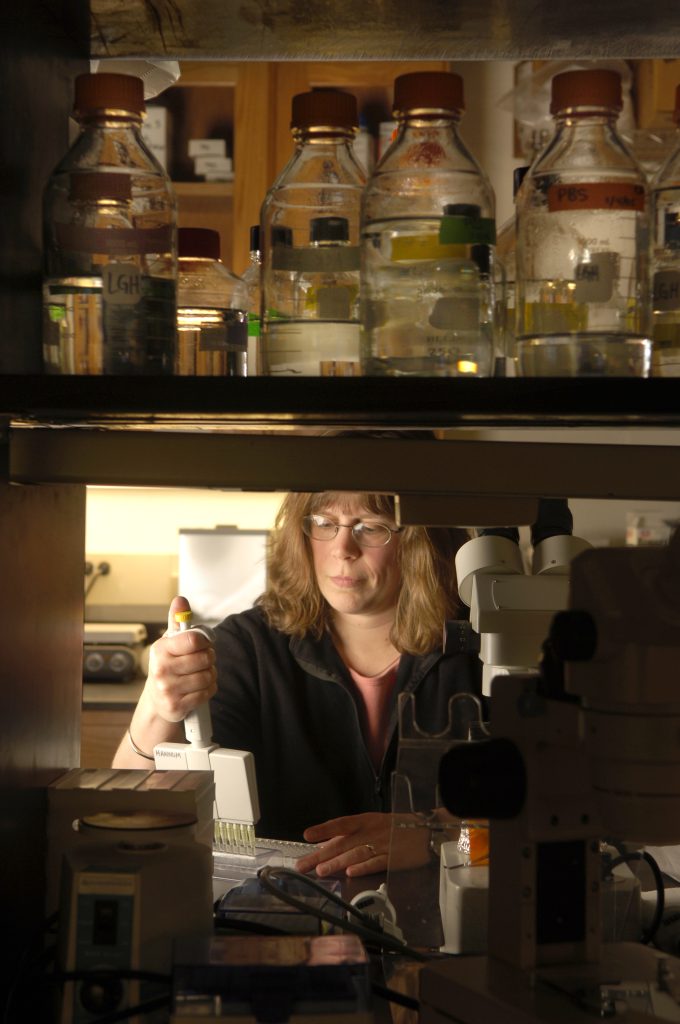
Lynn Hannum, associate professor of biology and the Charles C. and Pamela W. Leighton Research Fellow in Biology, is an immunologist whose primary research is on the innate immune responses in the zebrafish (Danio rerio).
“My interests lie in the daily rhythms and other factors affecting the activity of white blood cells, specifically the macrophages and neutrophils,” she explained. “These cells serve as the immune system’s front line of defense, detecting and destroying pathogens from the early stages of an infection. To make this research accessible to a broader group of students, I chose to study those cells in zebrafish instead of mice (the standard organism in immunology) when I established my lab at Colby.”
Her research has been supported by grants from the National Institutes of Health, the National Science Foundation, and the Maine Department of Environmental Protection. She has published numerous articles on both her research and her teaching philosophy, including several with student coauthors.
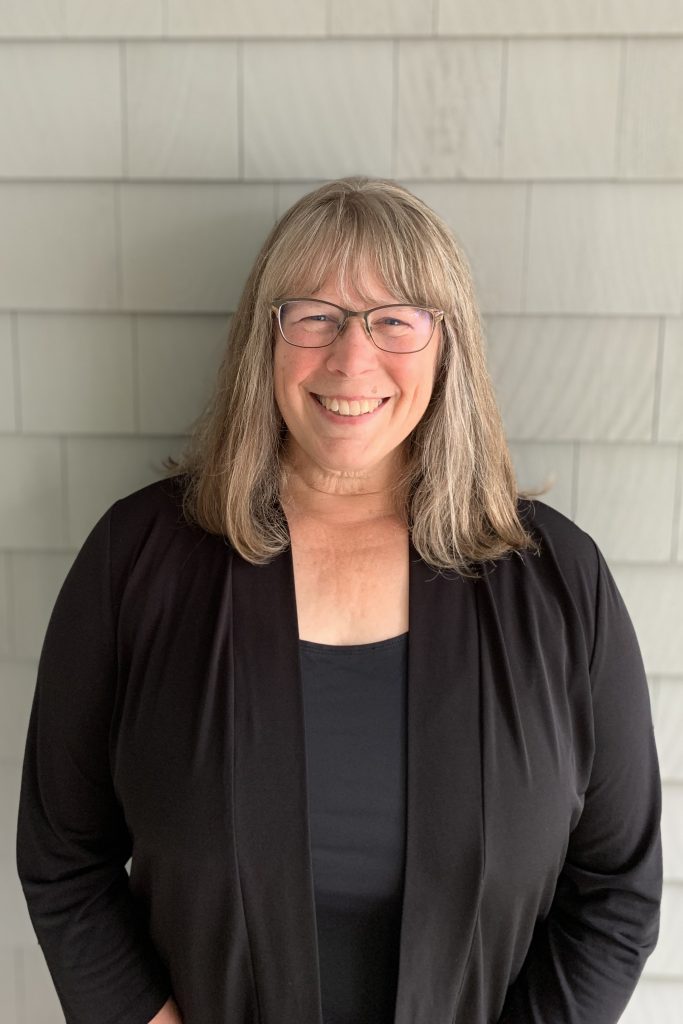
Originally from Maine, Hannum joined Colby’s faculty as its first immunologist in 2001, two years after receiving her doctorate in immunobiology from Yale University. She earned tenure in 2009 and was named the Leighton Research Fellow in Biology in 2019.
Colby hired Hannum to bring immunology to the College at a time when relatively few colleges offered standalone undergraduate immunology courses, she said. She developed a two-course sequence and introduced a weekly lab component in which students gained firsthand experience with methods such as flow cytometry and immunohistochemistry. The course and lab set Colby apart and offered rare experiences for undergraduates.
“Building a strong immunology focus has been my most significant impact,” Hannum reflected, noting her delight in the two new immunologists added to the faculty in the last three years.
Hannum also noted how directly she integrated students into all of her laboratory research, which allowed their development as scientists to be deeply intertwined with her scholarship. She expressed pride in the work many of them presented at regional and national conferences, especially the American Association of Immunologists’ annual meeting.
“Relatively few undergraduates attend AAI, so my students presented their research posters alongside graduate students and postdoctoral fellows. Seeing Colby students enthusiastically discuss our work with more senior researchers in the field is by far my favorite scholarly accomplishment.”
Those who know Hannum can attest to the power of her smile and humor to put others at ease or make difficult material understandable. She listed “laughing with a classroom full of students” as her favorite Colby memory.
“Learning is absolutely joyful, and whenever my terrible drawings or ridiculous analogies made students laugh together, their energy was just magical,” Hannum said. “I will always cherish that feeling of breaking barriers and making connections through laughter.”
The professor also created lasting connections with Colby’s first Posse cohort, of the Class of 2018. Hannum was their mentor for four years and understands the lasting impact of those years together. “Truth be told, the greatest impact was on me. I learned so much from my amazing Houstonians and still hold them close to my heart.”
Before coming to Colby, Hannum imagined a career focused on biomedical research. An early teaching opportunity revealed she was on the wrong path, she said. Joining the Biology Department was “the opportunity of my dreams,” right here in her home state.
And Maine is where she’ll stay in retirement, focusing more of her infectious energy and lifeforce “on my beloved four-generation family while allowing new adventures to unfold,” she said.
“I’m so grateful to have spent 25 years as part of the Colby community. It’s difficult to sum up just how much the years of working closely with incredible students and brilliant, caring colleagues have meant. I leave Colby feeling absolutely fortunate and fulfilled.”


