$9.5 Million Investment Empowers Colby’s Center for Resilience and Economic Impact
The endowment of the Tishman Director position secures a long-term commitment to community resilience in Maine
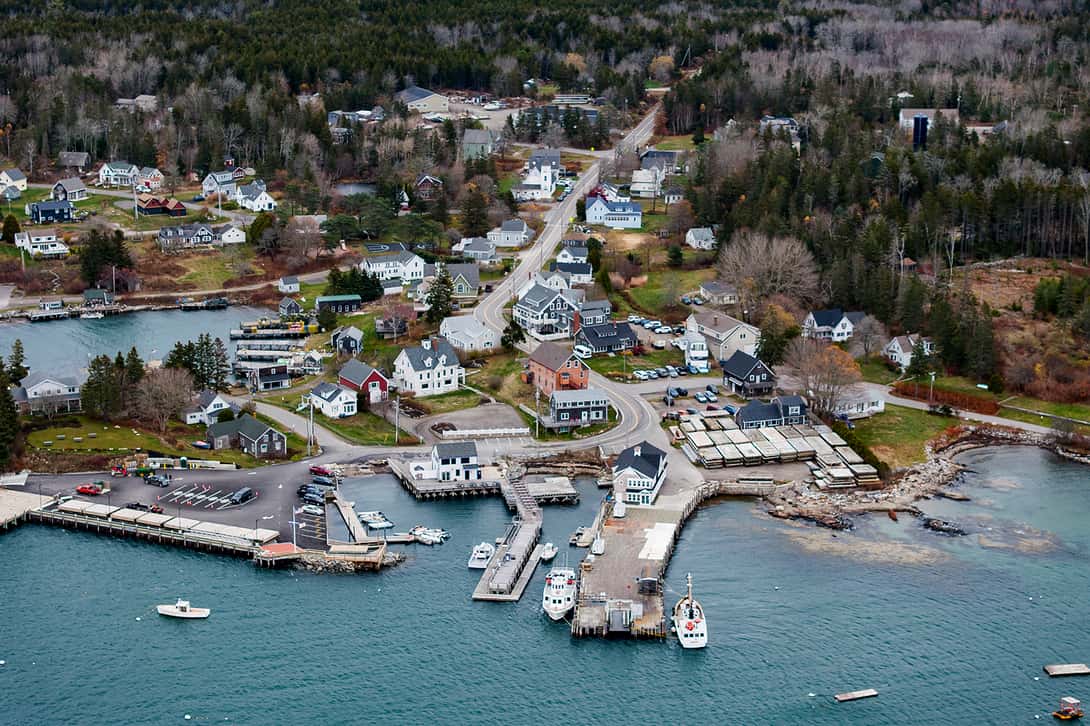
Colby has endowed the director’s position of the newly established Center for Resilience and Economic Impact on the Port Clyde waterfront, as part of a generous $9.5 million gift from the NorthLight Foundation and Maine residents Dan and Sheryl Tishman.
By endowing the director’s position, the NorthLight Foundation and the Tishmans signal their long-term commitment to the Center for Resilience and Economic Impact and the community of Port Clyde. The College also hopes the gift will inspire others to invest in this initiative to help Maine communities anticipate and respond to environmental and economic hardships.
Established in partnership with the NorthLight Foundation, Colby’s interdisciplinary research center will help Maine’s cities and towns strengthen their resilience to natural disasters, economic adversity, and other challenges. The Tishmans, who live in Port Clyde, formed the NorthLight Foundation to address environmental, land conservation, and community and climate resilience in Maine and around the country.
With a recent gift to endow the Tishman Director position, NorthLight and the Tishmans have invested in the purchase and donation of real estate, construction, and program development, staffing, research, and student fellowships.
“The Tishmans care deeply about Maine and are focused on finding creative and effective solutions to the challenges facing many of the communities in our state,” said Colby President David A. Greene. “We are thrilled to partner with them to help build back the geographic core of Port Clyde and to work across the state to support cities and towns that face unanticipated challenges.”
Nichole Price, a senior scientist, marine ecologist, and community leader with more than 70 publications and five patent applications, is the inaugural Tishman Director of the Center for Resilience and Economic Impact. Price, who has directed the Center for Seafood Solutions at Bigelow Laboratory for Ocean Sciences in East Boothbay, Maine, since 2015, began working in Port Clyde on June 1.
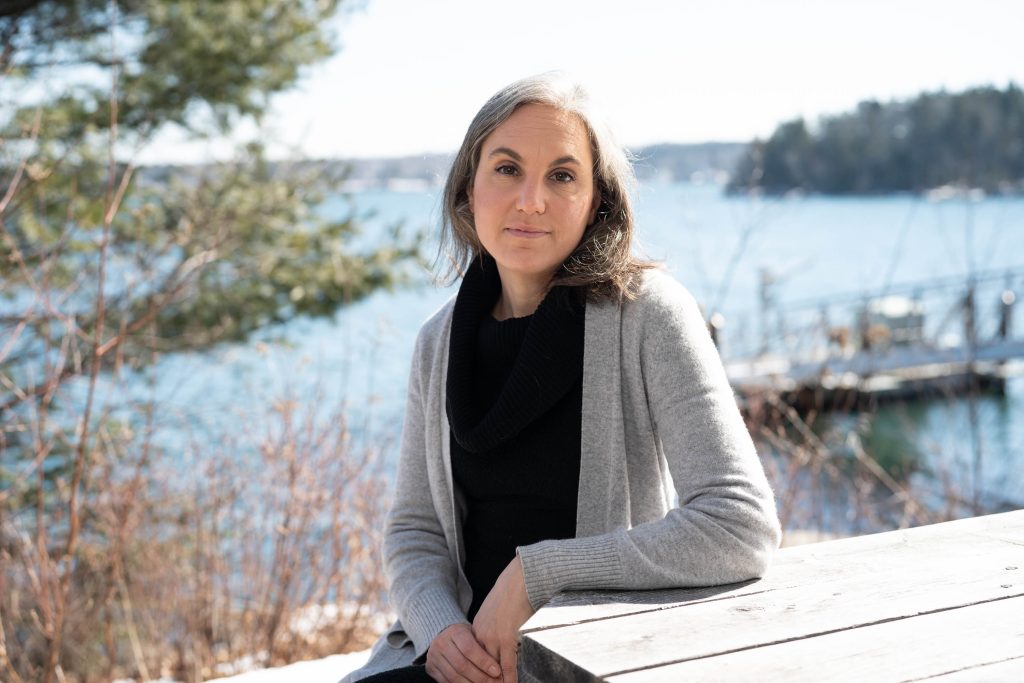
“We know that impactful work in resilience depends on having visionary leadership and talent at the helm,” the Tishmans said in a statement. “Endowing the director’s position for the new Center for Resilience and Economic Impact will help ensure deep and lasting impact in Port Clyde and Maine and be a model for other states. We’re thrilled that the inaugural director is Nichole Price, who brings immense experience and a thoughtful, entrepreneurial, and community-based approach to this work.”
Price said she was thrilled with the opportunity.
“I am grateful and excited about the level of commitment the Tishmans and the NorthLight Foundation are displaying with this endowed position and how they recognize that in order to serve a community, you have to make a long-term investment,” said Price, who has dedicated her career to working alongside Maine’s coastal and rural communities to adapt to change and plan for the future. “The endowed director’s position reflects their commitment.”
In directing the center as a hub for interdisciplinary research-to-action, Price will oversee core research initiatives, mentor student fellows, and build collaborative partnerships with Maine communities and governmental entities to drive community-identified, data-driven resilience.
Colby presented its vision for the Center for Resilience and Economic Impact during a recent community open house in Port Clyde. An additional community day with a boat trip to Colby’s Island Campus is scheduled for Aug. 16. Advance registration is required.
Introducing a community speaker series
During the community event, Price introduced the center’s summer-long speaker series, which will feature experts in the field:
- July 8, Barton Seaver, an author and chef whose work combines culinary innovation, sustainability, and public health;
- July 22, Paul Dobbins, vice president of aquaculture for the World Wildlife Fund;
- Aug. 12, Jenni Tilton-Flood, owner of a three-generation Maine dairy farm.
“These are all colleagues and dynamic speakers with global experience and a deep love for Maine and its rural and working waterfront communities and the challenges they face in the coming decade,” Price said.
Denise Bruesewitz, provost and Clara C. Piper Professor of Environmental Studies, said she hopes the center becomes a connector for research at Colby, makes a meaningful difference in Maine, and gives students and faculty more opportunities to engage with Maine communities.
“We will situate the work of the center in the local, state, national, and even international conversation about resilience,” Bruesewitz said. “We hope to hear from Maine communities about what they are experiencing and the opportunities for the center to engage, and that we explore the different dimensions of resilience in conversation together.”
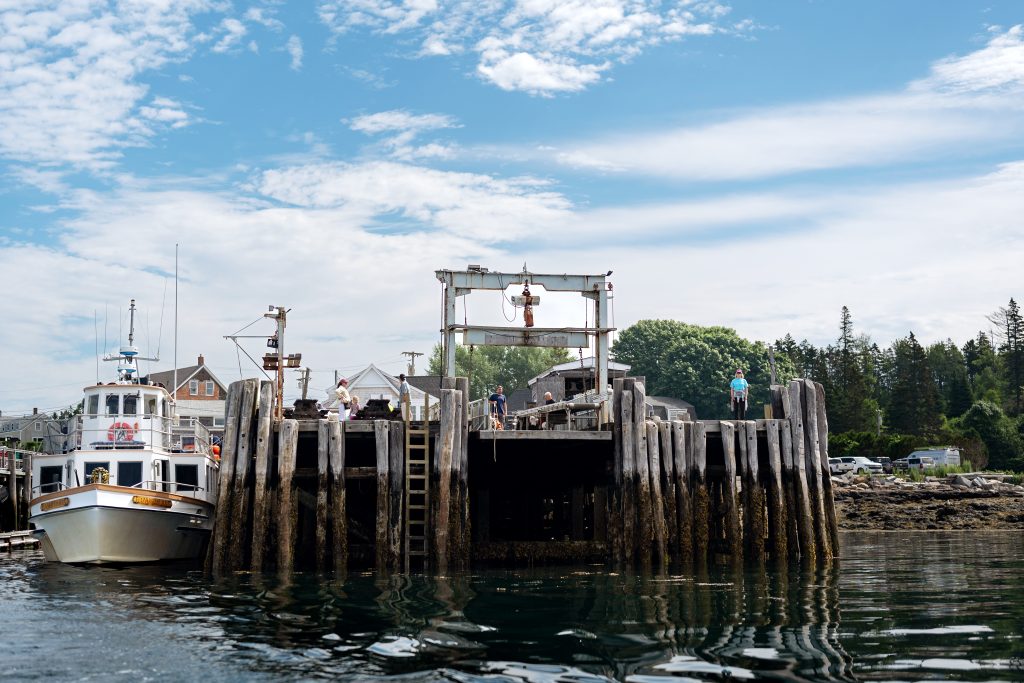
The center is based in Port Clyde, in part, because the community has a thriving working waterfront that has sustained a series of natural and economic catastrophes in recent years, and continues to recover and rebuild. A fire ripped through the community in fall 2023, destroying the general store, a waterside restaurant, and other places integral to community life. The winter after the fire, devastating ocean storms battered critical coastal infrastructure for the fishing industry, underscoring the vulnerability of Maine communities.
Under Price’s leadership, the center will leverage Colby’s strengths and build on key partnerships across Maine with scientists, policymakers, economists, and individuals and organizations directly impacted by environmental, economic, cultural, and public health crises.
With a gift from the Tishmans, Colby acquired the Seaside Inn, The Barn, the Squid Ink building, and the site of the Port Clyde General Store, which was destroyed by the fire. Colby’s plans for the properties include rebuilding a structure on the site of the former general store to house a restaurant and offices for the Center for Resilience and Economic Impact, with a gathering and collaborative space open to the community.
It will also maintain The Barn, which has operated as a seasonal bar and community gathering spot, and the Seaside Inn, which will serve as housing for scholars and others working at the center and as a home for student researchers living and working in Port Clyde.


