Colby Hires Inaugural Director of Center for Resilience and Economic Impact
Marine ecologist Nichole Price will lead the center dedicated to helping communities become resilient to a range of catastrophic events
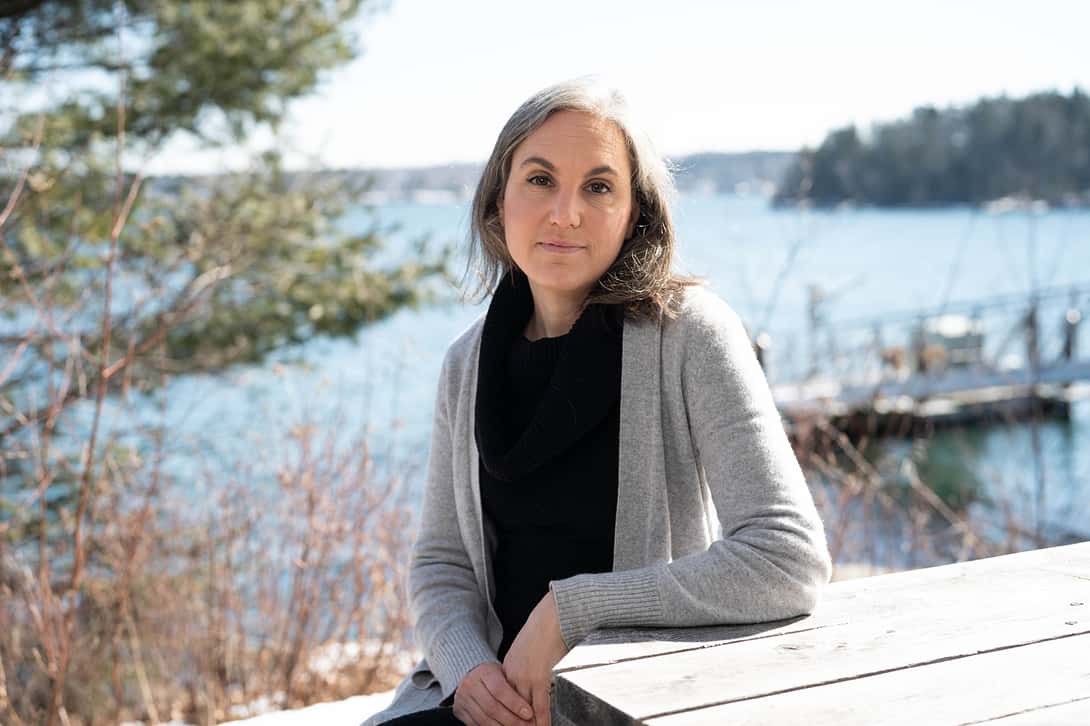
Nichole Price, a senior scientist, marine ecologist, and community leader who has dedicated her career to working alongside Maine’s coastal and rural communities to adapt to change and plan for the future, will become Colby’s inaugural director of the Center for Resilience and Economic Impact in Port Clyde, Maine.
Price, who has directed the Center for Seafood Solutions at Bigelow Laboratory for Ocean Sciences in East Boothbay, Maine, since 2015, will begin her new position June 1. As director of the Center for Resilience and Economic Impact, she will lead the new interdisciplinary research center that Colby is establishing to help Maine’s cities and towns strengthen their resilience to natural disasters, economic adversity, and other challenges. In addition to her scientific work, Price is known as a convener who brings together fishermen, farmers, policymakers, and researchers.
Price will guide the center’s strategic direction from its base in Port Clyde, establishing it as a premier hub for interdisciplinary research-to-action. She will oversee core research initiatives, mentor student fellows, and build collaborative partnerships with Maine communities and governmental entities to drive proactive, data-driven resilience.
In addition to her work at Bigelow, Price holds a research faculty appointment at Colby and has served as professor of environmental studies since 2021. Notably, she and a team of research partners are part of a $10-million U.S. Department of Agriculture grant to study algae-based feed supplements that boost milk production and improve farmer profitability.
‘Our aspiration is for the center to become a national model for how liberal arts institutions can catalyze community preparedness. Under Nichole’s leadership, we envision a future where the center not only supports the resilience of Maine’s communities and environment but also helps to position our state as a leader in the innovation economy.’
Provost Denise Bruesewitz
Prior to her work at Bigelow, Price spent several years as a project scientist and postdoctoral researcher at the Center for Marine Biodiversity and Conservation at Scripps Institution of Oceanography at the University of California San Diego, a hub for interdisciplinary research focused on understanding and protecting the planet.
“I care deeply about the coast of Maine and the people who make their living here,” said Price. “This work only succeeds if it’s done with communities, not for them. That means listening first, respecting local knowledge and heritage, and bringing people together to build practical solutions that support resilience and economic opportunity. This is also a chance to build on momentum across the state and work alongside communities like Port Clyde to address challenges and create new opportunities.”
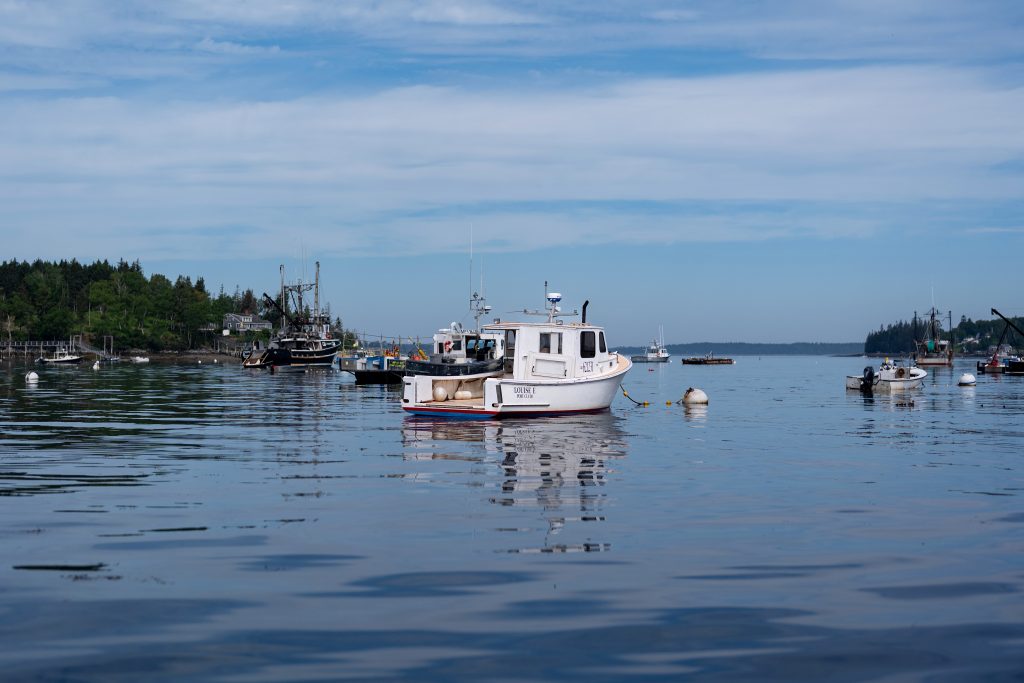
Building resilience statewide
As a home for educational opportunities, outreach, and community building, the Center for Resilience and Economic Impact will work with residents, local officials and municipalities, state and federal governmental partners, and research institutions to make data-informed decisions and evaluate progress in resilience planning. The center will take a practical, community-driven approach, working in partnership with stakeholders so solutions reflect local priorities and values.
Established with a gift from Maine-based NorthLight Foundation, the Center for Resilience and Economic Impact is the latest entity created as part of Colby’s Dare Northward campaign. Port Clyde residents Dan and Sheryl Tishman formed the NorthLight Foundation to address conservation, climate, and community resilience issues in Maine and across the country.
This effort will build on key partnerships across Maine with scientists, policymakers, economists, and individuals and organizations directly impacted by environmental, economic, cultural, and public health crises, said Provost and Clara C. Piper Professor of Environmental Studies Denise Bruesewitz.
“Our aspiration is for the center to become a national model for how liberal arts institutions can catalyze community preparedness. Under Nichole’s leadership, we envision a future where the center not only supports the resilience of Maine’s communities and environment but also helps to position our state as a leader in the innovation economy,” Bruesewitz said. “As a distinguished senior research scientist at Bigelow Laboratory and a professor at Colby, Nichole brings a rare combination of world-class scholarship and a proven track record of translating complex science into tangible economic and policy solutions.”
It is based in Port Clyde, in part, because the community has sustained a series of natural and economic catastrophes in recent years, and continues to recover and rebuild. A fire ripped through the coastal community in fall 2023, destroying the general store, a waterside restaurant, and other places integral to community life. The winter after the fire, devastating ocean storms battered critical coastal infrastructure for the fishing industry, underscoring the vulnerability of Maine communities. The center’s presence in Port Clyde is intended to support, not replace, the community’s own vision for its future.
With a gift from the Tishmans, Colby acquired the Seaside Inn, The Barn, the Squid Ink building, and the site of the Port Clyde General Store, which was destroyed by the fire in September 2023. Colby’s plans for the properties include rebuilding a structure on the site of the former general store, which will house a restaurant and offices of the Center for Resilience and Economic Impact, including gathering and collaborative space open to the community.
It will also maintain the Barn, across from the former general store, which has operated as a seasonal bar and community gathering spot, and the 12-room Seaside Inn as housing for scholars and others working at the center and as a home for student researchers who will live and work in Port Clyde. As part of her initial work at the center, Price plans to introduce a lecture series this summer and appoint a first cohort of academic fellows to begin work in Port Clyde.
The center will build on ongoing state and federal efforts to strengthen coastal resilience and economic opportunity, including investments in infrastructure, working waterfronts, and coastal communities. In 2024, Maine established the Commission on Infrastructure Rebuilding and Resilience, co-chaired by Dan Tishman, to develop a plan to mitigate risk. Colby’s Center for Resilience and Economic Impact evolved from that work.
Deborah Bronk, president and CEO of Bigelow Laboratory for Ocean Sciences, said Price’s move to Colby will benefit both institutions. “Colby College has been one of our most important partners,” Bronk said. “Nichole’s move opens new opportunities to collaborate in ways that strengthen both institutions and expand what we can achieve together.”
Real-world solutions
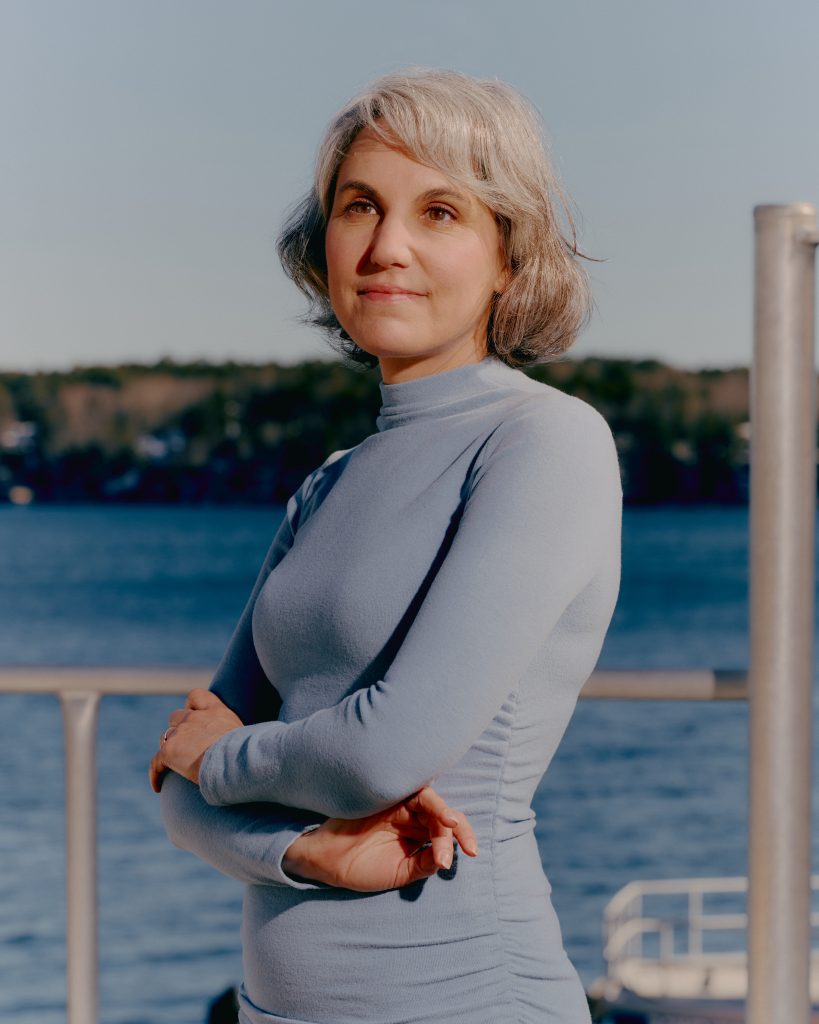
In her 20-plus-year career as a marine ecologist, Price has used science to solve real-world environmental and economic challenges. She specializes in ocean acidification, seaweeds, and carbon cycling, and studies how global change impacts bottom-dwelling species. Price has worked in numerous locations around the world studying the destruction of coral reefs, mitigation strategies for coastal acidification, and the use of farmed algae to reduce greenhouse gas emissions in dairy production, among other issues.
Price earned her Ph.D. in ecology, evolution, and marine biology, and a master’s in statistics and applied probability, both from the University of California, Santa Barbara. She earned her bachelor’s in biology and math from Connecticut College.
She joined Bigelow in 2014 as a senior researcher and became director of the Center for Seafood Solutions the following year. The center is a multidisciplinary hub that puts research into action and is dedicated to improving the safety, sustainability, and profitability of the global seafood industry. Through its work, it acts as a bridge between scientific research and practical applications for aquaculture and wild-harvest seafood, working with aquaculture farmers, seafood distributors, policymakers, and nonprofit organizations.
“My experience has shown me both the joys and challenges of launching a new initiative, and I am excited to do it again with a different team of talent,” Price said. “I am ready to expand beyond shellfish and kelp and think about how bringing together different fields and perspectives to create new opportunities for Mainers.”


