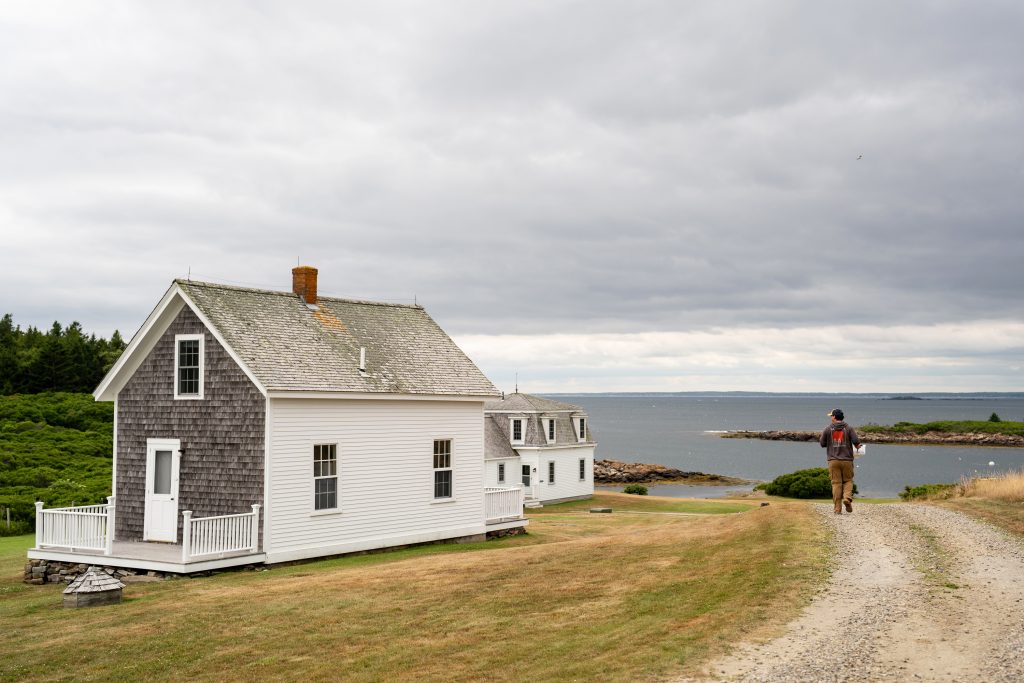
Living on Island Time
Now in its fifth summer, Colby’s Island Fellows program combines hands-on research with real-world responsibility
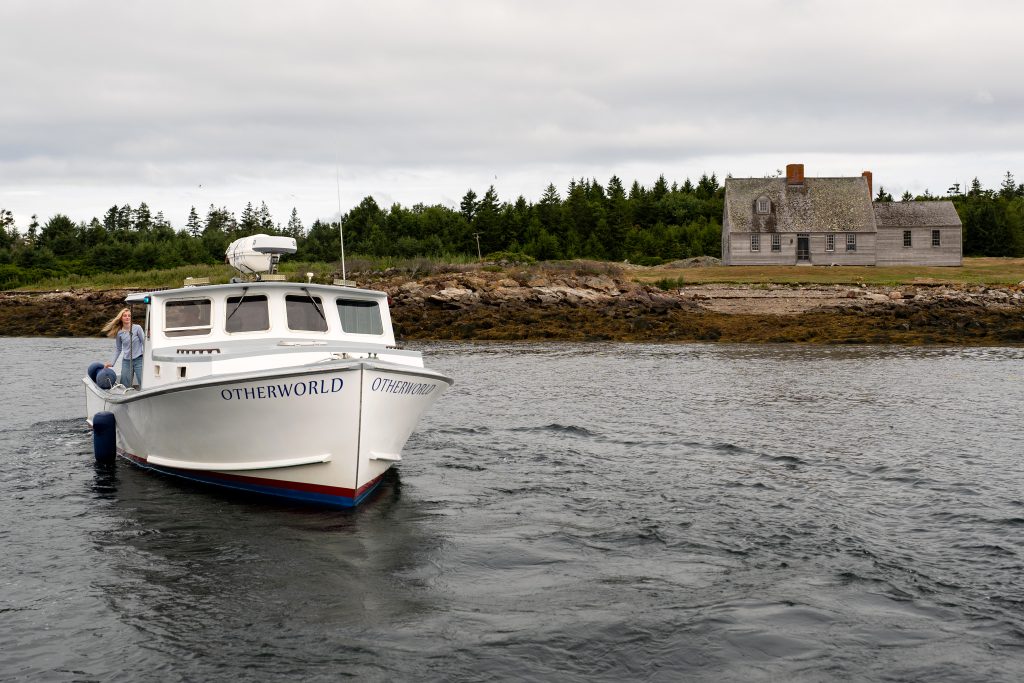
On a gray and rainy morning in early August, salt spray from Muscongus Bay splashed onto the deck of the Otherworld, the boat that brings people from the mainland to Allen and Benner islands.
For passengers more accustomed to placid, sunnier ocean voyages, the stormy crossing could have been intimidating. But the three Colby students aboard exuded calm competence as they gave the safety briefing, guided visitors to their seats for the 20-minute ride, pointed out sights along the way, and when it was over, helped folks step safely onto the dock at Allen Island.
The students were the Island Fellows, an innovative Colby program now in its fifth summer that makes it possible for students to live, work, and do research on the island, as well as welcome growing numbers of visitors here. It’s a wide-ranging fellowship with many different responsibilities and opportunities, and this year’s fellows have thrived. Jake Ward, the Island Campus Manager, said that the fellows have become an integral part of life on the islands this summer.
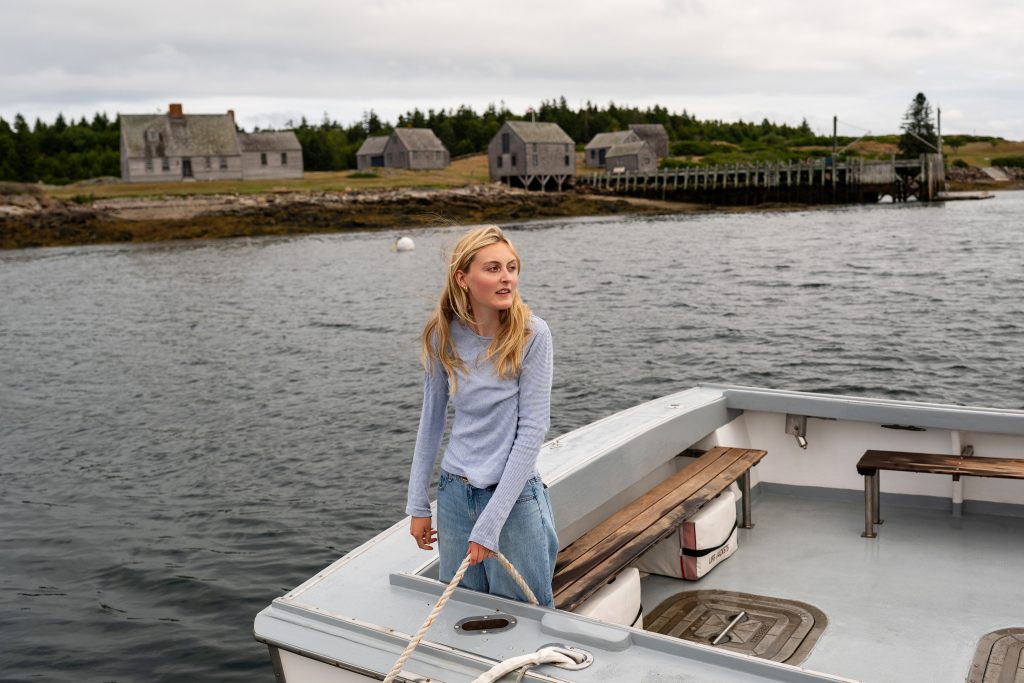
“We could not do this without them,” Ward said. “We’re family out here, and family looks out for each other. These kids have shown that they look out for us just like we look out for them, and that’s rare nowadays. We’re so happy to have them.”
Crabs and citizen science
This year’s fellows are Lachlan Bailey ’27, a philosophy and chemistry double major and the Peter Bryan ’80 Island Campus Summer Research Fellow and Head Fellow; Lucia “Lulu” Greene ’27, the inaugural Mark W. Hubbert Island Campus Summer Artist Fellow; Tanner Burnett ’27, the Joan & Ed Woodsum Island Campus Summer Research Fellow; and Charlotte Clark ’28, the inaugural Buz & Martha Brown Island Campus Summer Research Fellow.
For the fellows, their individual research projects are a major component of the summer experience.
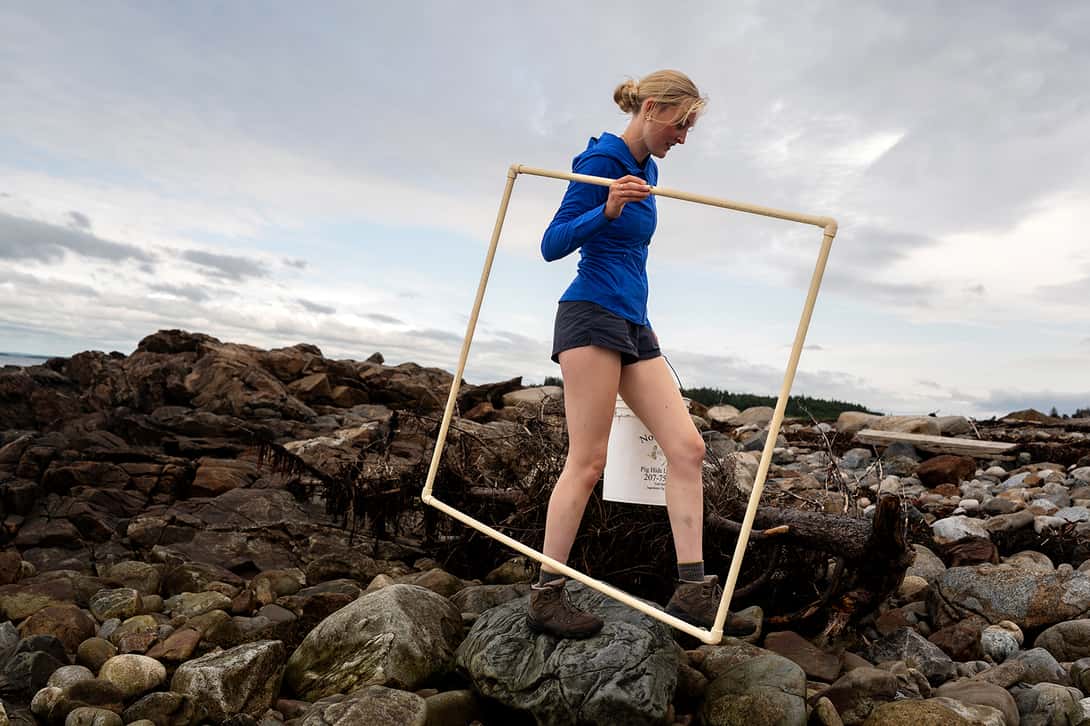
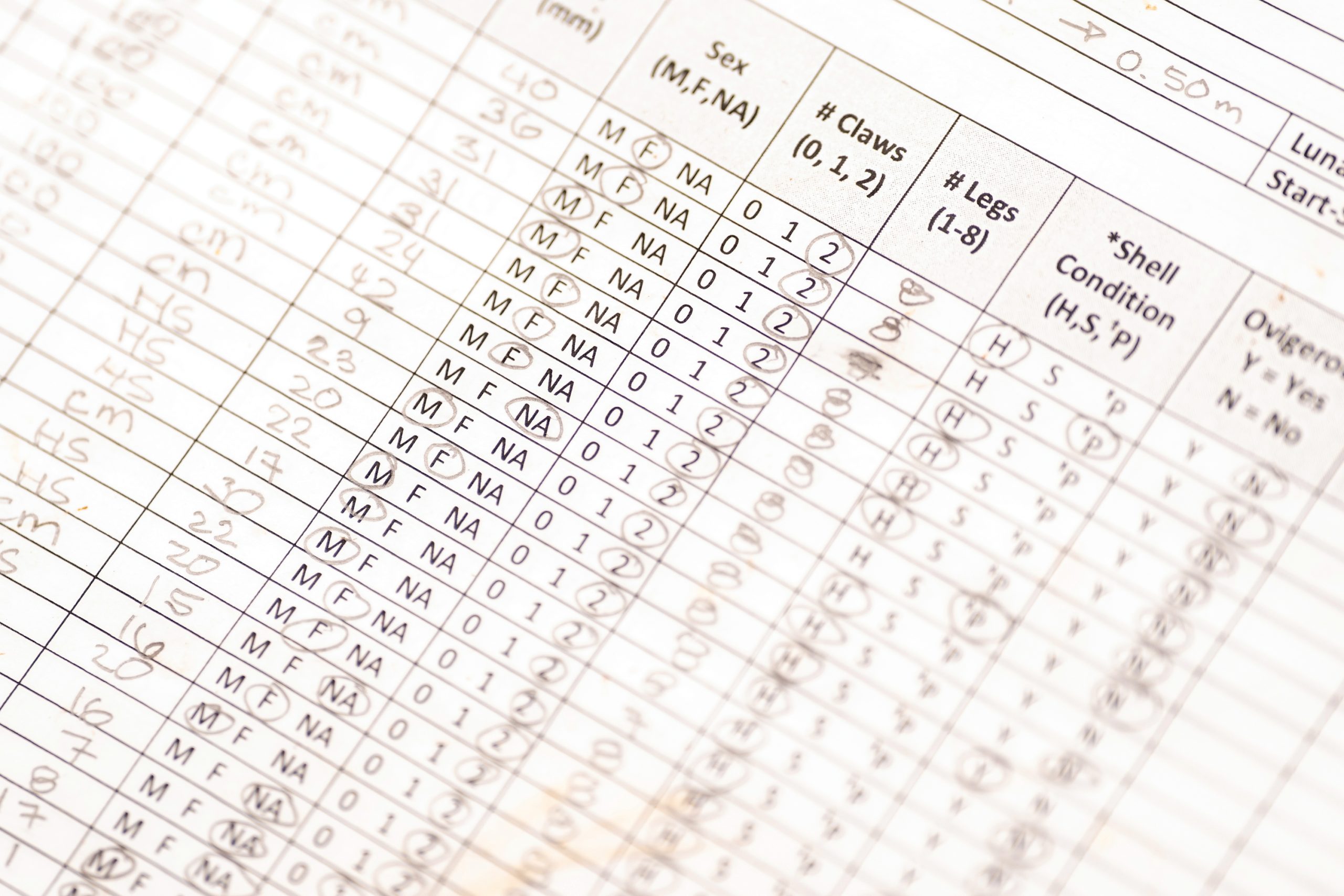
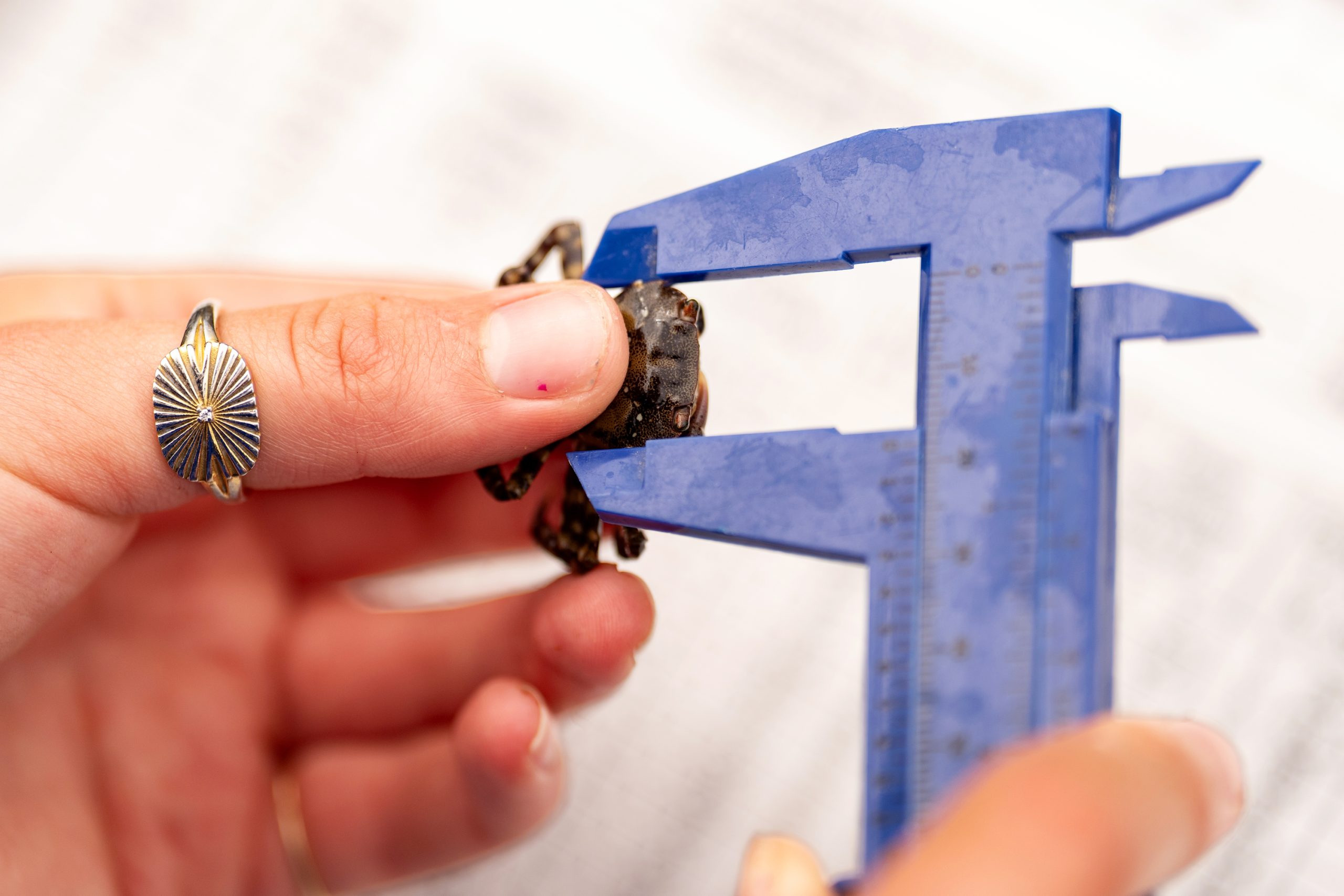
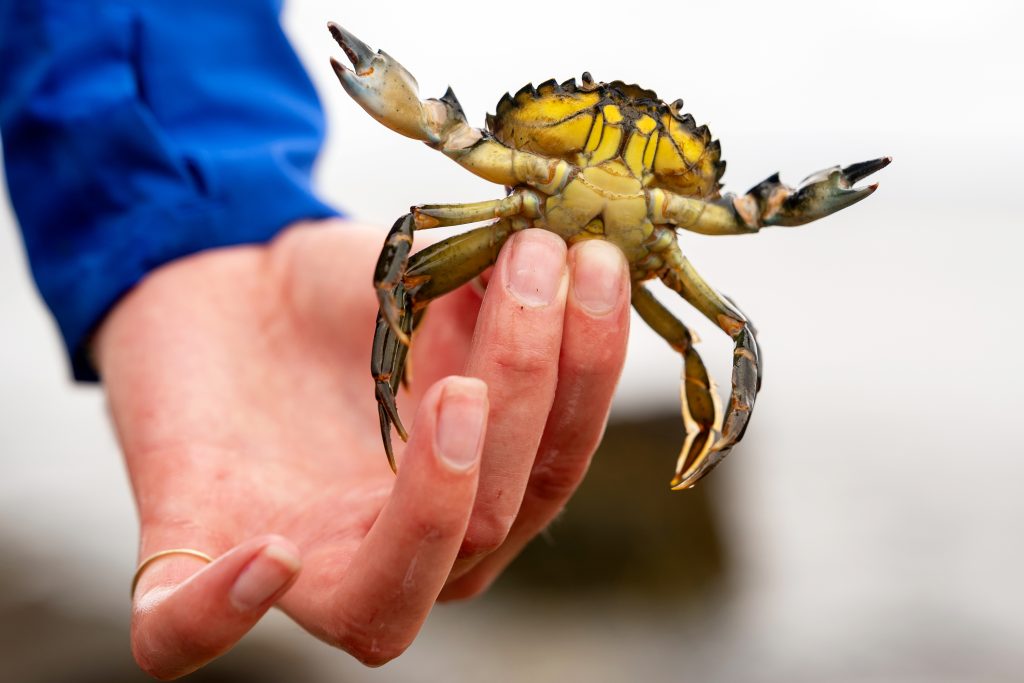
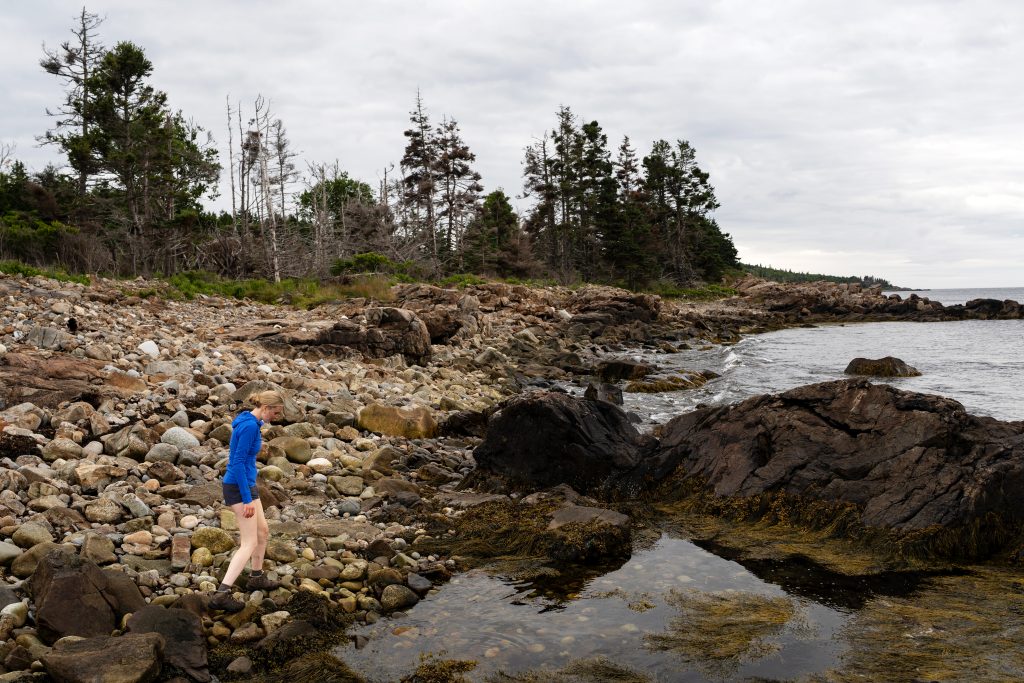
Clark, a biology and environmental science double major, is doing an invasive crab survey of the intertidal zone under the guidance of Cait Cleaver ’06, assistant professor of environmental studies. The student is surveying Betsy’s Beach, one of the favorite haunts of Betsy Wyeth, longtime owner of Allen and Benner islands. The seaweed-covered rocks of the beach are slippery, but Clark is sure-footed as she searches near the water’s edge, rapidly finding a green crab and an Asian shore crab. Both are invasive species that have disrupted local marine ecosystems and are easy to find on Allen. In contrast, she has only found one native Maine Jonah crab so far in her surveys.
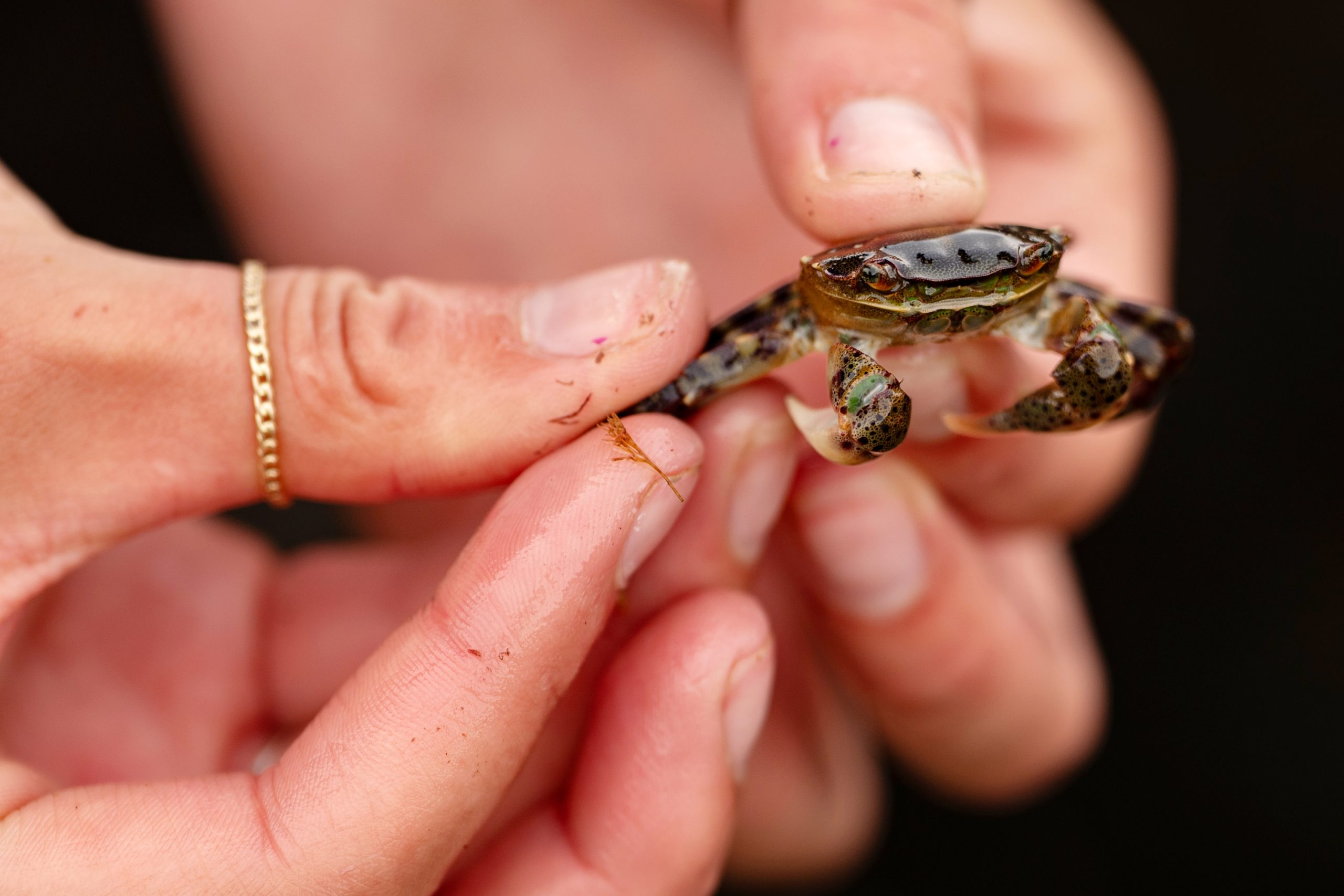
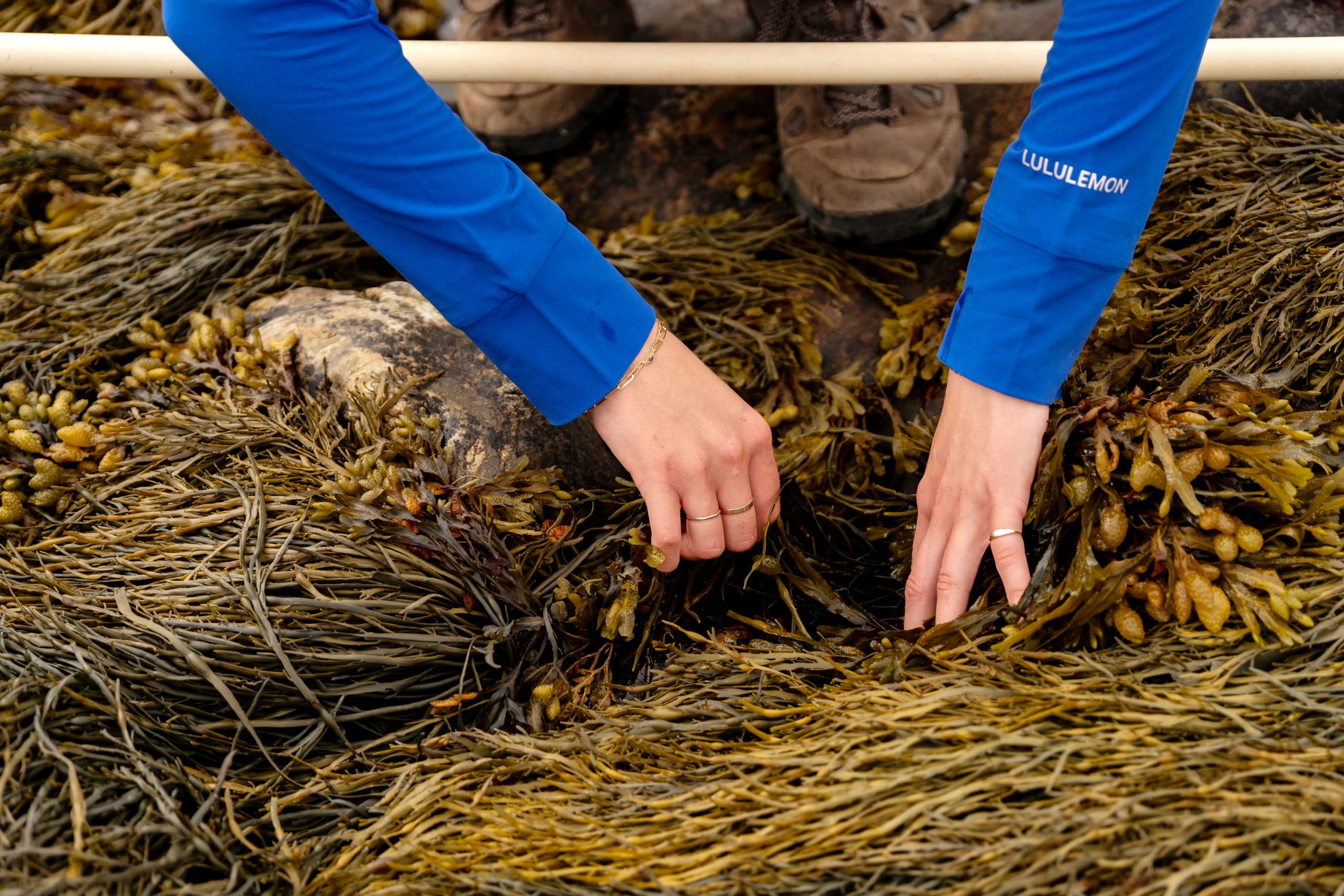
“I got so excited to find this little crab,” she said. “I was very careful. I returned that one nicely, and put it in a nice little spot.”
Clark, who is from Maryland, grew up crabbing on Chesapeake Bay. Her research on Allen combines her interests in the intertidal zone, place-based narratives, and citizen science, for which she’s helping to develop a crab survey protocol that can be repeated by groups like the Herring Gut Coastal Science Center in Port Clyde.
“We’re hopefully starting a survey on the island that can be continued,” she said. “It’s more meaningful data if there’s someone to continue it.”
Oil paintings, data collection, and ocean chemistry
Burnett, an economics major, has been working with Whitney King, the Dr. Frank and Theodora Miselis Professor of Chemistry, to build a data collection network around the island.
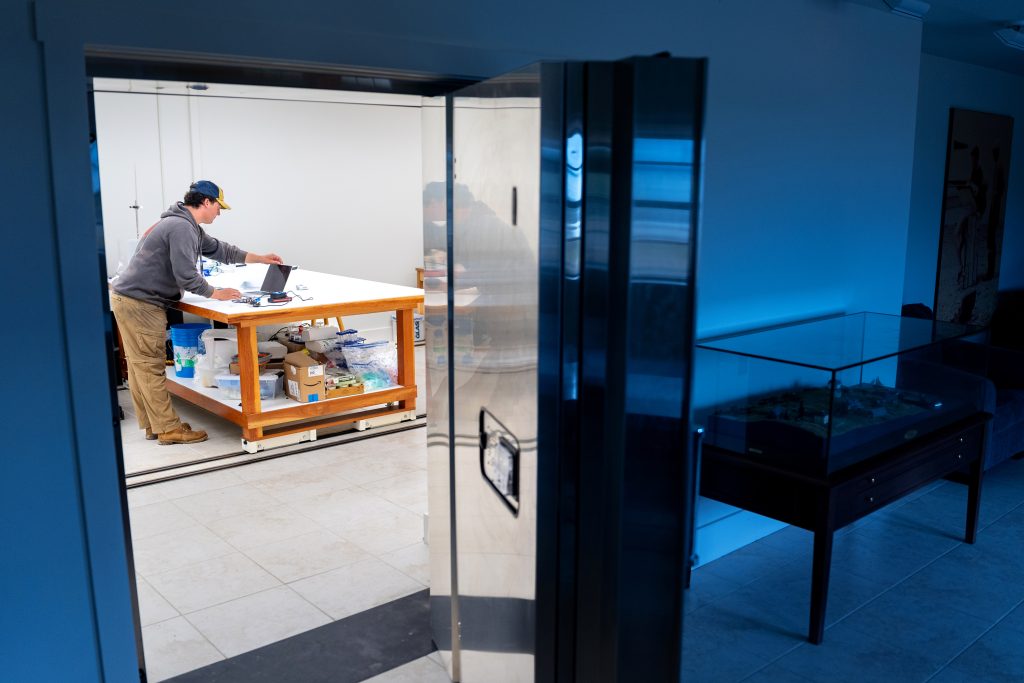
“We want to be able to put in temperature sensors in the forests, humidity sensors, and we want to connect them all in a loop,” King said. “We have a front row seat on one of the areas of the ocean that’s warming faster than anywhere else in the world, so we should take advantage of that position and build out climate monitoring capabilities.”
Towards this goal, Burnett used his coding skills to set up remote sensors. “I’m working on getting them connected right now,” he said of the sensor network. “It’s something that’s needed, and I have the digital know-how to accomplish this.”

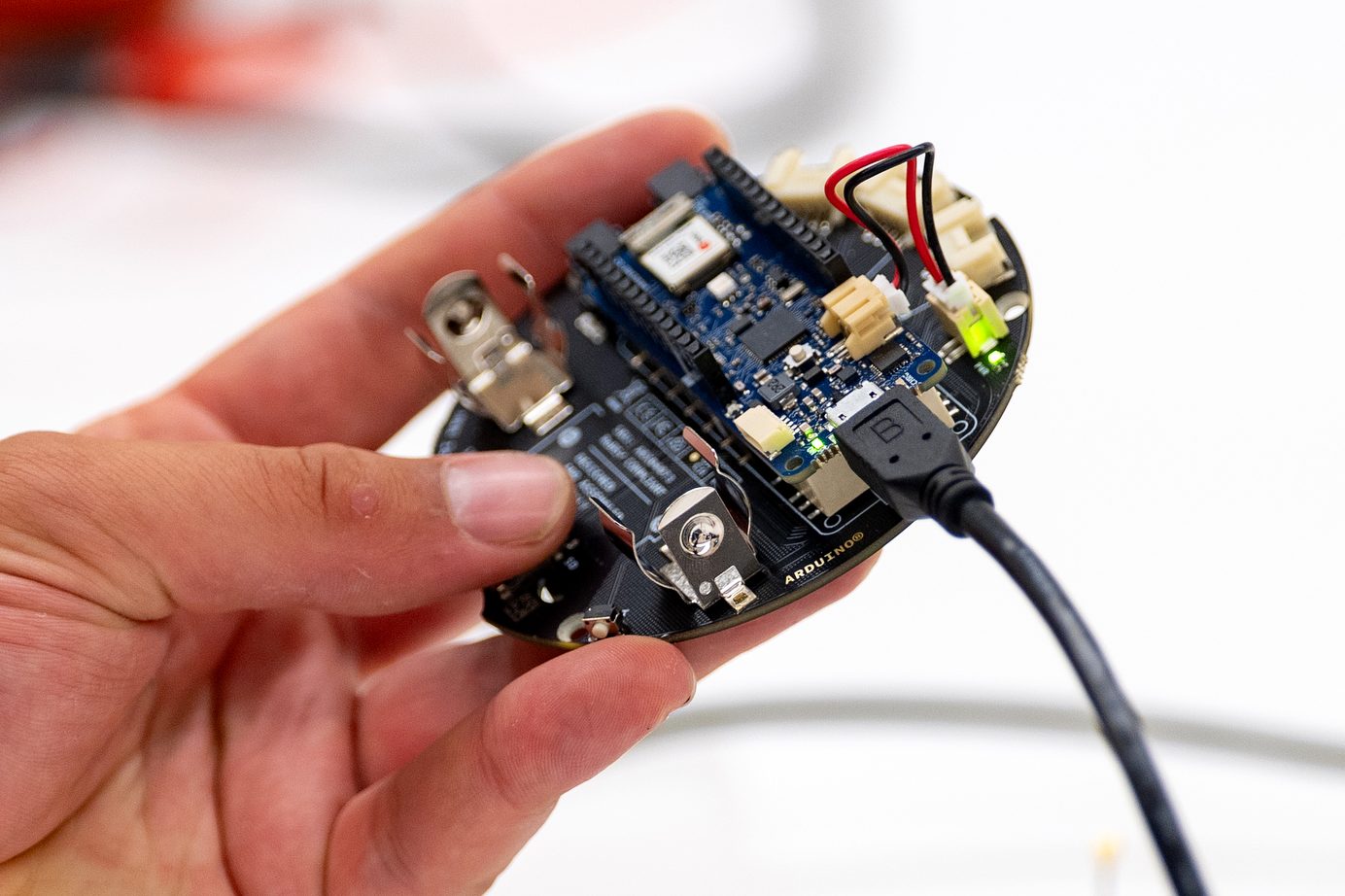
Bailey is also working with King on his research project, which revolves around creating artificial rock by passing low-voltage electrical currents through seawater to crystallize dissolved minerals. This technology, called “biorock,” has a lot of potential, King said.
“There’s a lot of interest in artificial reef-type formation,” the professor said.
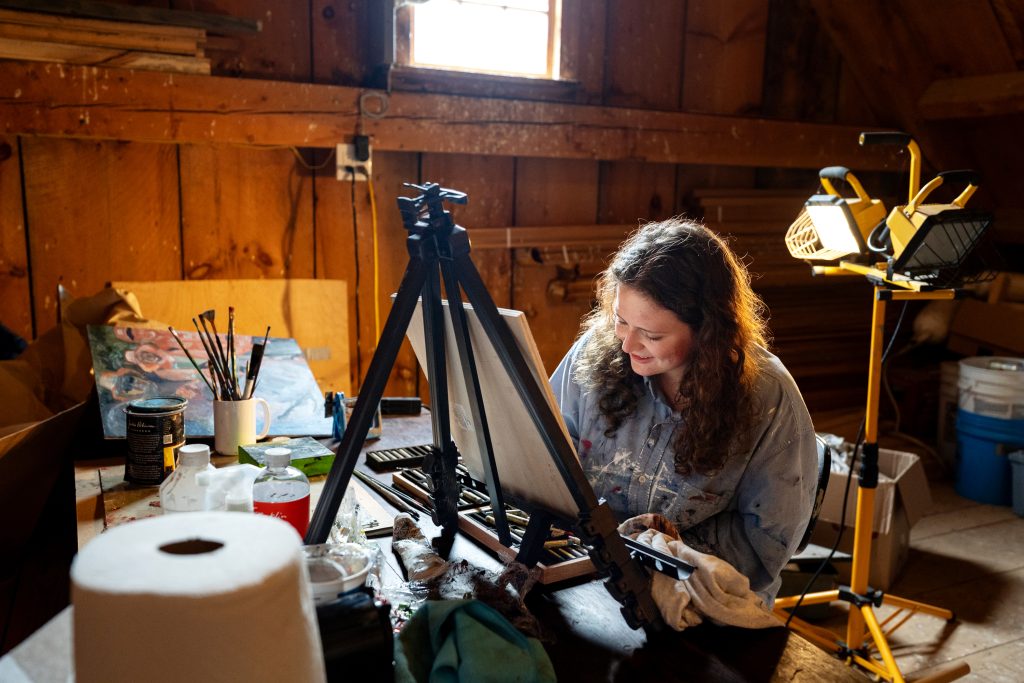
Greene, a double major in classical civilization-English and studio art, is taking a different approach to island research. She has created a small studio in the attic of the Allen Island barn, and she is working on oil paintings that explore the relationship between sea life, humanity, and herself. It’s inspirational, though sometimes intimidating, to paint in the same place where Andrew Wyeth painted.
“Andrew Wyeth is just, gosh, the American artist,” Greene said. “Being able to paint here is just a great experience.”


Fun On the Island
An offshore Maine island with no town, no stores, and no nightlife might sound isolating, but the fellows have found that life on Allen is far from boring.
The four students balance research projects with chores like gardening, helping visitors, and fun downtime activities like swimming, watching movies, fishing, and running on the island’s trails.
In his off hours, Burnett fishes off the dock and takes turns cooking dinners with the other fellows. He is a grilling fiend; Clark is good at pasta dishes; Greene makes delicious soups; and Bailey brings Asian specialties to the mix. And Burnett, although preparing for interviews and thinking about the post-graduation job hunt, has settled into island life for now.
“This is a great place to spend my last ‘free’ summer,” he said. “I love it here.”
Greene can often be found swimming in the ocean when she isn’t painting with oils in her barn atelier. One of her favorite experiences so far happened one night when the fellows went squid jigging down on the dock.
“We had all the lights out. There was no squid, but the mackerel came up, and they were all circling around. There were so many, like a thousand fish,” she said. “It was a great time.”
For Clark, every day is a little bit different.
“The best part is that anytime there’s something cool, like a puffin tour or a whale, everybody’s like, ‘Hop in the boat, let’s go!’” she said.
A midnight emergency
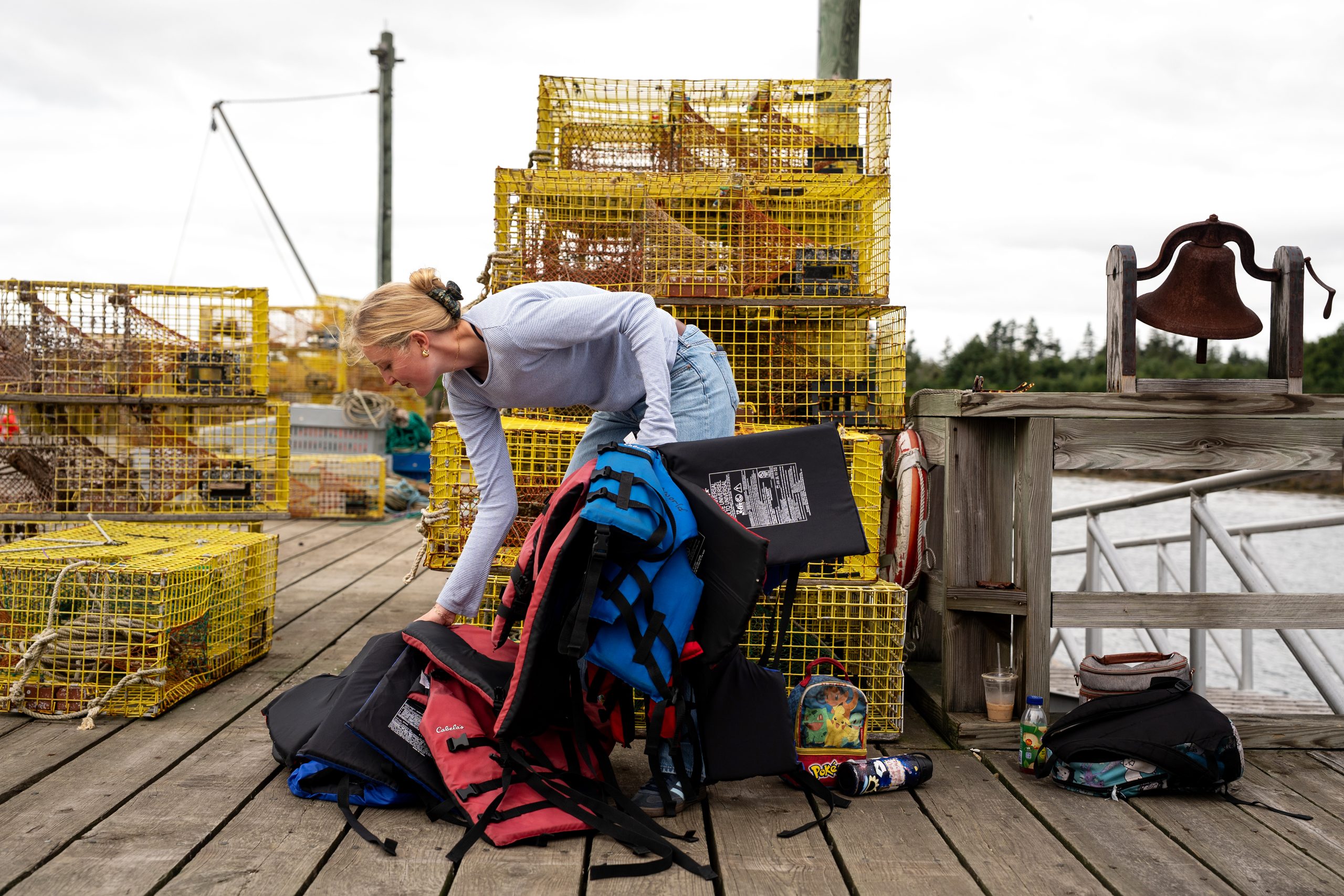
But the fellows also must pivot to meet any situation that could arise, not just the fun ones. And with an increasingly busy island—last summer there were 740 overnight guests and 161 group visits—anything can happen, and often does.
A few weeks ago, the fellows scrambled to make sure an overnight guest could get the medical attention she needed when she got very sick in the middle of the night.
As the woman was seeking help, she suddenly collapsed on the lawn of the Allen Island farmhouse.
“Luckily, it was a warm night, and the window was open, so her friend who was staying in the farmhouse could hear her calling for help,” Ward said.
He was on the mainland when the call for help came in at nearly 2 a.m., then phoned Aaron Golly, the boat captain and island caretaker, to devise a plan. Golly would get the woman to the mainland, and Ward would make sure an ambulance crew could meet the boat. But they needed the fellows to help. Burnett and Bailey were sleeping, but as soon as Golly told them there was an emergency, they jumped into action.
“Aaron said later it was like he turned on a light switch, or lit a firecracker. Both of them hopped out of bed and said, ‘What is it? We’re on our way,’” Ward recounted.
The students ran to the bunkhouse to get a backboard. They put the ailing guest on it, carried her to the back of the truck and then brought her down to the boat. The students rode with her on deck the whole way, one on either side, as the Otherworld churned through the dark water towards the mainland and help.
“It was not a great situation, and Lachlan and Tanner sat there and comforted her and made sure she knew that everything was going to be OK,” Ward said.
At the dock, the EMTs took over, but the students’ willingness to help made an impression.
“It’s not just about how you perform in the good times when everything’s going well,” Ward said. “The people that I hold close and the people that I want to work with, like these kids out there, it’s how do you perform when we have our backs against the wall? And they have proven that they can be counted on in the bad times as well as the good times. And I just can’t appreciate that more.”
Leaving their mark
For the fellows, it has been an unforgettable summer for many reasons. They’ve surveyed invasive species, created art, and worked to build a longitudinal monitoring system for Allen Island. They’ve also weedwhacked “probably at least 1,000 miles each,” Ward joked, helped a guest in an emergency, built lasting friendships, and gotten to know a remote corner of Maine in a way that few ever do.
Their impact will remain long after the season ends, and they’ll always be welcome here, Ward said. When they make their final journey to the mainland at the end of August, they will hopefully step off the boat with newfound confidence and resilience, as well as a strong set of sea legs. And even after the island disappears from the horizon, those things will stay with them for years to come.