Colby to Open Innovative Residential Complex on Mayflower Hill Drive
The new housing community will foster social connection and collaboration, while honoring inspiring Colbians
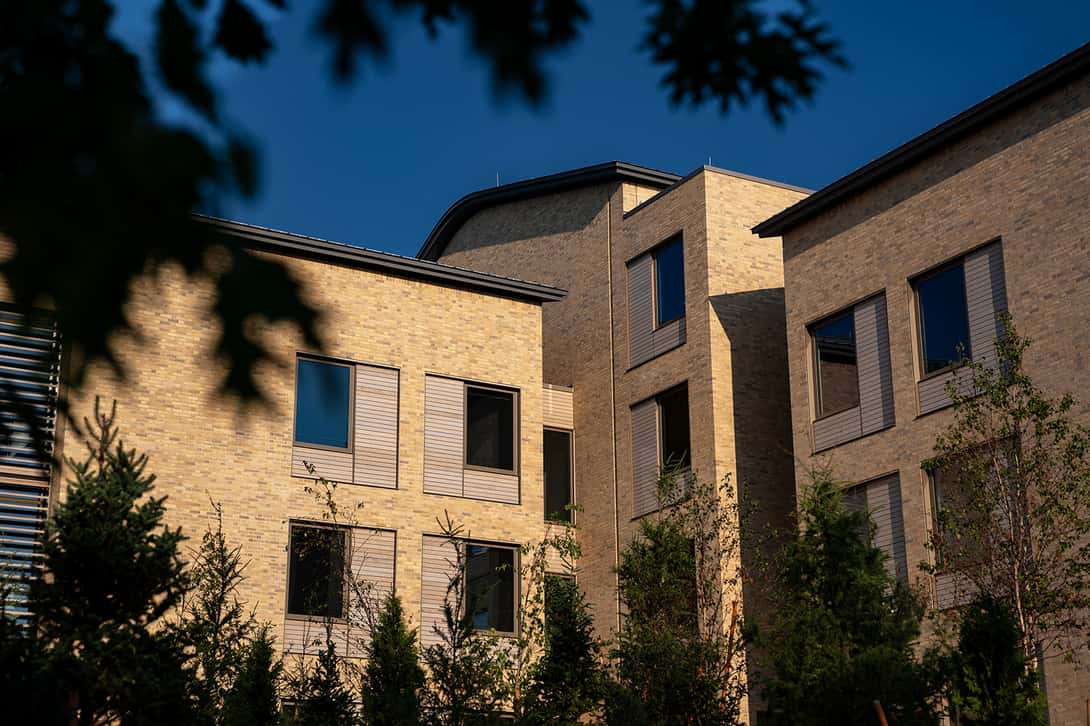
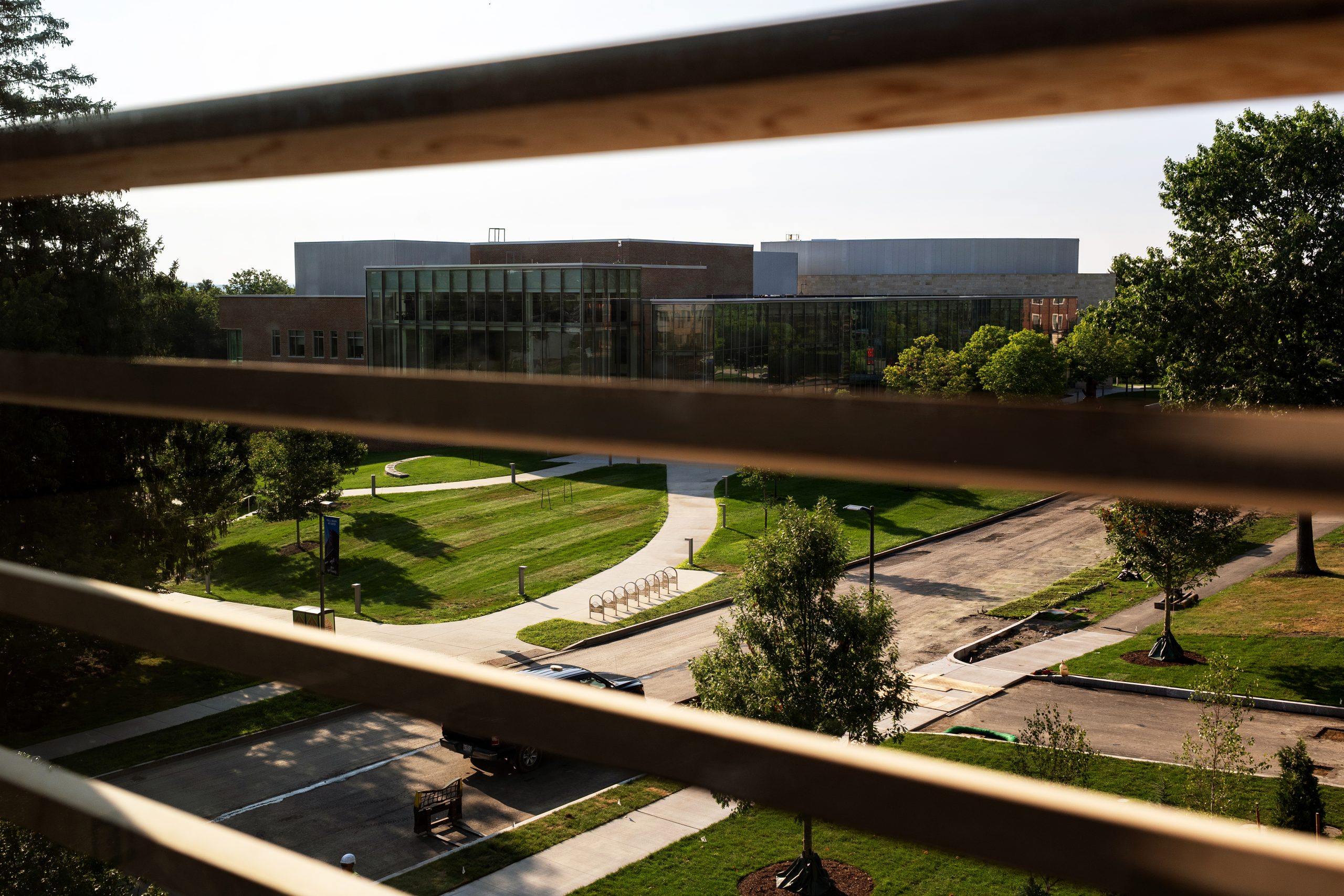
Colby College will welcome students to its new residential community on Mayflower Hill Drive this fall, marking a significant milestone in the College’s multiyear, more-than-$200-million investment in residential life. The newest building is the sixth built in recent years for student housing and the largest.
Overall, the new residences have added space for nearly 650 students. In addition, the College has systematically renovated its historic housing, long a hallmark of the Colby experience.
Designed as single rooms for 217 juniors and seniors by Hopkins Architects of London and Bruner/Cott Architects of Boston, the 112,000-square-foot complex started with a challenge: How to leverage Colby’s expertise in community-building to create a residence that fosters independence and connectivity? And how could the College move away from the hotel structure that dominates typical student housing design, with long hallways that separate students instead of bringing them together?
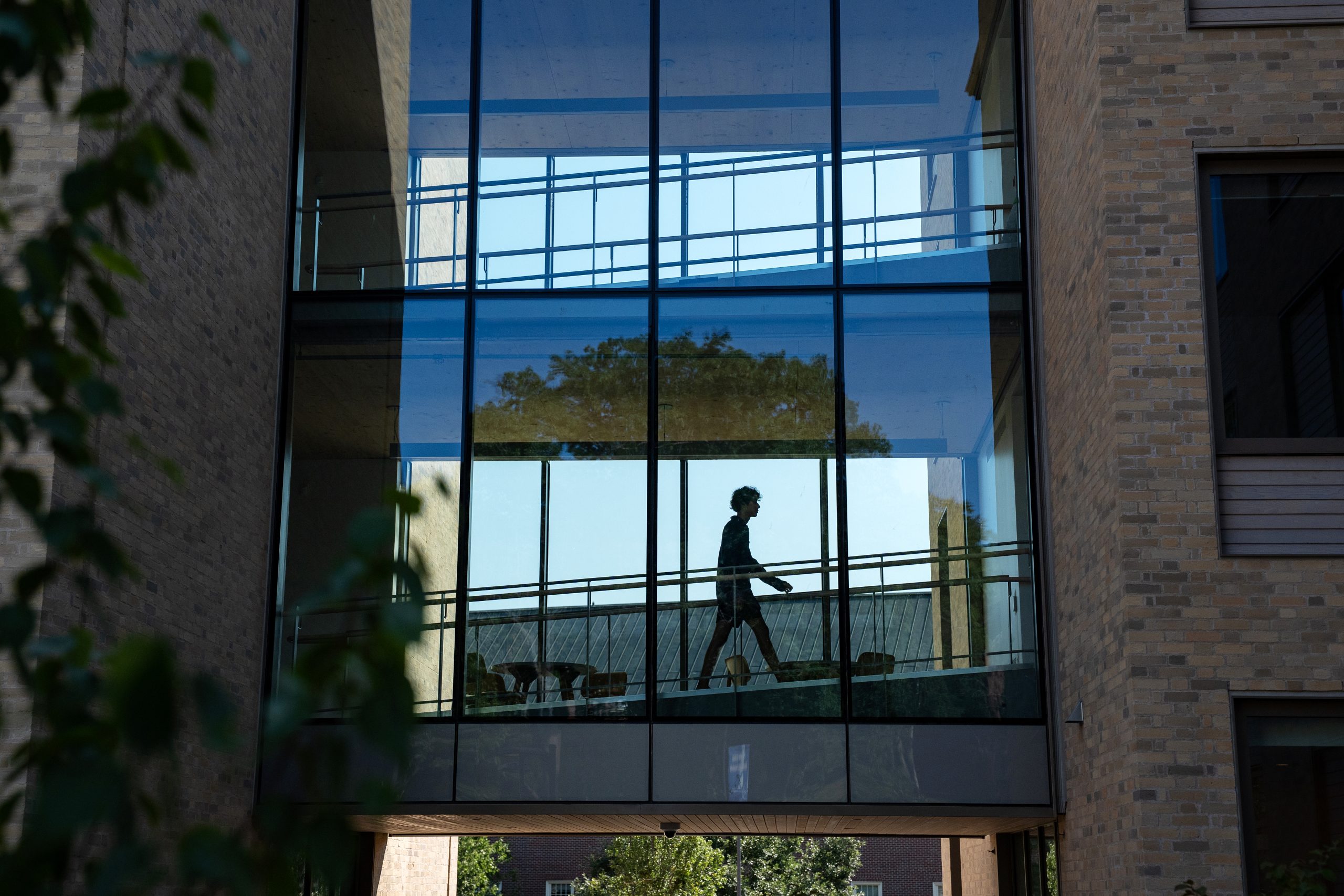
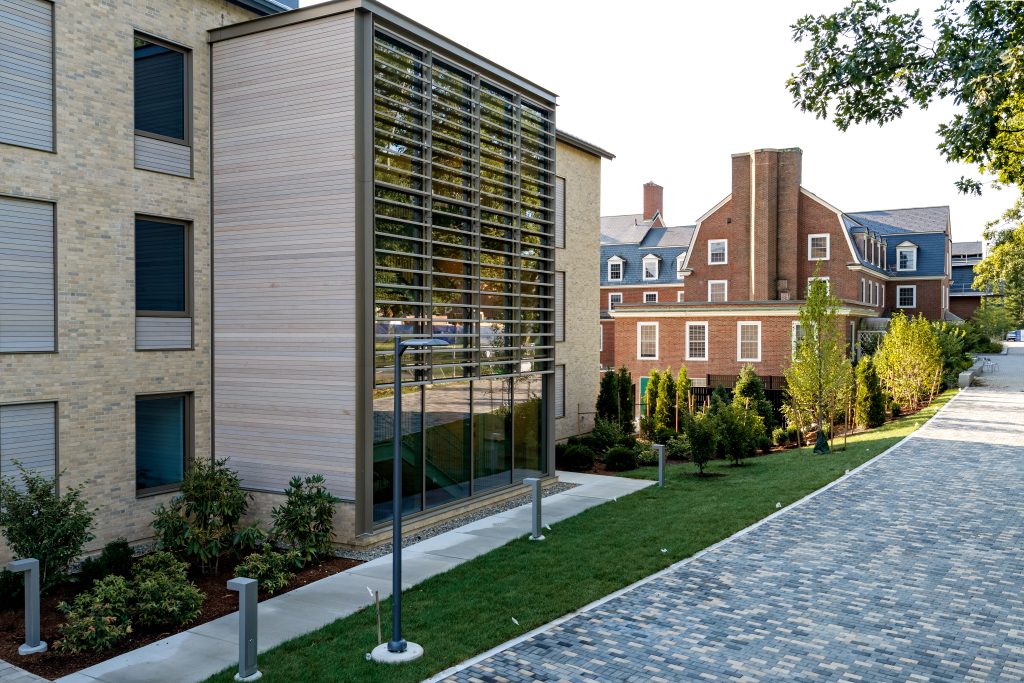
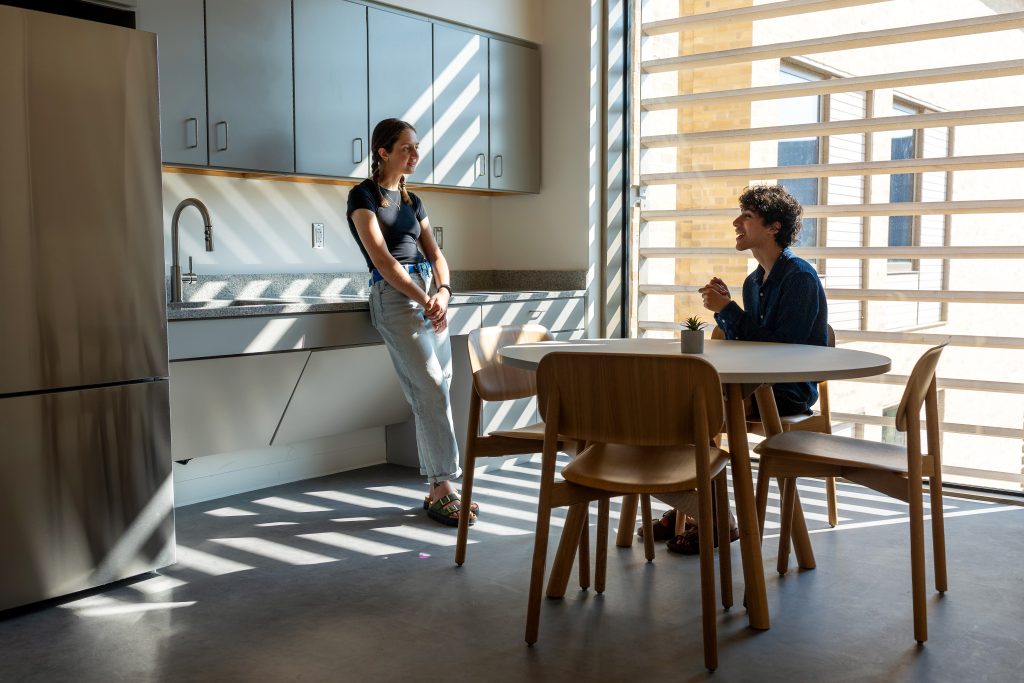
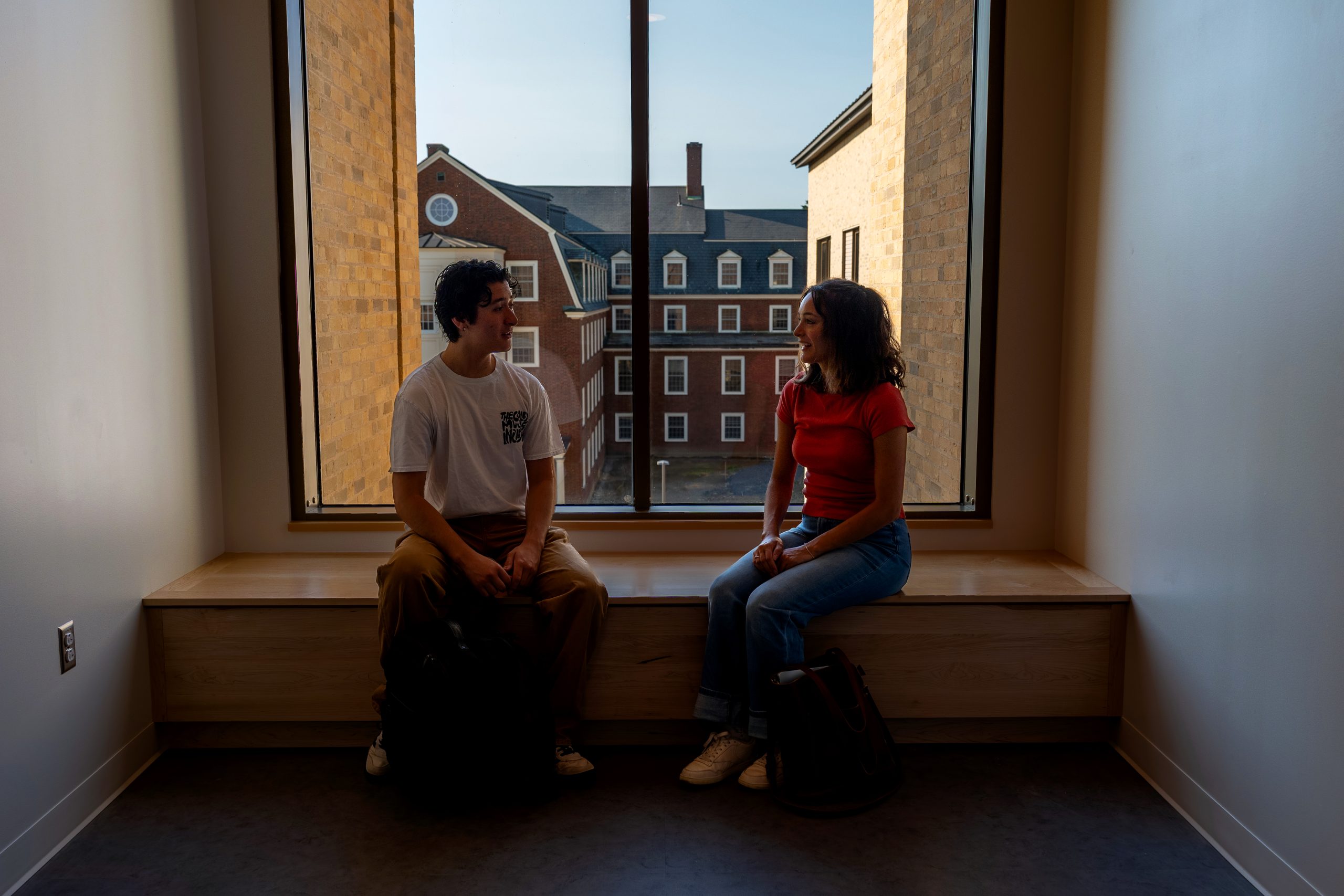
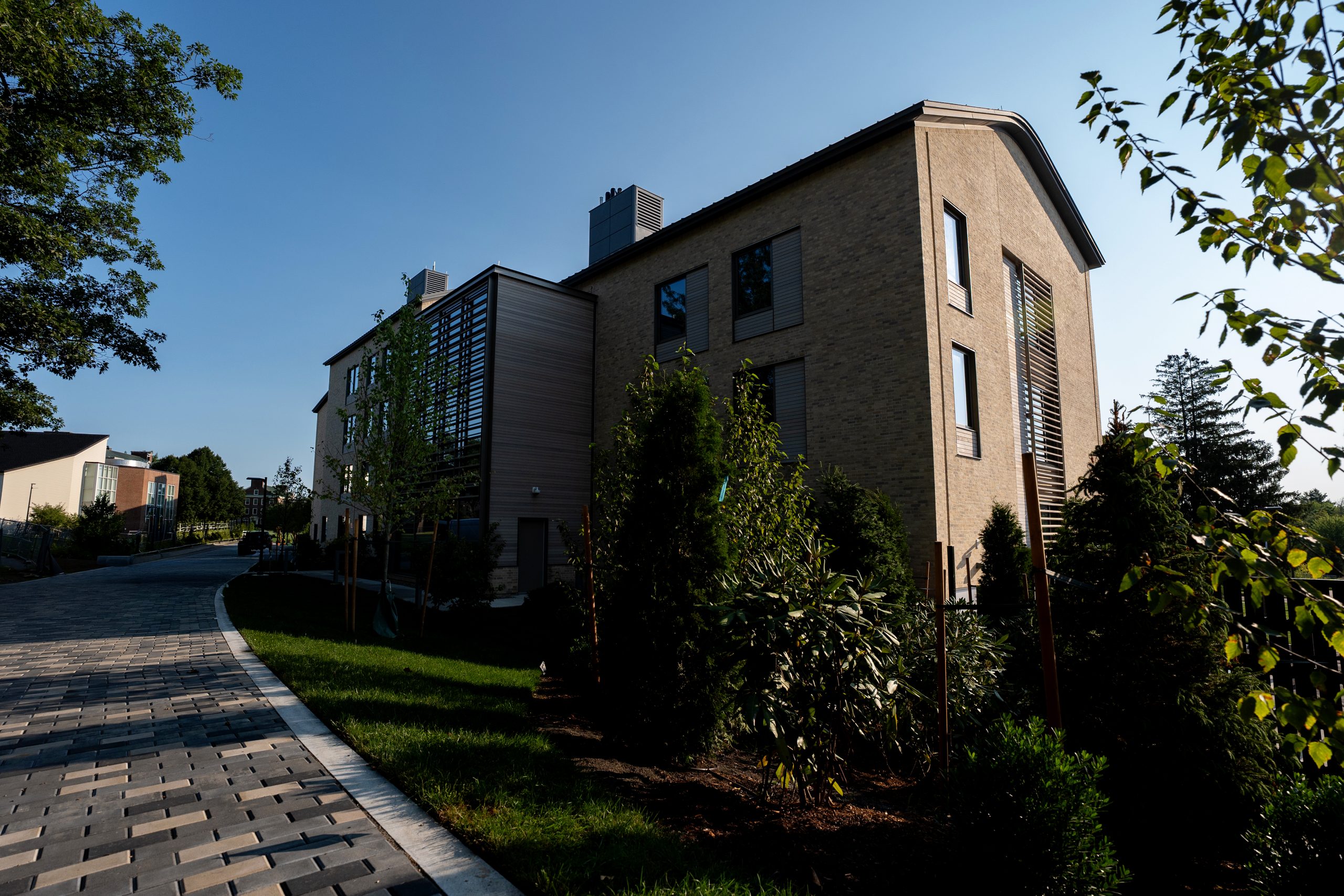
The answer was to build a residential complex with almost no hallways. The result is five connected houses, each with its own entrance, stairs, elevator, kitchenette, and gathering spaces. The five individual structures, three- and four-stories tall, are joined by evocative bridge spaces—the only “hallways” in the building—that serve as informal, light-filled social and study nodes with beautifully landscaped views. This design establishes tight-knit residential clusters with shared spaces for collaborative work, dining, and socializing.
More than 700 students applied for 217 available beds, affirming that Colby’s housing options reflect the comforts, technology needs, and privacy standards that modern students are accustomed to at home.
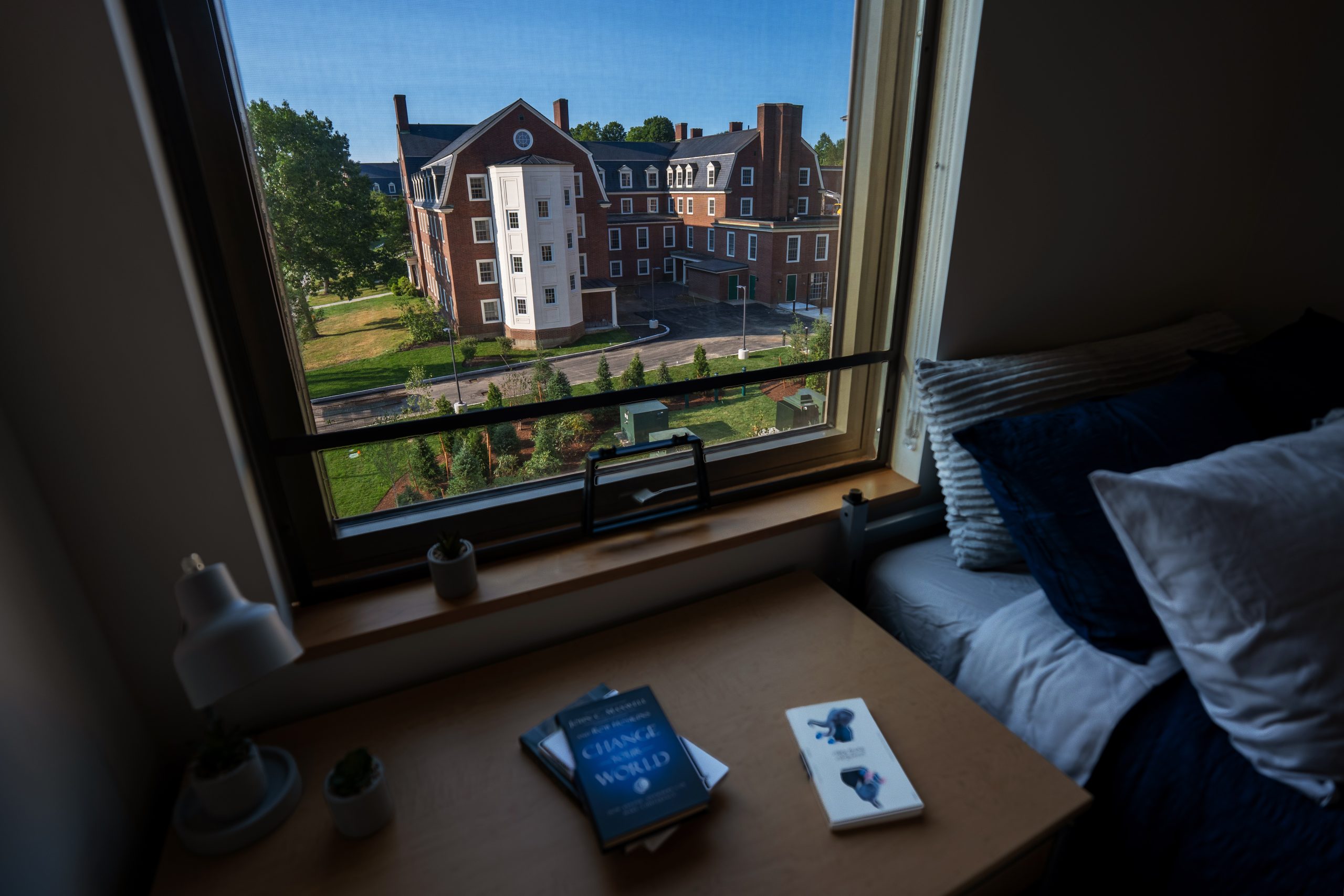
Students will live in a mix of traditional suites, clustered single rooms, and a new connected-suites concept. To encourage social interaction and collaborative living, adjacent suites share access to and responsibility for a central kitchenette equipped with a full-size refrigerator, sink, and a microwave/air fryer combination unit. Regardless of the configuration, every resident has a private, single-occupancy bedroom, satisfying the need for independent study space.
Generous support
The residential complex represents a critical pillar of the College’s historic Dare Northward campaign, which is approaching $1.2 billion. Early momentum was accelerated by collective leadership gifts from individuals who care deeply about Colby’s student-centered mission, some of whom gave anonymously.
Arrayed on Mayflower Hill Drive across from the Diamond Building and adjacent to Cotter Union, the five buildings are individually named: The Mayflower House, O’Neil House, Igarashi House, Charlie Bassett House, and Werlin House.
The residential community would not have been possible without the extraordinary support of Trustee Marieke Rothschild and her husband, Jeff Rothschild. As parents of a Colby graduate, the Rothschilds have an enduring commitment to education, arts and culture, health and wellness, and environmental conservation.

The Mayflower House is supported by anonymous donors. Carol S. O’Neil and Trustee John J. “Jack” O’Neil III ’77 donated funds for the O’Neil House. The Kingdon-Saylor family supported the Peter Igarashi House, named in honor of Peter Igarashi ’44, the first American-born person of Japanese descent to attend Colby. Trustee Sandy Buck ’78 and Sissy Buck are honoring the late Charles S. Bassett, beloved as the father of American studies at Colby and one of the College’s most revered professors, by naming the Charlie Bassett House. Trustee Jason Werlin ’00 and Amelia Schultz ’00 funded the Jason Werlin and Amelia Schultz House.
Jack O’Neil is cofounder of National Development, one of New England’s largest real estate development and investment firms. As a developer, he understands the power of intentionally designed spaces to facilitate human interaction and achievement. Carol O’Neil served as chair and trustee on the board of Kripalu Center for Yoga and Health and has more than 30 years of experience serving nonprofit organizations as a volunteer and leader. The O’Neils’ support of other initiatives on campus, including the O’Neil I O’Donnell Forum within the Harold Alfond Athletics and Recreation Center, has strengthened Colby and complemented their engagement in communities in their home state of Massachusetts.
For Jason Werlin and Amelia Schultz, their support of the residential community continues a longstanding commitment to the College that began when they met on Mayflower Hill as students. They have credited Colby with providing them with transformational experiences as students, and together, they established the Jason Werlin ’00 and Amelia Schultz ’00 Endowed Financial Aid Fund. Werlin joined the Board of Trustees in 2023. He is a managing director at TA Associates, a global private equity firm.
Sandy Buck, retired president of the Horizon Foundation, is a well-known conservationist. Sissy Buck is a printmaker and book artist. The Bucks have provided a variety of philanthropic support to Colby, primarily centered around student athletics and environmental leadership, including the Buck Lab for Climate and Environment. Buck was a student of Bassett’s, and this gift honors the many Colby faculty who changed the trajectory of their students’ lives through rigor, high expectations, and care.