Going with the Flow
Projects for Peace winner Bishal Khadka ’26 helps ensure safe drinking water in Nepal
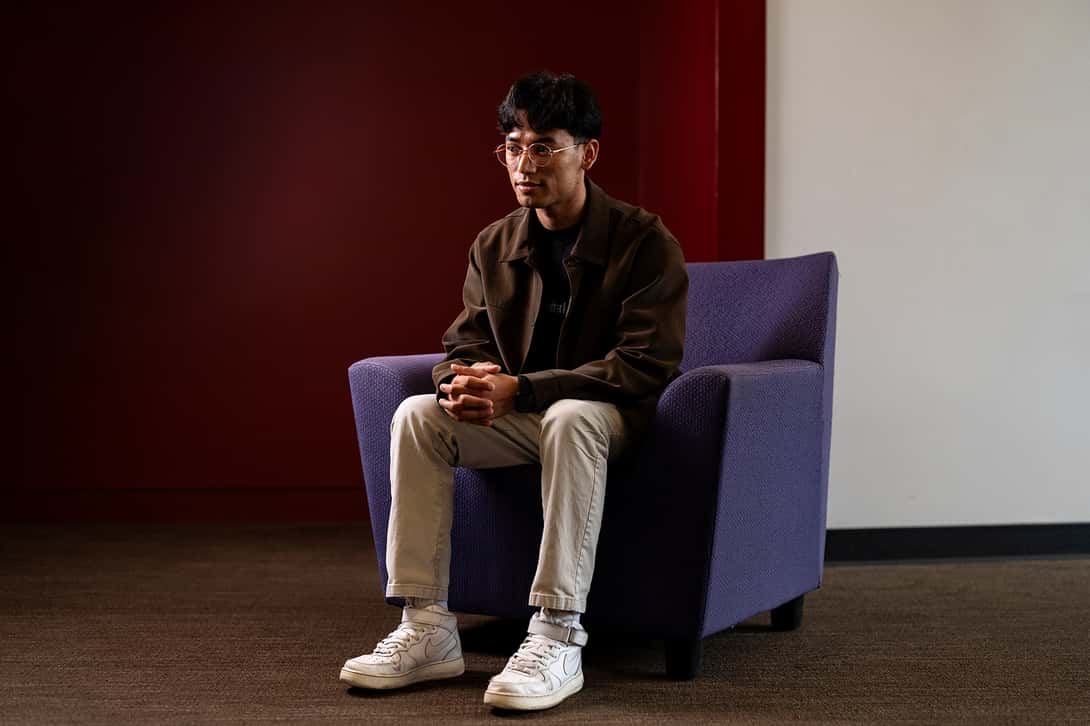
Tall grasslands and riparian forests weave among fields of rice and corn across subtropical valleys, surrounded by the Himalayan foothills. In Nepal’s Inner Terai region, Bishal Khadka ’26 lived in the municipality of Dudhauli until age 5, when his family moved to Kathmandu for a better education. He’s been back to Nepal often, but this year he returned as a winner of a 2025 Davis Projects for Peace Summer Grant.
“I wanted a project that would have an immediate impact and improve preventive health at the community level,” he said. He’s never forgotten what it was like to live without safe drinking water, which is still a problem in many parts of Nepal. He dedicated his Projects for Peace funds to the installation of water-filtration systems at two public schools in Dudhauli—for more than 850 students and staff—and a water storage tank in a nearby village.
“In the context of this project, for me, ‘peace’ means giving students a chance to focus on learning and growing without the fear of unsafe drinking water,” he said.
Founded by philanthropist Kathryn Wasserman Davis in 2007, the global program awards $10,000 each to U.S. and international undergraduate students to create and carry out projects anywhere in the world that solve a community-based conflict and foster peace.
Colby has been in partnership with the program since its inception, joining about 100 other colleges and universities, mostly in the United States. They nominate students for the award, and winners are chosen by Davis Projects for Peace, which is managed by Middlebury College in Vermont.
To date, Colby students have earned 29 of the awards, one to two annually. This year Khadka, who will graduate with a double major in computer science and mathematics, is the College’s sole winner and one of 136 Projects for Peace grantees worldwide.
Khadka planned his project from the ground up while he was studying as a Colby student at Worcester College at the University of Oxford, through the Institute for Study Abroad. He identified the need, consulted with those directly affected, and researched the solution.
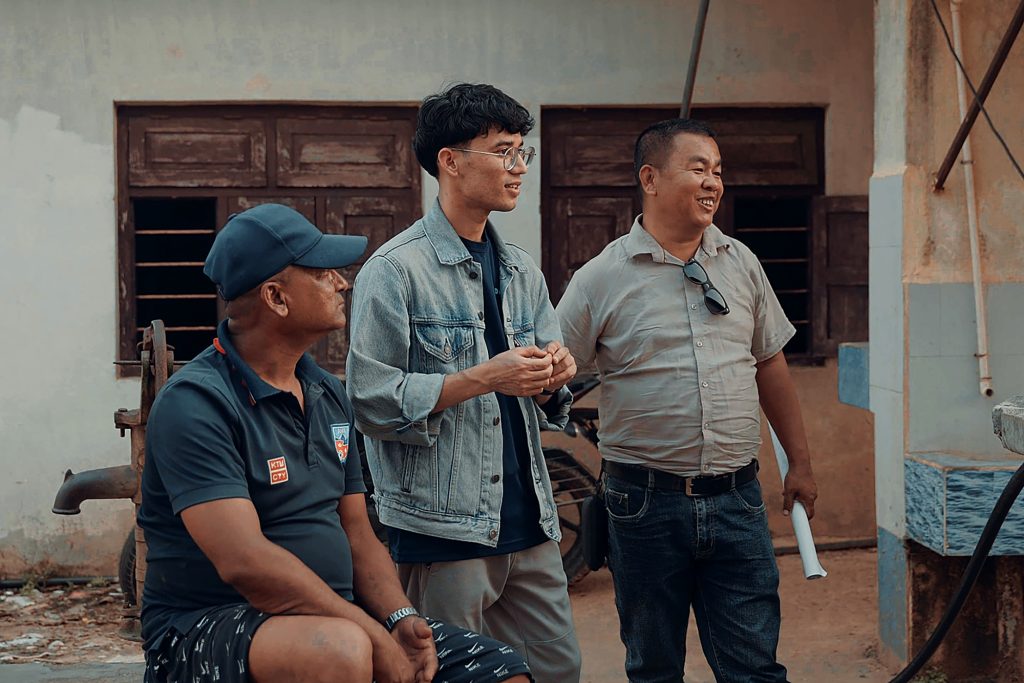
From afar, he followed the Davis United World College Scholars Program proposal guidelines and budget template, provided by Colby’s Office of Foundation Relations and Sponsored Programs, to plan the details. In November 2024, he submitted his Projects for Peace proposal.
A review committee from offices across campus considers the project’s need, timeframe, sustainability, and impact, and offers students feedback and recommendations to ensure that their proposals are competitive, said Seven Grenier ’94, director of sponsored programs.
It was late at night one evening last March while Khadka was at Oxford that he received the email saying he’d won the Projects for Peace grant. “Everything hit me all at once—disbelief, excitement, and also pressure thinking of the responsibility I now faced,” he said.
Khadka went to work right away, arranging WhatsApp calls with the school principal, people he already knew in that part of Dudhauli, and various water-filtration companies. He hired SmartPaani, which provides eco-friendly water-management systems and community training in equipment maintenance and hygiene.
‘The biggest thing I learned is that I am much more resilient than I realized. I used to believe I needed everything planned out perfectly to succeed, but this project taught me to let go of those strict expectations.’
Bishal Khadka ’26
Early April, during Oxford’s Easter vacation and before the monsoons, he left for Dudhauli to visit Shree Saraswati Secondary School. He was greeted by a nationwide teachers’ strike, which meant that schools were officially closed. But the principal and several staff members met with him, ready to collaborate.
“The need in this area is real and urgent,” said Sailesh Kapari, a civil engineer at SmartPaani. “The Terai Region’s issue is often contamination, particularly iron, manganese, arsenic, calcium hardness, and coliform.”
Test results of the school’s water showed high levels of turbidity and coliform counts. To address this, SmartPaani installed a multi-stage water-purification system. From a well in the school, the system routes water to a sedimentation tank and a biosand filter to remove physical impurities and pathogens. Then, an inline filter uses ultraviolet light to disinfect and sterilize. The now-potable water is held in a stainless-steel collection tank for safe storage and is accessible by a drinking-water station.
From his Oxford dorm room, Khadka single-handedly managed the day-to-day operations of the project, seeing it through to the end. And what a challenge. He had to navigate the time zone difference with his class schedule and deal with more project-timeline setbacks and another national strike that halted public transportation.
“It was impressive how Bishal handled the unexpected, temporary roadblocks that were out of his control, but he found a way to continue on,” said Grenier.
Next, Khadka tackled the water situation at Shree Bal Jyoti Primary School. Principal Khadga Sunuwar said, “Even though water from the open taps, springs, and wells looked clean, it wasn’t necessarily safe. Now, the children fill their own bottles directly from the tap and use the water in their classrooms, and they have remained healthy.”
Through SmartPaani, both schools have received detailed maintenance manuals and training, scheduled follow-ups, and five years of post-installation support. Students, parents, and staff also participated in WASH (water, sanitation, and hygiene) education. It covers safe drinking-water practices, key hygiene and sanitation topics, and ways the schools’ new water filtration systems contribute to these.
“The WASH sessions were the most rewarding part for me,” said Kapari. “Seeing the enthusiasm and willingness to learn made the whole experience meaningful. It turned the project from a technical installation into a moment of empowerment, where the students, staff, and community members gained the knowledge and confidence to protect their own health, every day.”
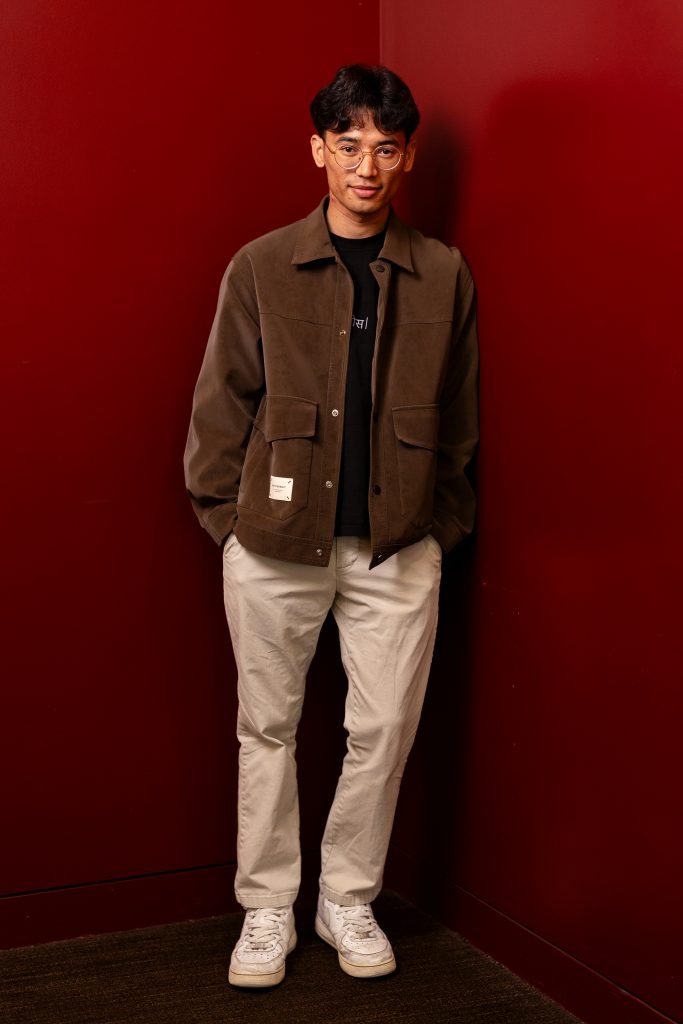
With the remaining Projects for Peace funding, Khadka saw yet another need. In this area of Dudhauli, water had flowed continuously through a line without a tap to control it. During the dry months’ rationing, it barely trickled out, and the monsoons made it muddy and unsafe. So, a water storage tank with a faucet was installed, which collects and safely holds water so it is accessible anytime.
Both schools are featured in Khadka’s 13-minute documentary on YouTube, Davis Projects for Peace: Clean Drinking Water for Students in Nepal. While the film brings awareness to some of Nepal’s water challenges and Khadka’s efforts to overcome them, his Projects for Peace journey has taught him a lot about himself.
He said, “The biggest thing I learned is that I am much more resilient than I realized. I used to believe I needed everything planned out perfectly to succeed, but this project taught me to let go of those strict expectations. I found myself in situations where things went wrong, and I had to respond quickly. It showed me that I could handle that stress and keep the work moving forward, even when things were chaotic.”
Michael Freese, director of international programs at Colby, said, “What moves me the most about Bishal’s project is that it was for his home village. It inspires international students to ask themselves how they can contribute to their own communities. And it inspires me to keep improving our resources to support them. I’m interested to see where Bishal goes from here, after Colby. I have no doubt he’ll be impactful.”
Khadka hopes to pursue a career as a software engineer.
And what about the next generation of Dudhauli? “I hope that they can grow up with fewer barriers and more opportunities,” he said. “If Dudhauli can be the place that supports their goals rather than something they feel they need to leave behind, that’s the future I want to see.”


