A Summer of Innovation for Colby Entrepreneurs
At the Roux Institute at Northeastern in Portland, students learn what happens after they make a successful pitch
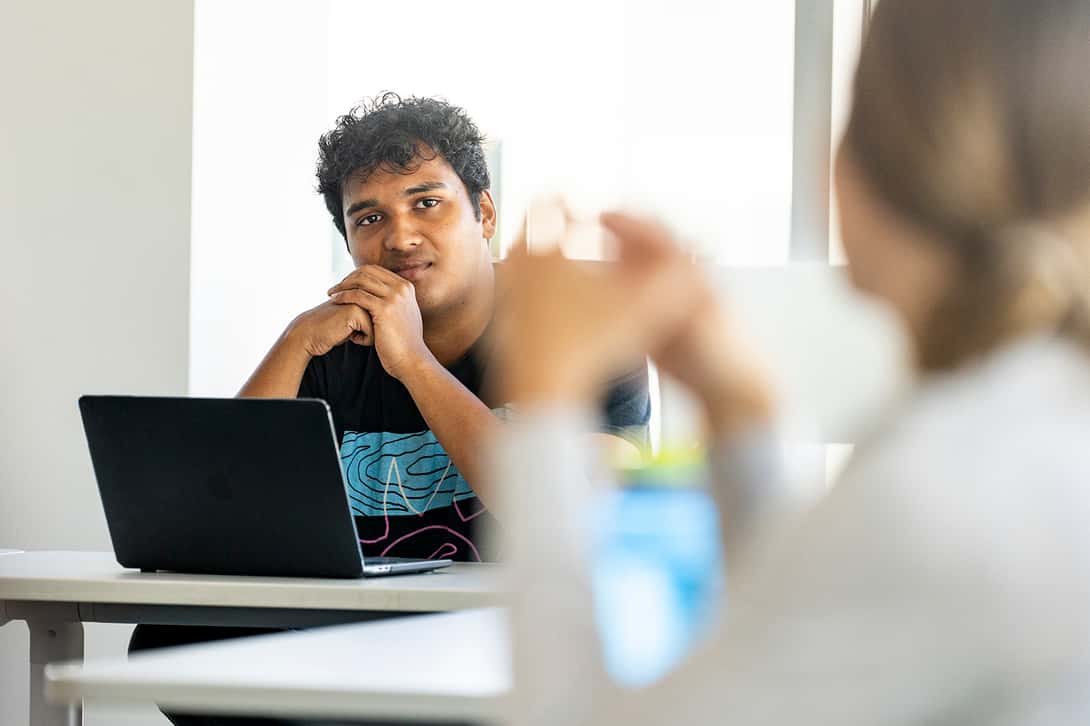
Colby students interested in becoming entrepreneurs are familiar with pitch contests, which challenge them to present an idea for a business before a panel of judges with an eye toward winning cash prizes, mentorship opportunities, or something else. Such contests are valuable, offering students the chance to prepare and perfect their pitches, receive critical feedback, and connect with experts and other entrepreneurs.
But pitch contests usually do not translate to the actual work of creating a business.
This summer, a cohort of Colby student entrepreneurs hoped to change that outcome. They participated in the month-long 2025 Maine Summer Accelerator at the Roux Institute at Northeastern University in Portland to find out what happens after they make their pitch.
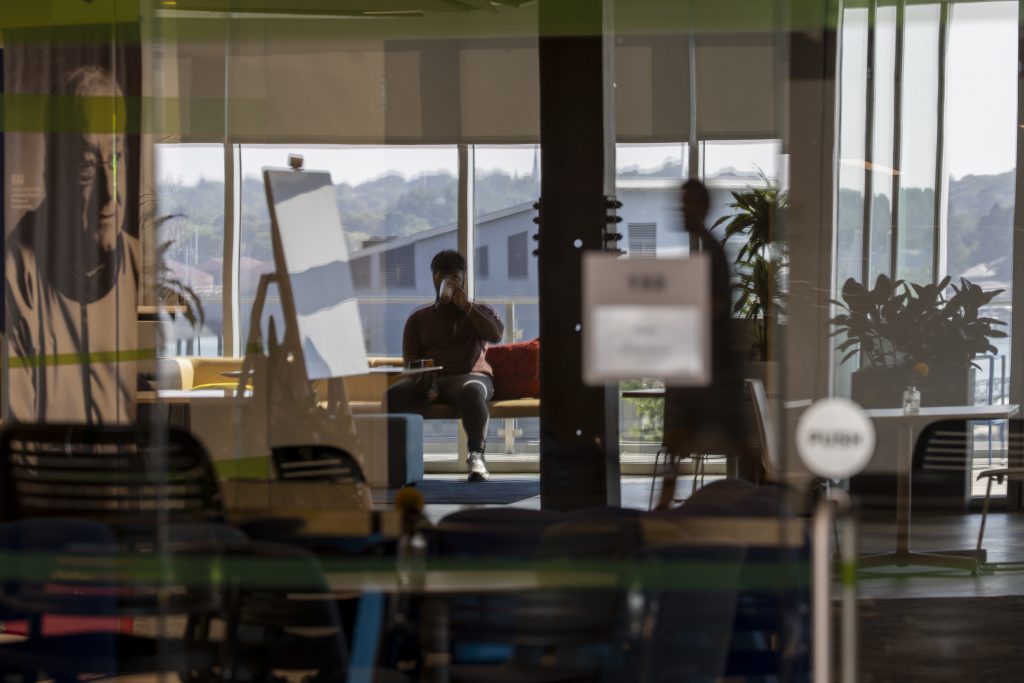
Throughout July, Colby students lived in nearby East End apartments, immersing themselves in the street-level bustle of Portland’s emerging innovation hub. At the Roux Institute, they savored the exchange of knowledge and information, where AI, data science, biotechnology, and other high-tech fields challenged students to push their ideas and the boundaries of their imaginations.
The Colby students worked on projects that range from South Asia’s first peer-reviewed tutor discovery program, which won Colby’s Back of the Napkin pitch contest last fall, featuring former Amazon executive Bill Carr ’89 as one of the judges; an online furniture marketplace powered by 3D technology; an AI-driven app to help dining services predict demand and reduce food waste; and a search engine making government information easy to find and understand.
The goal was for students to make significant progress on developing their ideas, getting them to the point where they can start to add customers, professionalize it, and continue to build it even after the program is over.
“The secret sauce in this is that you’re grinding on your idea around other students who are grinding on theirs. And there’s all this shared learning and collaboration that happens when you’re in a cohort.”
Jeremy Barron ’00, director of Colby’s Halloran Lab for Entrepreneurship
In addition to the Colby students, the inaugural cohort for this first-year program included 14 teams representing students from Bates College, Wellesley College, Worcester Polytechnic Institute, Northeastern, and many other institutions. They worked with 30 industry experts, who facilitated workshops, served as mentors, or shared their stories.
“It’s really a collaboration among a broader ecosystem,” said Jeremy Barron ’00, director of Colby’s Halloran Lab for Entrepreneurship, which arranged for Colby students to benefit from the programming offered by the Roux Institute.
“The secret sauce in this is that you’re grinding on your idea around other students who are grinding on theirs. And there’s all this shared learning and collaboration that happens when you’re in a cohort.”
A month-long intensive
Arhum Nadeem ’27 is part of a Colby team developing the AI-driven app Menyou, designed to help dining services improve efficiency and customer satisfaction. In addition to spending a month in Portland focusing on the project and interacting with student-entrepreneurs from Colby and other schools, Nadeem appreciated attending workshops and talks and conversing informally with founders, innovators, and entrepreneurs.
“They started as college students, as well. The steps they take inspire us to follow in their footsteps,” said Nadeem, a math major and engineering dual-degree program participant. “It’s a good experience because of all the people we get to meet, first and foremost. It’s not easy for so many founders and CEOs to be in one space where we can ask so many questions. And we have a month to do nothing but focus on our startup, which has been great.”

Sanjay Krshna Rameshkumar ’27, an economics and government double major and member of the Menyou team, found inspiration interacting with successful entrepreneurs. He’s not in their league yet, but he intends to get there.
“I usually get asked the question, ‘Where do you see yourself in five years or 10 years?’ I have no idea, except that I see myself as a founder running my own business,” Rameshkumar said.
Innovation ecosystem
For these teams to take their ideas to that next level, they need time, space, and mentorship. They got all of those things in the summer program, reinforcing the idea that innovation is a collaboration within a broad ecosystem.
Emily Morrow, who manages the Student Entrepreneurship Program for the Roux Institute, said the Maine Summer Accelerator surpassed her expectations. The students were deeply engaged in their work, and they experienced working on an ongoing basis among similarly motivated students exploring a wide swath of ideas.
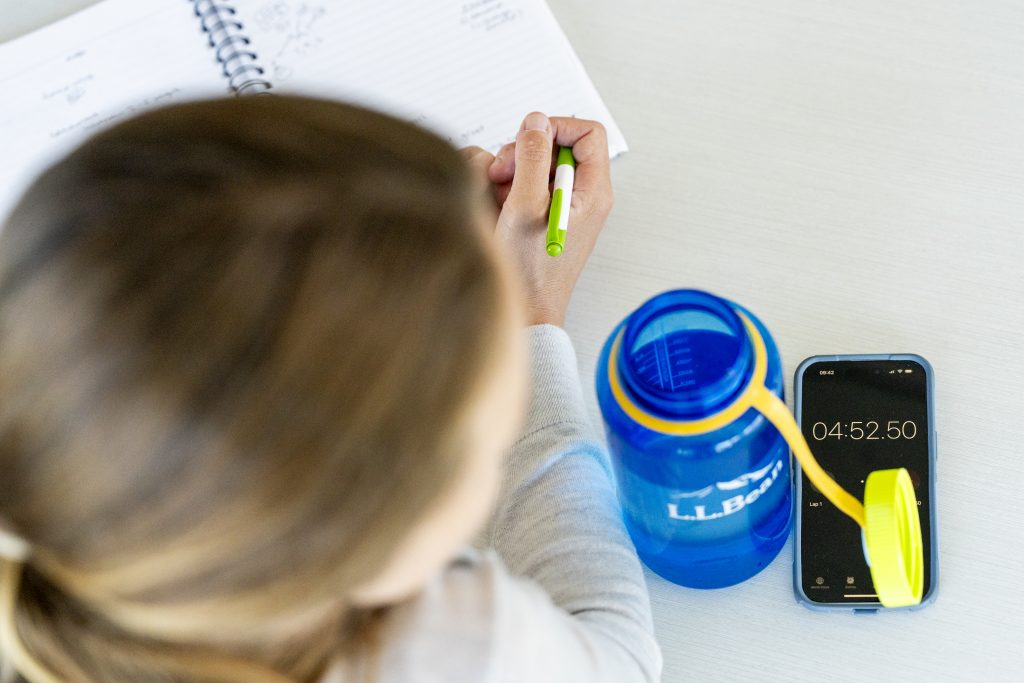
Further, they also experienced living in the city. Morrow arranged weekly outings that highlighted the allure of Maine’s largest city, including kayaking to Fort Gorges with Portland Paddle, learning how to lobster in Casco Bay, and enjoying time on the Eastern Promenade, all with views of the new Roux campus currently being built. Those activities were fun and games with the larger purpose of helping students find and feel comfortable in their community, Morrow said.
One of Roux Institute’s goals is building the economy in Maine by attracting young entrepreneurs. The accelerator program gives students from Maine schools the chance to live in the city and introduces the city and state to students from elsewhere. “By engaging with a variety of schools, the more opportunity we have to show students the beauty of Maine, help them build their own networks here, and tell their peers about the great things that are happening in our state,” Morrow said.
‘That’s how things get done’
Dave Boku ’26, a computer science major and math minor, found it helpful and inspiring to be in conversation with other entrepreneurs searching for innovative solutions, with his college-level peers, and with successful, seasoned entrepreneurs.
“Those small interactions that happen daily might be the best thing that has come out of this for me,” he said. “You always talk to people in passing, and someone knows someone in our space or we might know someone in their space, and it’s always interesting to have conversations where we point out people in our network they might use, or people in their network we might use,” he said. “That’s how things get done. That’s why we’re here.”
Boku is partnering with Carter Friese ’27 on a project called Sporos to create a search engine that makes government information easy to find and understand for small companies, nonprofit organizations, and others.
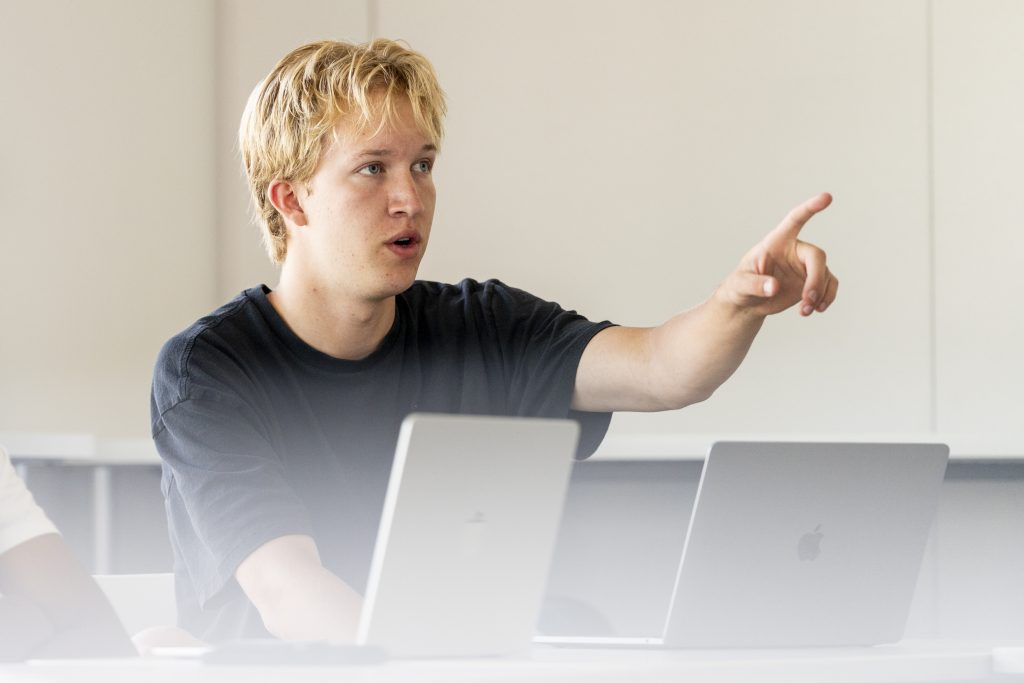
“We are trying to reshape policy intelligence as we know it,” Friese said. “There are a lot of solutions that exist for very large companies to stay in the know on government actions and things like that, but the small- and mid-market is often left out of the conversation. We are trying to bring the same intelligence that the Fortune 100 companies get to small companies, small nonprofits, and others.”
Friese especially enjoyed working in the physical space of the Roux Institute in Portland. The modern building is open, inviting, and comfortable, and the individual meeting rooms are conducive to the exchange of ideas and information, he said.
“One thing Colby has done a really good job at is creating this culture of entrepreneurship, and we have been lucky to take part in that. But that culture is already established here, so it’s good to see what that looks like and how we can help foster more of that at Colby,” Friese said.
“Having a space like this to work and being able to surround ourselves with like-minded and similarly driven individuals has been really powerful. And the location is incredible. Being in Portland has been a good experience for all of us.”


