Preparing Dancers for the World, Not Just the Stage
How the Department of Performance, Theater, and Dance helps students achieve success
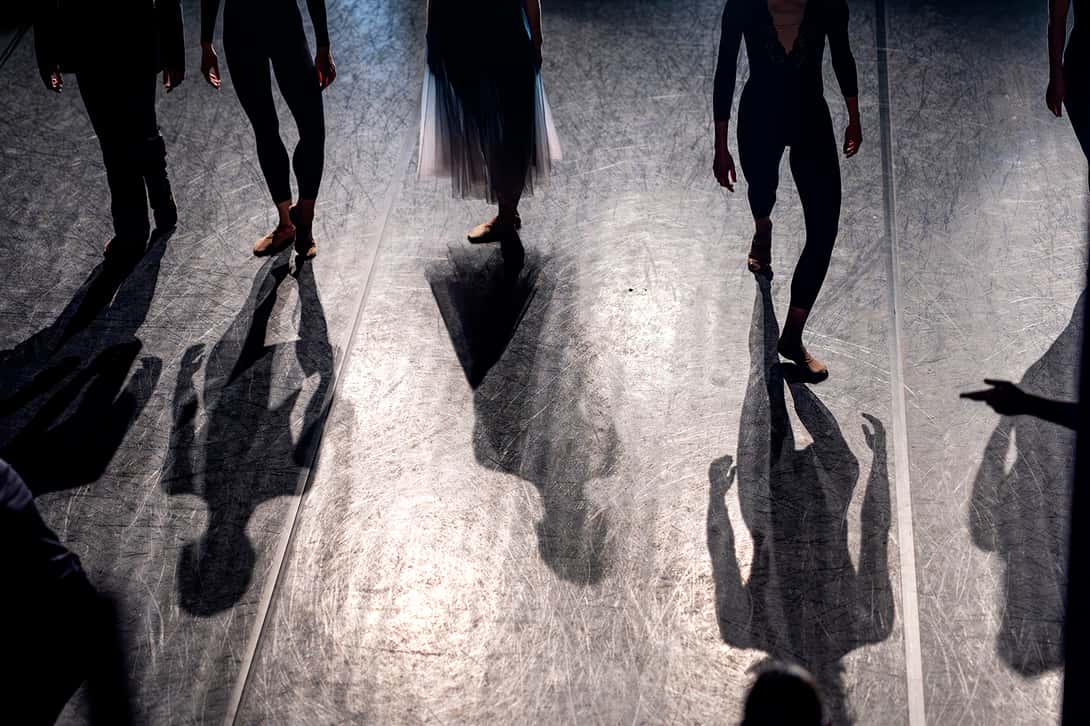
Growing up, for many dancers, singers, and actors, the curtain only rises after the school bell rings. At Colby, students practice performance as part of their academic program.
“Coming to college and understanding performance as an intellectual endeavor is a big leap,” said Professor of Performance, Theater, and Dance Annie Kloppenberg. “We’re taking something that was a passion project and showing students how they can use it to change the world, to explore who they are as human beings, and create a future together as a community through live performance.”
At Colby, for every course focused on traditional acting or dance techniques, there’s another interrogating how to use performance for social change. Students can take traditional coursework in ballet, acting, and stage design, as well as courses on activism, performing in museum spaces, and leadership.
“If students study something that helps them learn how to be a deeply engaged person in the world, who can think critically and communicate, then they can do anything they want to do,” Kloppenberg said. “Performance, theater, and dance is a way to study something that’s compelling while learning the skills that help you succeed anywhere. You can use your education to help you understand who you want to be in the world.”
A curriculum that encourages exploration
The Department of Performance, Theater, and Dance uses core values—collaboration, leadership, justice, and community reciprocity—to guide each student through the major. “Instead of a rigidly structured curriculum, we give students freedom to define their own pathways based on what they’re most interested in,” Kloppenberg said. “Within the curriculum, we’re developing courses that interrogate assumptions about performance in a multidisciplinary way.”
That gives students the freedom to choose from traditional coursework such as ballet technique or stagecraft alongside courses that blend theatrical conventions with interdisciplinary study, pulling from historical, political, and economic practices.
“We’re trying to think about the department less as distinct theater, dance, or performance and more about giving students the tools to make what they want to make. They can take conventional acting techniques or solo performance art, but they can also follow their interests and take lighting or costuming or scriptwriting. It’s more about letting them own their creative practice so they can make connections between disciplines and build something new,” said Assistant Professor of Performance, Theater, and Dance AB Brown.
“I teach a course on acts of activism, which explores emotion and storytelling in political acts, and a course on the art of everyday life, which looks at how performance is built into mundane activities,” said Brown. “These are geared toward different ways to use performance and to help students understand that one of the strengths performance gives us is a new way of seeing the world. This expands way beyond theater.”
Each semester culminates in a series of performances of original pieces and scripted plays.
“Our ongoing season gives students exposure to a wide range of work outside of conventional classroom work,” Brown said. “We want them to see what’s possible and also complement the skills they’re acquiring within the major with a wide variety of opportunities in acting, directing, or dance.”
Preparing students for the world
Students can leave the department with a solid foundation in many elements of performance. Whether they pursue a professional path as a practicing artist or not, they’re prepared for a variety of careers.
“From my perspective, when students graduate to pursue paths in theater and dance, that’s wonderful, but it’s equally successful to me when students choose a completely different career path, but have used performance as part of their education to inform the way they view the world,” Kloppenberg said.
That’s because performance study offers a set of transferable skills valuable for any career path—leadership, communication, organization, and creativity.
“When you’ve got 150 people watching you in a public performance, it changes the stakes,” she said. “I think that prepares students to encounter a world they don’t understand and work together to solve problems, which is something broadly applicable to many different fields. Whether that’s organizational leadership, like in our stage management course, or communicating for a variety of audiences, or building something of your own as an entrepreneur, developing these skills will serve students well in the future.”
Meet the performers
Colby performing arts alumni are making art across the world in a variety of media. Here, we introduce three Colby performers who come from a dancing tradition. While each does something different, they share a refusal to set boundaries in their work and take an interdisciplinary approach to performance art they learned at Colby.
Here are a few of their stories.
Sujie Zhu
Sujie Zhu ’15 didn’t think she would have her own IMDB page.
Like most young dancers, she loved performance as an extracurricular. When she came to Colby, she hesitated before signing up for a class. Instead, she filled her coursework with a globally focused curriculum, pulling from East Asian studies, anthropology, history, and economics. At the beginning of her time at Colby, theater and dance was still just that—an extracurricular activity.
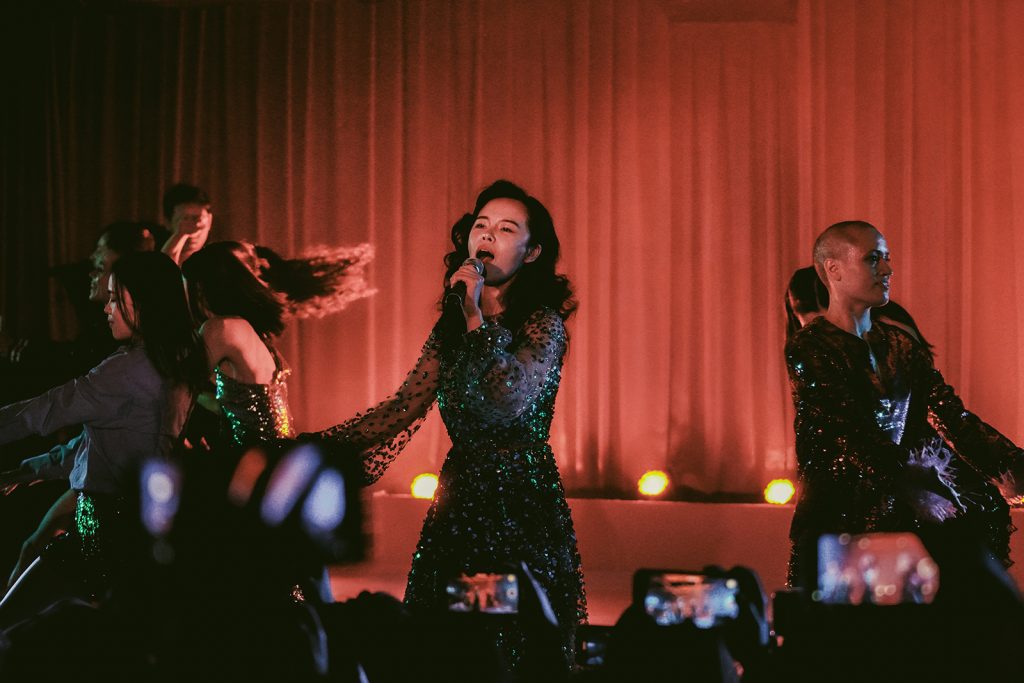
But soon, Zhu took every class she could—directing, choreography, acting. “These classes always surprised me, because we were taking a very liberal arts approach to them. We had students from all over campus in these classes, and it brought such a vibrant energy to the room. We were learning, but we had a lot of fun doing it.”
Instead of a traditional study abroad, Zhu landed a three-month dance position with renowned artist Tino Seghal. In a piece called Variation, Zhu and 19 other performers danced and beatboxed alongside an electronic music set, interacting directly with the audience. When she returned to Colby, she doubled down on performance work, graduating as a theater and dance major and an anthropology minor, and she was awarded a prestigious Watson Fellowship. Her project, “Expanding Possibility: Exploring Cross-Cultural Improvisational Performance,” took her to Japan, Korea, Chile, and France.
Her fellowship felt transformational, but Zhu missed performance. During her time abroad, she didn’t dance as much as she wanted to, and she came back to the United States with an eagerness to perform. She started with an artist residency at the Denmark Art Center in Denmark, Maine, before returning to China as a performer, writer, and director for the Paper Tiger Theater Company. In Shanghai, she also performed in Sleep No More, an immersive theatrical experience presented by the innovative company Punchdrunk.
She views performance as a complete experience, and likes to create immersive shows that make the audience a part of the action. “For the seventh year anniversary of Sleep No More Shanghai, we rented a double-decker bus. I created a show inside the bus, which drove from the Bund, an iconic neighborhood with architecture from the 1930s, when the show is set, to the theater. All the stops were related to the stories from the show, so the audience would be transported through time and space with the historical sites of the city as our backdrop,” she said. “Because of traffic, the show varied from 40 minutes to 90 minutes, so I had to create a script that could stretch in different ways with improvisation.”
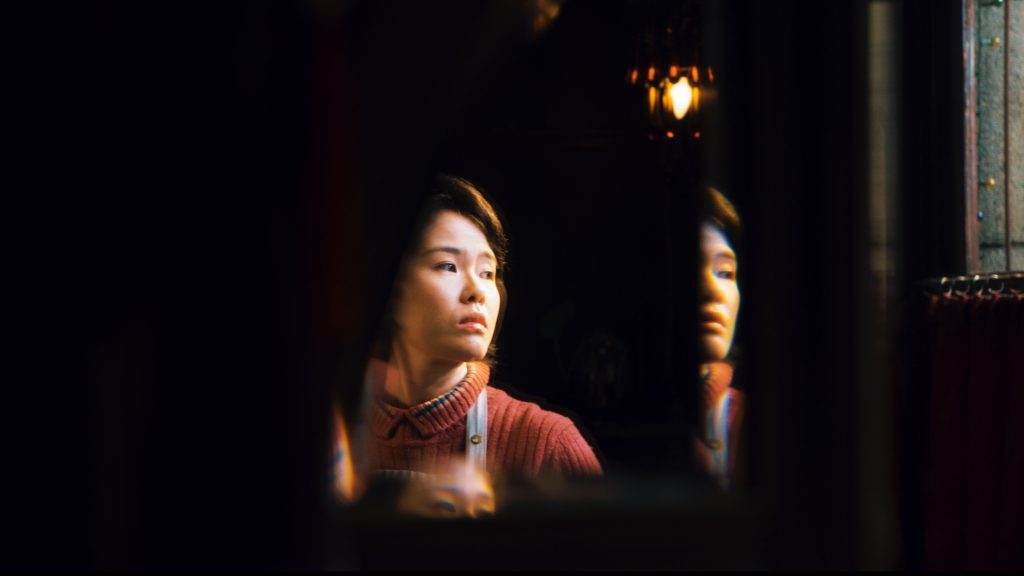
Creating an immersive script requires a deep, interdisciplinary approach that includes history, anthropology, and performance art—an approach that Zhu learned at Colby. “When I’m writing these characters, or even as a performer, we’re researching everything to make sure it’s as accurate as possible for the time period. The way they hold themselves, the way they do their hair, their makeup, everything,” she said.
Improvisation is the heart of a work like this, something Zhu practiced often at Colby. “I remember one improvisational performance called Just This Once, where we didn’t know anything before we got on stage and the lights went up,” Zhu said. “This was an adjudicated performance at a regional conference, with a huge audience, where we’ll get feedback, and I remember thinking, ‘What are we doing?’”
For 12 minutes, Zhu and her classmates had to create something out of nothing, the result of a course in improvisational dance performance in which they worked deeply to cultivate those skills as an ensemble. “It’s a lot of listening to each other and figuring out how to work together, which has been so valuable for me,” she said. “You have to be willing to step up and make a bold choice if no one else is, so there’s a focal point, or step back and let someone else take the attention as it evolves. It’s working directly with curiosity in real time.”
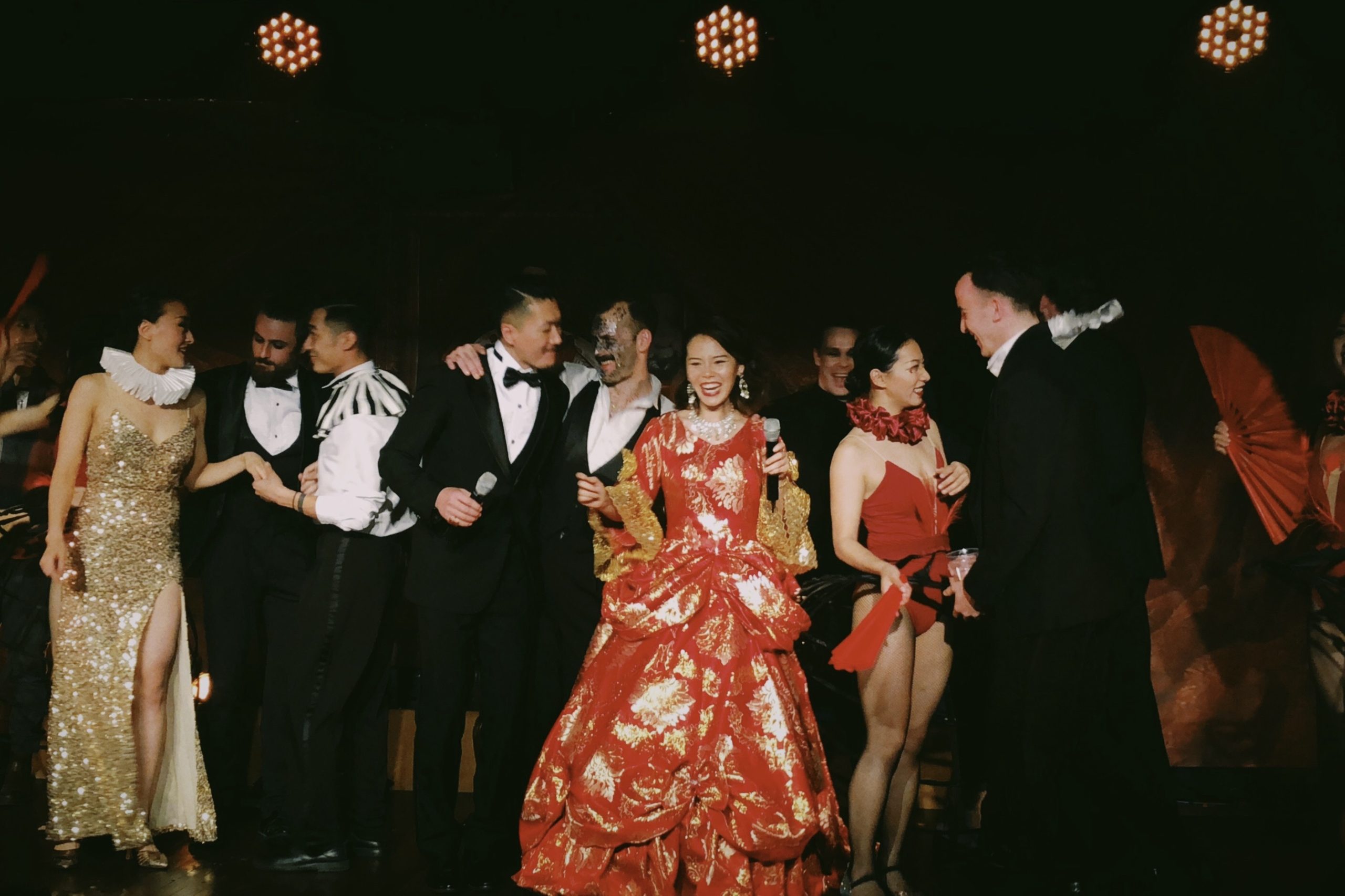
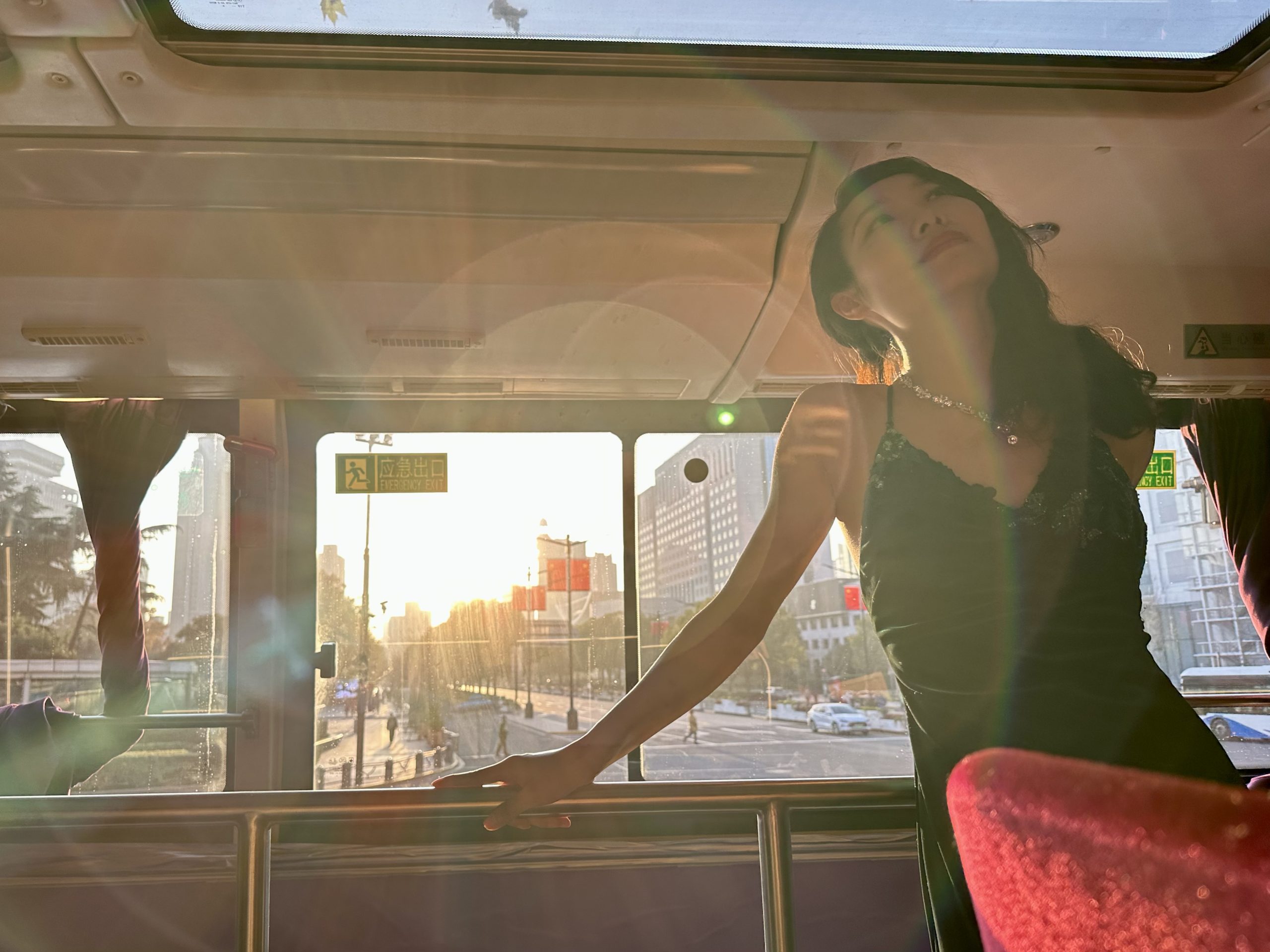
Besides her immersive work, she’s also stepped in front of the camera. She recently appeared in Wong Kar-Wai’s hit Chinese drama Blossoms Shanghai and has several more mainstream film projects in the works. Zhu hopes to continue her film career while balancing directorial projects and her dance practice. Through it all, she attributes her willingness to improvise as key to her success.
“One of the best pieces of advice I got at Colby was to really inhabit a character. So I’m not performing Lady Macbeth, I am Lady Macbeth. That idea has been so influential to my career.”
Sara Gibbons
Sara Gibbons ’15 thought her ballet career ended when she graduated high school. Then she sat down in Professor of Performance, Theater, and Dance Annie Kloppenberg’s first-year writing course, Articulating the Physical.
“I had become less interested in dance as an option because of the narrative that it’s not an intellectual pursuit, that it’s only about the body, and you’re not thinking while you’re doing it,” Gibbons said. “This class showed me the intense, intellectual side of dance that complements the physical practice. I was immediately hooked by how rigorous it was. Not just the dancing, but the writing and researching made me fall in love again.”
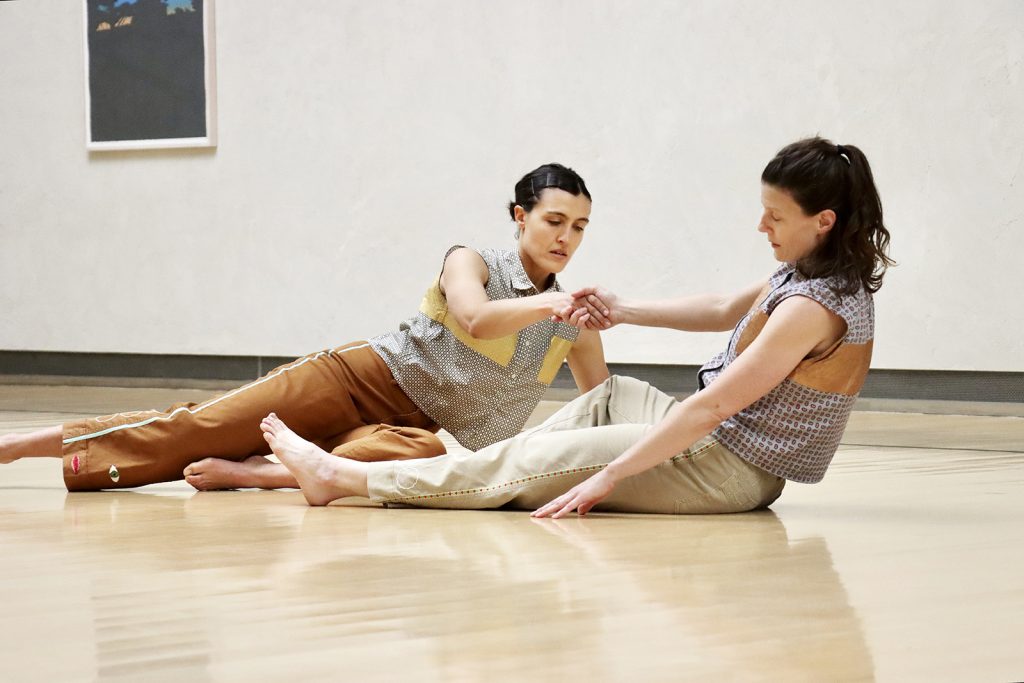
At Colby, she learned to break out of ballet’s strict rules of movement, trying out contemporary dance, improvisation, choreography, and more. “It was so different from the dance I had done growing up. It was uncomfortable at first, but I grew to love it. It feels more relaxed and forgiving than ballet, even with the structure and technique behind it,” she said.
Gibbons’s first professional gig was dancing in David Bowie’s Blackstar video, the final video Bowie made before his death. She then joined her first professional dance company, David Dorfman Dance, as an apprentice and moved to New York City after graduation. Soon, she joined Elephant Jane Dance Company, where Heidi Henderson ’83 is the artistic director.
By 2017 Dorfman tapped her to be his assistant choreographer for a new play, Indecent, written by Pulitzer Prize-winning playwright Paula Vogel. The play follows the controversy surrounding Sholem Asch’s God of Vengeance, written in 1907 and widely performed across Europe. When it came to Broadway in 1923, the entire cast and crew were arrested after the first performance. Gibbons stayed with Indecent as it went to Broadway, including restaging the production for a national tour and in London’s West End as the associate choreographer.
“I came from a world of dance, so branching out into professional theater was new for me,” Gibbons said. “It was a surreal experience to be exposed to such a high caliber of actors, directors, lighting, everything. I mean, this is the apex of people’s careers, to be on Broadway, and I was just pinching myself to be a part of it for so long.”
After Indecent, Gibbons branched out into directing, working as an assistant director on the Off-Broadway play Becky Nurse of Salem, which explores the legacy of the Salem witch trials in the modern era. Then, she choreographed the Off-Broadway musical Kafkaesque!, a mashup of Franz Kafka’s stories in a contemporary setting.
Gibbons got her first taste of choreography at Colby, both in formal classes and sharing her work at the American College Dance Association Conference, a juried regional competition.
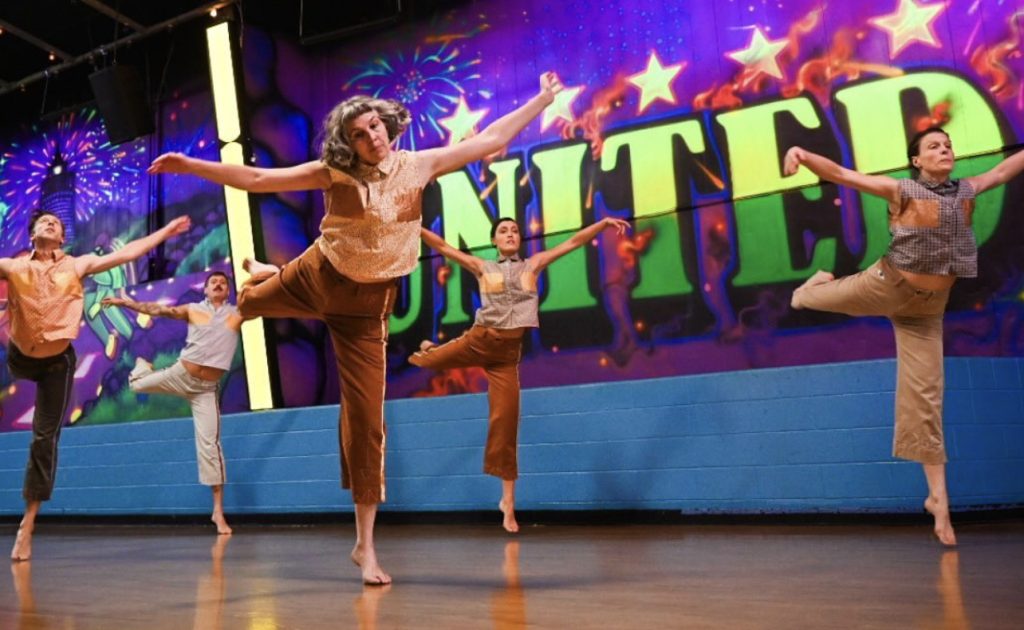
As a double major in human development and what was then theater and dance (now performance, theater, and dance), Gibbons expanded her study to include human expression and the body. After Colby, she paired her professional dance degree with clinical nutrition, receiving her master’s in 2022.
“I originally thought I’d pursue something scientific, maybe pre-med, while at Colby,” she said. “I’ve always been interested in the body and how it works, how to fuel it properly, and how to recover. Performance definitely made me engage with that on a regular basis, and it felt like a natural progression of my interests,” said Gibbons, who splits her time between several clinics on top of a busy performance schedule.
“Colby taught me how to anchor my creative field with practical skills, and it was there I learned how to show up and make connections when I’m interested in something,” she said. “I loved how if you had an idea, you could do it with the full support of the department. I was constantly creating work outside of class because I wanted to do it, and now I have the skills to continue to explore creative work.”
Maddie Kurtz Marcadis
Maddie Kurtz Marcadis ’14 spent thousands of hours in tutus, tights, and sparkles growing up as a competitive dancer. But she never thought “professional dance artist” was an option.
“I grew up dancing. I was good, and I loved it, but I never thought I’d be a dancer,” said Marcadis, who has made her career in dance and now teaches dance at the college level in Florida. “I just figured I’d keep dancing when I applied to college as an extracurricular. It never occurred to me that I would major in it, or make it my life’s work.”

She spent her first semester abroad in Salamanca, Spain, through Colby’s Global Entry program. When she arrived on campus for the spring semester, she added a contemporary technique dance class on a whim. It was the first time taking a dance class steeped in intention. “Most dance classes focus on the steps and the music, and of course, that’s part of it,” Marcadis said. “What surprised me is how these classes make you think in completely different ways. There’s history, there’s theory, there’s improvisation.”
She declared as a theater and dance and religious studies double major later that semester. Marcadis was uncertain how it would translate into a real career, and she assumed the only viable career path for someone passionate about dance would be arts administration. That’s as close to the action as you can be without stepping on stage, so that’s where she went. She spent her first year and sophomore summers interning at New York Live Arts, one of the most important contemporary dance institutions in the world.
“Sitting there watching the hustle and bustle and hearing about all of the dance companies coming through was so influential, even if I didn’t realize it at the time,” she said. “I got to go to every performance and take dance classes from some of the best contemporary dancers in the world. Here I was, a 19-year-old who had no idea what I was doing, but I was given the opportunity to figure out what I wanted, and I learned that what I wanted was to dance.”
Her Colby professors encouraged her to engage with dance from a variety of perspectives—not just other dance formats, like ballet or jazz technique, but also yoga, anatomy, theatrical improvisation, and breathwork.
They also encouraged her to look beyond Waterville, sending her to intensive dance training workshops like the Bates Dance Festival, American College Dance Association Conference, and a semester at the Headlong Performance Institute in Philadelphia. All of this added up to understanding what practicing artistry looks like beyond joining a dance troupe or performing on a cruise ship.
For the past 10 years, Marcardis has judged dance competitions, work that she described as inspiring, rewarding, and “the most fun.” Many weekends, Marcardis and her fellow judges watch 600 performances, recording their commentary on footwork, musicality, and choreography. “It can be really inspiring to see the next generation coming up,” she said. “These 16-year-olds are just unbelievable. I’m here critiquing them, as if I can do what they do. I certainly cannot and will never be able to.”
After completing her M.F.A. in dance performance and choreography from the College at Brockport, S.U.N.Y., Marcadis balanced performing and creating with a research role at the Maggie Allison National Center for Choreography, assisting working artists in residence. That experience led to her current job as an adjunct professor at the University of Tampa and Eckerd College.
In her early 30s, Marcardis isn’t far removed from her current students. “I’ve definitely had to figure out how to find my voice,” she admitted. “But the students keep me so grounded. I have a relaxed teaching style, and I think the students appreciate the empathy I have for that phase of life, since it wasn’t that long ago I was in their shoes.”
After spending so many years focused on her own creative practice, she finds it inspiring to mentor the next generation. Her goal? To help her students connect with their bodies in an interdisciplinary way—through movement, but also through historical analysis, written reflection, and artistic exploration.
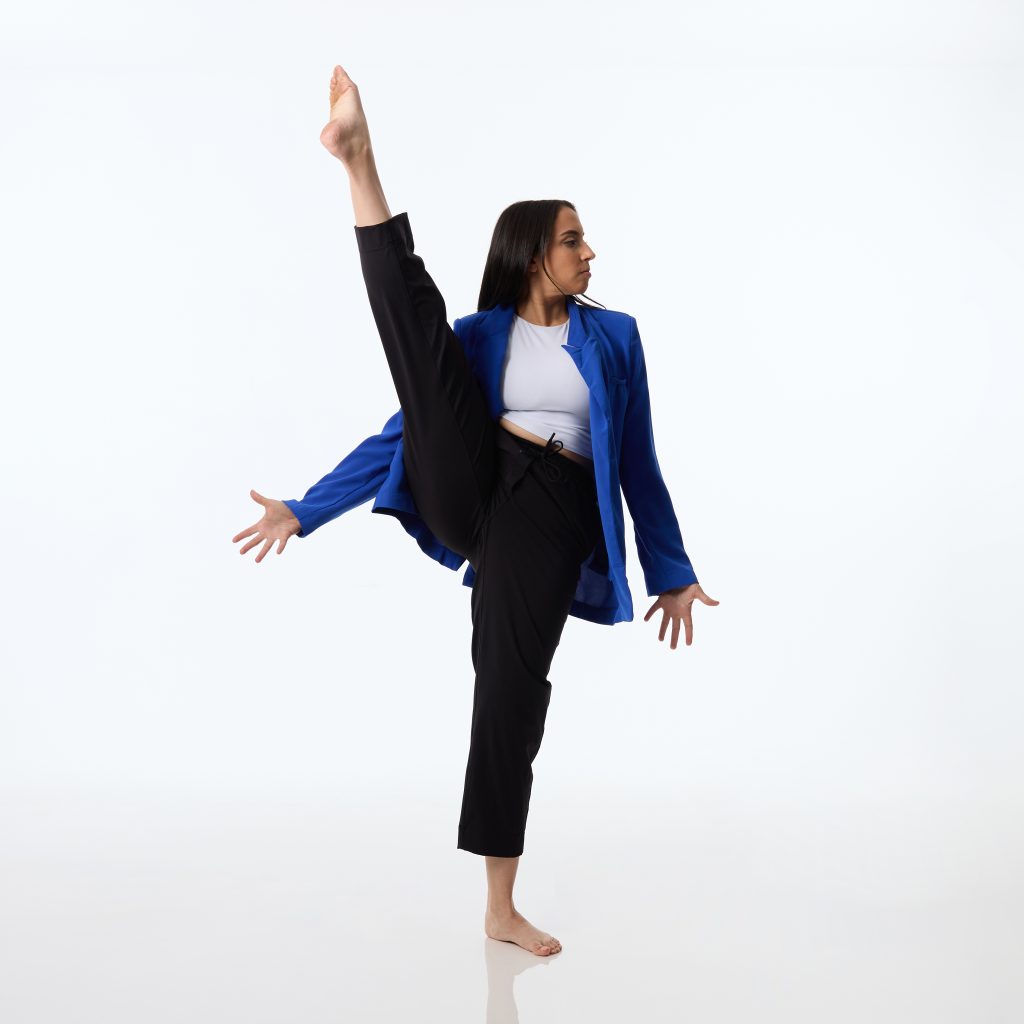
“Often the audience wants to know, ‘What is this dance about?’ But with contemporary dance, the whole point is that there is no narrative,” said Marcardis. “Every single one of us has an experience of living in a body. An idea can be a physical one that you want to explore.”
For Marcardis, it’s about showing her students that dance is as much about ideas as it is about movement, which is what she learned at Colby.
“The biggest thing I learned at Colby was how to think critically, and I think that taught me how to make good work, and taught me how to teach well, being exposed to such great teachers. I’m so grateful for the attention and opportunities I received at Colby because it completely shaped my career. I get to do something I love every day.”