Transforming the Smithsonian’s Archives of American Art Journal
As executive editor, art scholar Tanya Sheehan oversaw a dramatic increase in the venerable journal’s readership and quality
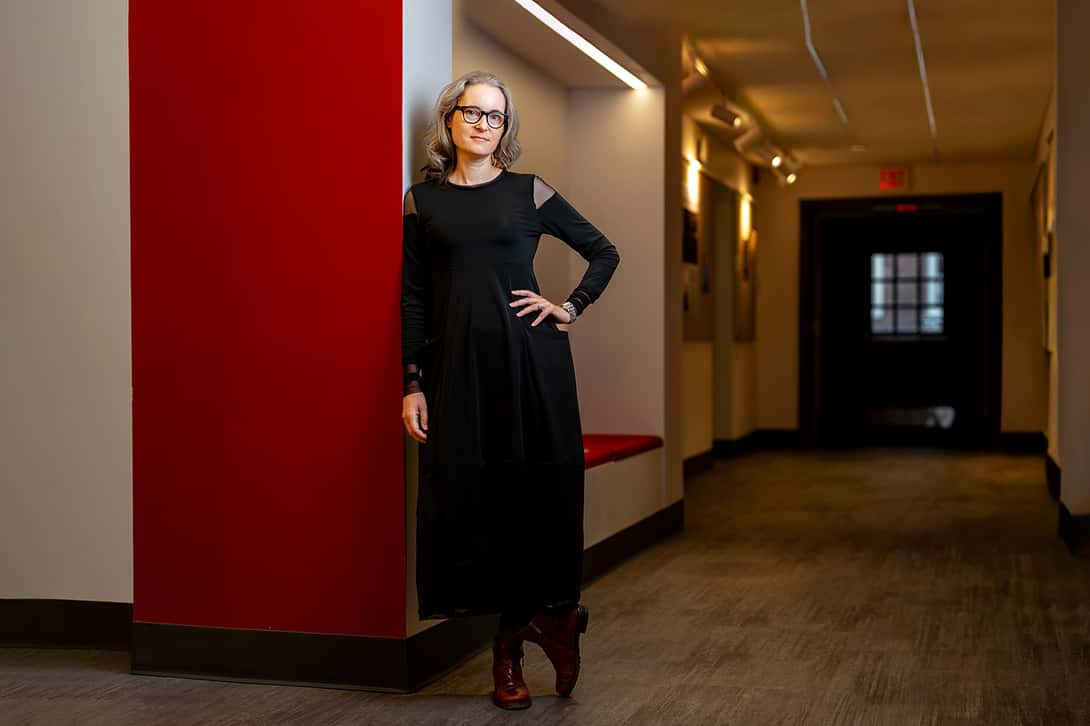
Tanya Sheehan, the Ellerton M. and Edith K. Jetté Professor of Art, recently finished 10 years as executive editor of the Smithsonian Institution’s Archives of American Art Journal. The journal is the longest-running scholarly periodical dedicated to the history of art in relation to the United States, and Sheehan has been the driving force behind its transformation into a first-rank research periodical.
“She cultivated and strategically leveraged an enviable professional network, reaching out each year to hundreds of scholars across related fields and disciplines to identify and solicit contributions,” Liza Kirwin said in July 2025, when she was interim director of the Smithsonian Libraries and Archives. “Tanya also redefined the structure of the journal by introducing new sections for shorter, commissioned contributions from artists and curators. These additions brought fresh voices and diverse perspectives, broadening the journal’s reach and appeal.”
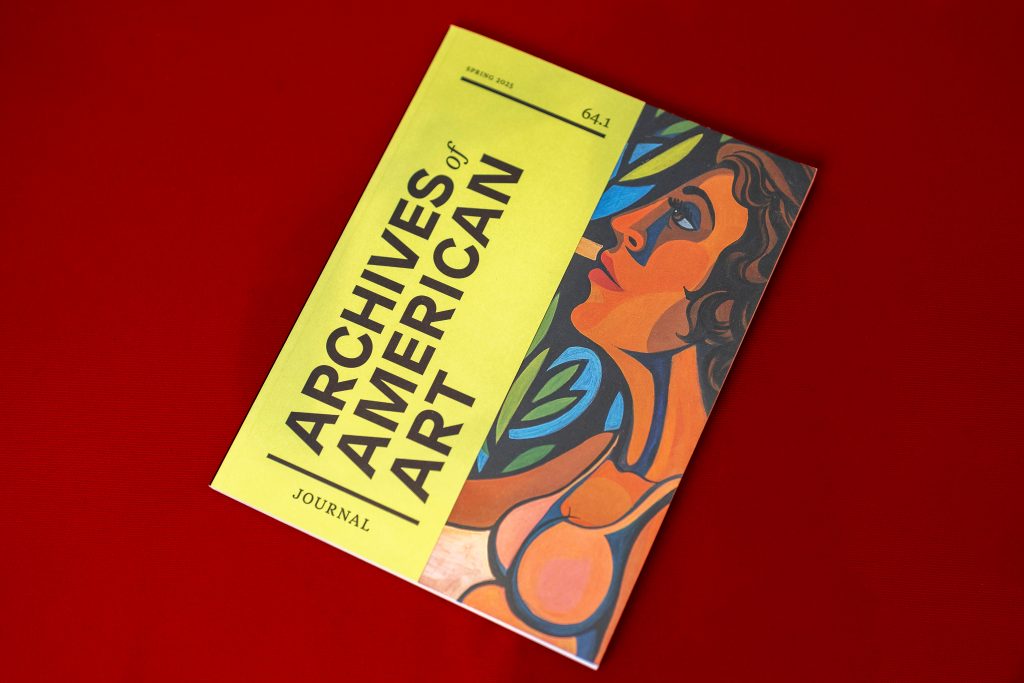
The journal also won several design awards during Sheehan’s time as editor, including from the American Alliance of Museums and the Association of University Presses.
Sheehan, who joined Colby’s faculty in 2013, works at the intersection of American art history and critical medical humanities. She is also chair of Colby’s Humanities Division and its Department of Science, Technology, and Society, and she is director of academic and scholarly engagement at the Lunder Institute for American Art.
Colby News asked Sheehan to reflect on her time at the journal and share how her involvement with the journal benefited Colby students.
How did you first get involved with the Archives of American Art Journal?
In 2015, I replied to an open call to work for the Archives of American Art Journal. They were looking for a guest editor who could put together a special issue on art by African Americans, an area in which I have published and taught. Halfway through my term as guest editor, the Archives of American Art [or Archives] invited me to stay on for another one-year term. I was rehired, one year at a time, for several more years before I signed a longer, multi-year contract. I never imagined I would end up staying at the Archives for a decade.
When you took over the reins, the journal had been struggling for submissions and readers. What were the challenges ahead of you?
It’s true, when I became guest editor, there were few manuscripts in the pipeline and historians of American art—me included—simply weren’t reading the journal. If we couldn’t at least make it important to that field, then ending the publication was a real possibility. So the stakes were high. The journal also had an identity crisis that needed to be solved: Was it a scholarly periodical or a promotional tool for the Archives?
How did you address them?
The Archives decided to embrace the journal’s scholarly ambition by establishing a double-blind peer-review process and distributing the journal by subscription through the University of Chicago Press. So, some of my early contributions included setting up the journal’s peer-review process and revising submission criteria.
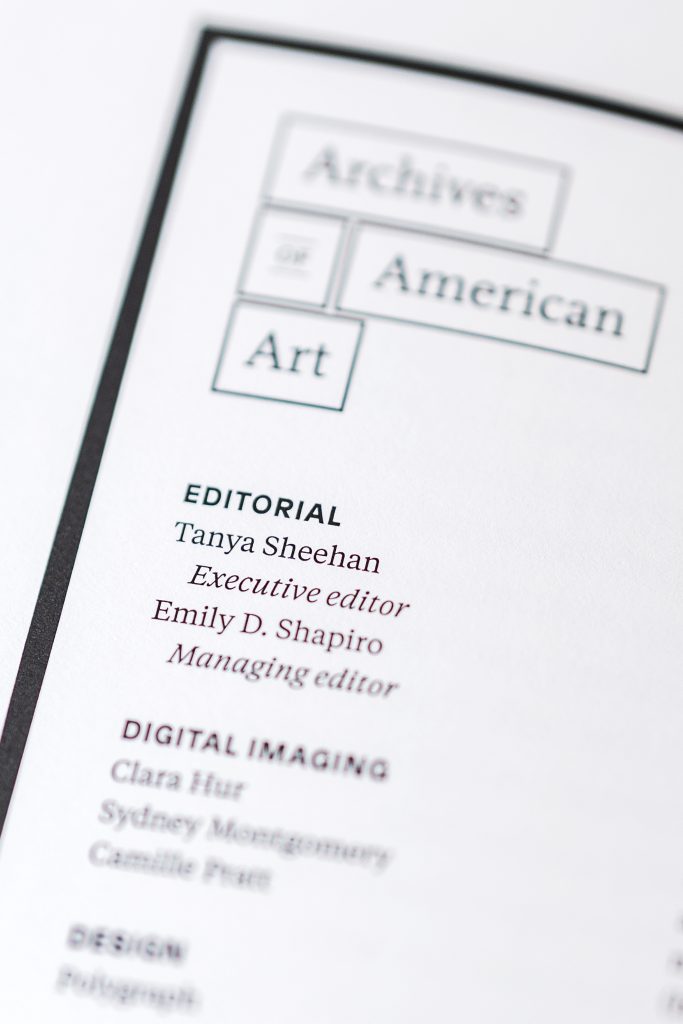
I began working closely with potential authors to develop contributions to the journal and creating new content that would reach a broader audience than ever before. I was especially interested in publishing writing that took on big questions concerning art and archives, as well as creative interventions into the Archives, such as original artworks. To ensure we had a steady stream of submissions, I launched a massive communication campaign that involved individually targeted emails, phone calls (and later video chats), and in-person meetings at the Archives’ office in Washington, D.C., and conferences around the world. In 2016, we hired a new managing editor, Emily D. Shapiro, who oversaw vast improvements in the journal’s design and print production.
The results of our efforts were dramatic. Not only did manuscript submission numbers grow exponentially, but we also saw the overall quality of our content increase. Most importantly, people started talking about the journal with enthusiasm and admiration.
What were the joys or the successes along the way?
There were many, which is why I stayed for so long! I loved the collaborative and supportive working relationship I developed with members of the editorial team. It was an all-hands-on-deck kind of operation. I also found great joy in making professional connections with academics, curators, and artists in the United States and beyond. As executive editor of a scholarly journal, I had an excuse to reach out to anyone in the field, pretty much at any time. Over my 10 years at the Archives, I compiled a list of nearly 1,000 people I had engaged with—as reviewers, potential contributors, or published authors. It was especially rewarding when those authors were emerging scholars whom I could support in publishing their first article.
How have you leveraged your involvement with the journal into your teaching at Colby?
Twice, I brought Colby students to Washington, D.C., to engage with my Smithsonian colleagues. The first time was in 2016, when art history and studio art majors on a professional development trip funded by the Mirken Foundation learned about the many different kinds of jobs at the Archives. They also visited the National Museum of African American History and Culture, where I shared the work I had done at the journal to mark the museum’s opening. In 2018, DavisConnects funded a trip to DC for the students in my Global Lab on American Art. At the Archives, they got to talk with Josh T. Franco, who then oversaw the Archives’ Latino Collecting Initiative; while at the Smithsonian American Art Museum, they shared ideas about transnational art histories with the museum’s graduate student fellows. These were experiences made possible by my role at the journal and were truly unique opportunities for undergraduates.
At Colby, I have taught several essays from the journal. One of my favorites to teach in the Art Department’s first-year writing seminar is an article by Rachael DeLue of Princeton University on how to interpret an artist’s diary as if it were a work of art. That was my very first commission for the journal. I also wrote an article for the journal that reconstructs the story of the Archives of Maine Art, from its founding at Colby in 1961 to my rediscovery of it in the attic of Bixler in 2015. I used our local case study and the evolution of the Archives of American Art to help readers understand why regional histories were highly valued and then devalued over the course of the 20th century. That essay inspired students’ engagement with the Archives of Maine Art, which I’m happy to say now lives in Special Collections at the Colby Libraries.
How has your time as executive editor enhanced your scholarship?
As a scholar of American art and visual culture, I have always engaged critically with primary sources, reading them well beyond face value. My decade at the journal helped me recognize that as one of my scholarly commitments. I also more consciously ask of my own work questions I often posed to the journal’s contributors: How would you articulate the significance of your work for a broad audience? What larger questions—about art, archives, American identities—are you addressing through your case study? Simply put, so what?
My recent scholarship has benefited greatly from my specific knowledge of the collections at the Archives. In fact, it would be impossible to write my current book project, on African American artists in the mid-20th century, without those collections. They include the voluminous records of the Downtown Gallery, which represented artist Jacob Lawrence, on whom I have published widely. I even found in the papers of Charles Alston an object that will radically change our understanding of the artist’s work when it comes to light in my book: an offprint of an article from a prominent medical journal, which Alston illustrated with his own drawings.
Looking back over the last 10 years, what stands out? What are you most proud of?
In 2015, I didn’t know how I was going to fill my first issue, given how few manuscripts had been coming in the door. In 2025, I had accepted content for the journal into 2027. So I’m most proud of having left the journal thriving, and in the hands of a new and incredibly talented editorial team.