A New Report Measures Colby’s Economic Impact
With its investments and initiatives on campus and downtown Waterville, the College has supported more than $2.5B in economic activity in Maine since 2019
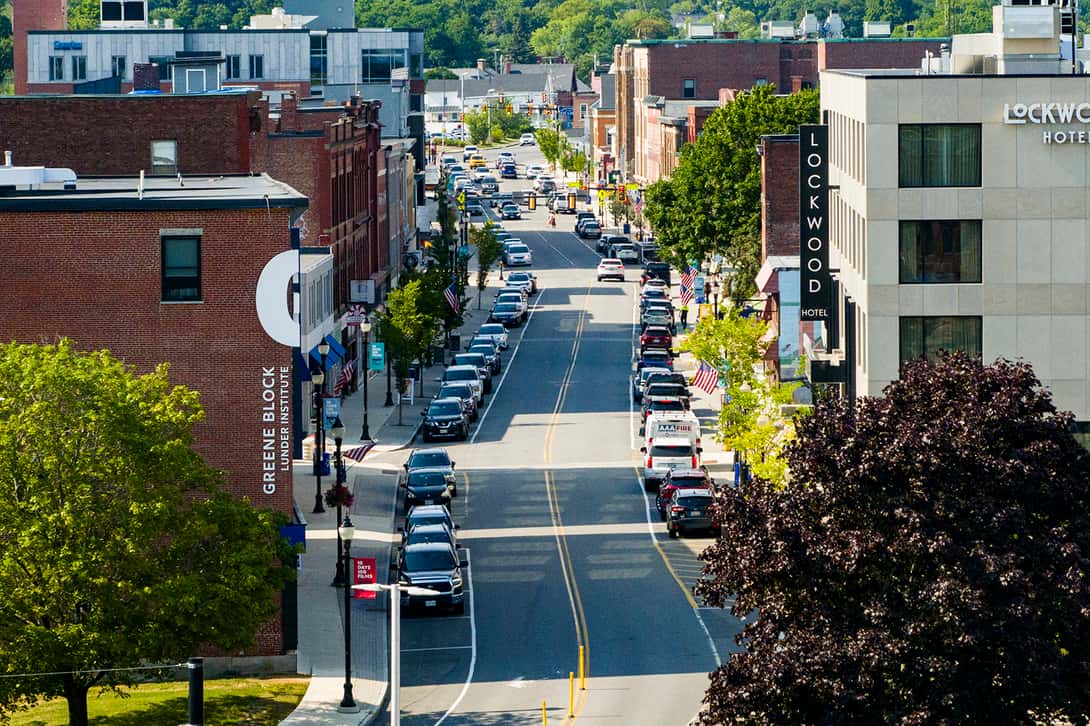
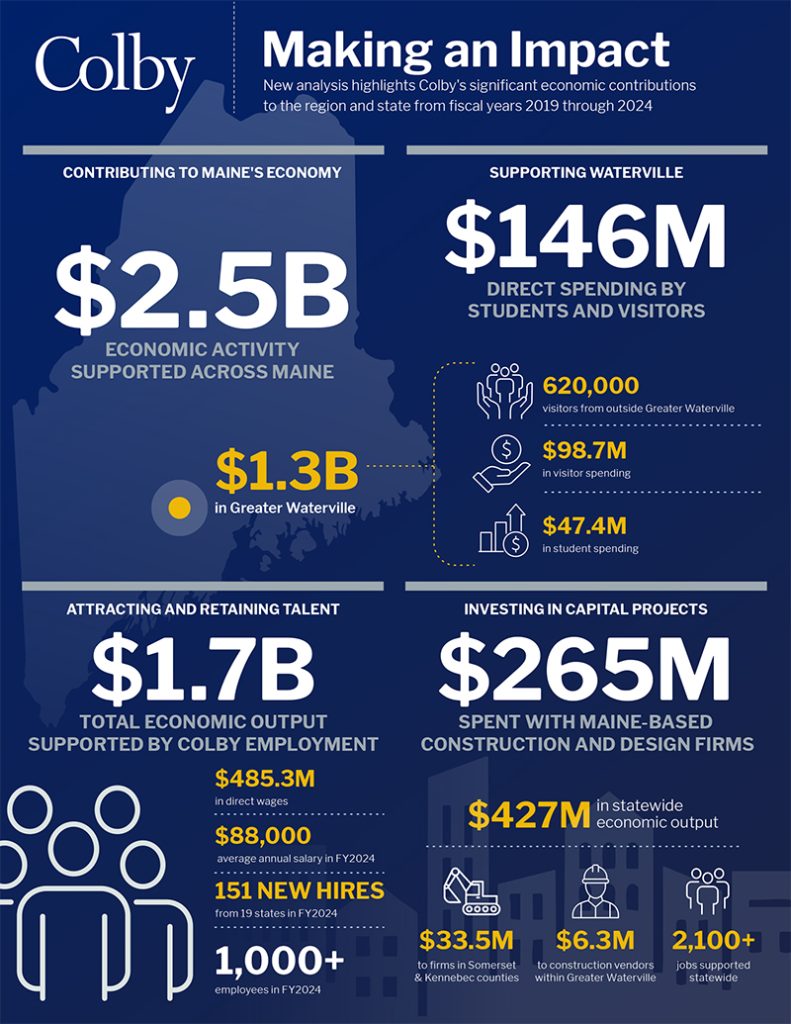
Colby supported more than $2.5 billion in economic activity across Maine, including $1.3 billion in greater Waterville alone, according to a new independent study commissioned by Colby measuring the economic impact and reach of the College from fiscal years 2019 through 2024.
Released Aug. 14, Fulfilling the Promise of Revitalization: The Economic Contributions and Impact of Colby College is a follow-up to a 2019 report that quantified Colby’s contributions to the city and state during the early years of the College’s ongoing revitalization project, from fiscal years 2014 through 2018. The new report, based on College and government data, provides a broader measure of Colby’s economic impact on the city and state and, most importantly, addresses the extent to which Colby has fulfilled the early promise of revitalization.
“Job creation, business development, and population growth are essential to Maine’s future, and that begins with strong communities,” said Colby President David A. Greene. “This report provides evidence that institutions can provide both catalytic and supportive roles to ensure all of Maine—not simply Portland and the coastal vacation centers—can plan for and benefit from a strong economy that benefits individuals and small businesses.”
Camoin Associates, a consulting firm specializing in economic development for communities and organizations, conducted the research and produced the report.
Several top-level takeaways:
- Colby operations, vendor spending, capital investments, and student and visitor spending supported $2.52 billion in statewide economic output from 2019 to 2024, including $1.33 billion in the Waterville area. In 2024, Colby’s activities supported more than 2,900 jobs and $216 million in earnings statewide, representing $487 million in economic output for Maine businesses. These figures reflect both direct and ripple effects generated by Colby’s spending and presence.
- Colby remains Kennebec County’s second-largest employer as it increased its workforce by nearly 12 percent and paid $485 million in direct payroll, which circulated throughout businesses and services across the state.
- Colby spent more than $265 million on capital projects with Maine-based firms during the study period, including $33 million in Kennebec and Somerset counties and $6.3 million in Greater Waterville.
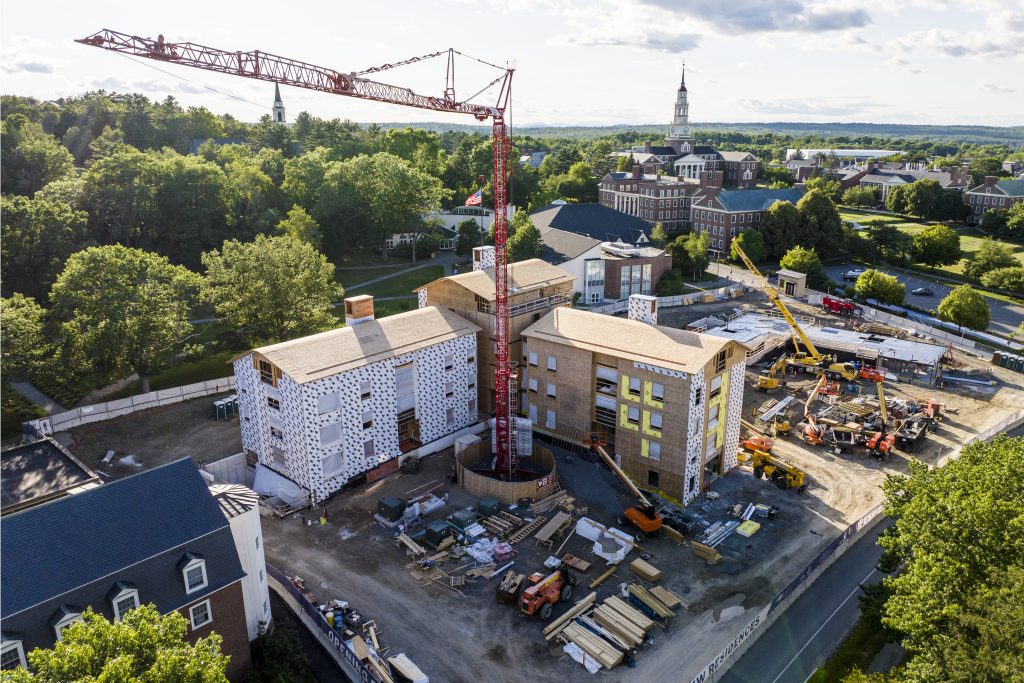
- In total, Colby’s capital expenditures related to major construction projects on campus and downtown, including residence halls, academic buildings, and community spaces, supported $427 million in economic output across Maine. Notably, the scale and consistency of Colby’s construction projects helped sustain Maine businesses throughout the Covid-19 pandemic, according to the report.
- More than 620,000 people from outside Greater Waterville visited the city for arts and cultural events, athletic competitions, alumni gatherings, institutional events, and admissions tours from 2019 through 2024, spending a total of $98.7 million and supporting $119.3 million in economic output in Greater Waterville.
- As enrollment grew by 14 percent from fall 2018 to fall 2023, Colby students remained a consistent and dependable customer base in Waterville and across the state. Colby students spent $79.7 million during that period, including $47.4 million in Greater Waterville. In total, student spending supported $146.4 million in economic output statewide.
- Colby operates with a “Maine-first” purchasing philosophy, prioritizing doing business locally and committing to local and state economies. During the study period, Colby spent nearly $28 million with Maine-based vendors, including $5 million in Waterville and $7 million in Kennebec and Somerset counties. Statewide, this spending generated $21.3 million in earnings and produced more than $55 million in total output.
Waterville as an arts hub
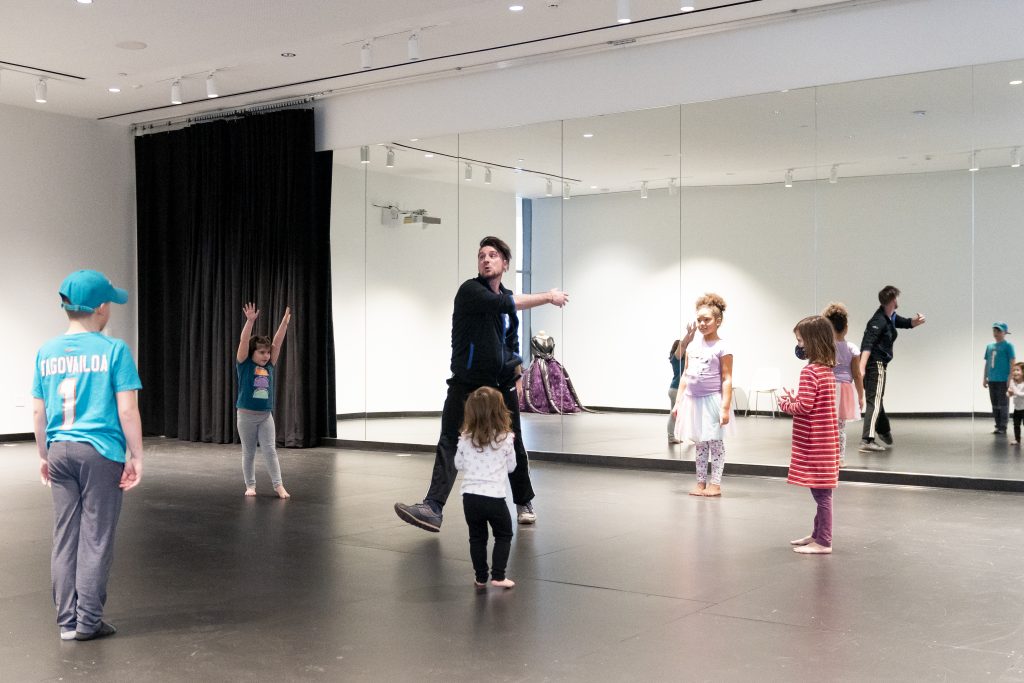
Colby’s investments in the arts have contributed significantly to Waterville’s emergence as a cultural destination, expanding access to programming, supporting local artists, and attracting new audiences. According to the report, 330,000 non-local visitors attended arts-related events in Waterville and on campus during the past six years, generating $45.3 million in total economic output and $15.1 million in earnings for Greater Waterville.
In downtown Waterville, arts activities are centered at the Colby-owned Paul J. Schupf Art Center, the Main Street home to the city’s leading arts organizations as well as the Colby Museum of Art’s Joan Dignam Schmaltz Gallery of Art. There are also numerous arts events, including First Friday celebrations and public gatherings, at Greene Block + Studios. On campus, the Colby Museum of Art, the Gordon Center for Creative and Performing Arts, and other arts entities offer widespread public access to a range of events and activities and provide educational opportunities for local schools.
Downtown investments
In a clear sign of progress downtown, Waterville’s state-assessed taxable property valuation rose by 56 percent from 2020 to 2024, a key measure of economic health. Colby contributed to this effort by restoring and increasing the value of underutilized buildings encouraging new economic activity, ultimately helping to make Waterville a more vibrant community in which to live.
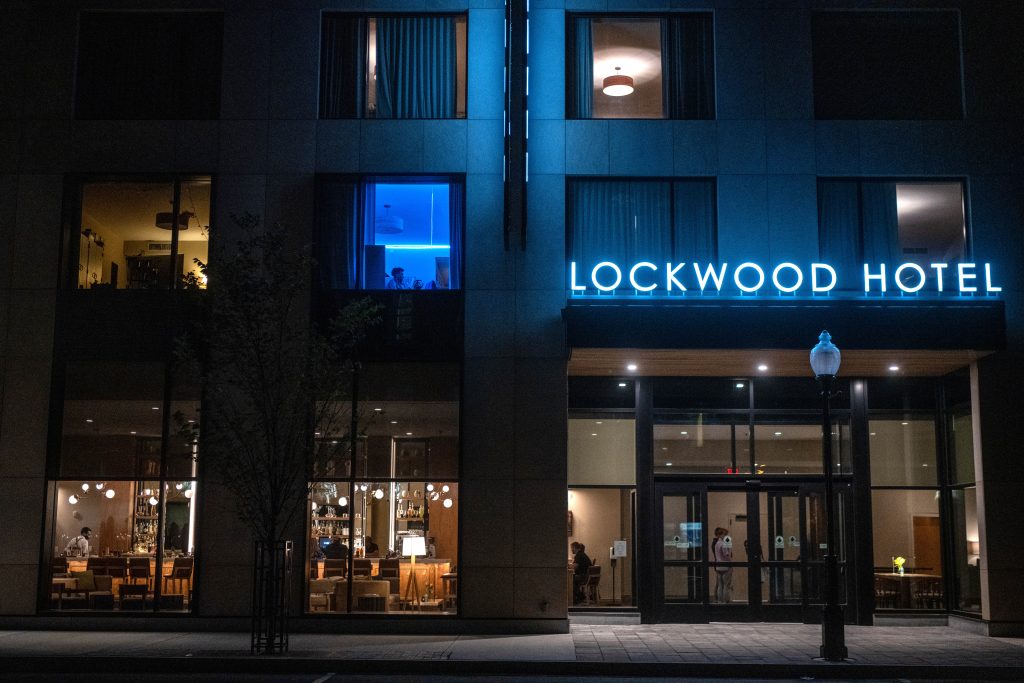
In recent years, Colby-owned buildings have become home to a florist, bookshop, café, and several restaurants. Since 2019, the College’s tax commitment on those properties was nearly $2.6 million, including more than $650,000 in 2024. Prior to Colby acquiring properties in 2015, tax revenue from those parcels was $70,600. Such projects as the Bill & Joan Alfond Main Street Commons, which houses 200 students engaged in civic life, and the Lockwood Hotel, with 53 guest rooms and an assessed value of $12.6 million, help expand the city’s tax base. The hotel alone provided $250,000 in tax commitments in 2024.
Also, since 2019, more than 40 commercial property transactions have taken place, reflecting heightened real estate activity and private investment.
Gregory W. Powell, chief executive officer and president of the Harold Alfond Foundation, praised Colby’s leadership for its vision and commitment to Maine.
“The revitalization of Waterville in partnership with Colby and other members of the Waterville community has become a national model for communities working together for the greater good. Under the leadership of President Greene, the model has proven effective, prescient, and bold,” Powell said. “This report confirms what we see on Waterville’s Main Street and beyond. Because of Colby’s leadership and our collective investments, Waterville has a healthier tax base, a robust and growing community of small businesses, more jobs, and a larger population. Simply put, Colby has had an extraordinary impact on the state of Maine.”
Demographic trends
During this time of investment and tax-base expansion, Waterville also has undergone something of a demographic shift, according to the report. From calendar years 2019 to 2024, Waterville’s population grew by more than 9 percent, outpacing both Kennebec County (4.5 percent) and Maine overall (3.5 percent). This trend was likely influenced by pandemic-era migration patterns, but the scale and timing of the growth in Waterville suggest the sustained investment in downtown, the growth of the city as an arts hub, and public infrastructure improvements played a key role, according to the findings.
Similarly, during the same period, Waterville’s labor force grew by 6.9 percent, compared to 2.2 percent for the state and 1.5 percent for Kennebec County.
Housing and income
The value of housing and household income are both on the rise. During the five years covered in the report, the median sale price of a single-family home in Waterville rose 86 percent, from $133,000 to $248,000. Meanwhile, median household income is up nearly 23 percent from $38,745 in 2018 to $47,489 in 2023.
The city’s median income is lower than both county and state averages, but the rate of growth reflects “meaningful progress,” according to the report: “The full economic effects of Colby’s investments—particularly those made during this study period—may take additional time to materialize.”
Impact of Colby employees
With more than 1,000 employees, Colby is among Maine’s 30 largest private employers and the second largest in Kennebec County. Colby employees reside in communities across the state, with the largest concentration in and around Waterville. The average salary for a Colby employee is $88,000, up 39 percent from 2018. Colby’s average salary in 2024 was nearly 20 percent higher than the statewide average of $73,555. “This level of compensation highlights Colby’s role as a provider of high-quality, stable employment in central Maine,” according to the report.
Good news on ‘brain gain’
One of Maine’s most vexing issues is its aging population and workforce, and the state’s long-term economic health depends on attracting and retaining younger talent. Colby helps make this happen by providing students with meaningful in-state professional experiences with the possibility of post-graduate employment, attracting alumni who live and work in Maine, and recruiting newcomers through job opportunities.
‘Contributing to our local and statewide communities is central to our values as an institution. Waterville and Maine have been important to the College throughout its history, and ensuring that Colby makes a positive impact is one of our key priorities.’
Colby President David A. Greene
Since 2020, Colby students have completed nearly 1,000 professional experiences with Maine employers. As of 2024, nearly 3,700 Colby alumni work in the state, the vast majority moving from other states. And in the last fiscal year, Colby hired 151 new employees from 19 states. The median age of these hires was 34, more than a decade younger than Maine’s statewide median age of 44.9.
“Together, these efforts illustrate Coby’s ongoing role in attracting national talent, expanding access to well-paying jobs for Mainers, and helping to bring younger professionals into Maine’s workforce,” according to the report.
Taken as a whole, the report confirms Colby investments are tangibly benefiting the community and the state by creating business for Maine companies, boosting the tax base and value of downtown properties, and attracting young people to live here with jobs that pay above the state average, President Greene said.
“Contributing to our local and statewide communities is central to our values as an institution,” said Greene. “Waterville and Maine have been important to the College throughout its history, and ensuring that Colby makes a positive impact is one of our key priorities.”


