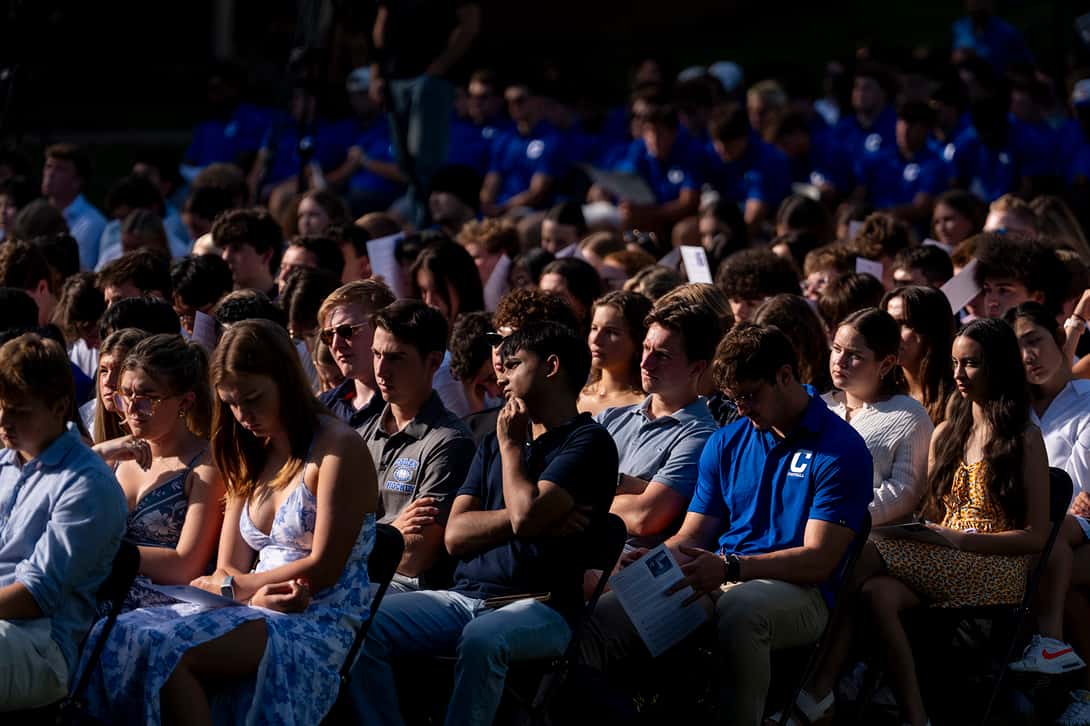
Numbering 639 students, Colby’s Class of 2029 has arrived on Mayflower Hill amid the splendor of late summer in Maine, hope for the future, and the promise of a Colby education.
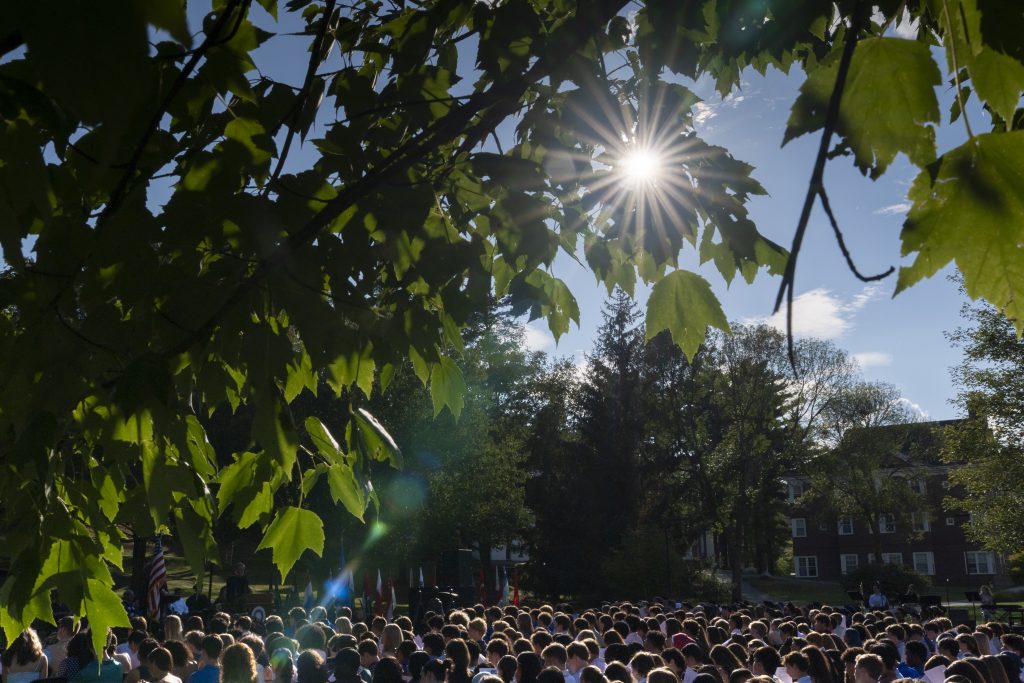
Classes began Sept. 3 following orientation, move-in day, COOT outings, and an inspiring and welcoming convocation address by Herbert E. Wadsworth 1892 Professor of Economics Michael Donihue, thus beginning a long immersion for these first-year students into the Colby community.
An additional 40 students will join their classmates on campus in January, with many participating in one of the College’s two Global Entry Semester programs in Salamanca, Spain, and Dijon, France.
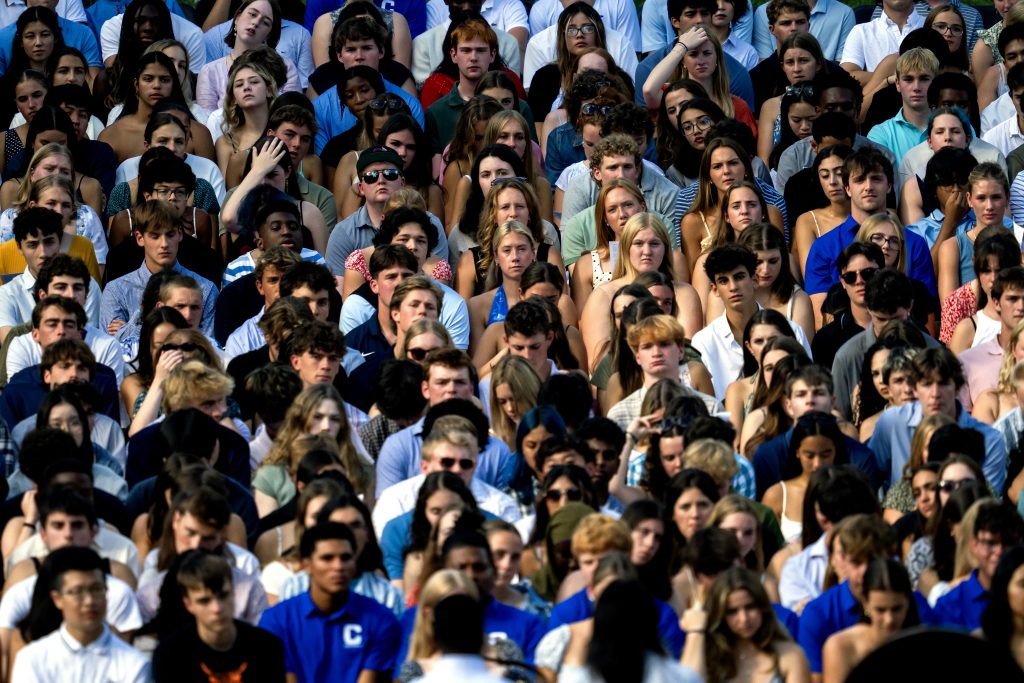
“The Class of 2029 has demonstrated extraordinary academic depth and intellectual curiosity,” said Randi Maloney ’09, vice president and dean of admissions and financial aid. “We are eager to see how they will hone and leverage their talents throughout their time at Colby.”
The students were selected from 20,144 candidates, the largest and most competitive applicant pool in Colby’s history. They represent 41 U.S. states and two U.S. territories, 56 countries, and nearly 500 high schools. Among this year’s new students, 19 percent are the first in their families to attend college in the United States, and 10 percent are non-U.S. citizens. Nineteen percent received federal need-based Pell Grants, which promote access to postsecondary education for low-income undergraduate students.
Forty-two percent of students in the Class of 2029 will benefit from Colby’s financial aid program, the Colby Commitment. Nationally recognized as one of the most generous, this initiative ensures the most talented students have access to the best education.
“The financial aid we offer students is an investment in their future and ours,” Maloney said. “It gives talented students the chance to sharpen their insights, navigate challenges and complexities, and elevate their impact on our community and world.”
A record of achievement
Members of the Class of 2029 arrive on campus with a record of achievement at the high school level, with a median SAT score of 1500 and a median ACT score of 33. In addition to Colby’s 59 majors and 38 minors from which to choose, these students have access to centers of thought, action, and impact that include mentoring, networks, resources, and funding to explore issues and topics of interest to them.
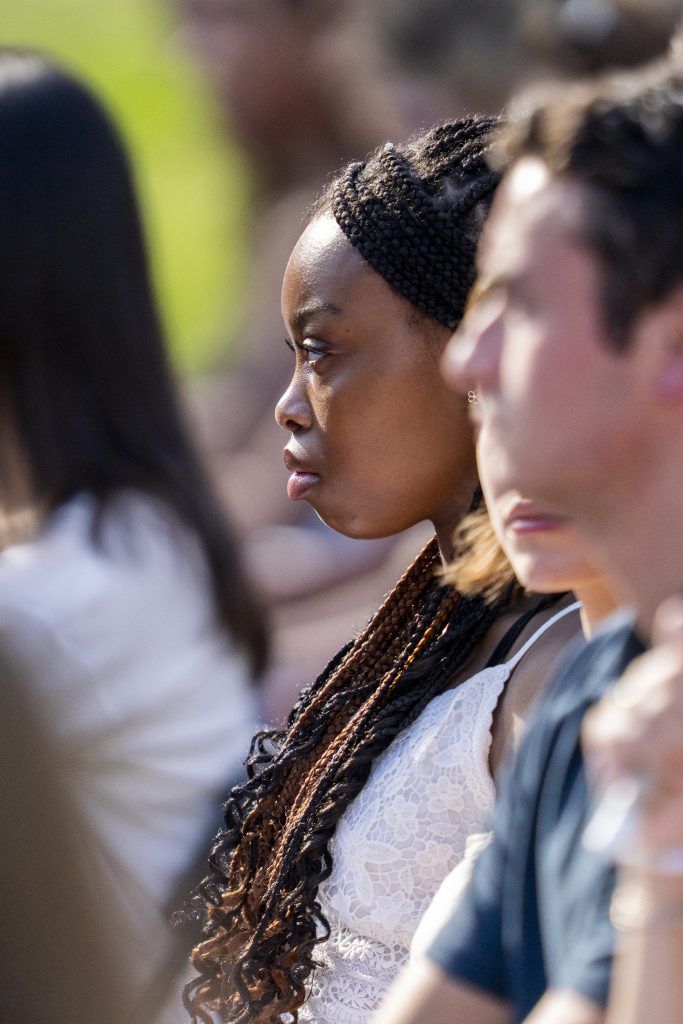
They join Colby during a time of growth and change. While maintaining liberal arts traditions and committing to interdisciplinary studies, the College is on a trajectory of expansion in its course offerings in public health, applied sciences, and innovation.
In recent years, Colby has established the Davis Institute for Artificial Intelligence, the first of its kind at a liberal arts college; created the Island Campus, a 500-acre coastal research campus in Muscongus Bay; and launched the McVey Center for Computational and Data Sciences.
The College has also created a suite of programs to support creativity, innovation, and finding solutions to longstanding community challenges, including the Buck Lab for Climate and Environment, the Linde Packman Lab for Biosciences Innovation, and the Halloran Lab for Entrepreneurship. Now in its third year, the Lyons Arts Lab is an arts incubator and creative think tank.
This fall marks the inaugural year of the Public Policy Lab, a non-partisan hub for interdisciplinary research, immersive learning, and meaningful collaboration with policymakers and community stakeholders across Maine and the United States. Recently, the College announced a new Center for Resilience and Economic Impact, an interdisciplinary research-and-action center to help Maine’s cities and towns build and strengthen their resilience to adversity and develop plans to foster thriving communities.
DavisConnects works closely with students to identify and orient to their “true north” by arranging high-impact internships, research, and global opportunities, and providing expert coaching, guidance, and connections to Colby’s network of alumni, parents, and institutional partners.
Beyond the classroom
Beyond the classroom and the demands of the rigorous curriculum, Colby encourages students to participate in on-campus and community events, including issue-specific forums presented by the Goldfarb Center for Public Affairs, the Davis Institute for Artificial Intelligence, and the Center for the Arts and Humanities, as well as a full calendar of performances arranged by Colby Arts.
This fall marks the fifth anniversary of the opening of the Harold Alfond Athletics and Recreation Center, a state-of-the-art complex that is home to Colby’s varsity sports teams, intramural and recreational sports programs, and gathering spots for the community. And this is the third year for the Gordon Center for Creative and Performing Arts, an innovative and flexible space for teaching, performing, and creating across artistic disciplines. With multiple performance venues and creative studios, the Gordon Center is the home of the departments of Music, Cinema Studies, and Performance, Theater, and Dance.
A longstanding campus jewel, the Colby College Museum of Art is a leading teaching museum among liberal arts colleges, a destination for American art, and a place for education and engagement with local, national, and global communities. The museum also presents exhibitions of contemporary art and selections from its collection in the Joan Dignam Schmaltz Gallery of Art, located within the Paul J. Schupf Art Center in the heart of downtown Waterville.
“Today’s students have unparalleled access to the exceptional array of interdisciplinary opportunities and resources that have come to define the Colby experience,” Maloney said. “Welcoming these newest community members at such a remarkable time in the College’s history is inspiring and exciting.”


