Running the Gauntlet: Colby Joins ‘Big Night’ to Save Migrating Amphibians
As frogs and salamanders begin their perilous springtime trek to Maine’s vernal pools, students and staff take to the road to offer a helping hand
Throughout late March and early April, Angelica Loredo kept a close eye on the weather forecast.
She was waiting for a night predicted to be 45 degrees and rainy: the perfect conditions for frogs and salamanders to leave their overwintering habitats and migrate to vernal pools, ponds, and other wetlands to breed.
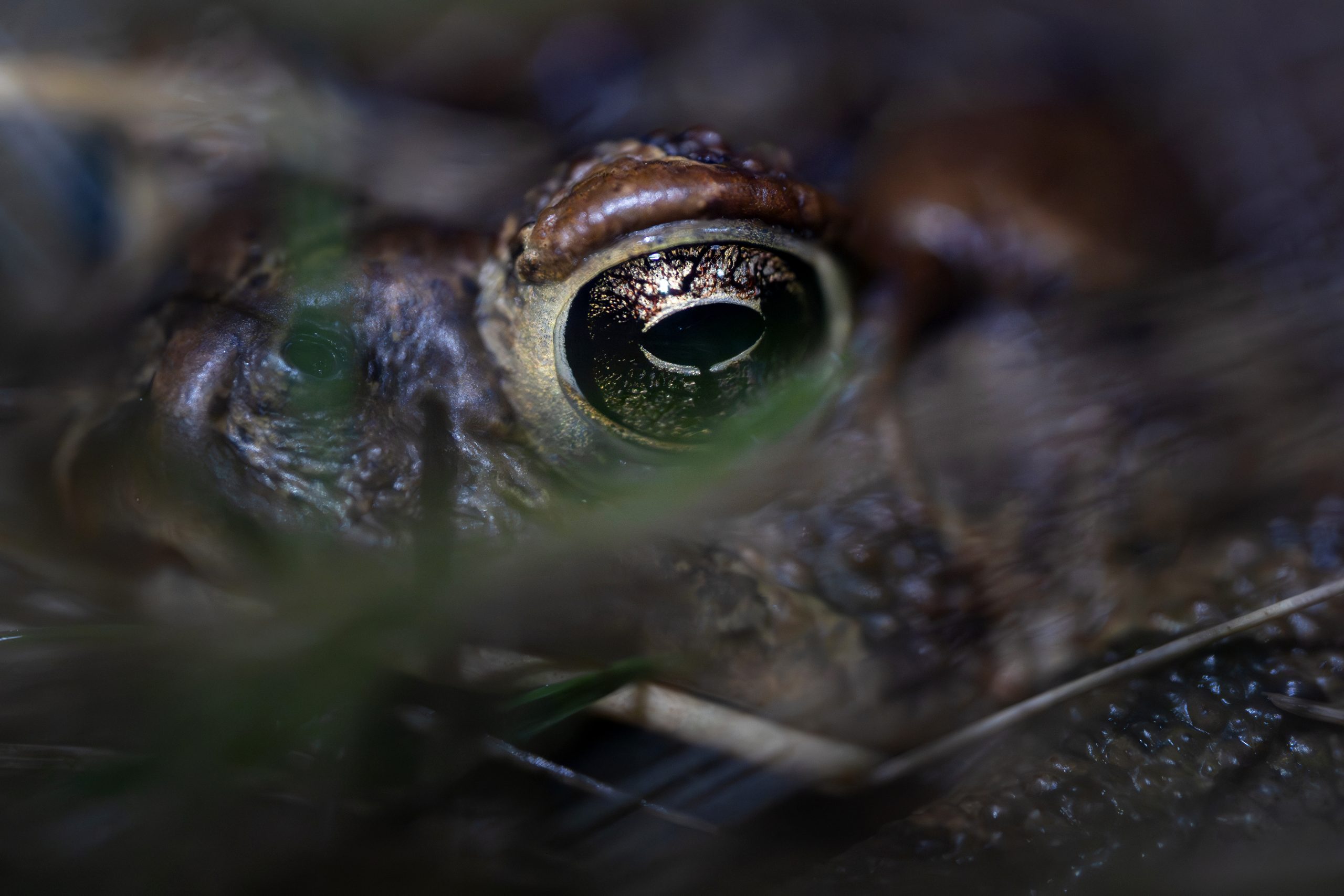
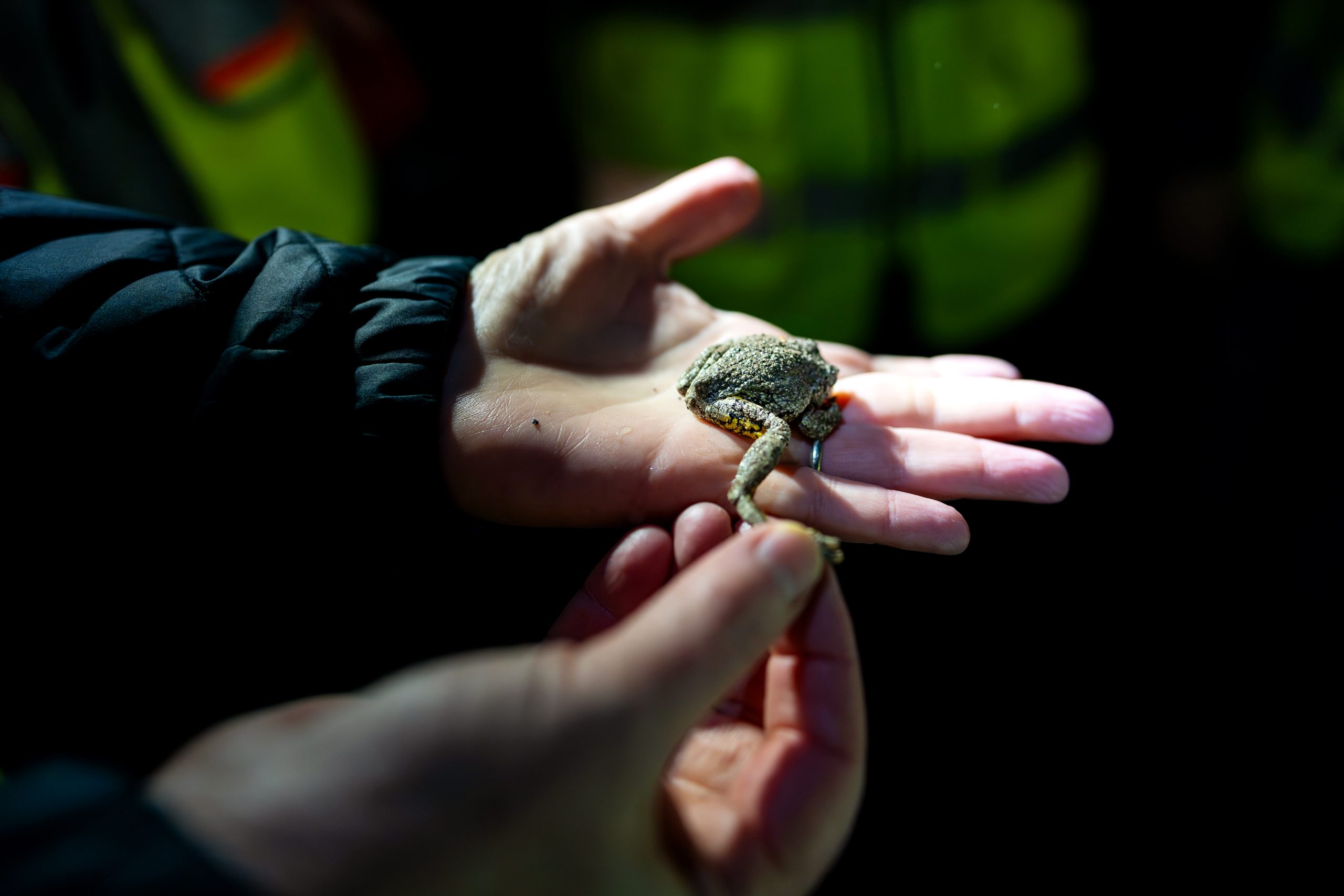
But the amphibians’ springtime journey is not an easy one, and there are dangers along the way. Among the hazards they face are road crossings, where they may be struck by vehicles.
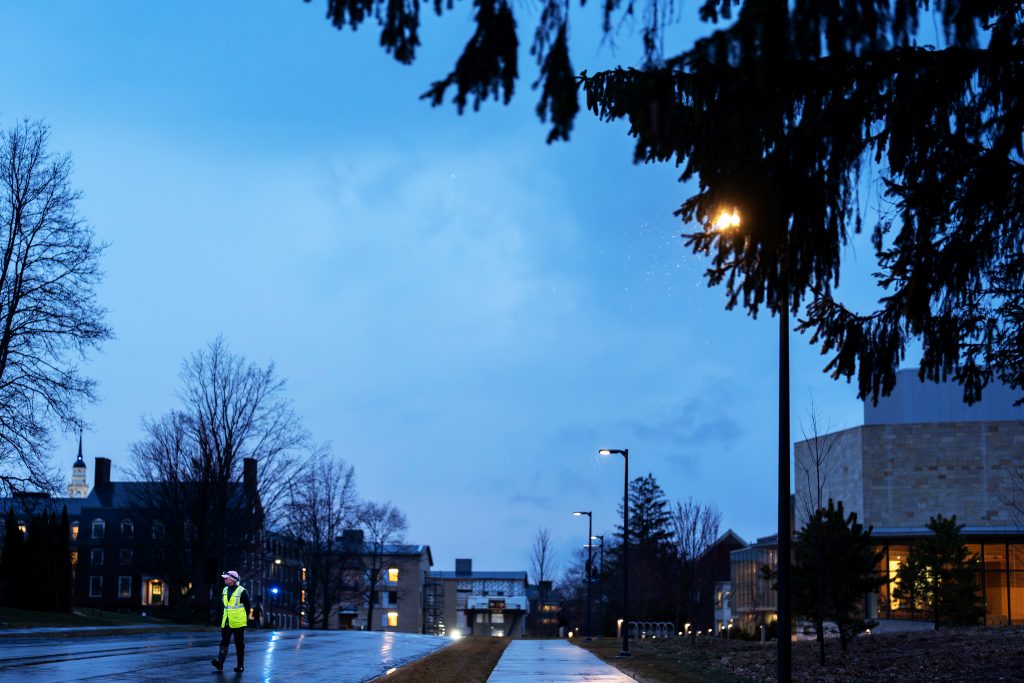
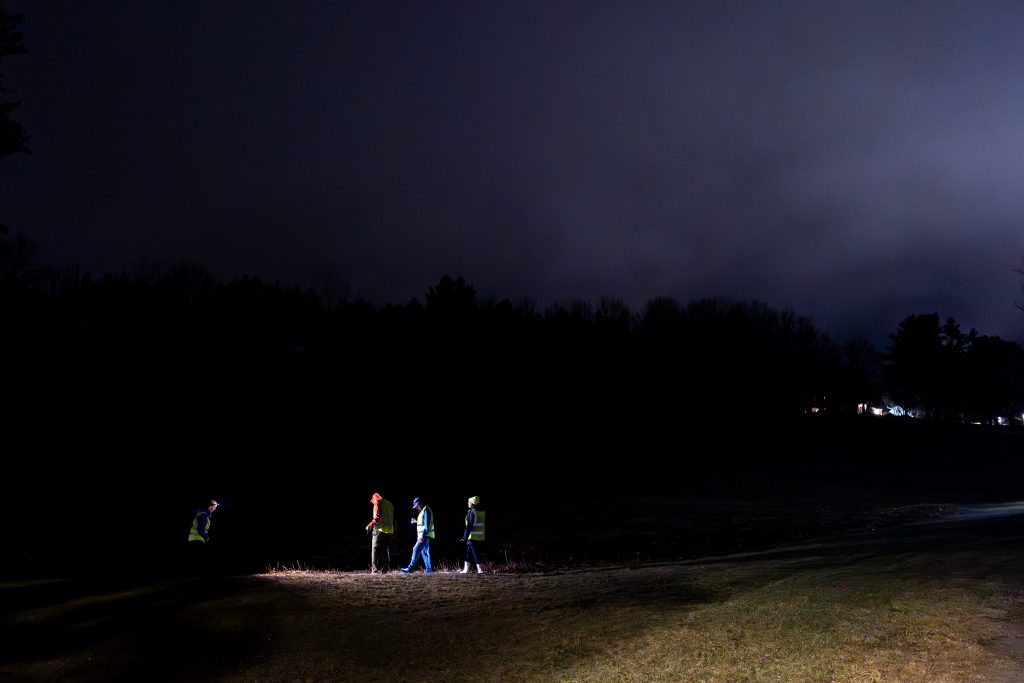
This year, Loredo, who works in the Office of Residential Experience, led an effort to help amphibians safely cross Mayflower Hill Drive. Colby hosted its own Big Night on April 14, part of Maine Big Night, a nonprofit community science project established to help amphibians from becoming roadkill.
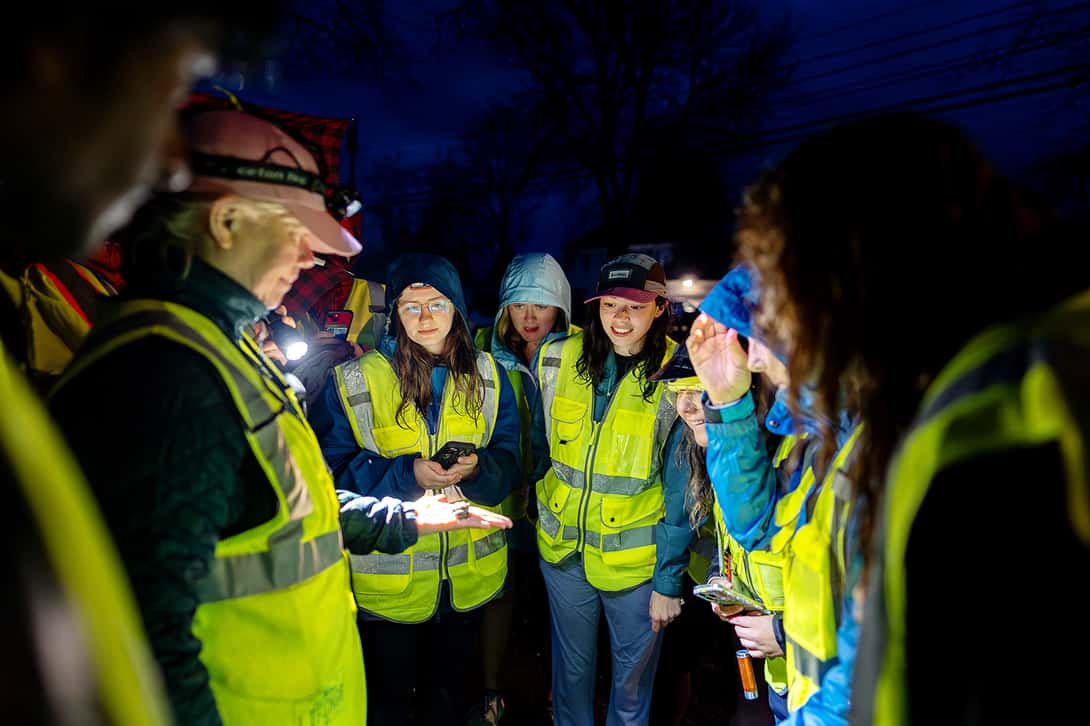
She and about a dozen volunteers, including students, professors, and Waterville community members, wore bright yellow vests for visibility as they gathered on the road to escort any amphibians they saw to safety.
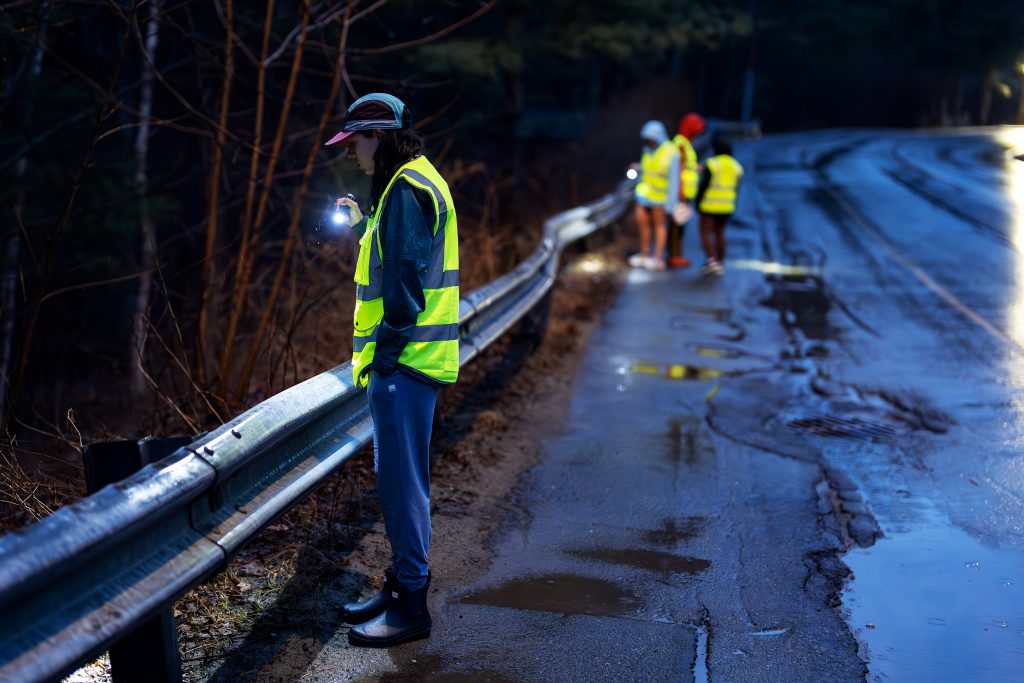
“I’m really passionate about amphibians,” said Loredo. “Amphibians are really important for Colby’s ecosystem, and for the whole ecosystem here in Maine.”
Maine Big Night was founded in 2018 by Gregory LeClair, then a Unity College student. Now, the biologist is the board president and executive director. Last spring, more than 1,000 volunteers monitored amphibians at hundreds of sites across the state, and since the beginning of Maine Big Night, volunteers have moved more than 20,000 amphibians to safety.
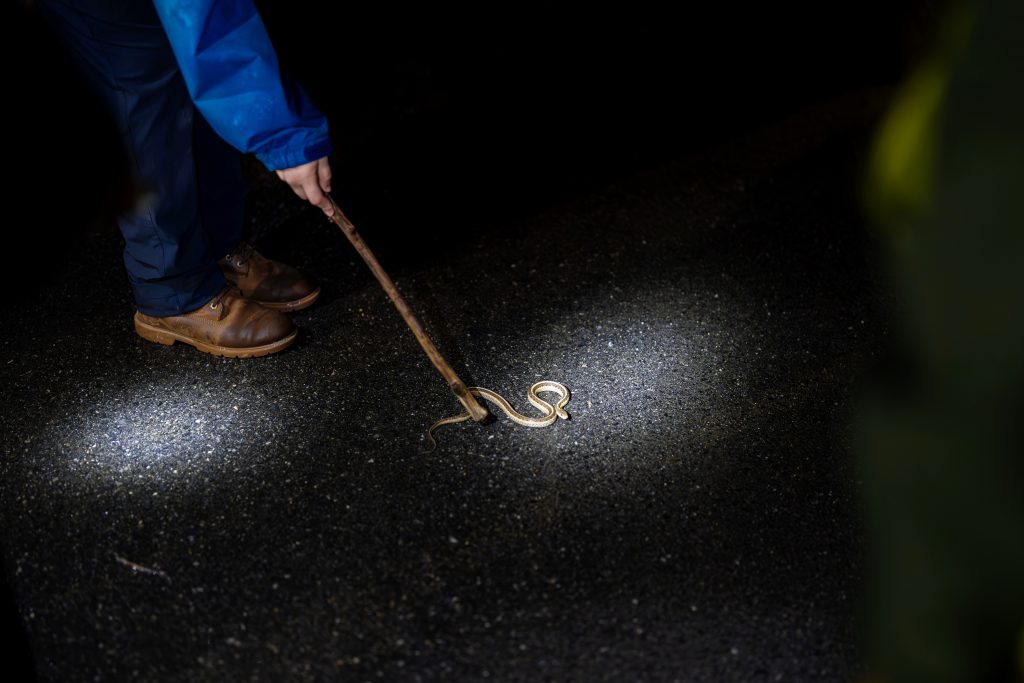
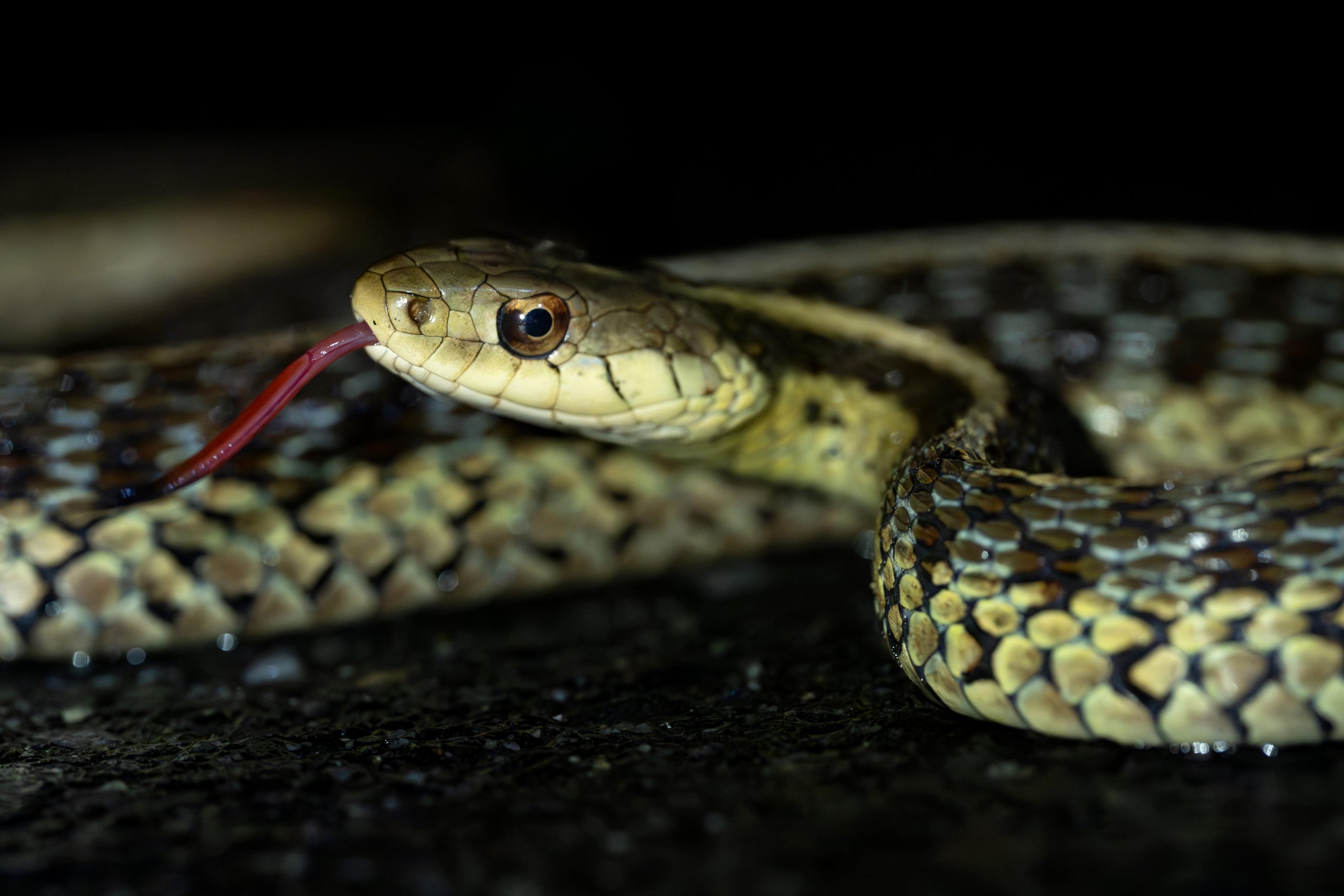
On Mayflower Hill, despite the perfect weather conditions and the chorus of frogs and spring peepers that echoed throughout the dark, damp night, the volunteers helped only one frog cross the road. But they also spotted a snake, gathered data for the project, and learned more about amphibians from each other and from experts like CathyBevier, Oak Professor of Biology, who was participating in her first official Big Night.
Bevier heard wood frogs, spotted a gray treefrog, and searched for amphibians heading for the road. Maine is home to 18 species of amphibians, including frogs, toads, and salamanders. Amphibians are on the decline worldwide, facing threats such as habitat loss and fragmentation, as well as road mortality.
“The goal is to mitigate road strikes on these poor amphibians, who are trying to run this gauntlet,” Bevier said. “You pick them up carefully with a clean hand and walk them across the street. Somebody records the data, and through the training, you get to know what species are on the move.”
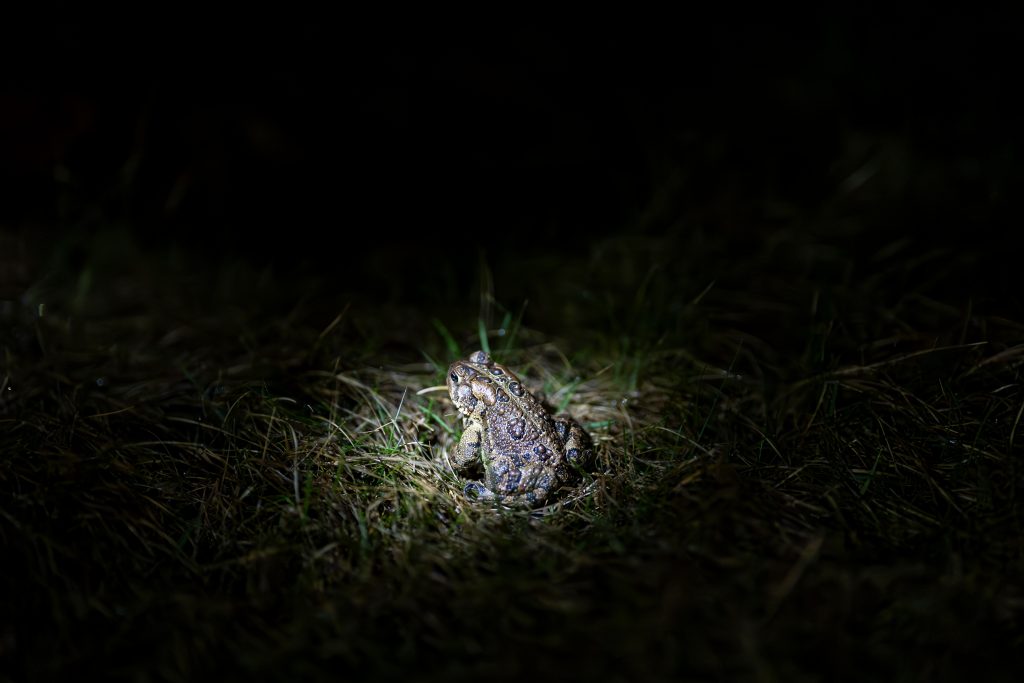
Loredo, who would love to have Colby’s vernal pools be protected in recognition of their importance to amphibians, had a good Big Night. She heard students asking each other what their favorite amphibians were, and she enjoyed the camaraderie and learning that took place during the evening. And even if there weren’t many amphibians on the move, it was wonderful to hear them all around.
“It just shows there’s wildlife all around Colby,” she said. ”And that’s pretty awesome.”