Thinking With Animals
Colby’s latest Public Humanistic Inquiry Lab explores the profound, messy, and beautiful relationships between humans and animals
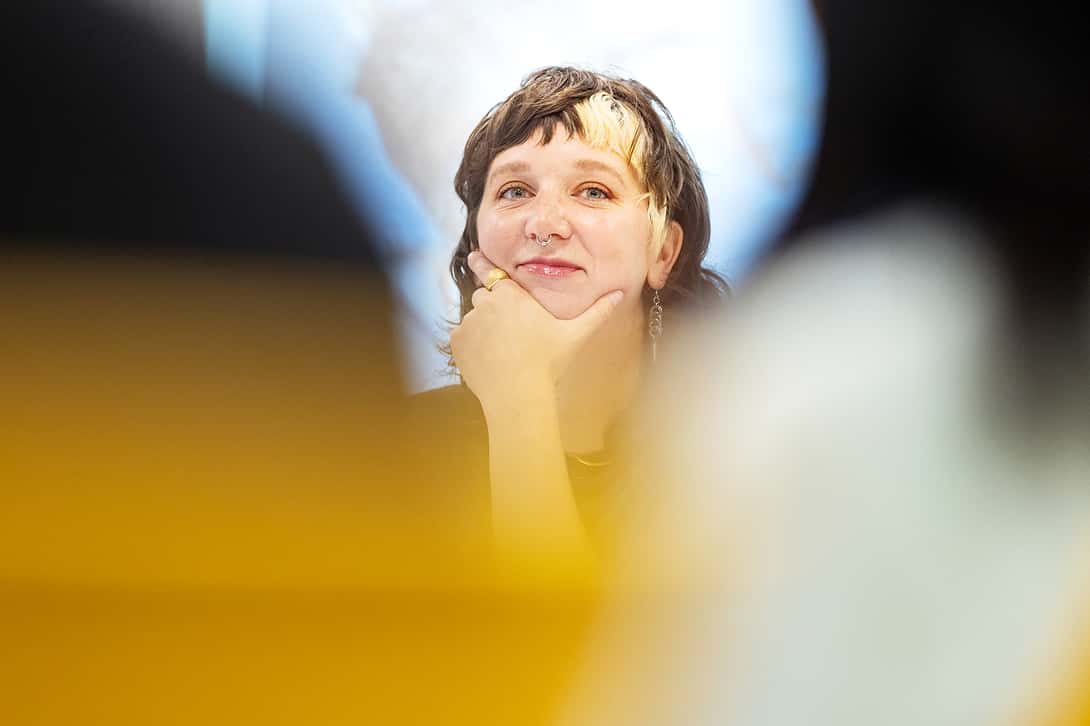
Animals are all around us. They’re in the air, fields, forests, oceans, in our homes, on our plates, in our science, our stories, our art, and our social media feeds.
They’re so important to people and the planet, and so ubiquitous, that it’s only right that humans—another type of animal altogether—should spend time thinking deeply about them and our relationships with them.
Through Thinking With Animals, Colby’s current Public Humanistic Inquiry Lab (PHIL), an initiative supported by the Center for the Arts and Humanities, students, faculty, and the public are in the midst of a three-year, interdisciplinary exploration of the history and evolving relationship between human and non-human animals.
Following the success of the inaugural medical humanities PHIL, which sparked campus-wide conversations that have outlived its three-year run, this second iteration aims to do the same. By examining animals as companions, sources of labor and food, ecosystem partners, and more, the project brings these vital questions to life through special courses, public events, and community storytelling.
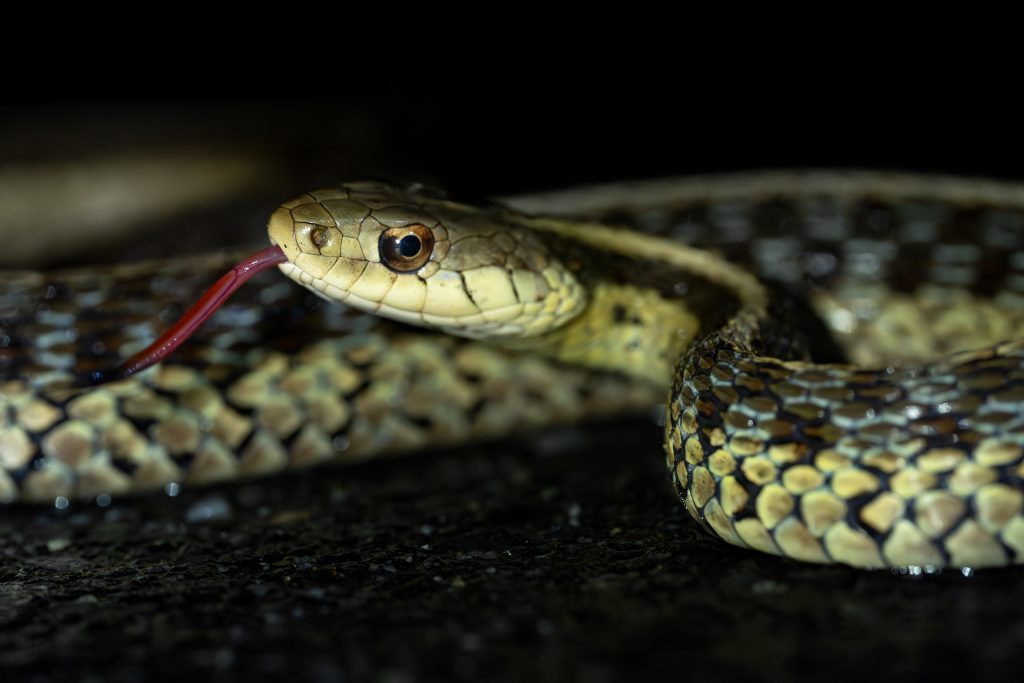
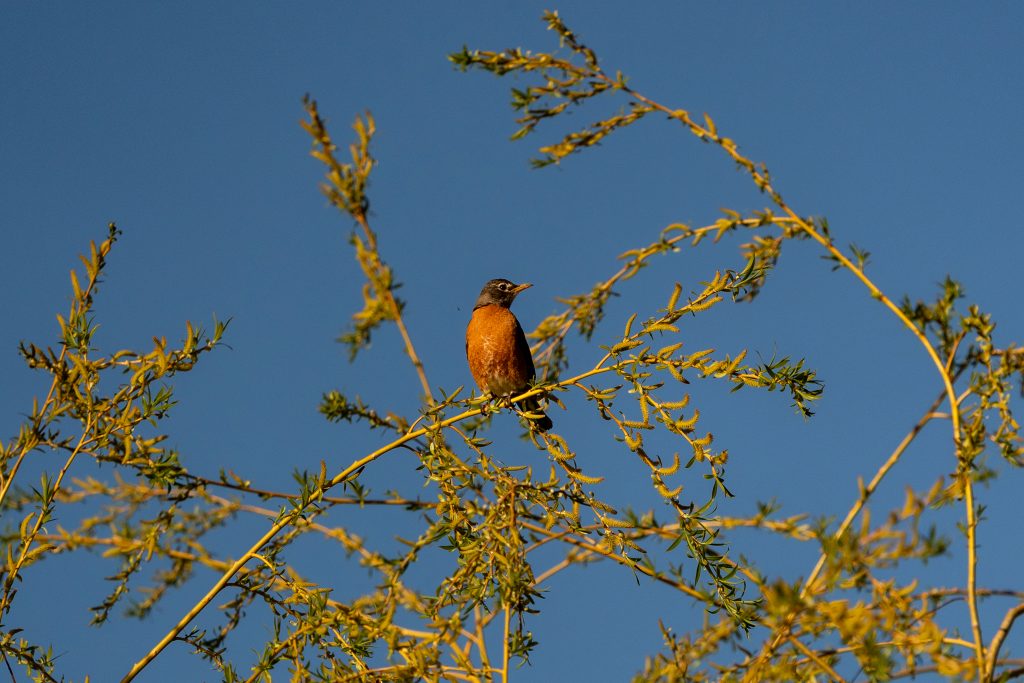
“Animal studies is a really exciting area of interdisciplinary inquiry right now in the humanities and across the sciences. It’s just so interesting, so creative, and so boundary-pushing in many ways,” said Daniel Harkett, associate professor of art and one of the two principal investigators of the PHIL. “It asks so many profound questions about our relationship to the world, about ourselves, about our relationship to the future and the past. I think that’s what drives us in this project.”
Laura Nüffer, assistant professor of East Asian languages and cultures, is the other principal investigator. She’s been fascinated by animal studies since graduate school, when she wrote her dissertation on the many medieval and early modern Japanese texts that include anthropomorphized animal characters.
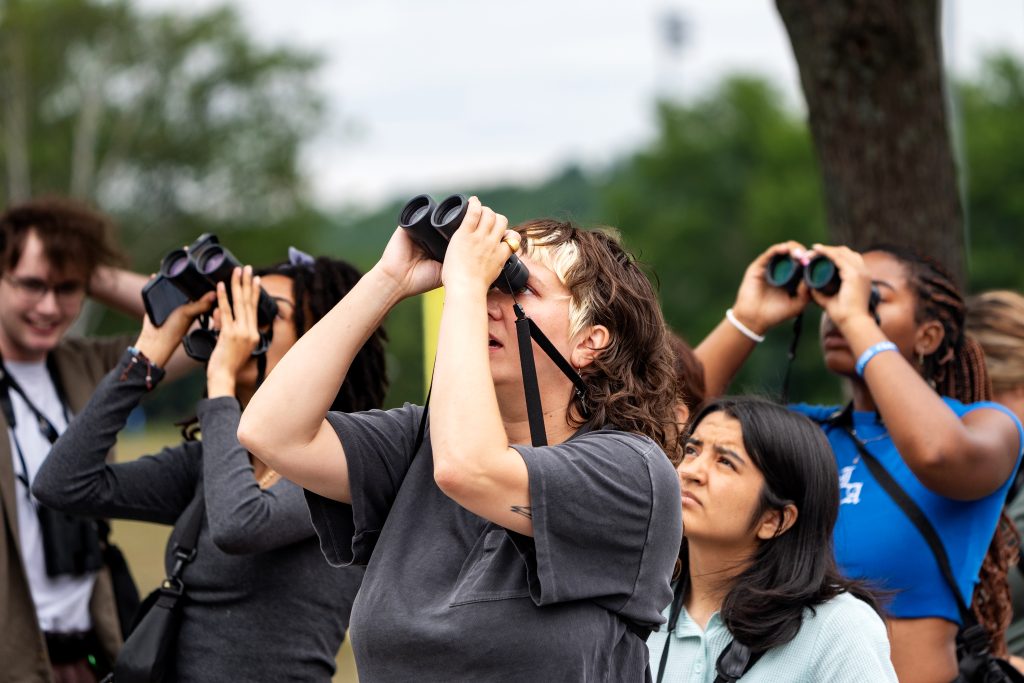
“From there onward, I’ve just been conscious of the ways in which humans use animals to make sense of our own lives and to tell stories,” she said. “The irony now is that as we live in a world that is increasingly distant from actual flesh-and-blood animals, we still consume entertainment that involves both animated, impossible animals and also nature documentaries. So the animal holds this really large footprint in our mental real estate, or paw print, if you will. And I just think that is something that deserves consideration and exploration because it is so much a part of our collective experience.”
Lessons from the archives
When Ashton Wesner, assistant professor of science, technology, and society, learned about the PHIL, she was eager to be part of it. Animal studies are a component of her research, and she spends a lot of time thinking about the environment and the ecological relations between people and non-human animals.
“I thought this would be a great place for me to engage with other scholars who think critically about animals,” she said.
So, with the support of the PHIL, Wesner designed a new course, Human-Animal Studies. She envisioned it as a way to extend the conversations about animal studies that STS students were already having in her entry-level classes. Even more importantly, the course offered students an opportunity to engage with the public by inviting visiting speakers and hosting public book clubs in local libraries.
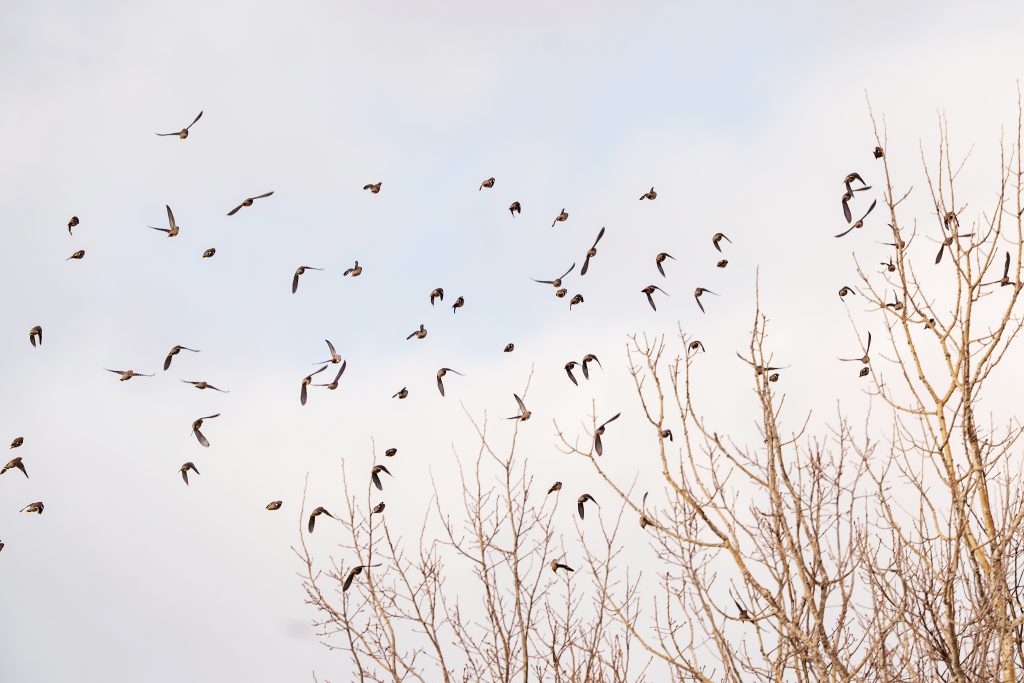
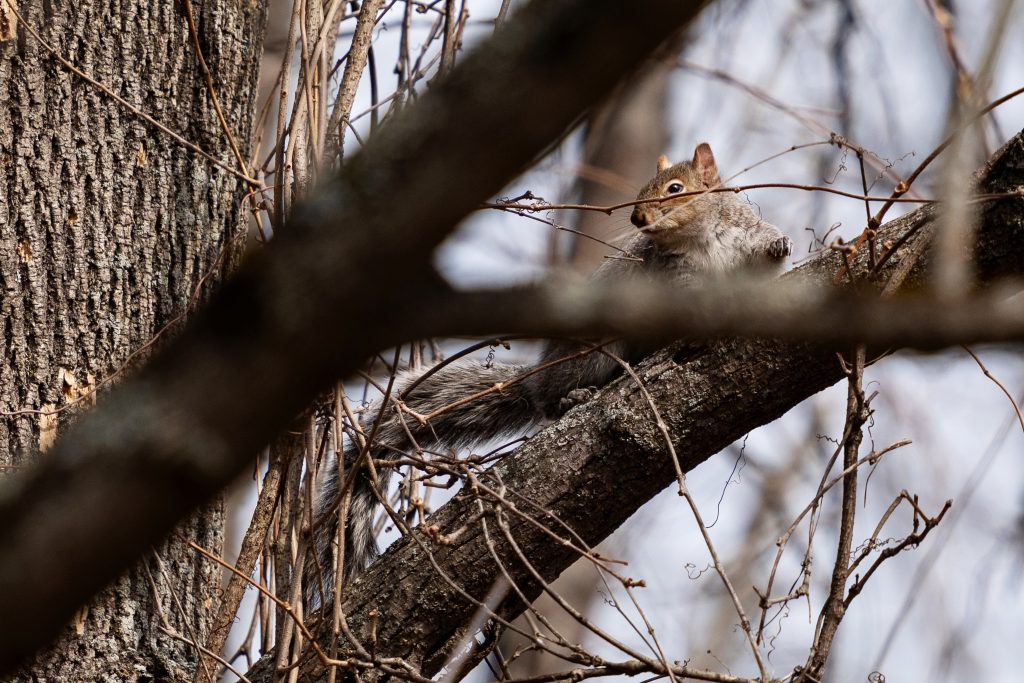
She started the semester by asking her students to dig through the Colby Libraries’ Special Collections & Archives as they considered how the College has been shaped by human-animal relations. What the students found in the archives became Bumping Into Animals, a spring exhibition in the Robinson Room of Miller Library.
In the archives, students found plenty of primary sources that offered sometimes mind-blowing information. The campus landscape they might assume has always looked the same has not. When the College purchased 600 acres on Mayflower Hill in 1931, the parcel was largely grazing land for cows. Johnson Pond, now an often-photographed campus feature, was a man-made pond and the site of a sometimes-contentious push-and-pull between the ducks who wanted to live there and the Colby groundskeepers who wanted to keep the area clean.
Other animal stories raised eyebrows, too. One of the College’s first mule mascots, Louis (renamed “Ybloc,” or Colby spelled backward), was eventually discovered to be a Sicilian donkey, and not a mule at all. Another shocker to modern eyes: in the early 20th century, a Colby science professor sent biology students into the streets to capture cats for dissection and study.
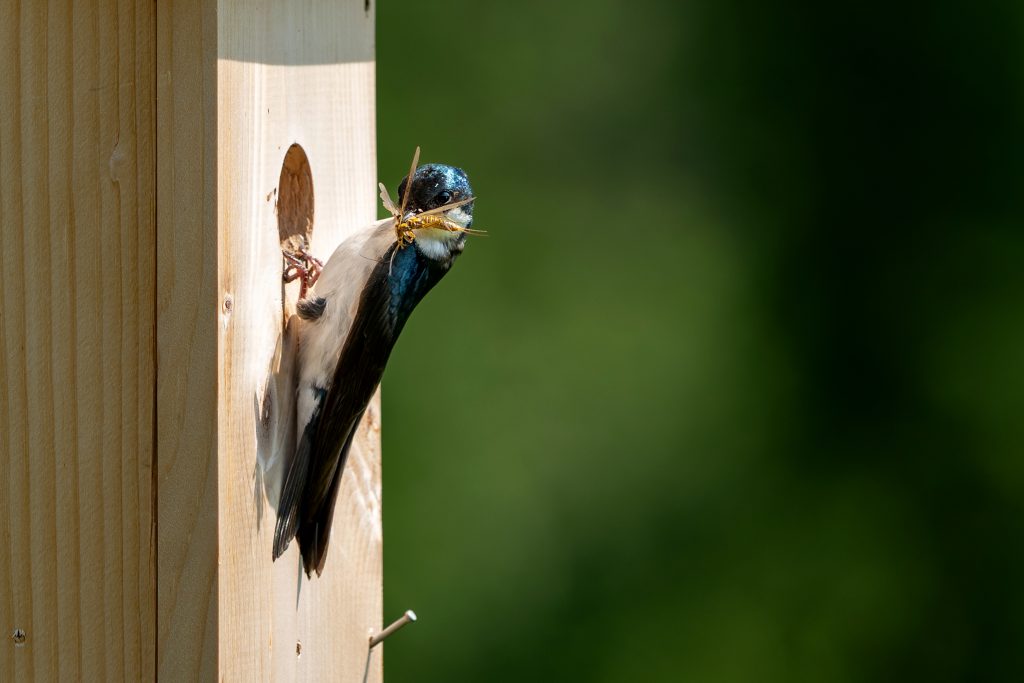
Elliott Seymour ’27, a biology and science, technology, and society double major, assembled his part of the exhibition from archival sources, including longtime biology professor Webster Chester’s typed memoir, administrative campus notices, and historical photographs of student dissections.
“Together, these sources show how cats moved from shared social spaces into the laboratory, where they were reclassified as instructional material,” Seymour said. “In terms of human-animal studies and STS as a whole … it represents that the meaning of an animal is not fixed. A cat can be seen as a companion, a stray, a pest, or a laboratory specimen, depending on the human need that surrounds it.”
Birds as a shared language
Wesner’s students then left the archives behind, switching gears to launch book clubs with partner organizations the Waterville Public Library, the Winslow Public Library, and the Lithgow Public Library in Augusta. They gave participants copies of the Feminist Bird Club’s Birding for a Better World: A Guide to Finding Joy and Community in Nature, and as students facilitated the book club meetings, they worked to remember that many of the people in the room knew more about Maine and birds than they did.
“That’s a core lesson in all our STS classes—the idea of multiple forms of expertise, and trying to de-hierarchize that expertise,” Wesner said. “The students were really aiming for that in how they organized the sessions, and they balanced that well.”
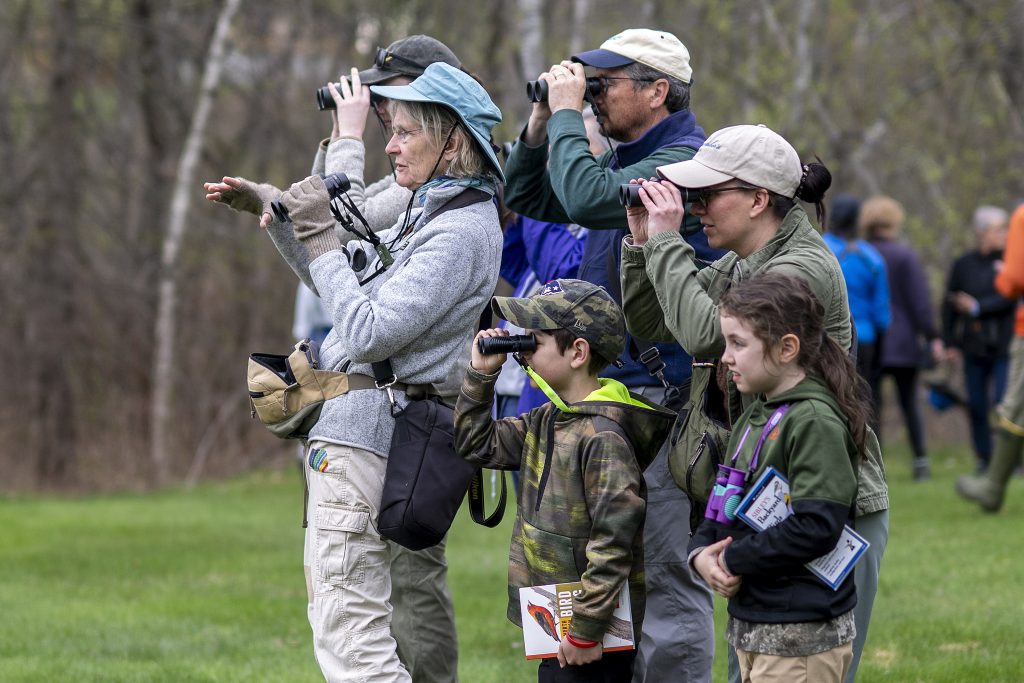
The students were also moved by how excited people were to talk about birds. This excitement helped to make harder conversations—about things like colonialism, racism, and capitalism— easier to hold with the whole group.
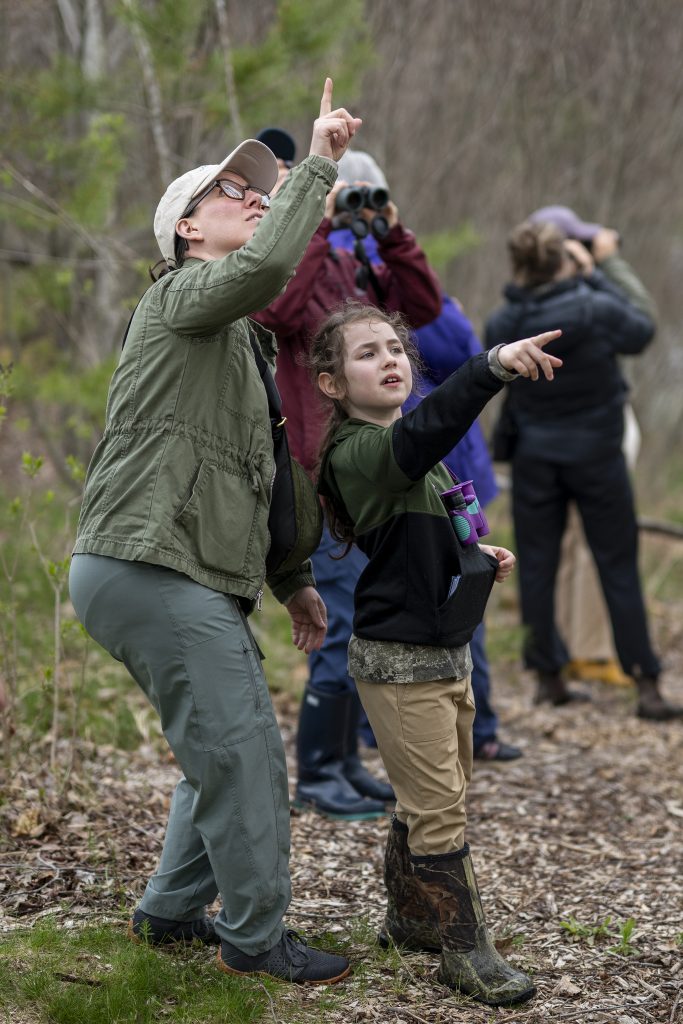
“If we start with birds, and follow birds, and end with birds, people are pretty onboard with birds,” Wesner said. “If we can use this mutual interest and affinity for birds as a gentle vessel to carry us through these more activating conversations, it might go well. And I think it went well.”
After the book clubs, students gave research presentations on their work at a public symposium held at the end of the semester. In her presentation, KC DeSarno ’26, an economics and science, technology, and society double major, discussed helping lead the community book club at the Winslow Public Library.
“What made this event meaningful was the way birds became a meeting point for many forms of knowledge and experience,” she said. “In my particular meeting, people came from across the Winslow community with vastly different experiences, ages, and relationships to nature.”
Despite their differences, she continued, the book club allowed people to connect deeply.
“Birds became a shared language that united everyone in conversation,” she said. “For some participants, birding acted as a peaceful reflection, while for others, it invoked memories of loved ones or meaningful moments in their lives. In this setting, human relationships with animals became a way of understanding human relationships with one another.”
Expanding the conversation
Wesner’s class is just one example of the kind of creative learning that is happening with the Thinking With Animals PHIL, according to Harkett and Nüffer. There have been engrossing talks on the history of carrier pigeons and the beaver, as well as faculty research seminars on topics such as the history of big-game hunting and African safaris in German film.
The PHIL also sponsored an animal stories night on campus, where students and others were invited to tell stories about animal encounters they’ve had. One student talked about wild horses in abandoned schools in Puerto Rico, and another shared a poignant childhood memory of her father catching a pregnant shark while fishing in the Caribbean.
“It was a very powerful and affecting story,” Harkett said. “There’s a wonderful way in which some of these different things are connecting together.”
And when Thinking With Animals comes to a formal end at the end of the next academic year, it’s safe to say that many on campus and beyond will continue the conversation.
“I think with the PHIL, the special sauce is that a lot of people involved have particular interests, but they’re using those interests to get at really big questions about how we exist in the world,” Harkett said. “We know that once we start talking about animals, whether it’s pets, animals that work, or animals that we consume, once you start asking questions about those things, people are drawn in.”


