From the Senate Floor to the Working Waterfront
How the Bram Public Policy Lab is helping students and communities solve problems together
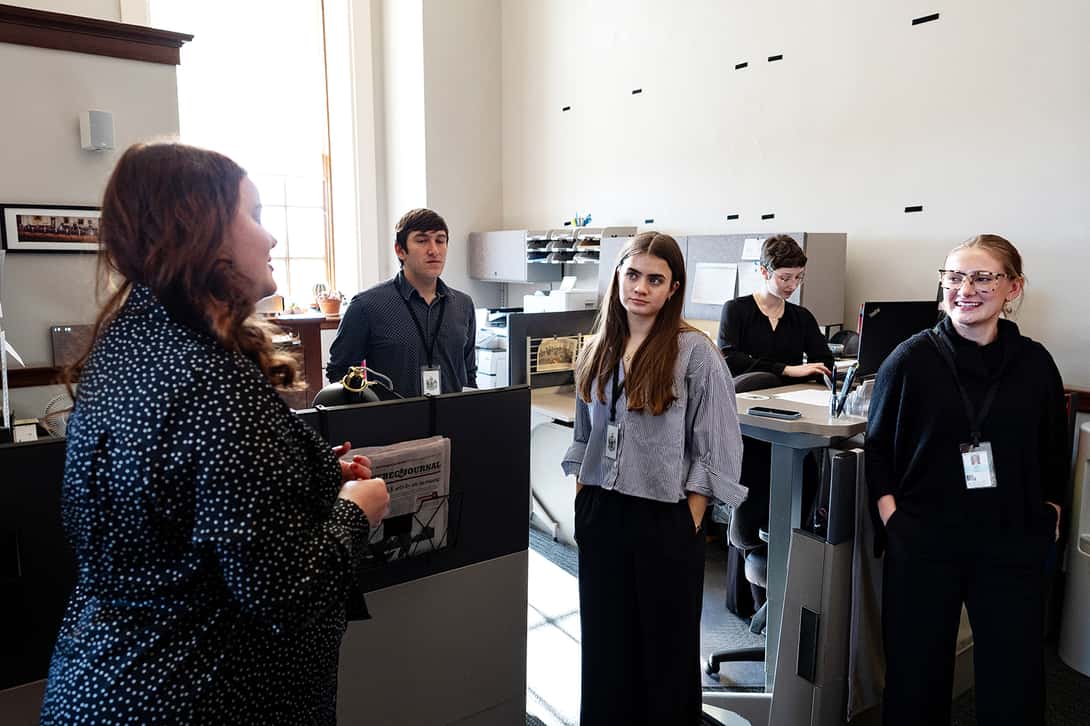
When Gabrielle Lewis ’28 was growing up, the Winthrop, Maine, native had the opportunity to be a page for a day at the Maine State House through the Maine Senate Honorary Page Program.
It was a rewarding, if brief, experience for the global studies and Spanish double major, and it whetted her curiosity about state government. Last month, Lewis found herself back at the State House, this time through the Bram Public Policy Lab’s new State House Fellows Program, a first-of-its-kind effort at Colby to place students inside Maine’s legislative process as active participants. She was one of nine students who spent Jan Plan working with elected officials, state agencies, and nonpartisan committees to get an inside view of how state government works.
Lewis and Lillian Ranco ’26, a government major, both worked in the office of Senate President Mattie Daughtry. They attended hearings, followed bills, researched background information, and more over the course of the month.
“I think I’m learning a lot that I wouldn’t necessarily get in the classroom,” Lewis said. “I just really wanted some hands-on experience, and I feel like I’m getting that here.”
A non-partisan hub for hands-on learning
The Bram Public Policy Lab was established last year as a non-partisan hub that will provide students with real-world policy experiences through internships, partnerships, and hands-on research opportunities across a range of issues. There’s also a long-term survey initiative called NorthPoll, the first public opinion panel in the state hosted by a Maine institution.
The lab was funded with a $5 million gift from Jon and Susan Bram, a member of the Colby Board of Trustees, and one of its most important goals is to rebuild public trust in government, elected officials, and policy expertise.
Students are already helping to do that, said Nicholas Jacobs, the Goldfarb Family Distinguished Chair in American Government and the inaugural director of the lab. In addition to the State House Fellows Program, students are working on research projects in conjunction with the city of Waterville, the Maine Department of Labor, the Gulf of Maine Research Institute (GMRI), and others.
“Students are working on tons of different projects. They’re not the textbook model. They’re not the good-problem set,” Jacobs said. “They’re new, and they’re messy, and that’s what makes them interesting and really hard to solve.”
Cold calls and coastal risk
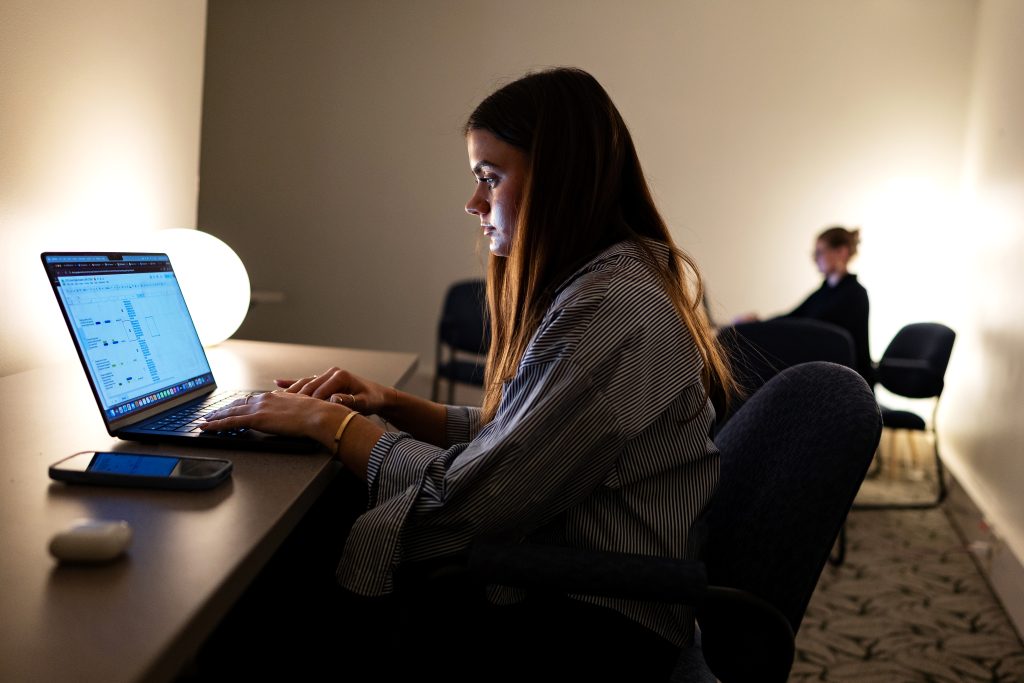
Such problems can also be very important. One example is the work that a trio of students has been doing to aid GMRI with a research question that is connected to the health of Maine’s working waterfront. After a series of devastating winter storms two years ago damaged coastal infrastructure across the state, the institute has been looking into the ownership of properties integral to the working waterfront, and whether those properties are insured. Students Halston Wilkey ’26, Annika Mannix ’27, and Daksh Prashar ’26 helped with this research project.
“What we were trying to do was actually determine how coastal communities and working waterfronts in Maine are dealing with increasing climate risk, particularly around storms, flooding, and long-term resilience,” Prashar, a government and environmental policy double major, said. “From the beginning, we knew that this was going to be something a little bit different. It was feeding into actual decision-making, which was something I think we took really seriously.”
Docks, marinas, wharves, slips, and landings tend to be privately owned, publicly used, underinsured, and deeply tied to the Maine economy, Prashar said. He and the other students began building a working waterfront property database by cold-calling town clerks, harbormasters, lobstermen, shop owners, dock owners, and people who run marinas. They also used the Maine Registry of Deeds to figure out ownership of the properties.

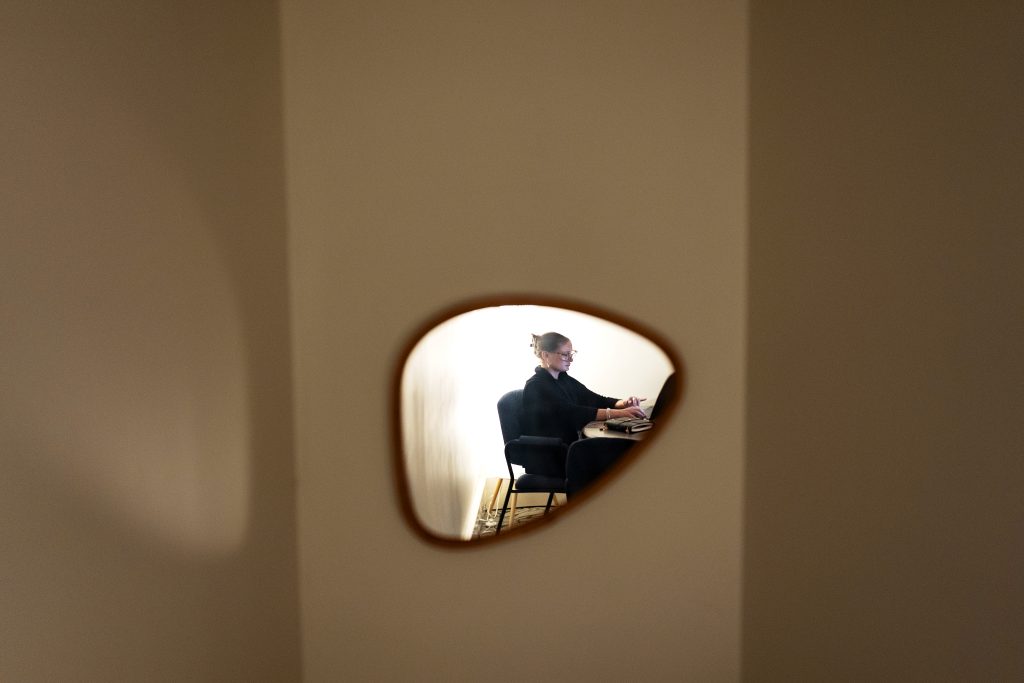
In their conversations with Mainers, the students learned about the issue and the importance of the working waterfront. They also saw firsthand how public policy work, which can seem slower and less orderly in the world than it does in the classroom, can also be more relevant.
“There was a genuine sense of responsibility that I hadn’t felt in other classes or other lessons. I think knowing that someone might actually rely on the data we produced, or use it to inform a conversation on policy choice, definitely changed how seriously I approached every detail,” Prashar said, adding that he realized that progress happens in small, incremental steps. “It forced me to think less about finding the perfect solution, and more about asking what is realistically useful now.”
A transformative path forward
For Jacobs, one of the promises of the lab is that more students like Prashar will learn about public policy as they do the work and be inspired to continue along that path.
“Nothing gives me more joy in my job than when I sit there with a student who struggled for weeks pulling together a dataset, and then we finally pull together the code to get the first glimpse, that first figure we’ve been building to,” Jacobs said. “The lab, I think, is a way to accelerate and expand the number of opportunities like that for students.”
To maintain independence and impartiality, the lab and its students are not paid for their research projects, surveys, or analyses. Jacobs hopes their early success leads to additional partnerships, and he has had conversations to expand opportunities.
“Maine gives us a close-up view of how citizens relate to their institutions,” Jacobs said. “By combining rigorous research with real-world engagement, we’re trying to understand how trust is built, sustained, or lost—and those lessons extend well beyond Maine.”
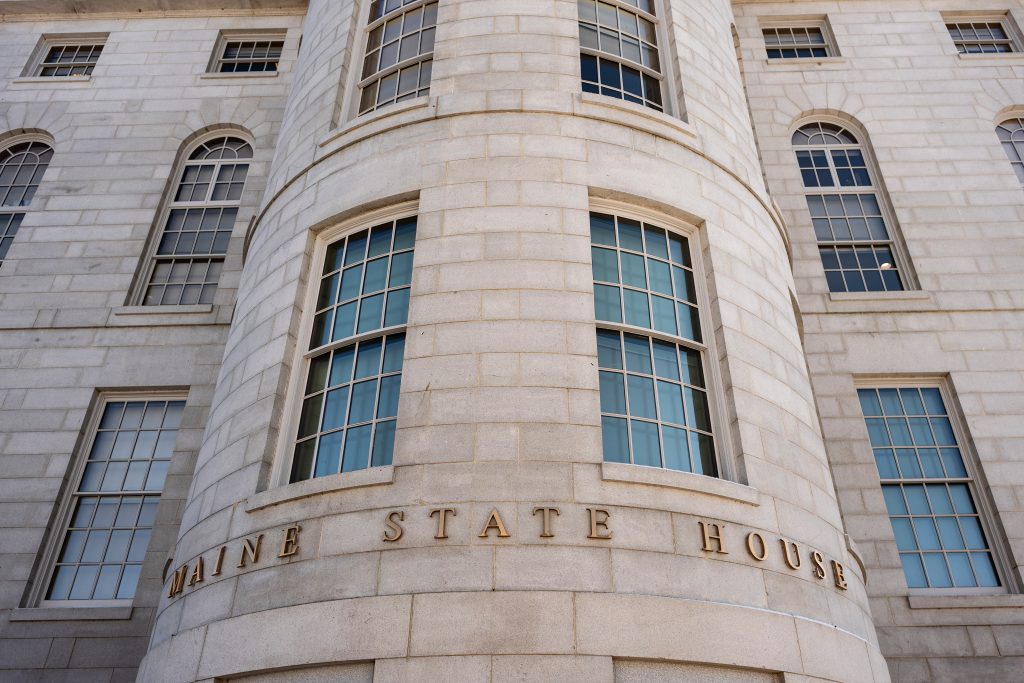
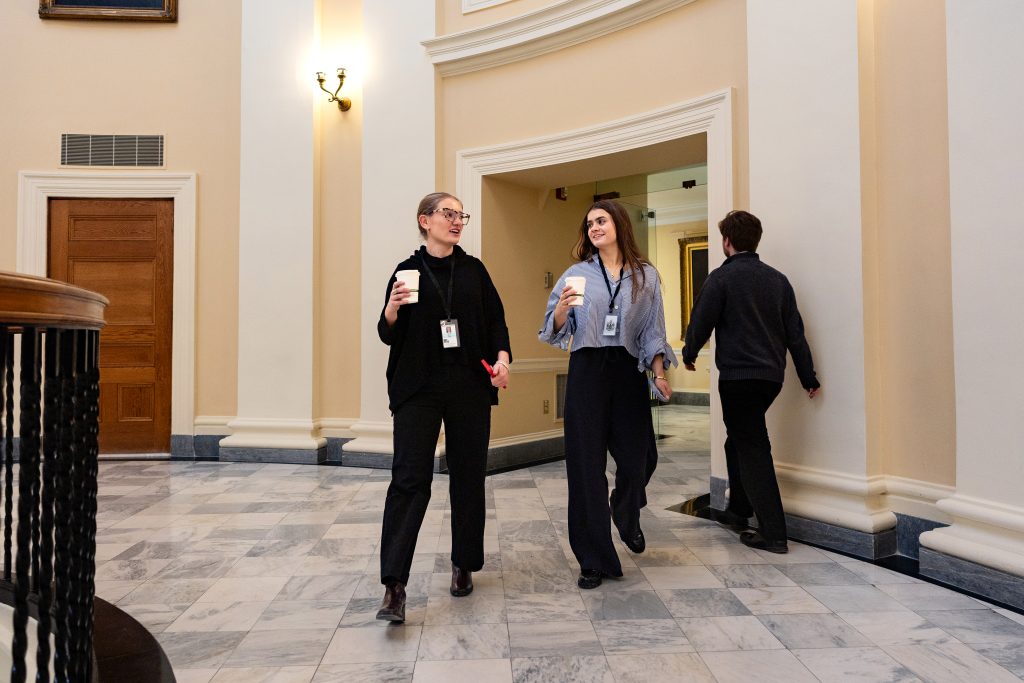
Back in the State House, Lewis and Ranco shared a small office near the rotunda, where they interacted with policymakers on a daily basis. For Ranco, who hails from Westbrook, Maine, it felt different than the internship she did last summer for Maine U.S. Senator Angus King.
“I really liked working at the federal level, but I feel that working at the state level, especially in my home state, is much more fulfilling,” she said. “The process is a lot quicker and more efficient, and it’s much more bipartisan. It’s just a really good place to be.”