Meet the AI Expert Helping Guide Colby through a Technological Revolution
As faculty explore ways of harnessing the power of artificial intelligence that preserve the friction essential to learning, Vijayanta Jain is on hand to help
It’s a lively moment in the sciences.
AI capabilities are advancing rapidly, helping drive breakthroughs in fields from medicine to materials science. Models are cracking mathematical problems that have long perplexed researchers. And in physics, AI is revealing previously hidden patterns in nature.
Researchers can’t afford to miss the boat. Across disciplines, scientists are scrambling to figure out how to make the most of these new capabilities, whether to accelerate research or make discoveries that would otherwise be out of reach.
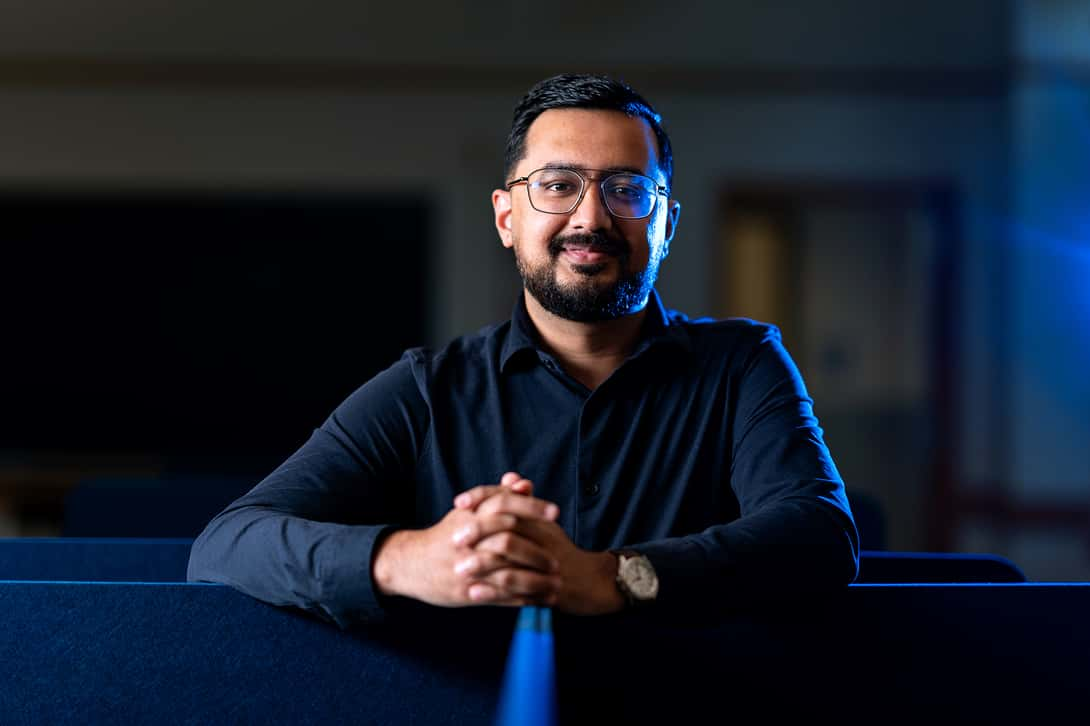
Vijayanta Jain, a computer scientist, helps facilitate these explorations at Colby when he joined the College’s Davis Institute for Artificial Intelligence last year. A postdoctoral associate, Jain is working with faculty to fuse AI with their research and teaching. And with the current pace of AI progress, his hands are full.
“As new models come out, understanding their capabilities, as well as their risks, is becoming a bit of a challenge,” said Jain.
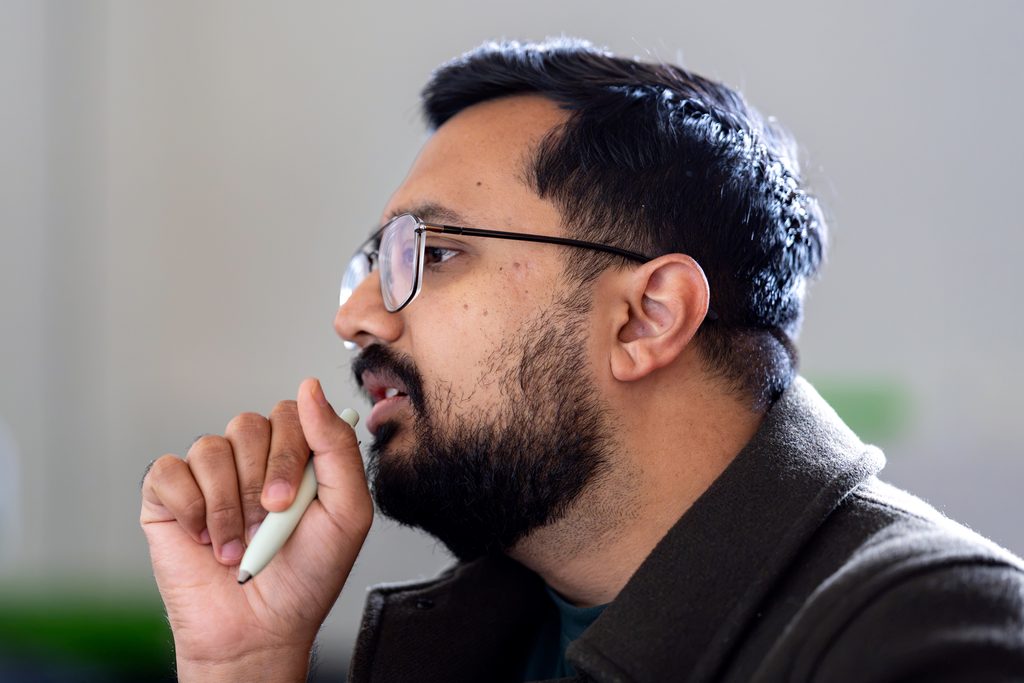
The nation’s first cross-disciplinary AI institute at a liberal arts college, Davis AI helps Colby faculty and students explore AI’s possibilities while critically examining its consequences and implications. In May, Davis brought Jain on board to work directly with faculty across disciplines, helping them identify where AI tools might advance teaching and research, and then develop the tools to make it happen.
“We are so lucky to have Dr. Vijayanta Jain join us during such a pivotal moment,” said David Watts, director of the Davis Institute. “His deep technical expertise combined with his broader knowledge about privacy and his outstanding teaching skills is what made Vijay stand out as an ideal candidate for this role at DavisAI.”
Wide explorations
The job has led Jain into some unexpected territory.
Elizabeth McGrath studies distant galaxies. An associate professor of physics and astronomy, McGrath has thousands of Hubble Space Telescope images of galaxies on a hard drive. She knew classifying their structures and shapes could offer important clues to their origins, but manual classification would be painstaking. So McGrath turned to Jain.
Jain suggested using convolutional neural networks to automate the process. Unlike the generative AI systems that dominate headlines, convolutional neural networks are built to analyze and classify visual information, not to generate new content. They were the right tool for the job, and Jain’s model has helped accelerate McGrath’s work. “A lot of people think AI means generative AI, which is not true,” Jain said. “AI encompasses so many different kinds of technologies.”
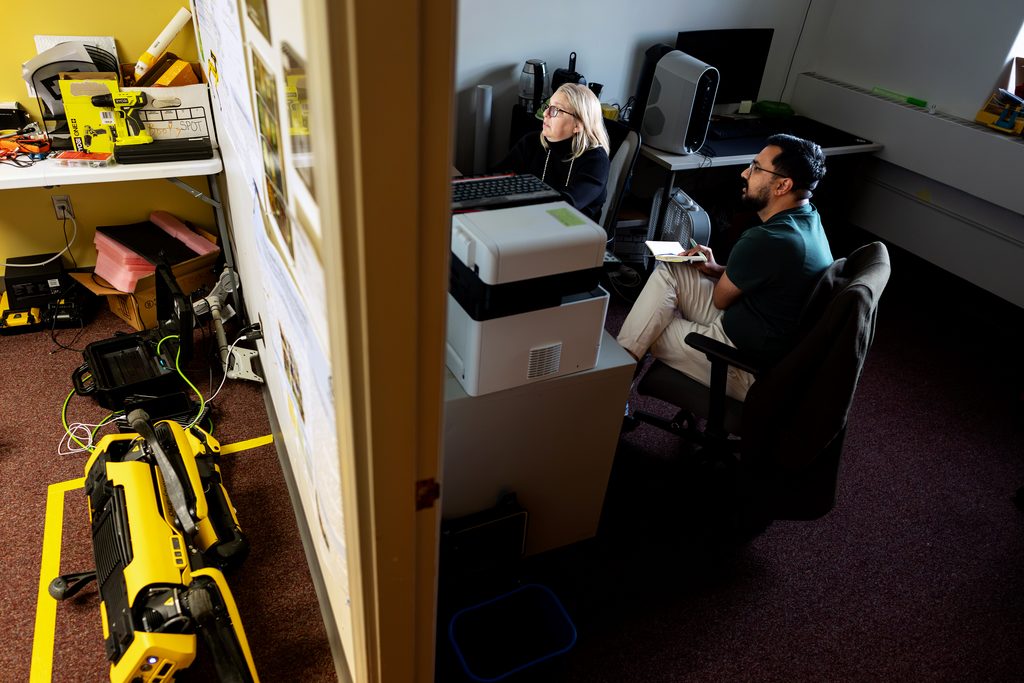
Back on Earth, Jain is working with Professor of Psychology Chris Soto to explore how locally hosted language models can streamline scientific-literature reviews, asking if smaller, tailor-made systems could rival much larger commercial models. He’s also investigating how AI could help researchers extract insights from large volumes of quantitative data by identifying patterns in interviews and other research materials.
“When you’re doing a lot of interviews and want to understand sentiments at a large scale, AI is a really good solution,” he said.
Jain also brings his problem-solving approach into the classroom. Alongside Watts, he teaches AI Lab, an experimental research seminar that brings together students from all four academic divisions to tackle real-world research challenges using generative AI.
Grounded in privacy
Jain’s path to Colby started at the University of Maine, where he earned a Ph.D. in computer science. His research focused on privacy, exploring how AI could uncover how software handled personal information, and then translate those findings into privacy disclosures. This background also informs another part of his work at Colby: expanding access to AI models hosted on the College’s own computing infrastructure.
As concerns grow about how commercial AI providers handle user data, including potentially sensitive or unpublished research, Jain is helping make AI models available on the College’s own servers, offering faculty and students a secure alternative to commercial systems.
“Everything that people use stays on Colby’s infrastructure,” Jain says. “We’re not collecting any personal information, and it’s private.”
For all his enthusiasm about AI’s potential, Jain also recognizes its limitations and the risks of relying on it too heavily. Many students and faculty share this concern. How can liberal arts colleges leverage these powerful capabilities without diluting the intellectual effort that’s vital for learning?
Jain helps Colby navigate this challenge. “My goal is to help faculty, staff, and students with anything they might want to use AI for,” he said. “But I also help them think through whether AI is really the best tool for a particular job.”
And sometimes, the best advice is not to use AI at all. “It’s not our goal to put AI in everything just because we’re Davis AI,” he said. “We also ask: ‘Do we actually need AI for this, or do we not?’”
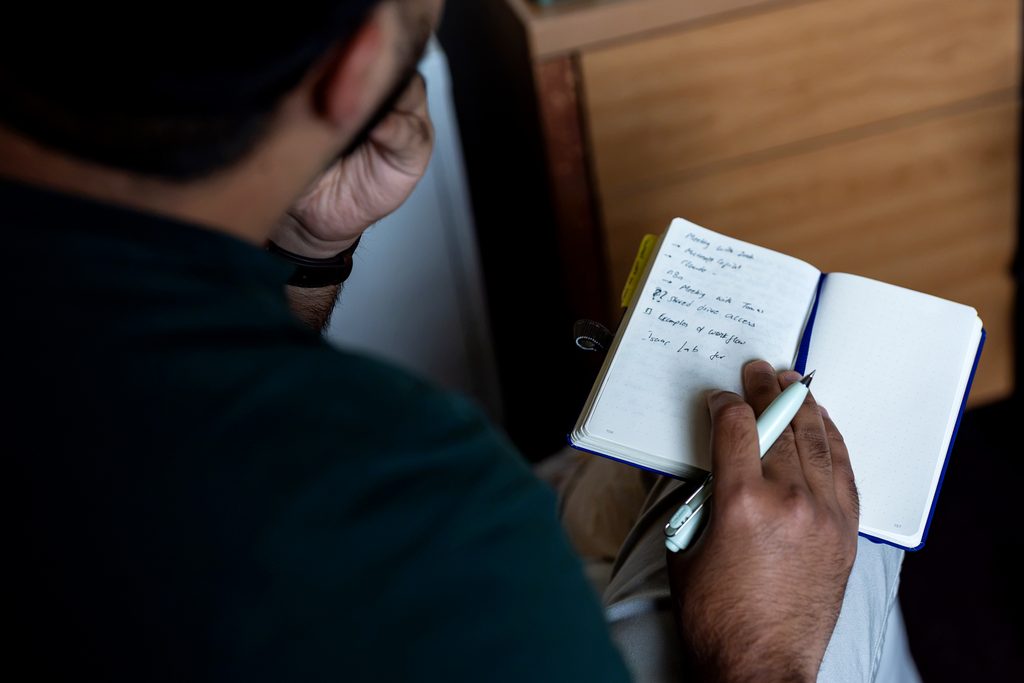
Answering these questions is a College-wide effort. Every Friday, Davis AI hosts Bagels & Bots gatherings, where faculty share their experiences of using AI in teaching and research and discuss what works and what doesn’t. These conversations, which Jain helps steer, bring together colleagues from different departments who might otherwise have little opportunity to compare notes.
“Someone in, say, the Economics Department might not be talking to someone in the Art Department about how they could be using AI,” said Jain. “So we host a lot of roundtable discussions so that can happen.”
The conversations have no fixed endpoint. “We need to keep having these discussions, if we’re going to understand how best to use a technology that’s evolving so quickly.”


