Bringing Herman Melville to Life
Renowned sculptor Stefanie Rocknak ’88 unveils her most ambitious work yet
Partially set in New Bedford, Mass., Herman Melville’s Moby-Dick, or The Whale, remains a masterpiece of American literature, the epic tale of Captain Ahab’s quest for revenge against the white whale that severed his leg on a previous voyage.
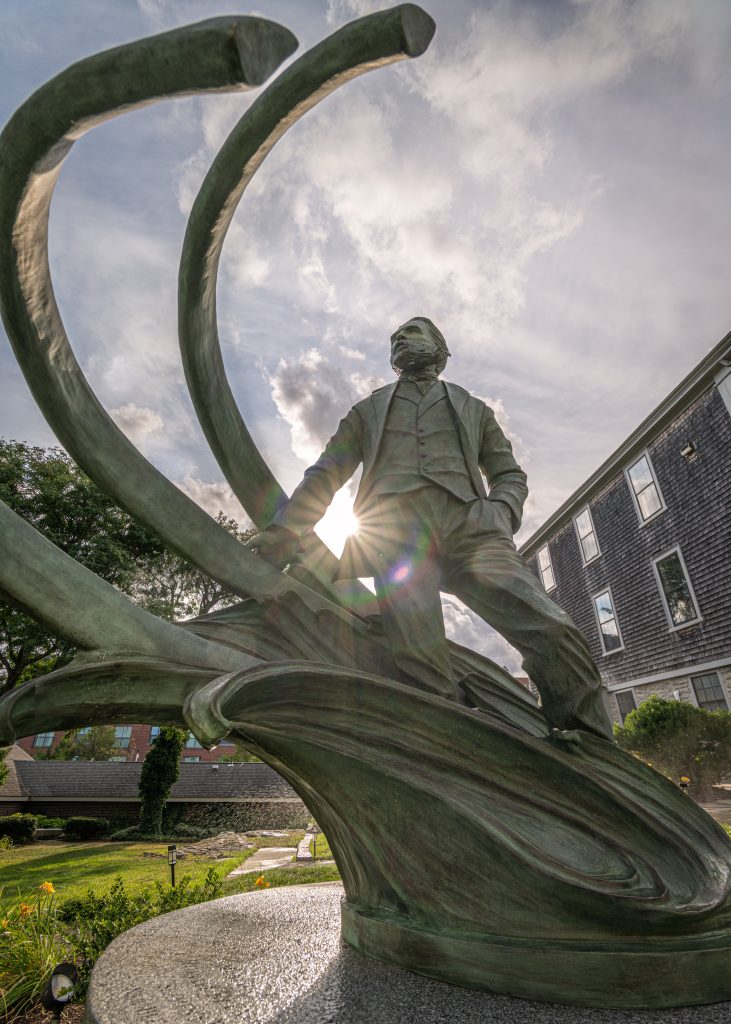
Now, thanks to artist Stefanie Rocknak ’88, a handsome bronze sculpture of the author stands outside Seamen’s Bethel, the New Bedford chapel where whalers worshipped before setting out, including Melville, who visited in 1840 before sailing on the journey that inspired the novel published in 1851.
The city of New Bedford unveiled the sculpture during a four-day Melville in Our Seaport celebration in August, a cultural event honoring Melville’s influence and New Bedford’s role in his most celebrated work. It included conversation, scholarship, performance, and more, including the introduction of Rocknak’s sculpture and a dramatic reading from the novel by actor Sam Waterston.
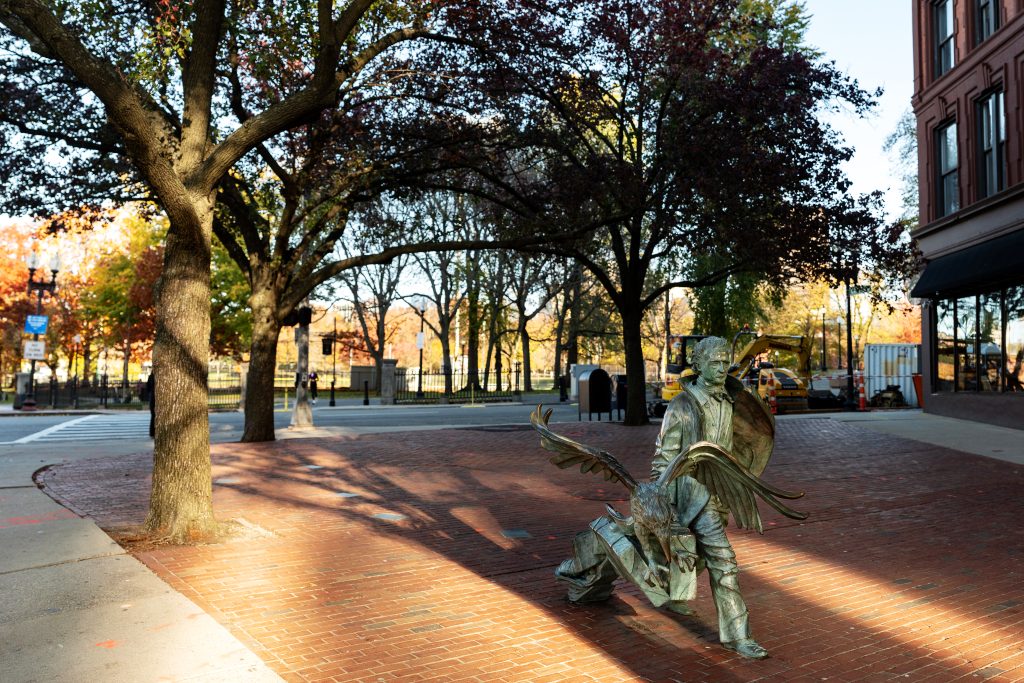
Rocknak is an acclaimed sculptor best known for creating expressive, figurative carvings in wood and other materials that capture psychological depth. She gained widespread national recognition for her public monument Poe Returns to Boston, a bronze sculpture of Edgar Allan Poe near Boston Common. Her works have been featured in numerous solo and group exhibitions, earning praise from art critics and publications around the world.
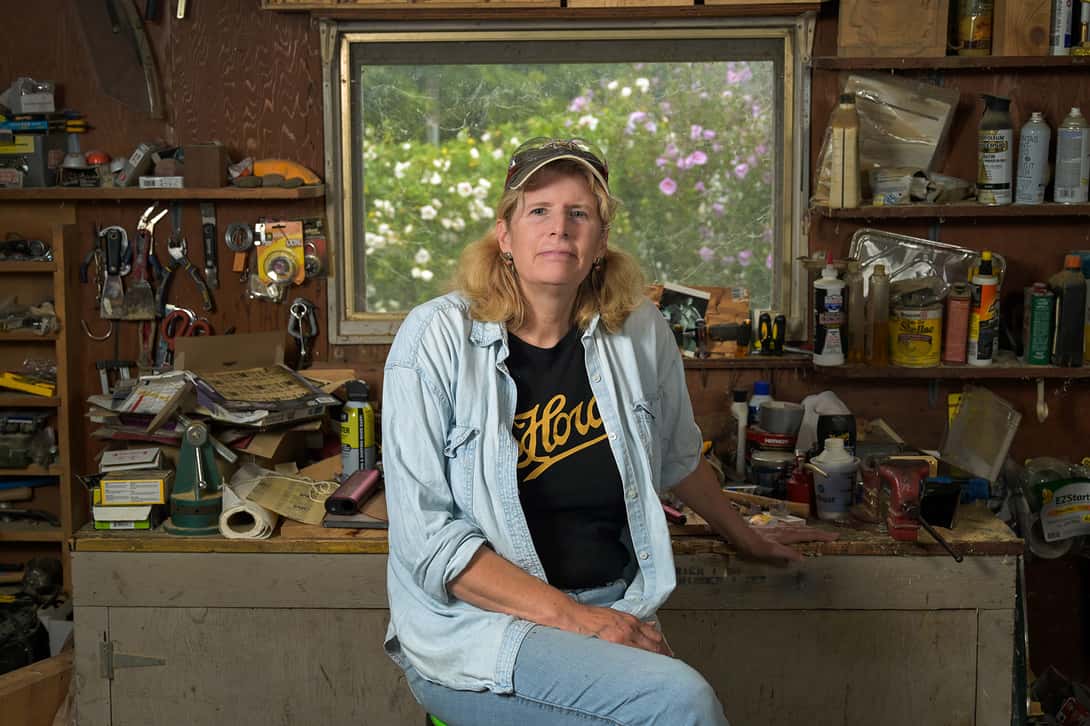
In addition to a renowned career as a sculptor, Rocknak is a professor and chair of philosophy at Hartwick College in Oneonta, N.Y., where she teaches courses on the philosophy of art and contemporary art theory.
Rocknak’s new piece, Melville and Jonah’s Journey, depicts the windswept author rising from the waves, encircled by three large whale ribs. Melville references the Biblical story of Jonah, who was swallowed by a whale, in a famous passage from chapter nine in Moby-Dick. The three bones represent the three days Jonah spent inside the whale and the duration of Ahab’s hunt.
“It occurred to me that Melville really is a Jonah figure,” Rocknak said. “This entire story is a journey of moving in and out of the whale to come back and speak the truth, which became Moby-Dick.”
‘My most ambitious sculpture to date’
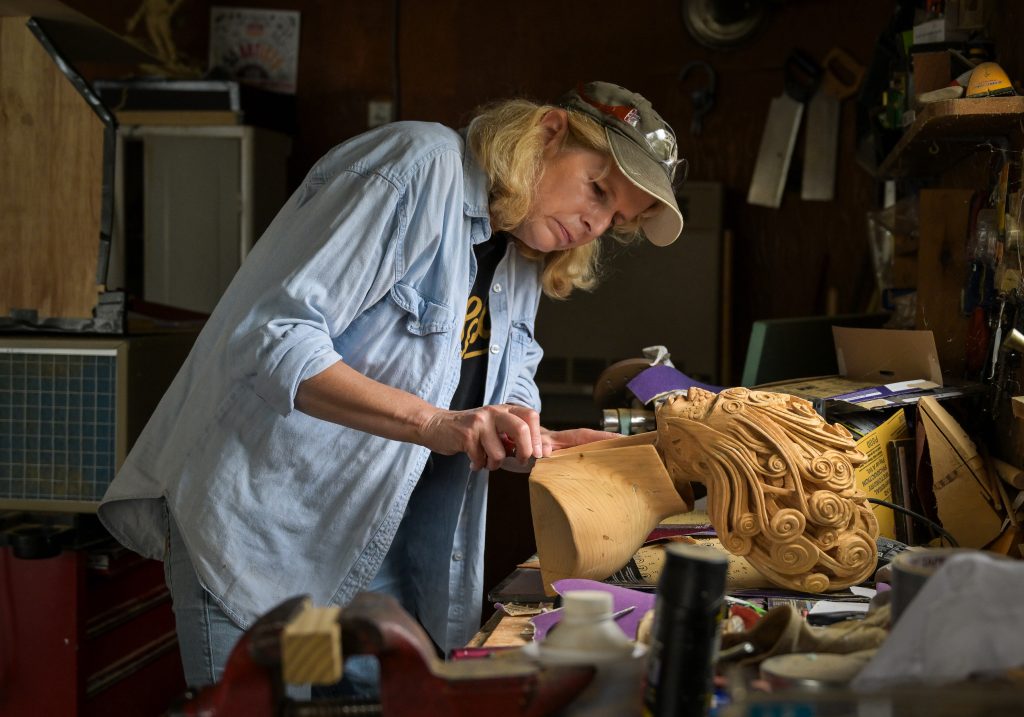
Rocknak first read Melville’s writing at Colby as an American studies and art double major. “I read a lot of Melville at Colby, mostly short stories, and that encouraged me to read Moby-Dick one summer,” she said. “When I heard about the application for this public sculpture, I jumped on it.”
The city of New Bedford chose Rocknak from among 41 artists who submitted proposals. At the dedication ceremony, New Bedford Mayor Jon Mitchell said Moby-Dick “has shaped America’s national identity, and so it is entirely fitting that today on the grounds of the chapel where he once worshipped, having been drawn to New Bedford’s great whale fishery, we dedicate a statue of Herman Melville, whose magnum opus continues to call us to reflect deeply on our place in the world.”
He also commended Rocknak for her “brilliantly conceived” artwork, noting that it embodies both Melville’s ambitious nature and the resolute, courageous character of New Bedford.

More than 200 people attended the dedication ceremony at Seamen’s Bethel, just steps away from the New Bedford Whaling Museum.
Rocknak said she was challenged by the subject and the location.
“With public art, I like the challenge of figuring out the puzzle of how the work fits in this specific place,” she said. “You’re thinking about the audience the entire time, which is so different from sculpting for me, where I’m just making something personal, or trying to capture a feeling, like a three-dimensional photograph. It’s probably my most ambitious sculpture to date, but I really enjoyed making it.”
Rocknak’s dramatic sculpture has received widespread media coverage, including a front-page story in the Boston Globe, a feature in Artnet, and mentions in art blogs.
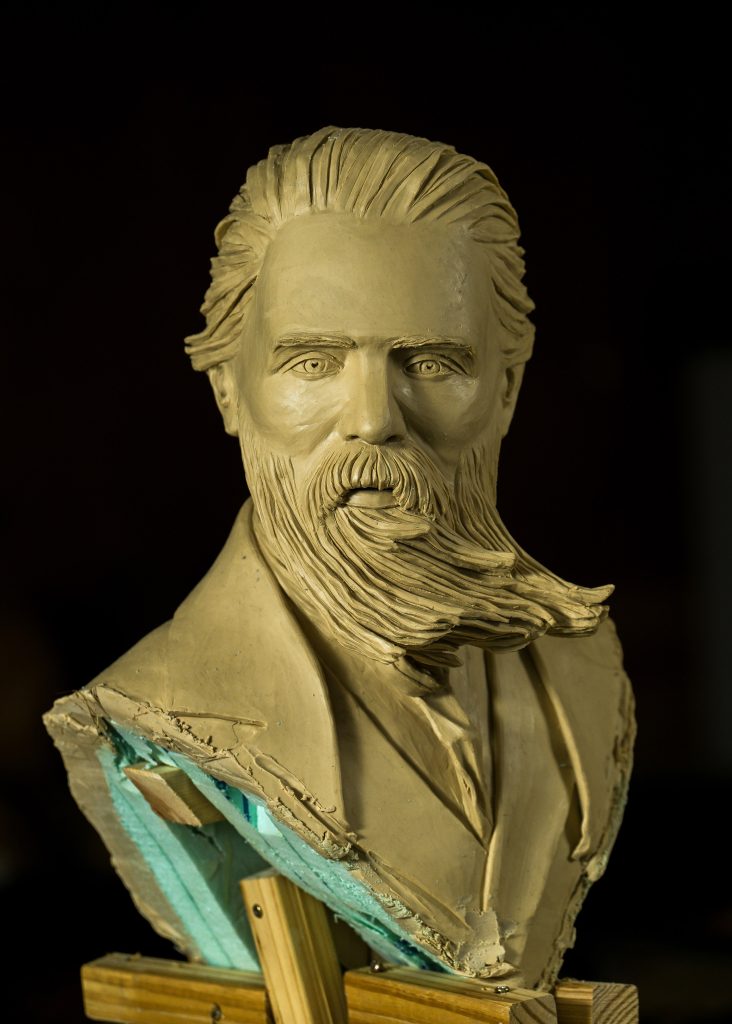
The sculpture has gone viral for portraying the author as being ridiculously good-looking. The Globe called him “hot.”
Of the public reaction, Rocknak just laughed. “I tried to get his likeness, and it turns out a lot of people find that attractive,” she said. “For me, if that’s what makes the sculpture accessible, if that’s what helps people go and see it, to think about the novel, to visit New Bedford and the museum, that’s terrific. I want there to be an access point, whether it’s a Melville scholar or someone who has never heard of the novel.”
How she did it
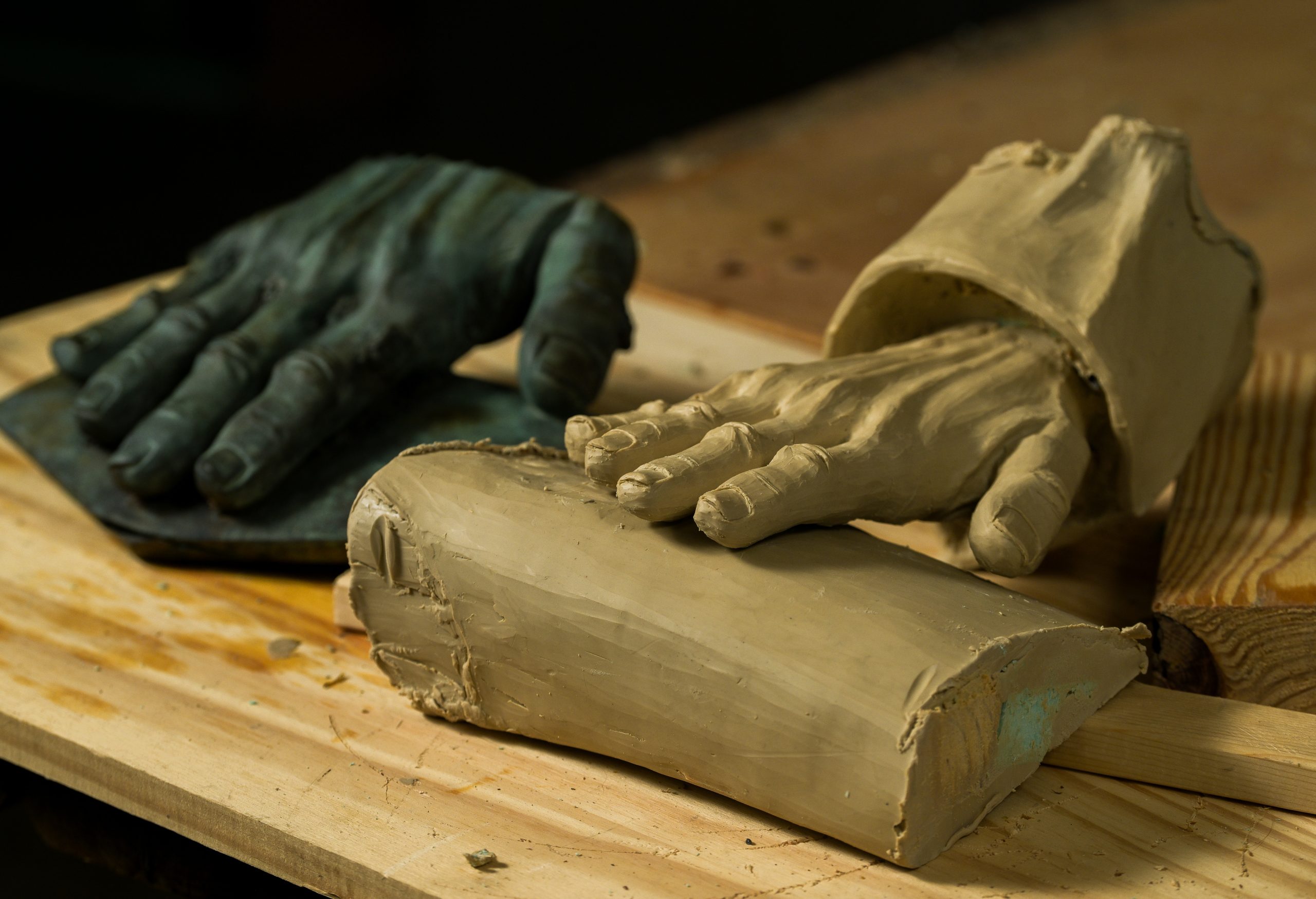
To bring Melville to life, Rocknak began with clay. She started with a 19-inch clay model to work out the design, and then enlarged it to five-and-a-half feet. With its base, the final piece towers more than seven feet off the ground.
“I wanted him to be as large as possible,” Rocknak said.
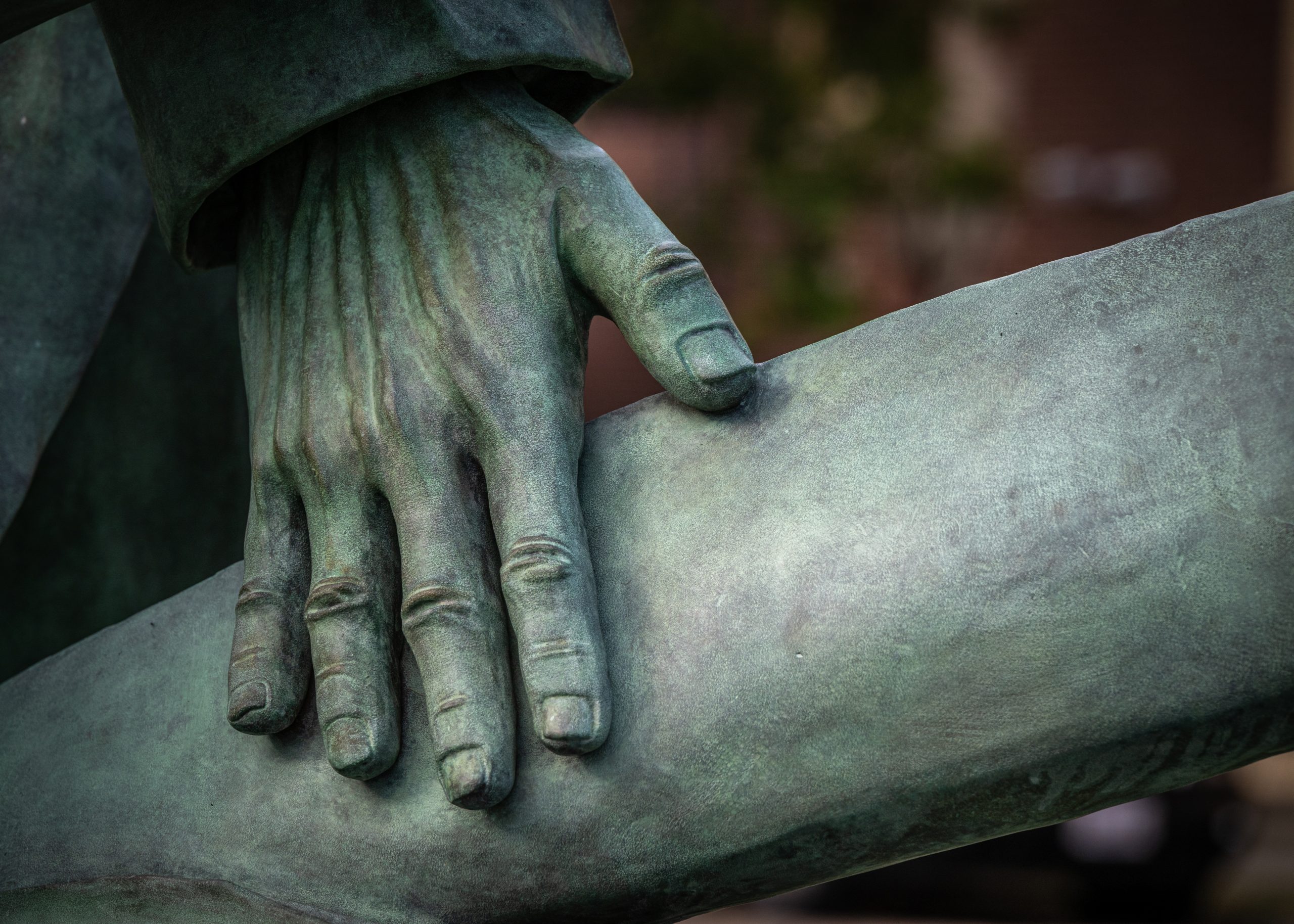
Rocknak combined modern and traditional methods for this project. She worked with Urban Art Projects foundry in Rock Tavern, N.Y., to create a high-resolution scan of her clay sculpture, then used that to cast the sculpture in bronze using the traditional lost-wax method. This was Rocknak’s first time using high-resolution scanning of a traditionally sculpted work.
“This technology is fairly new, and I was excited to try it,” she said. “You can’t tell that it was a digital rendering at all. I think it’s a great example of how technology can be an important tool in an artist’s toolkit.”
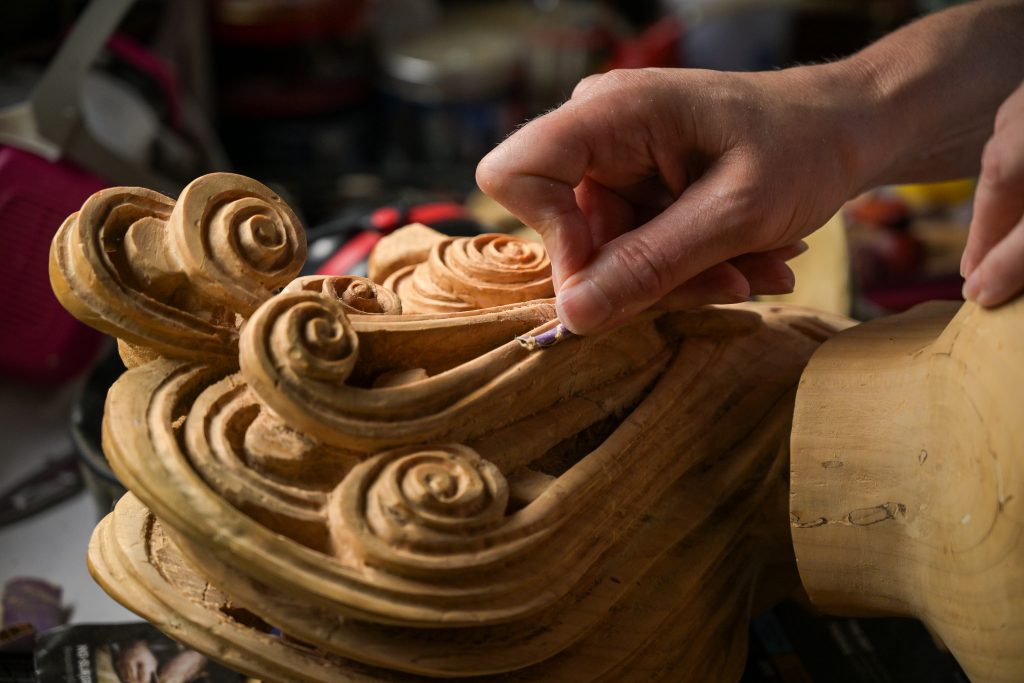
Rocknak began her career at Colby focused on painting, and it wasn’t until she studied abroad in Rome during her junior year that she fell in love with sculpture.
“I spent my free time sitting in museums like the Vatican and drawing sculptures, and I was just entranced by them,” she said. “I came home and was so inspired, but obviously, there’s not a lot of marble available in Maine, where I grew up. I started wood carving instead, which is part of a long tradition here in Maine, and I still mainly sculpt in wood today.”
The artist brings an interdisciplinary approach to her sculptures, which she credits to her time at Colby.
“I think any liberal arts education teaches you to be comfortable with multiple approaches. Colby taught me how to adapt and be flexible as I create, and exposed me to such a broad range of approaches. Here, I’m bringing in literature, philosophy, and art, besides the technical aspects of the piece,” she said.