Found Between the Lines of History
ReWritten, a multidisciplinary performance project, reimagines the complex relationship between two famous authors
Generations of Americans know about mid-19th-century authors Nathaniel Hawthorne and Herman Melville from high school reading assignments and their secure places in the literary canon.
Hawthorne and Melville gave the world famous (and oft-wrestled-with) books like The Scarlet Letter and Moby-Dick; novels that are understood as essential reading but are nevertheless likely to be seen as remote dispatches from a world different from our own. In portraits featured on the back covers of their works, the authors are shown in old-timey attire, their unsmiling faces seeming to gaze back at the reader.
What new can possibly be discovered about such long-studied and acclaimed men?
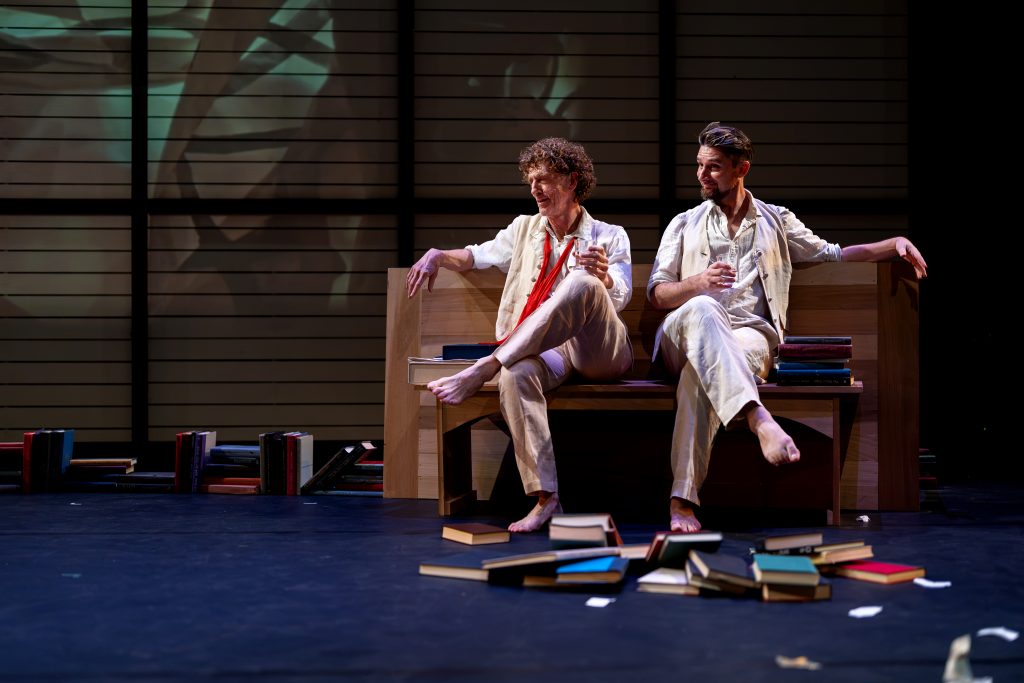
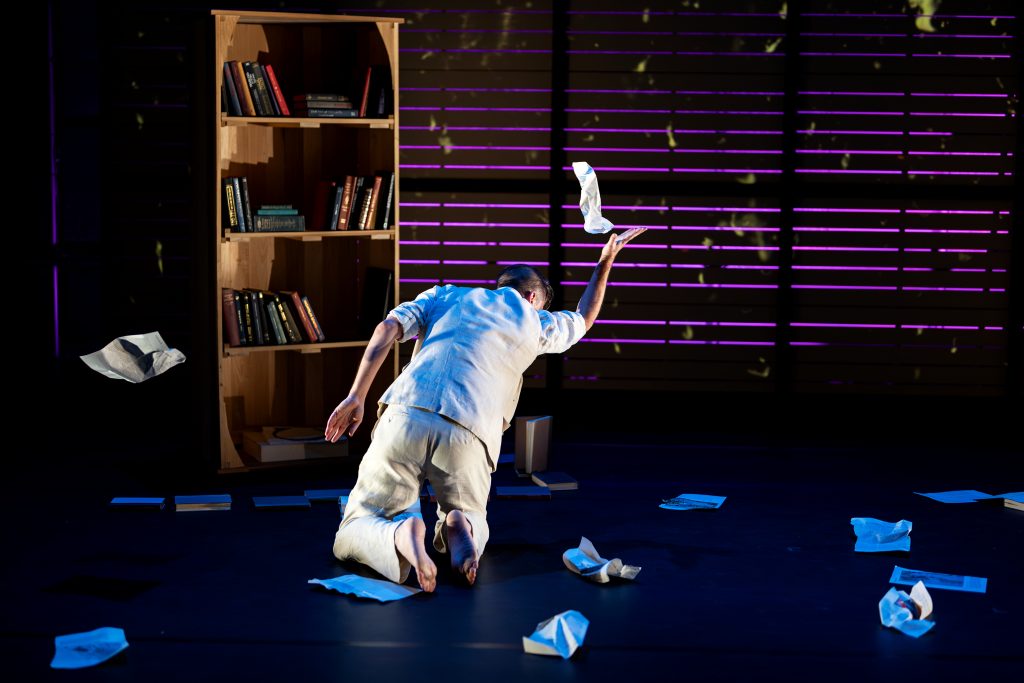
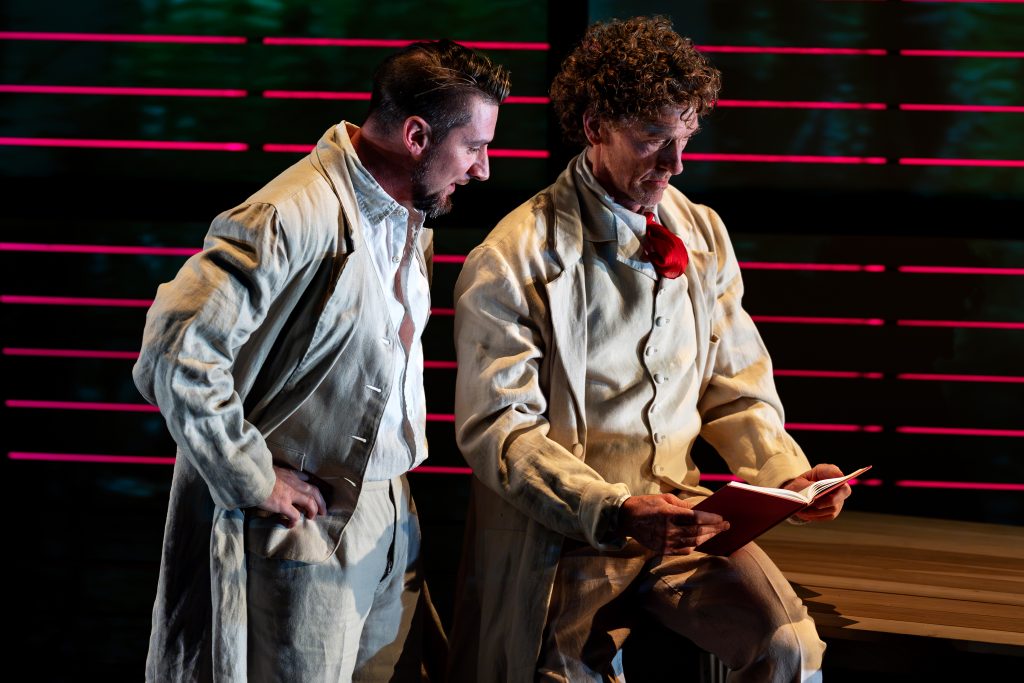
As it turns out, quite a lot. Hawthorne and Melville, who met in 1850, shared an intense friendship that lasted about a year and a half. A trove of passionate, philosophical, and erotically charged letters from Melville to Hawthorne written during that time has survived. But the only surviving letter from Hawthorne to Melville is businesslike and bland.
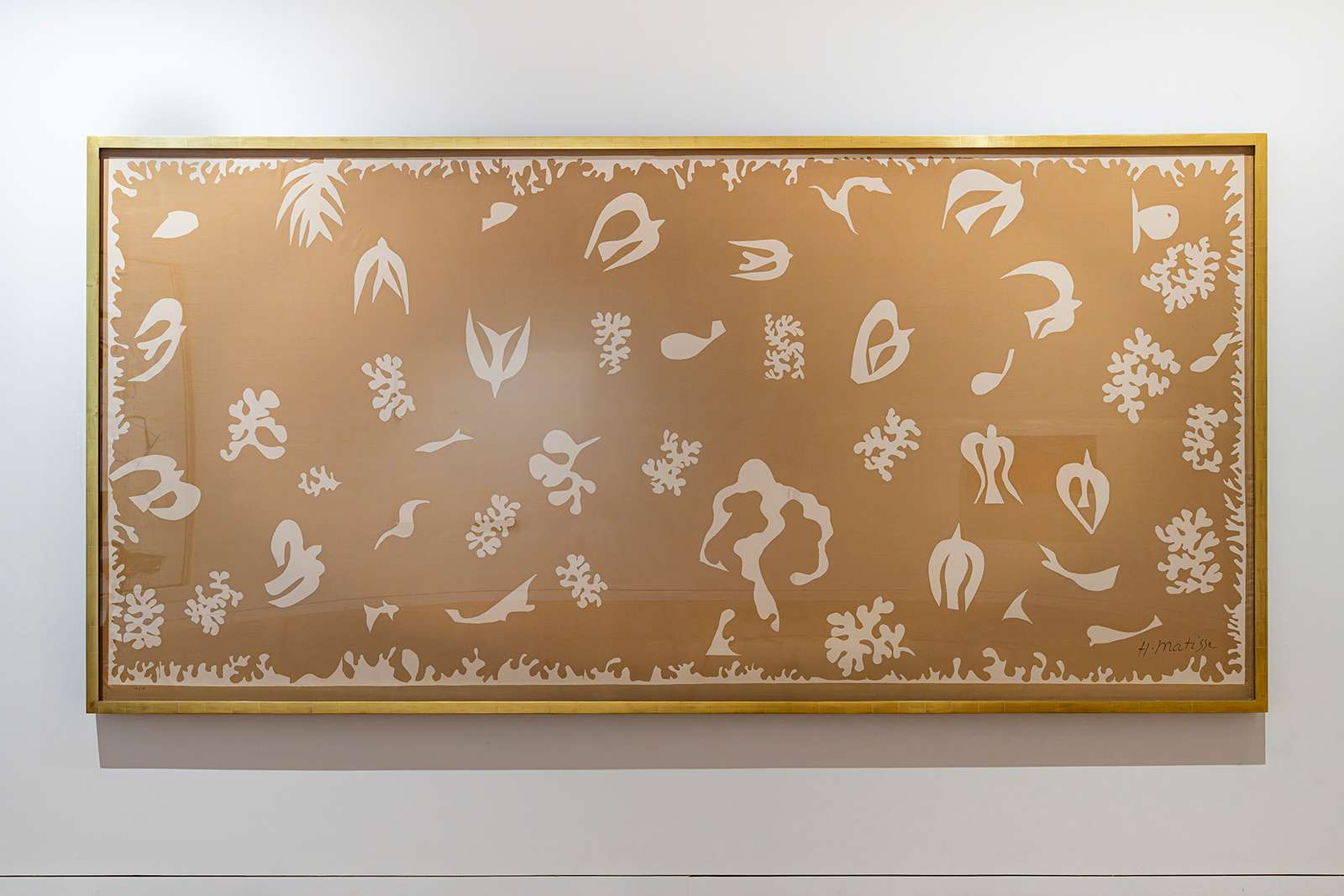
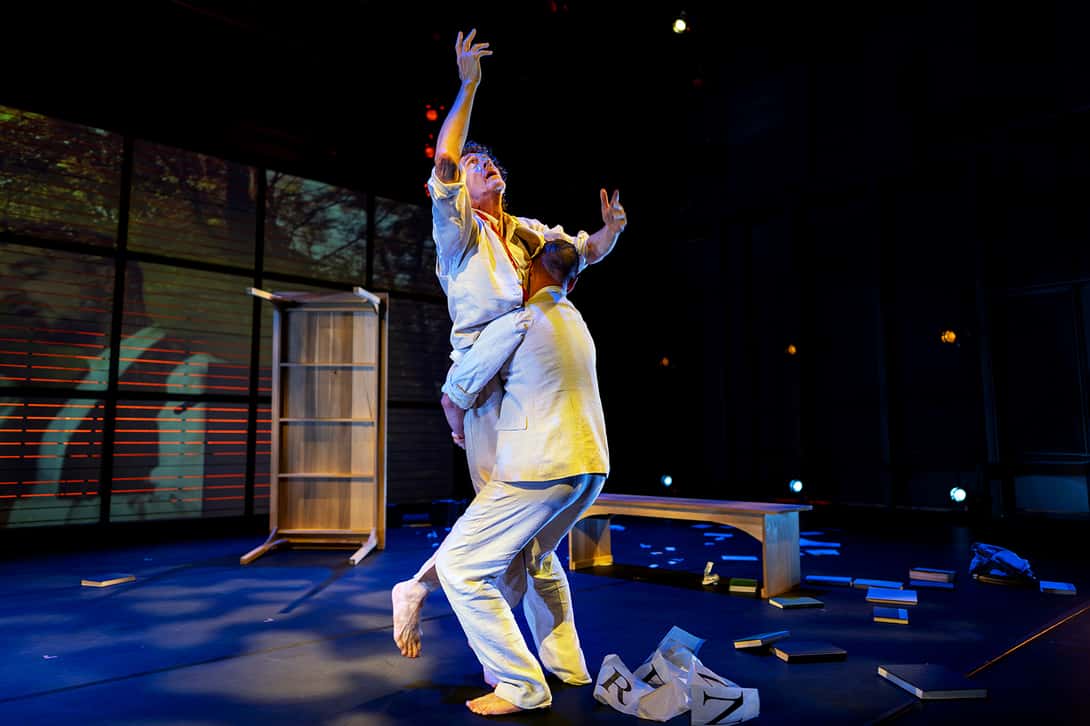
The surviving and vanished letters together comprise a major literary mystery and a clue to a deeper understanding of these canonical authors. ReWritten, a powerful multidisciplinary performance project with Colby roots, helps fill the gaps in history by weaving dance, music, visual art, projection, and text to reflect on the intimate relationship between Hawthorne and Melville and to explore queerness, history, and the written word.
It will be performed at 7:30 p.m. Friday, Sept. 18, and Saturday, Sept. 19, and at 2 p.m. Sunday, Sept. 20, at Studio 2 in the Gordon Center for Creative and Performing Arts. Melville is having a cultural moment right now, with a new bronze sculpture by Stefanie Rocknak ’88 turning heads and generating headlines in New Bedford, Mass.
“It’s one thing to try and understand the past for the sake of understanding where we come from, but I think it’s another thing to really grapple with why we read these texts today, and what can that offer,” said Matthew Cumbie, assistant professor of performance, theater, and dance, and the co-creator of the project. “If we are applying a kind of queer understanding to the relationship of these men, why? What does that provide today in the way we think about ideas of belonging and history? For me, that’s always been at the heart of this work, wanting to see myself reflected in these stories.”

The spark of inspiration
ReWritten originated with Tom Truss, an artist, dancer, and educator who is friends with Cumbie. In 2019, he was searching for material with rich language to turn into a one-man show. He was living in the Berkshires and asked the librarians at the Edith Wharton Cultural Center for ideas. They sent him many different possibilities, but nothing clicked.
“And then one of them said, ‘Well, you should read the letters from Herman Melville to Nathaniel Hawthorne. Some people think they were lovers,’” Truss recalled. “I was driving my car, and I almost drove off the road when I heard that.”
He was still pondering how to pursue the project when he happened to meet Cumbie and asked if he’d be interested in working on it with him. The answer was yes.
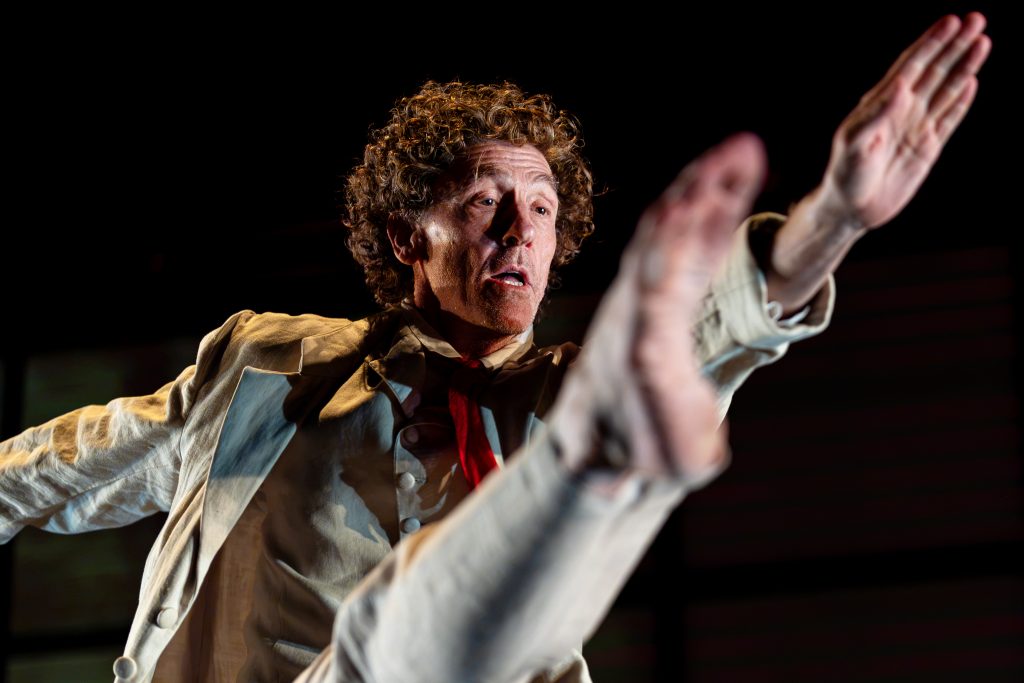
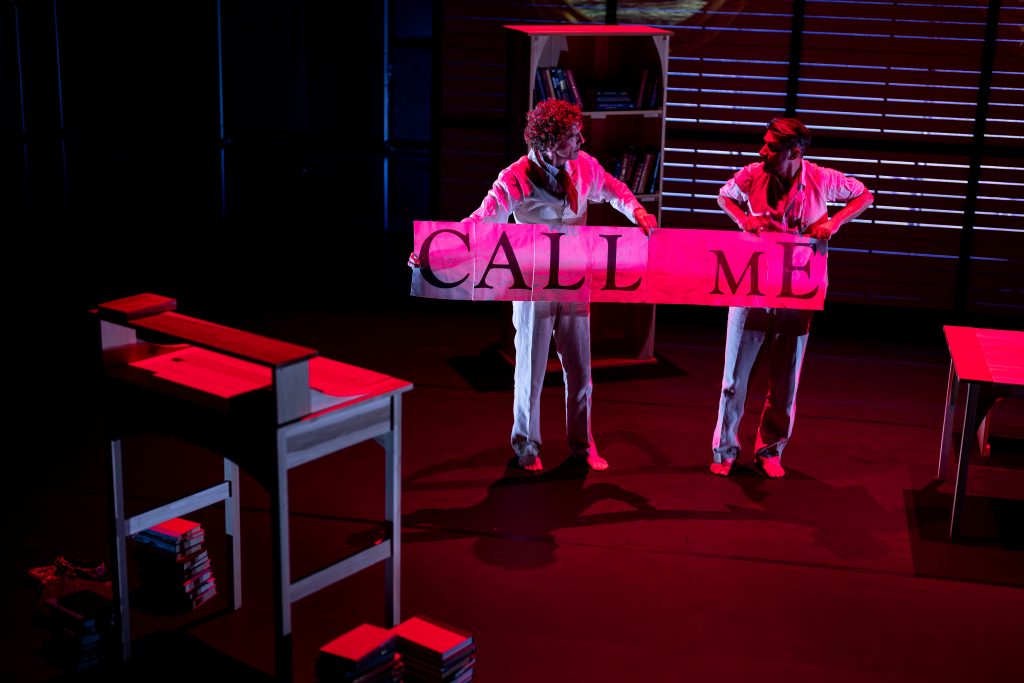
“We just went down this rabbit hole, and it went from there,” Truss said.
In the fall of 2019, they worked to create a show tightly focused on the letters, but when the Covid-19 pandemic began, everything changed.
“I think had the pandemic not happened, we would have made a lovely, small duet, and that would have been that. And I don’t know that it would have even really touched on our lives,” Cumbie said. “But then, of course, the pandemic happened, which asked us to slow down. And in that slowing down, it was an opportunity for us to start asking, who else is interested in this? What else can we do?”
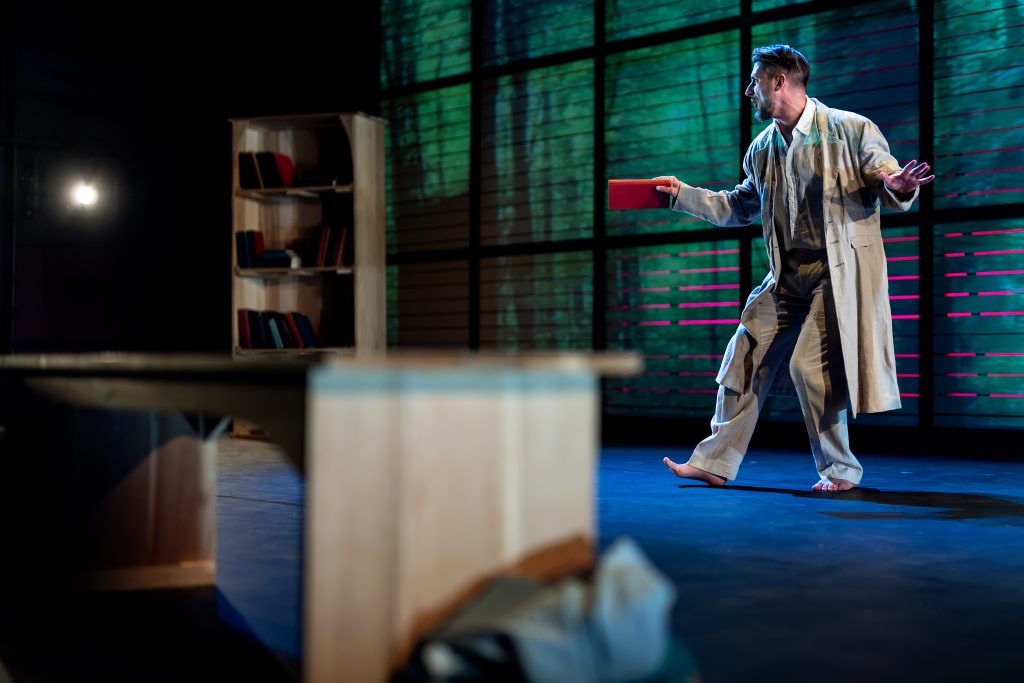
That is when he met Katherine Stubbs, Colby’s Lee Family Associate Professor of English and a scholar of 19th-century American literature. She has taught courses on Hawthorne and Melville shaped by the understanding of what people do and do not know about the relationship between the two men.
“As a queer scholar myself, I’ve always been, as Matthew is, very interested in queer history, the queer archive, and what we do not know—the gaps in the archive,” Stubbs said.
Understanding the 19th-century world
Cumbie and Truss invited her to become a collaborator on ReWritten, and she serves as the dramaturg, a person consulted on the primary literary texts used in the play and the play’s world.
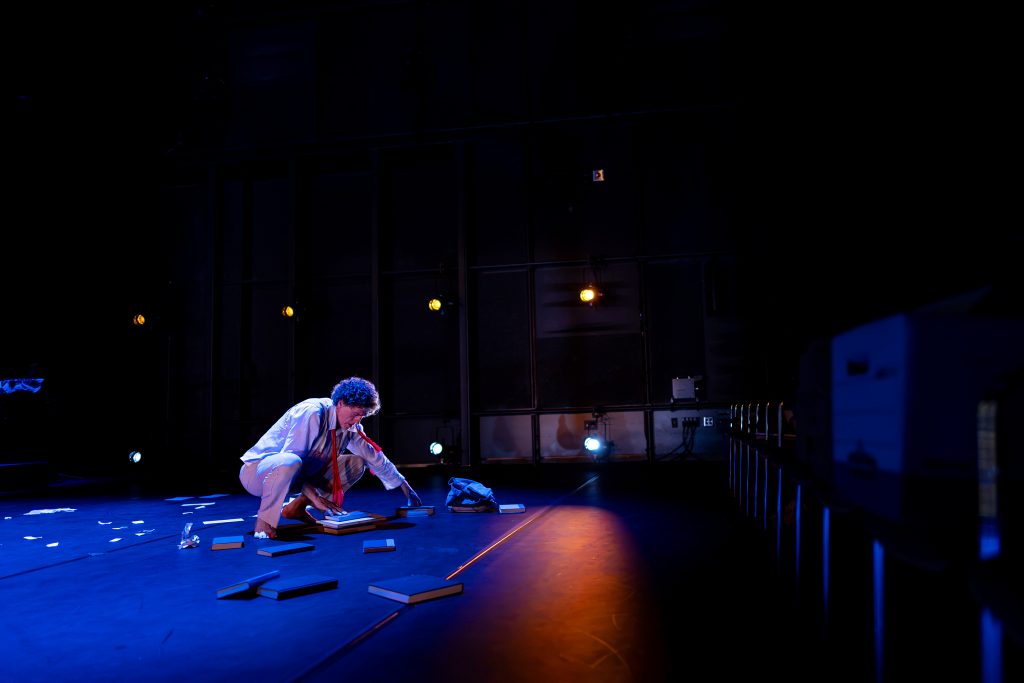
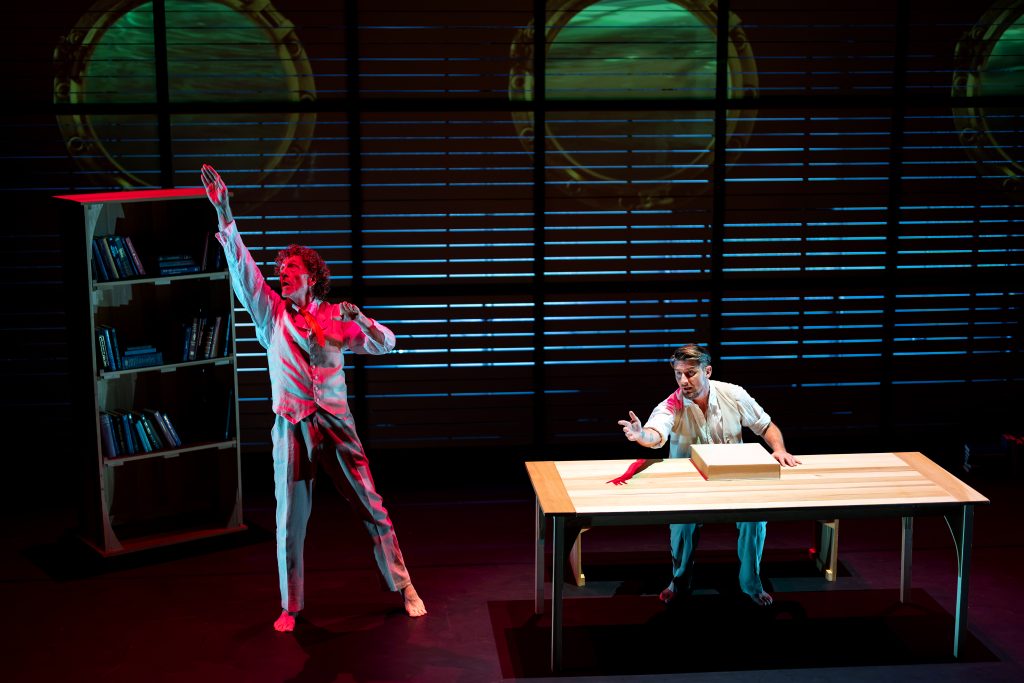
“It has been said that the past is a foreign country. The past is unknowable on some level,” Stubbs said. “The way that people understood specifically same-sex relationships between women and between men, the way those were understood, is not identical to the way we understand them now. What appears to us to be overtly sexual may or may not have been understood in that way in that time, but the question of course is, how can we understand those relationships now? Especially if they appear to be coded.”
The ReWritten team ultimately created a work that brings together elements of the past and the present. It’s a speculative piece, one that is “necessarily a might-have-been,” Stubbs said, yet it feels critically important, especially in our time, when rights that once seemed firmly established are under threat.
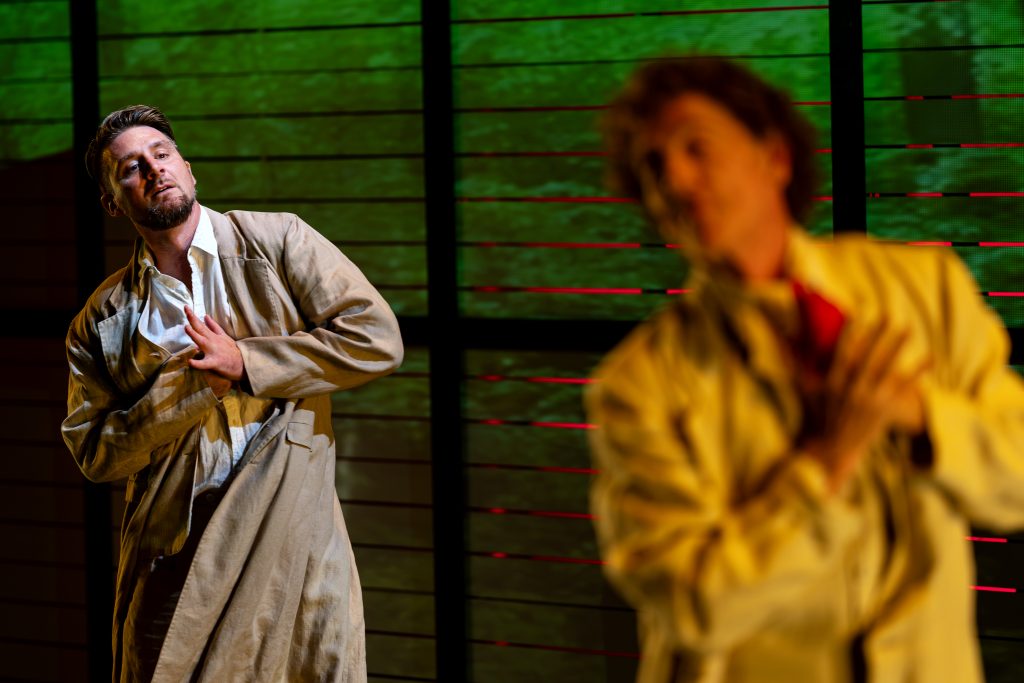
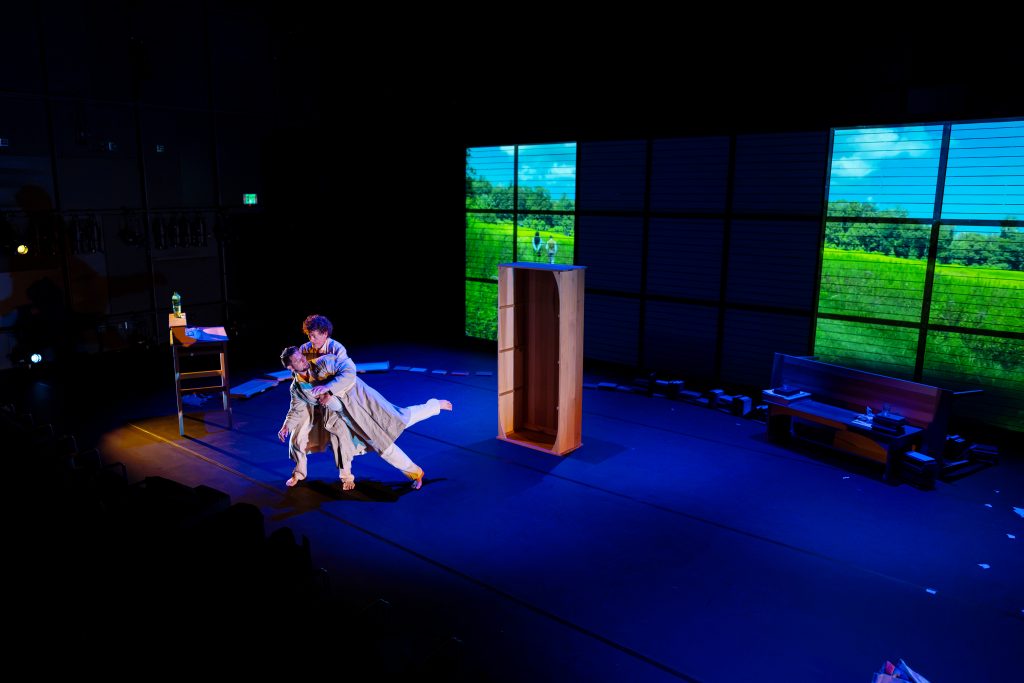
Since that beginning in 2019, the piece has continued to evolve. The team has had residencies at places including Colby and the Berkshire County Historical Society at Herman Melville’s home, Arrowhead, in Pittsfield, Mass., where they have performed the show in the author’s barn and under a grove of pine trees that he planted. They’ve also had performances around the country and beyond, including an engagement residency at the International Melville Conference in Paris, France, and the University of Toronto, Canada.
Beyond the words on the page
For many literary scholars, who are more accustomed to an analytical, cerebral reading of texts, it is powerful to see how Truss and Cumbie bring the authors to life through movement and embodiment.
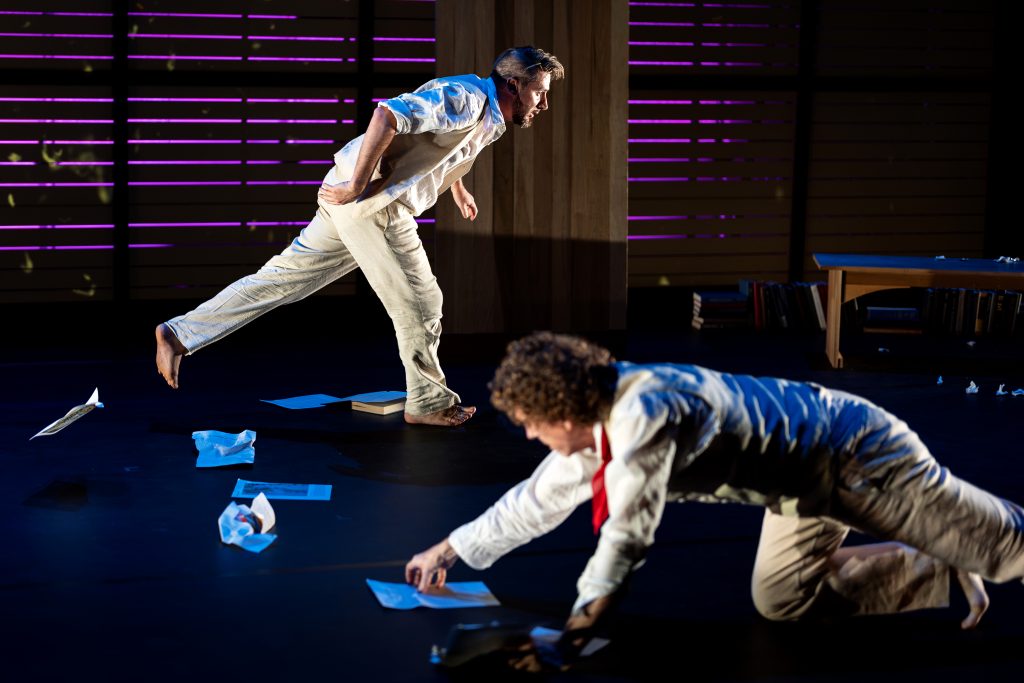
“In the performance of ReWritten, I deliver a line of text, ‘I know that what we make can be a blueprint for how we live,’” Cumbie said. “I feel like this is one of the moments in the show where we see Matthew and Melville more closely together—Melville came to understand the world through this writing, and I come to understand the world by bringing my body to it.”
At the University of Connecticut, where they performed for scholars and other attendees at the 2025 International Melville Conference, the audience was deeply moved.
“There are ways of knowing something that cannot be reduced to words on the page,” Stubbs said. “I think that is what literary critics in particular find fairly mind-blowing. I think they were taken by the work and by the excitement of interpreting language through the body and performance. So much has been written about Melville and about Hawthorne, and that’s exciting, but there are other ways of accessing this work in addition to writing about it.”