Reimagining American Art on the Global Stage
Lunder Institute for American Art hosts international convening at Colby
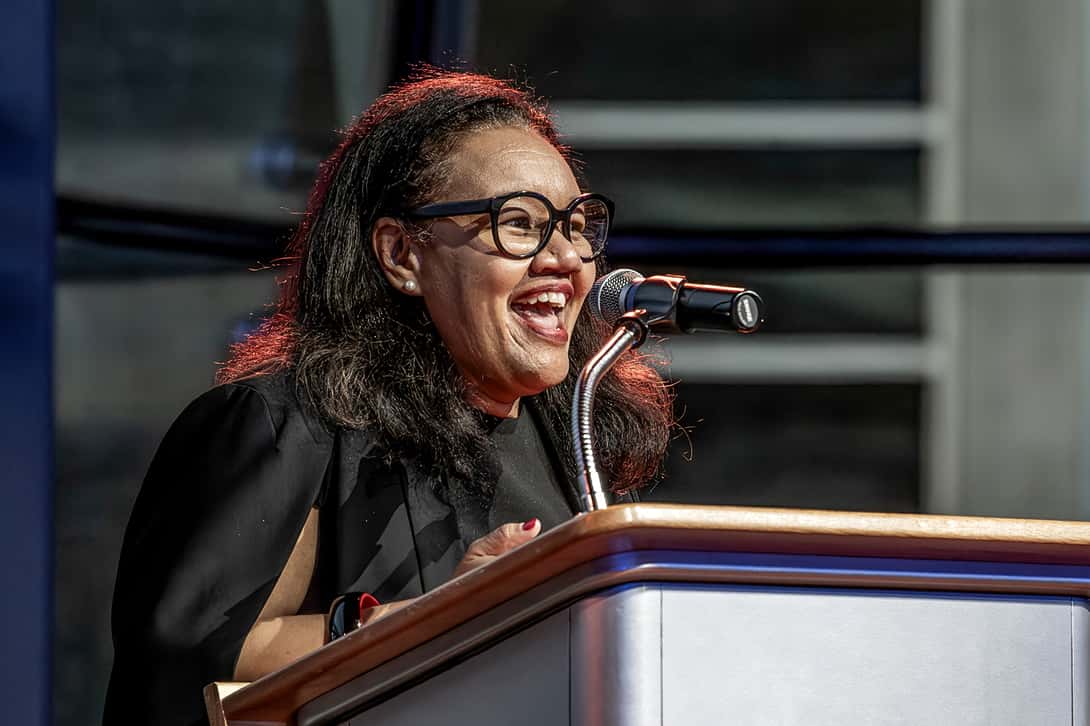
An international cohort of art historians, museum directors, curators, and students gathered at Colby in early October to further explore a question they’ve discussed for two years.
What is the state of American art?
“What emerges, of course, is not a singular answer, but a set of partial responses that in turn ignite further questions and reflections,” said Jacqueline Terrassa, the Carolyn Muzzy Director of the Colby College Museum of Art. “Much has changed in the world and in the field, even within the last two years. All of that reflects not only how we think about American art, but even how we think about the idea of America.”
Hosted by the Lunder Institute for American Art as part of its ongoing Lunder Institute @ program, the international convening examined how transnational histories, collective memory, and evolving museum practices are reshaping the definition of American art. Spearheaded by Erica Wall, director of the Lunder Institute, the initiative challenged partner institutions to address a single, complex question while exploring broader ideas about how institutions collect art, curate exhibitions, and engage with artists and the public.
International partners
The convening, which included a two-day, live-streamed public symposium, held on campus and in downtown Waterville, highlighted findings from the 2024 domestic participants, including the de Young Fine Arts Museum, The Broad, Crystal Bridges Museum of American Art, Addison Gallery of American Art, Museum of Fine Arts, Boston, and the Whitney Museum of American Art; and the 2026 international partners, including Tate Britain, the Yale Center for British Art, the Royal Academy of Arts, and the Peggy Guggenheim Collection.
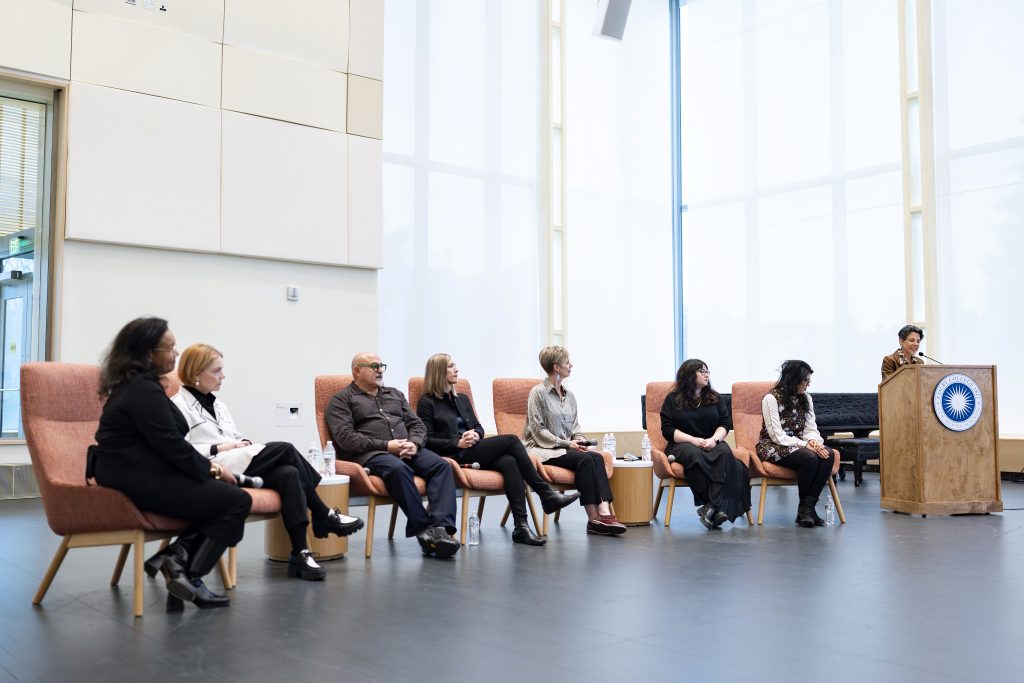
As part of their participation, each institution hosted a public program to explore the question, typically involving artists, curators, educators, and members of the public. The early October gathering was the second time the Lunder Institute brought participants to Waterville to talk about their experiences.
Ed Patuto, director of audience engagement at The Broad in Los Angeles, said the individual gatherings that each institution hosted had value, but the larger benefit of the Lunder Institute @ initiative is the ongoing conversations and connections it has generated.
“It has had a great impact on my work, and also on the work of The Broad,” he said. “Being able to come together with colleagues from the country, and now from around the world, to discuss issues relevant to our field in a contemporary and very timely context is enough, because it’s not something that happens on a daily basis.”
‘Much has changed in the world and in the field, even within the last two years. All of that reflects not only how we think about American art, but even how we think about the idea of America.’
Jacqueline Terrassa, Carolyn Muzzy Director of the Colby College Museum of Art
The panelists agreed that American art was never created in isolation, and understanding its development requires examining geopolitical connections, migration, trade, and shared cultural production across continents. As the United States marks the 250th anniversary of its independence from Great Britain, Wall noted that the nation’s artistic origins extend far beyond its borders and must be explored through interconnected global histories.
Central to this expanding horizon is Colby’s global engagement, highlighted by its collaboration with Tate Britain on a landmark James McNeill Whistler retrospective that opened in London in May and moves to Amsterdam this month.
The exhibition drew on an international conservation project supported by the Lunder Foundation, as well as the collections and expertise of the Colby College Museum of Art, which include extensive Whistler holdings. It demonstrated how 19th-century American art was built on transatlantic exchanges, European artistic networks, and global migration.
For the Whistler exhibition, the Lunder Institute engaged the Tate as one of three international partners in its 2026 Lunder Institute @ series. These programs underscore the Lunder Institute’s growing role in international art, positioning Colby as a global think tank influencing how American art is exhibited, researched, and understood across borders.
The Lunder Institute for American Art is a collaborative initiative founded in 2017 to expand who shapes the field of American art through scholarship, creative production, and mentorship. It operates as part of the Colby College Museum of Art, serving as a museum-based incubator that convenes visiting scholars, living artists, and students while offering a unique platform that connects research, art-making, and dialogue.