Colby Launches New Center for Resilience and Economic Impact
Situated on the Maine coast, the initiative will help communities find innovative ways to adapt in the face of catastrophic events
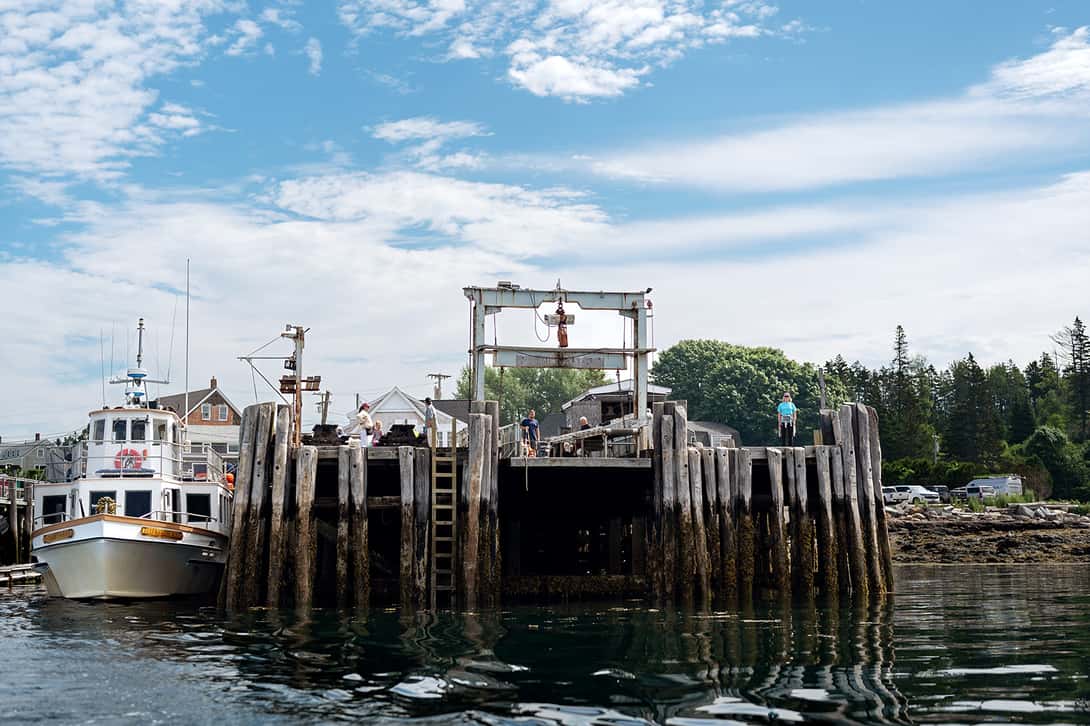
Colby will create an interdisciplinary research-and-action center to help Maine’s cities and towns build and strengthen their resilience to adversity and develop plans to foster thriving communities. Colby’s Center for Resilience and Economic Impact will begin operating in 2026 in Port Clyde, Maine.
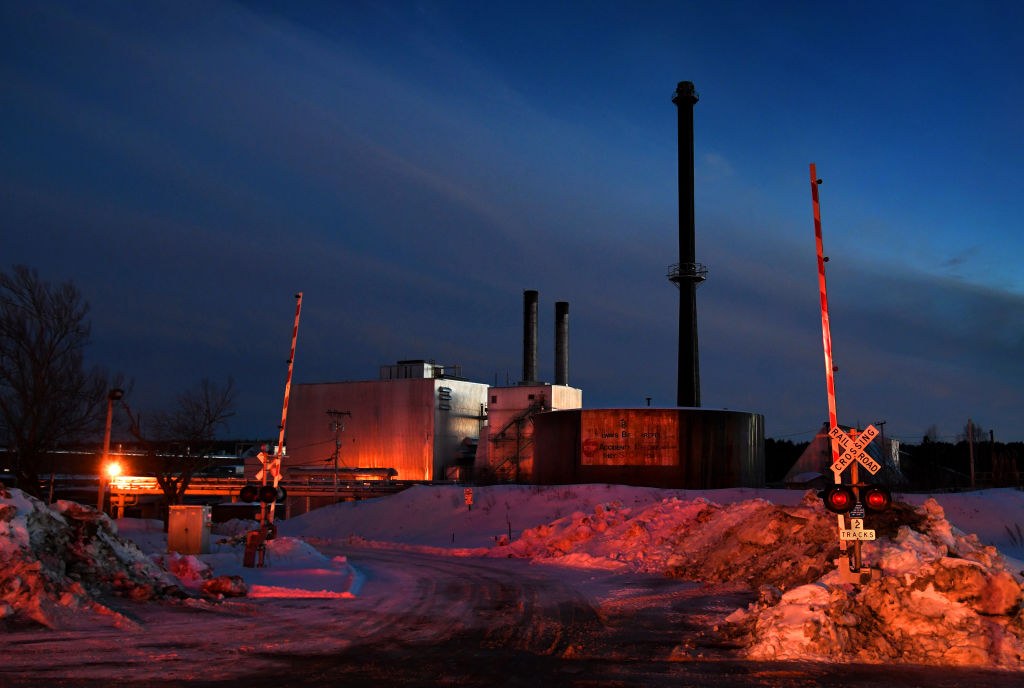
The history of Colby’s home city of Waterville illustrates both the need for and the potential impact of the center. Over the last half-century, Waterville weathered a series of economic and cultural crises with the closure of its textile and manufacturing mills. These catastrophic events led to the loss of thousands of jobs and a steady population decline. The city has proven resilient, and over the past decade has partnered with Colby, federal and state agencies, private investors, and others in a revitalization effort that has led to a growth in population, encouragement of new businesses, and a healthy economic and tax base.
The hardships Waterville faced are not unique. Communities across Maine—and throughout the country—have been tested by similar disruptions, from the loss of major employers to destructive natural disasters and public health crises. These shared challenges underscore the importance of building local capacity and resilience, so towns are not only able to withstand shocks but also to seize opportunities for renewal.
“If we examine what is needed to build resilience in different communities across Maine, we can begin to understand patterns and collaborate with communities to develop and scale strategies to adapt,” said Colby President David A. Greene. “This is truly interdisciplinary work, involving academic, governmental, and local private and public partners.”
As a home for educational opportunities, outreach, and community building, the new center will work with individual stakeholders, residents, local officials and municipalities, state and federal governmental entities, and research institutions to make data-informed decisions and evaluate progress in resilience planning through a lens that centers collaboration among community members, organizations and government, social networks, and education.
It will also help the College expand the reach and influence of its ongoing interdisciplinary scholarship and research conducted on Colby’s Island Campus, which consists of Allen and Benner islands in Muscongus Bay, accessible by boat from Port Clyde.
Established in part with a generous gift from Maine-based NorthLight Foundation, the Center for Resilience and Economic Impact is the latest entity created as part of Colby’s historic Dare Northward campaign. Port Clyde residents Dan and Sheryl Tishman formed the NorthLight Foundation to address environmental, land conservation, and related issues in Maine and around the country.
This new effort will leverage Colby’s strengths and build on key partnerships across Maine with scientists, policymakers, economists, and individuals and organizations directly impacted by environmental, economic, cultural, and public health crises, Greene said.
“Working to build resilience makes economic sense for Maine. Investment in resilience infrastructure, natural shoreline protection, sensible policy implementation, and education yield far better results than expensive repair and damage mitigation,” he said. “We are creating an interdisciplinary hub of action that will use data-driven, proactive approaches to build resilience for Maine’s communities, infrastructure, and economy.”
Making an impact
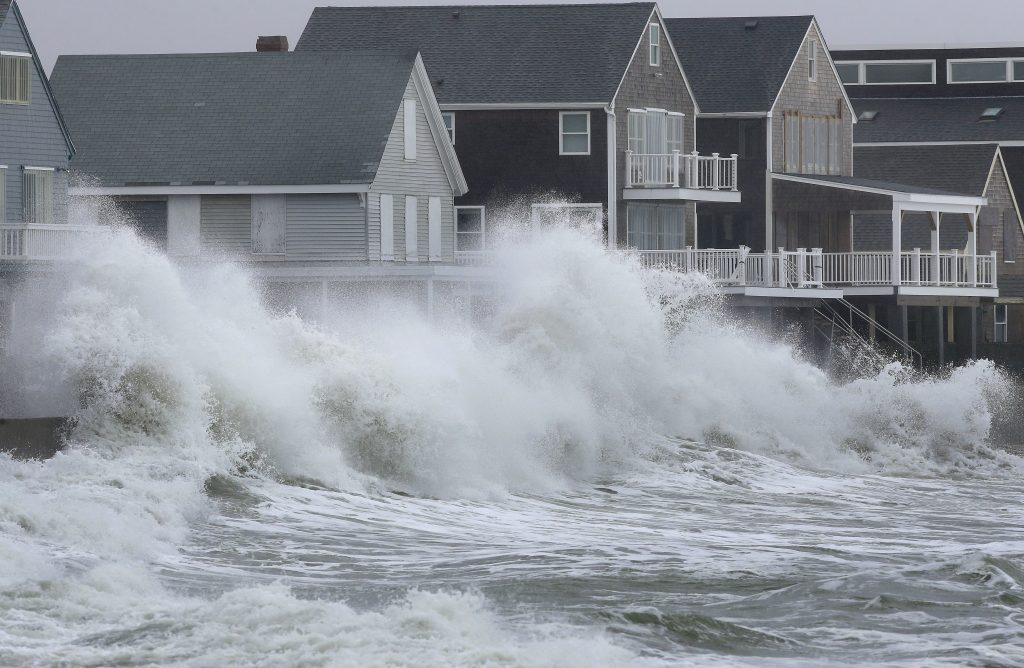
Colby’s decision to establish the center dovetails with an effort by the State of Maine to develop strategies to reduce the risk of natural disasters and related catastrophes and to help communities and private entities recover from them. In 2024 Gov. Janet Mills established the Commission on Infrastructure Rebuilding and Resilience, co-chaired by Dan Tishman, to develop a plan to mitigate risk. The commission issued its final report, A Plan for Infrastructure Resilience, this spring, advocating for a comprehensive approach to integrate resilience principles in decision-making at all levels of government.
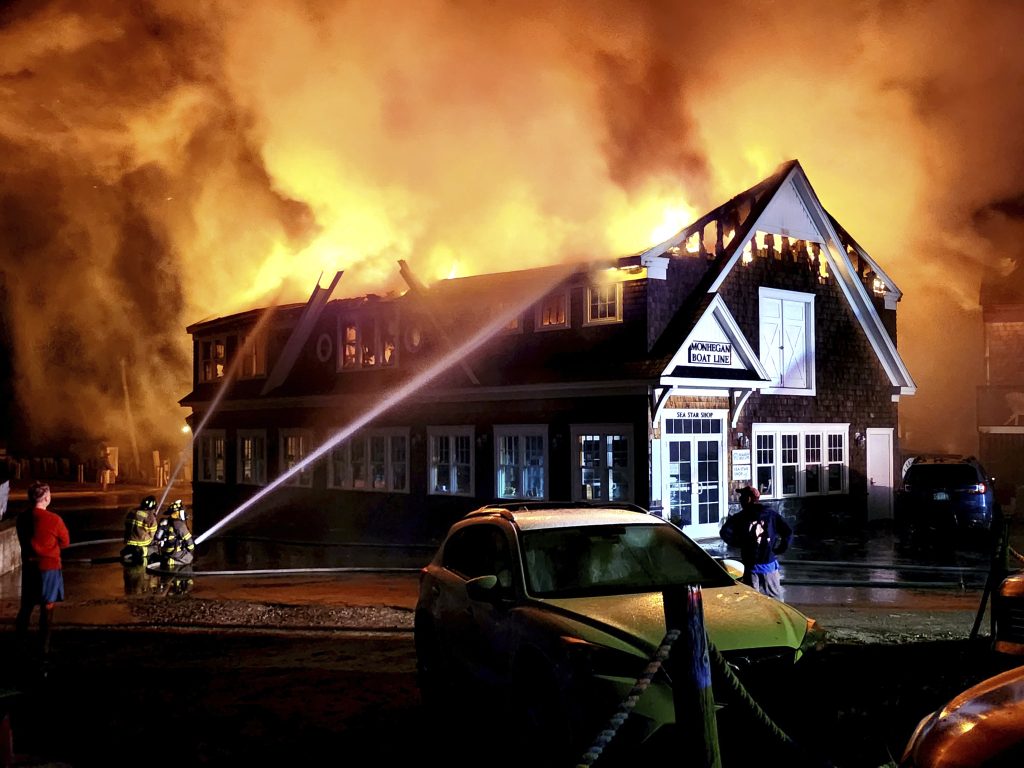
Among its findings, the report noted a lack of capacity at the local level to effectively plan for and manage disruptive events, such as severe weather. The same lack of capacity is evident in other crises in Maine and across the country, such as destructive fires, the closing of a mill, or the Covid-19 pandemic, leaving communities more vulnerable and slowing their ability to recover.
“Based on Colby’s experiences in collaboration with the city of Waterville, we recognized that recovering from adversity, whether caused by a disaster or an economic shift, all require a similar focus on a community’s ability to find a path through the challenge toward a sustainable future,” said Provost and Clara C. Piper Professor of Environmental Studies Denise Bruesewitz. “The Center for Resilience and Economic Impact will help fill that gap as a resource for planning, mitigation, and recovery.”
In a statement, the Tishmans emphasized the urgency of investing in community-based resilience, noting that the lessons learned from severe weather can also help Maine confront other pressing challenges of our time.
“We live in Port Clyde—a remarkable part of the Maine coast that, like so many communities, is increasingly vulnerable to disruptive events, including the devastating storms of 2023 and 2024,” they said. “Thanks to Governor Mills’s leadership, Maine has made meaningful progress, but much more is needed. The lessons we are learning about how to prepare for and respond to severe weather also provide valuable guidance for confronting other pressing challenges of our time—from pandemics to economic disruption. As disruptive events grow more frequent and federal support grows less certain, Maine must chart its own path to resilience. We’re thrilled to partner with Colby College to help do just that.”
The center represents an opportunity to advance Colby’s interdisciplinary work while bringing together science, economics, and policy to drive timely projects that are critical to the welfare of all Mainers.
The Center for Resilience and Economic Impact will benefit from the College’s existing strengths and partnerships and the planned expansion of the science program into engineering and public health, Bruesewitz said. “Colby’s expansion in the sciences will emphasize engineering approaches developed in a liberal arts context that not only solve problems but also enhance community well-being over time, increasing resilience and improving quality of life,” she said.
Colby is well-suited for this work. The College has deep roots and broad strengths in environmental science, computation, and policy. Many faculty are engaged in research that explores questions around the resilience of Maine’s communities.
In addition, the College has a history of fostering collaborative partnerships with academic and research institutions across Maine, including the Bigelow Laboratory for Ocean Sciences, Gulf of Maine Research Institute, Island Institute, as well as biomedical partnerships with The Jackson Laboratory, MDI Biological Laboratory, and MaineGeneral Medical Center.
Key objectives
The Center for Resilience and Economic Impact will operate under the leadership of a full-time director, who will work to implement four key objectives:
- Create a hub for partnerships and collaborations that will synthesize information and build an interdisciplinary research program to expand existing knowledge about the resilience of Maine communities and economy. This will include developing actionable projects for communities and avenues to inform and influence public policy.
- Serve as a home for education, outreach, and community building. The center will host a lecture series, plan workshops related to communities becoming more resilient, and create summer research internships for area high school students.
- On an ongoing basis, the center will work at the local and state level to help evaluate the progress of resiliency planning and implementation by highlighting successes and sharing new ideas.
- Expand the impact of Colby’s work on Allen and Benner islands, resulting in more seasonal access to the islands and additional capacity for programming and research, as well as opportunities for establishing a Coastal Fellows program, where students would be in residence in Port Clyde dedicated to specific issues. This would be similar to the College’s existing Island Campus Fellows Program, in which four students live and work on the island each summer.
“Establishing a Center for Resilience and Economic Impact represents a powerful opportunity to leverage our interdisciplinary strengths, statewide partnerships, and deep commitment to making a difference for Maine’s communities,” Greene said. “By uniting science, economics, engineering, public health, and policy with hands-on, locally grounded research, the center will position Maine as a leader in fostering adaptive, community-focused resilience—with lessons and innovations that will benefit Maine and resonate far beyond our borders.”


