Following in Thoreau’s Footsteps
Colby students are learning about phenology by observing the world around them
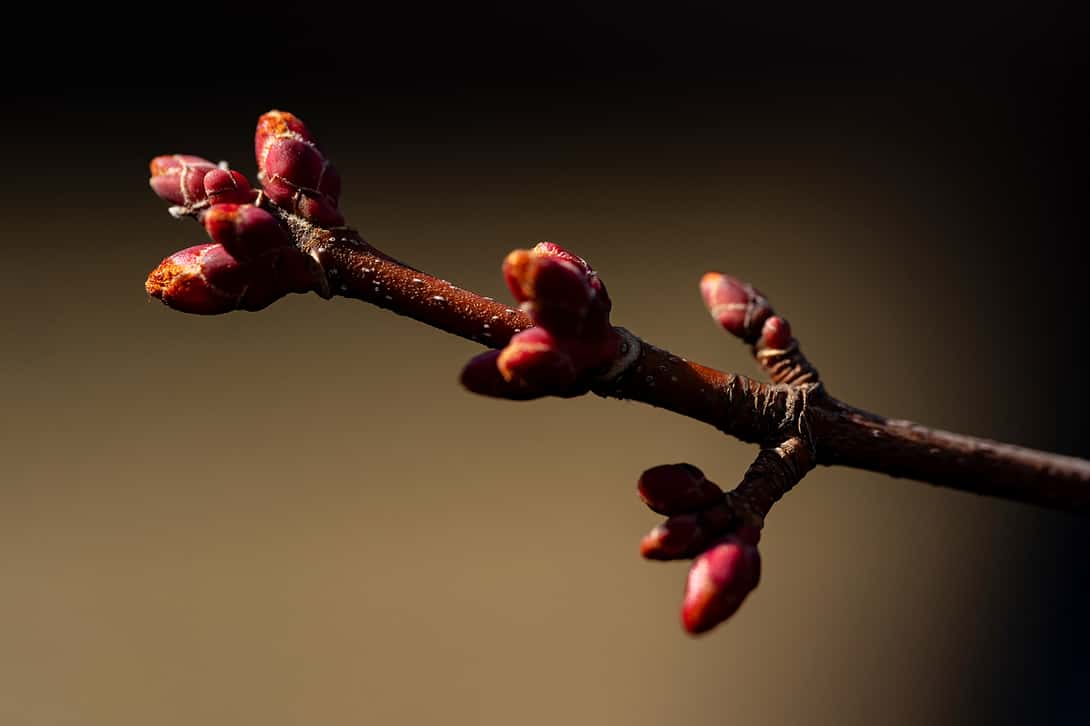
Henry David Thoreau understood the importance of looking closely at the world around him and carefully documenting what he witnessed.
For years, the 19th-century writer, naturalist, and philosopher walked almost daily around Concord, Mass., observing the natural world and writing in his journal the seasonal biological events he saw: the date the trees leafed out, when blueberries blossomed, and when the eastern bluebird and other migratory birds first arrived at Walden Pond in the spring.
The detailed record he left more than 150 years ago is relevant today and helping to reveal how spring in New England is arriving earlier than it did in his day. Thoreau’s naturalist journals are examples of what’s called phenology—the study of seasonal biological events. This semester, students taking Amanda Gallinat’s course Phenology: Ecology of the Seasons are using Thoreau’s data as a starting point to measure these changes for themselves.
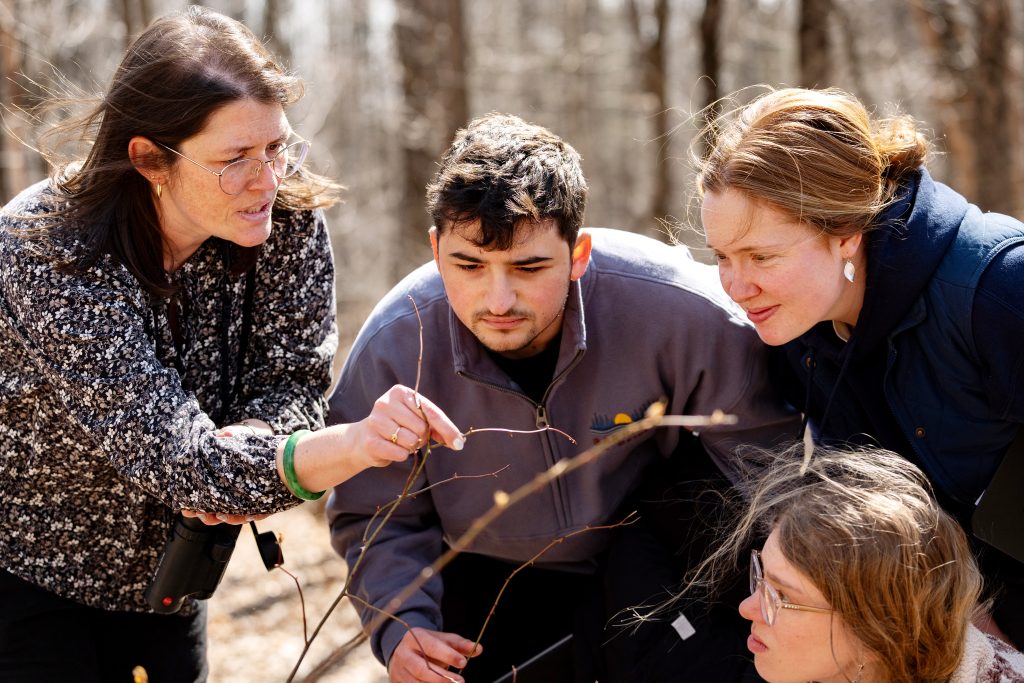
When Gallinat, lecturer of environmental studies, was a graduate student at Boston University, she used Thoreau’s data set to analyze shifts in plant flowering, leaf-out times, and bird arrival in Concord. Now, she loves helping students at Colby become phenologists in their own right. In class, they dig into the literature, closely reading papers, leading discussions, making their own observations, and thinking about how to put them in context. They always keep Thoreau’s work at Walden Pond at the front of their minds.
“Thoreau’s work gave me a really clear sense of the power of observation. This was someone who knew his plants, and he knew his birds, and he just had a notebook out there with him,” Gallinat said. “One of the most important things I felt I could do as a researcher in graduate school was to continue those observations, to go out and observe plants and animals, and do that really fundamental job of recording.”
The power of observation
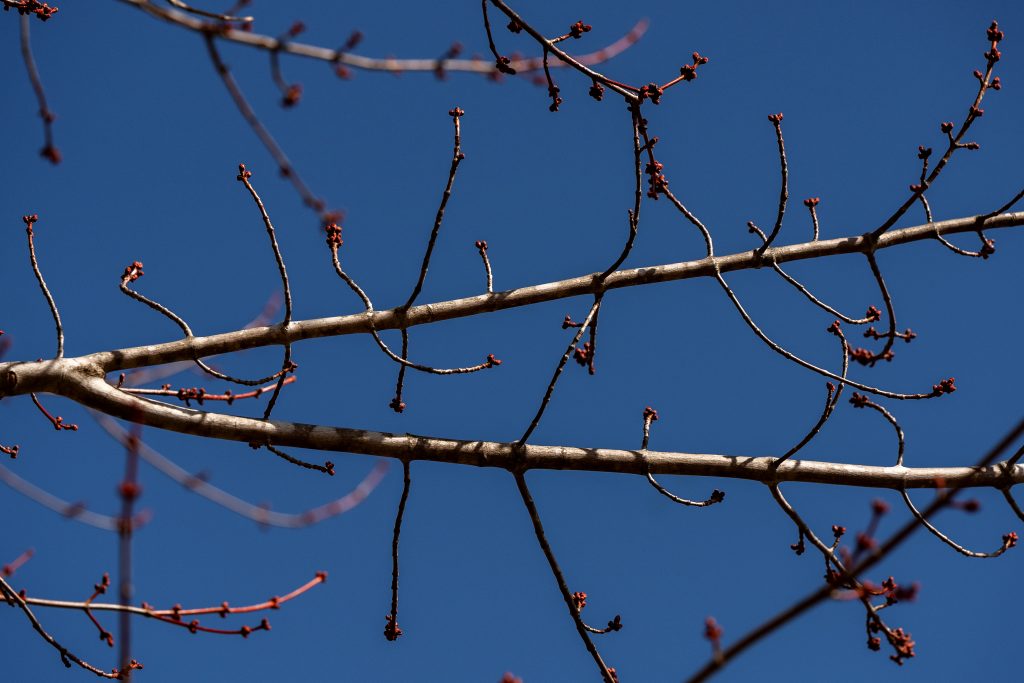
On an unseasonably warm day in early March, Gallinat’s students took a closer look at twigs clipped from black cherry, red maple, beech, and red oak trees that were just about to bud out. What changes did they see in the twigs from the last class, the professor asked, and what changes were they seeing outside? It was a week of snow melt and temperature swings, meaning that late winter was moving fast into early spring, and trees and animals were reacting.
“We’re having some incredibly warm days, right? And as phenologists, we are jazzed to make observations when those warm days happen,” the professor said. “Has anybody seen any plant activity or any other activity happening in the last couple of warm days?”
Jaslynn Devora ’26, a double major in environmental science and biology, was quick to respond.
“Yesterday I went out to do some birding, and surprisingly, there were bugs out,” she said. “I think for sure there were two different species of insects flying around. It was absolutely shocking.”
Other students noticed bud swelling in red maple trees, and Gallinat talked about observing changes in the ice, listening to birdsong, and watching for bulb activity in the ground, not just looking for leaf-out and flowering.
“You are our first line of observers,” she told the class.
‘An incredible record’
Devora’s observations underscore how long-term data sets, such as the one from Concord and Walden Pond, help illustrate how rapidly warming temperatures are leading to ecological mismatches among interacting species. For example, if migrating birds arrive after insects have emerged, it may mean that the birds are hungry.
At Walden Pond, Thoreau wasn’t the only person to note what they saw in the environment. Alfred Hosmer, a Concord shopkeeper, made his own record from 1888 to 1902. Ornithologists William Brewster and Ludlow Griscom recorded bird information in the late-19th and early-20th centuries, as did Concord schoolteacher Rosita Corey, who was active from 1956 to 2007.
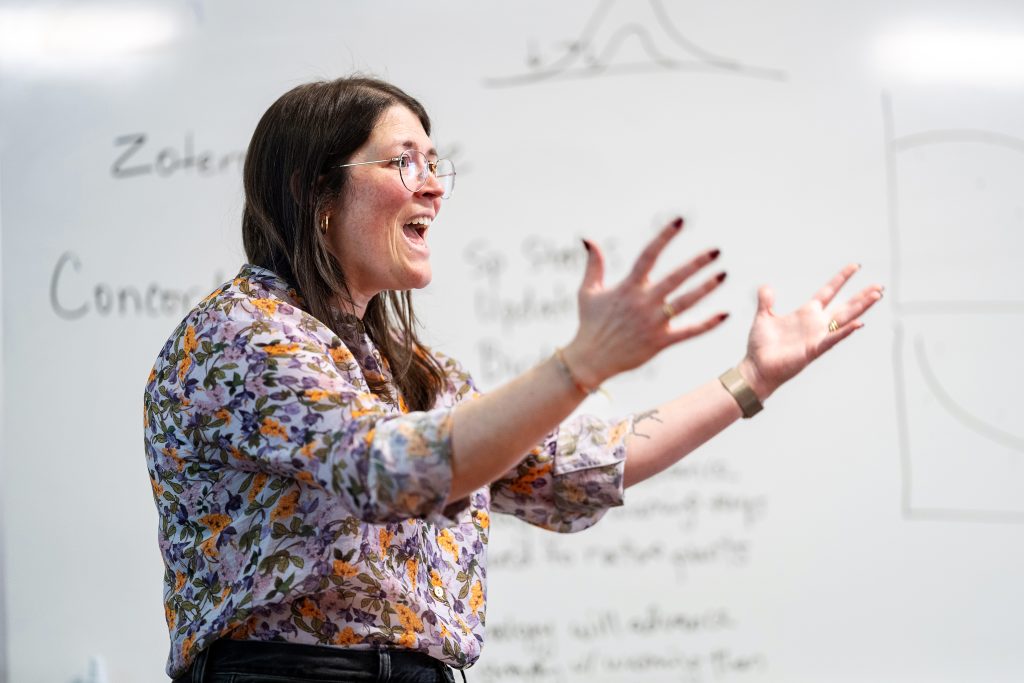
Many of these people were what we refer to today as “citizen scientists,” and they all collected data using decidedly analog, low-tech methods such as notebooks, pencils, and their own eyes. Their combined body of work is “an incredible record,” Gallinat said, and represents one of the oldest, most detailed phenological data sets in the country.
When students work with data from original field journals, including Thoreau’s handwritten ledgers, they see that long-term ecological data sets are built from individual observations.
“This allows us to consider both the value and limitations of historical data, and what it means to analyze data conscientiously, in ways that scale up to bigger, equally imperfect data sets,” Gallinat said. “I also think seeing Thoreau’s handwritten records and then going out with a journal and pencil to make their own observations shows students that we are part of a much longer scientific tradition of observing seasonal change.”
A New England-based study
Until the early 2000s, most long-term studies documenting how the changing climate affects ecology were far from New England and the United States: cherry trees in Japan, for example, or Alpine glaciers in Switzerland. That changed when Richard Primack, a Boston University professor of plant ecology and Gallinat’s Ph.D. advisor, learned from local historians that Thoreau had started a long-term study in the heart of New England.
Such local data make the findings feel more relevant and interesting to non-phenologists, Primack told Gallinat’s class earlier in the semester. That’s especially true with the Walden Pond study because so many people are fascinated by Thoreau, the subject of a new Ken Burns documentary.

Scientists are continuing to make discoveries based on the Walden Pond data. Last fall, Gallinat, Primack, and others published a study in the Wilson Journal of Ornithology suggesting that at least some migratory birds may be able to adapt to climate change, with birds arriving in Concord about a week earlier than what Thoreau noted in the 1850s.
“The Walden Pond project has been an exciting combination of experiments, fieldwork, and long-term observations, and thinking about the ways that we integrate these approaches,” Gallinat said. “From the start, it has given me a real sense that I want my work—and the work we do as a class—to be relevant to a broader audience, and to be communicated beyond just the scientific community.”
Starting with an observation
Gallinat’s students develop skills and approaches through group work on the Walden Pond data. They then use their own experiences and interests to choose an independent research project, develop a testable hypothesis, and use publicly available data to see what they can discover.
Last year, her students helped the Fairbanks Museum & Planetarium in Vermont digitize and analyze 120 years of wildflower-blooming records, finding that 95 percent of the museum’s surveyed species now bloom significantly earlier.
This spring, students are examining subjects as diverse as the relationship between sea ice and seabird arrival times, how disturbances like drought and wildfire affect leaf-out times, hummingbird migration in the western United States, and more.
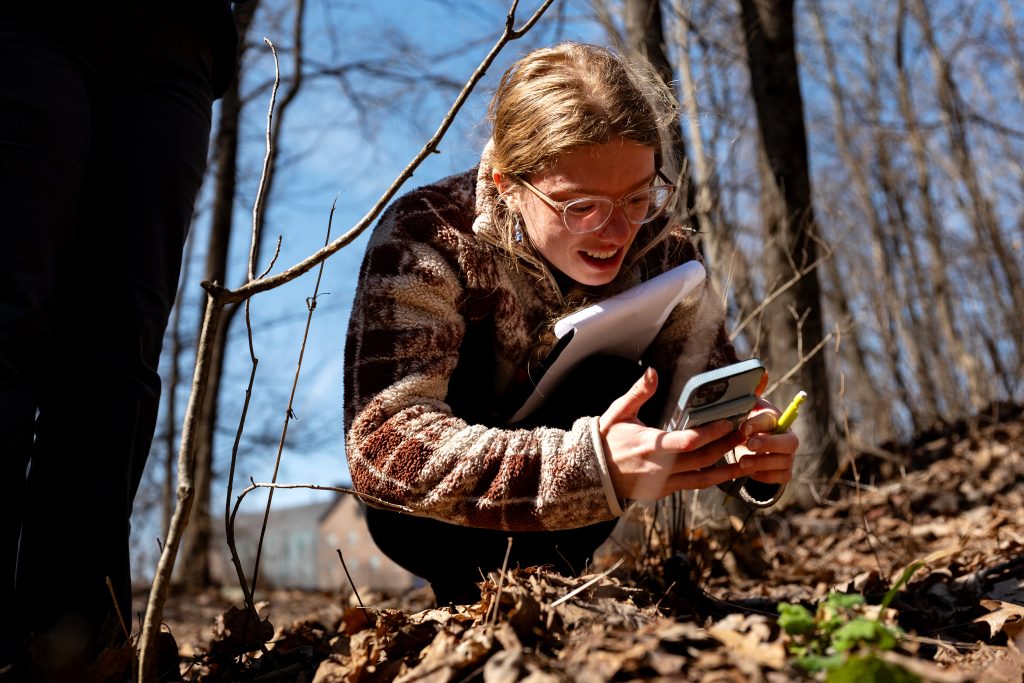
“It starts with an observation. It starts with something they learned that sparked an interest,” Gallinat said.
Izzy Kanefsky ’28, a double major in environmental science and Jewish studies, is looking at phytoplankton blooms in the Chesapeake Bay. It’s an interest that came from work she does in the summers, teaching children about marine science on Long Island Sound.
“Phytoplankton are tiny, and they’re super important,” she said. “They create a biological carbon cycle that’s really important, and it’s just cool to think about them, and see if they’re potentially changing as sea temperature rises or as time has gone on.”
As students research their subjects, they use datasets such as those found on eBird and the USA National Phenology Network, where amateur naturalists share information. As in Thoreau’s time, the observations of regular people continue to be invaluable to learning about the natural world. Everyone is a phenologist, Gallinat said, and phenology “touches on everything.”
“If you have seasonal pollen allergies, you’re a phenologist. If you go fishing, you’re a phenologist. If you are aware when bird activity picks up in the spring or dies down in the fall, you’re a phenologist, or if you like to go leaf peeping,” she said. “Everybody observes phenology.”


