Marine Science Minor Provides Opportunities in Ocean Science
Developed in partnership with Bigelow Laboratory, Colby’s new marine science minor offers foundational knowledge and hands-on learning

The long-standing relationship between Colby and Bigelow Laboratory for Ocean Sciences recently took a step forward with the creation of a marine science minor that brings together Colby’s enthusiastic students and strong academics with Bigelow Laboratory’s world-class experiential learning programs and research facilities.
“I hope students come out of this seeing how the ocean connects to life in a lot of different ways,” said Bigelow Laboratory Senior Research Scientist and Vice President for Education Ben Twining. “In the classic liberal arts fashion, it’s designed to pique their interest and give them a solid grounding so they can go deeper if they choose to.”
The marine science minor, housed within the Department of Environmental Studies, was approved in December 2024. Established as part of the College’s commitment to science from a liberal arts perspective, the minor is open to students from all majors. The first student to earn a minor graduated in 2025. Three members of the Class of 2026 are minoring in marine science, two from the Class of 2027, and eight from the Class of 2028.
The original driver behind establishing the minor was to push students to take advantage of the opportunity of Colby’s partnership with Bigelow Laboratory, said Justin Becknell, Colby associate professor and chair of environmental studies.
“They offer classes that provide our students with the kind of research experiences only available at R1 institutions,” Becknell said. “The Bigelow partnership acts as a straightforward path from Colby to the ocean for those who are interested. It magnifies what is possible at Colby and lowers the bar for students who want to engage in marine science research.”

Minors can take Principles of Ocean Science, an intensive Jan Plan course that includes a week at Bigelow Laboratory, as well as four electives from across earth sciences, chemistry, biology, or environmental studies. Alternatively, they can take one elective and participate in Bigelow Laboratory’s Sea Change Semester. The 14-week residential program, accredited by Colby and open to undergraduates from other institutions, takes place each fall and incorporates classes, independent research, and fieldwork.
The goal, Twining said, is to expose students to multidisciplinary perspectives, from the fundamentals of marine biology to the applications of climate science. The other priority is hands-on ocean science experience, so all students are required to spend some time immersed in the Bigelow Laboratory research community.
“Institutionally, this helps create a regular schedule of ocean-related courses and a regular demand for those courses that Colby, the students, and our researchers can all rely on,” Twining said. “For students, my hope is that we can build community around this and help connect them with new opportunities.”
The early results are in—and encouraging
Just one year in, those hopes appear to be materializing.
“Throughout my time at Bigelow, I learned so much about what the day-to-day life of a researcher looks like,” said Jane Marlott ’28, a biology major who took the Jan Plan course this year. “I really enjoyed being able to see the data through, from being collected with my own hands to being analyzed and put into a lab report.”
“I wouldn’t have changed a thing—though maybe I’d pack more wool socks next time,” she said.
That kind of broad introduction to ocean research is exactly what Karen Stamieszkin, a senior research scientist at Bigelow Laboratory and instructor of the Jan Plan course, is going for.
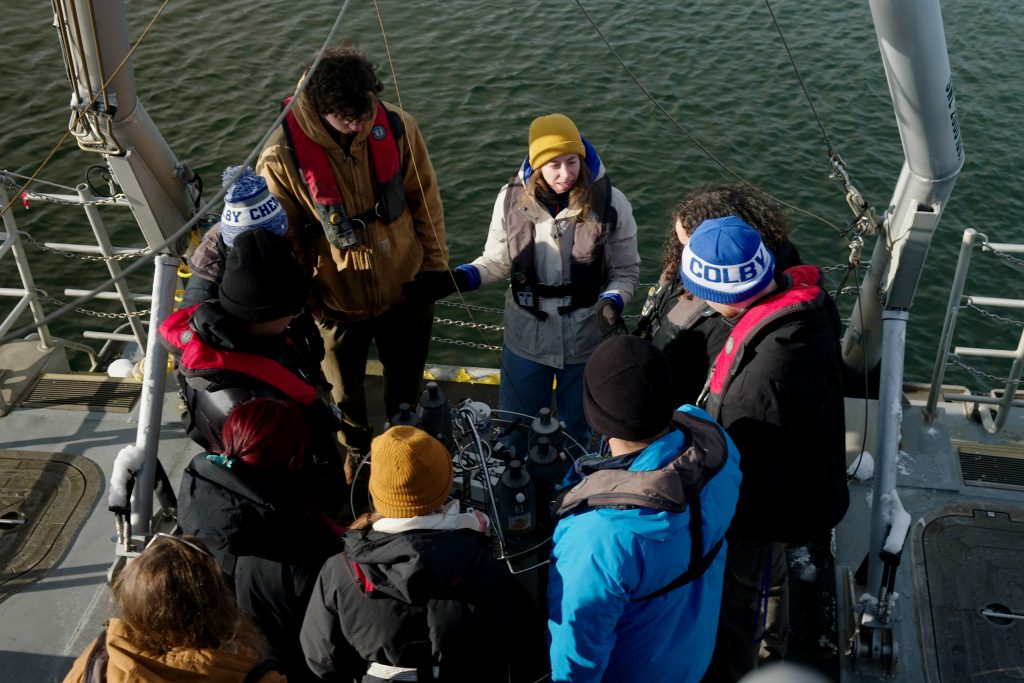
Principles of Ocean Science is a four-week course, including the week at Bigelow Laboratory, during which students participate in lab activities and two research cruises. Reflecting the breadth of the minor as a whole, the Jan Plan course gives students a foundation in data science, physics, geology, chemistry, and biology from an oceanography perspective—and then encourages them to apply those basic principles to complex issues from ecosystem restoration to fisheries management.
“We’re teaching them the foundations, but also focused heavily on showing them what data is out there and giving them the skills to be able to use that data to ask real questions about the marine environment,” Stamieszkin said.
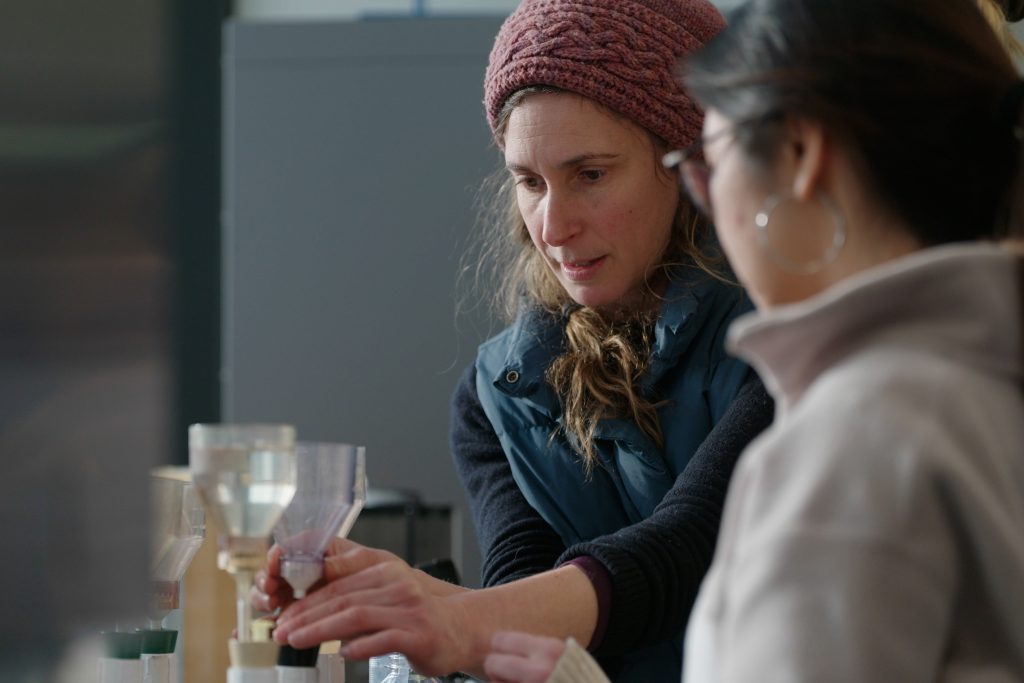
Last month was Stamieszkin’s fourth time teaching Principles of Ocean Science, but her second teaching it as a Jan Plan intensive rather than a semester course. The change was made, she says, to allow for the residential experience.
“The immersive week at Bigelow provides a great introduction for Colby students to our institution and all the opportunities they have access to as part of the Bigelow-Colby collaboration,” Stamieszkin said.
That’s what happened for sophomore environmental science majors Gael Ortiz Ramirez ’28 and Isabelle “Izzy” Kanefsky ’28. Both were introduced to Bigelow Laboratory on a field trip for an environmental systems chemistry class as first-year students. That inspired them to enroll in Jan Plan.
Now, both are planning to return this fall for the Sea Change Semester and have registered as marine science minors.
“Having access to Bigelow and courses in marine science is incredibly valuable because it gives us the chance to have unique research-driven experiences and learning,” Ortiz Ramirez said. “Being able to take these opportunities has helped me better understand potential career paths in ocean science and has been a significant part of my academic experience at Colby.”
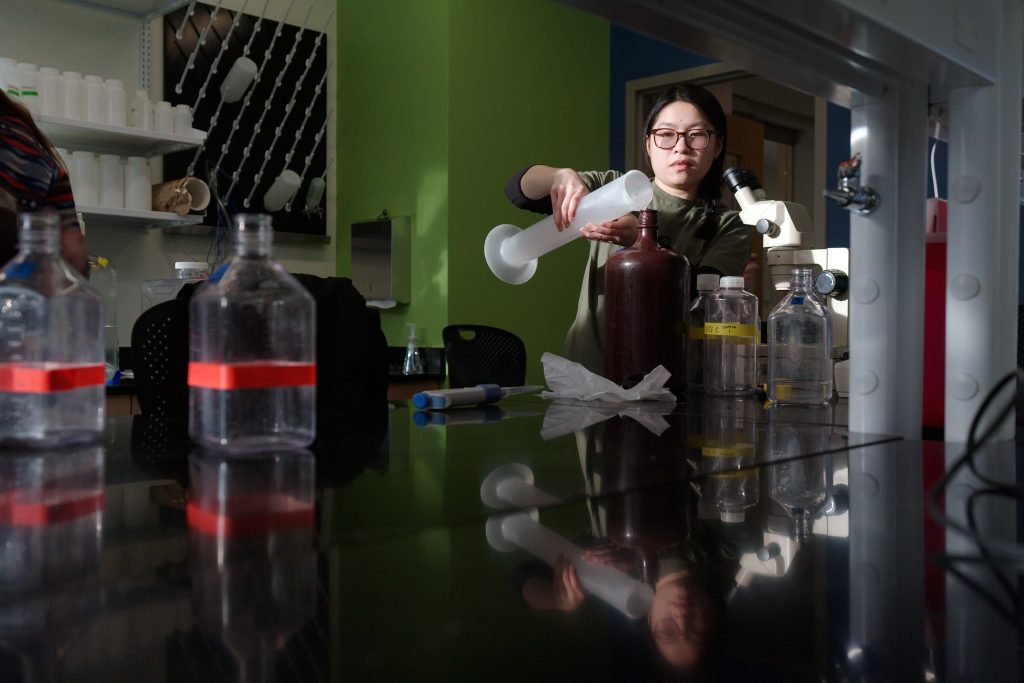
“Even though Jan Plan was brief, being in the lab reminded me of how much I enjoy hands-on scientific work and just the general lab experience,” added Kanefsky, who is also majoring in Jewish studies. “As a Colby student, having access to learning opportunities through Bigelow and the marine science minor allows me to dive deeply into my interests, feel more connected to the ocean, and experience Maine itself almost as a lab.”
Ortiz Ramirez’s and Kanefsky’s experience of participating in multiple Bigelow Laboratory programs is exactly what the institute’s education programs are designed for, and what the minor will encourage more students to do.
“Students have lots of demands on their attention, so we’ve taken all the opportunities that are there and packaged them into a single thing that gives them a meaningful understanding of marine science,” Twining said. “Our hope is that the minor makes them aware of—and excited about—these opportunities and helps inspire the next generation of ocean leaders.”
The first to complete the minor
Elias Porter ’25 holds the distinction of becoming the first Colby student to graduate and earn a minor in marine science. An environmental studies major, Porter was familiar with Bigelow Laboratory growing up on the Maine coast, and then as a sophomore, he took a Seafood Forensics course taught by Bigelow Senior Research Scientist Doug Rasher. That led him to enroll in the Sea Change Semester and to his decision to focus his studies on the environment and marine science.
“Courses with Bigelow staff at Colby are great ways to meet researchers and start to find out what marine research is actually like,” Porter said prior to graduating. “I think it would be really hard to experience the community, resources, and expertise at Bigelow and decide that you don’t like the lab environment.”
Becknell said it was fitting that Porter was the first student to earn the minor. He grew up in Maine, worked on boats much of his life, and showed up at Colby with knowledge of marine systems. “That gave him a head start as he dove into the scientific details in his classes. He also brought specialized and place-based knowledge to classes that he was always happy to share. He is also just very enthusiastic about all things ocean, and that kind of thing is great with any student,” Becknell said.
This story was reported, written, and photographed in partnership with Colby News and Bigelow Laboratory for Ocean Sciences.


