‘An Amazing Early-Career Grant’
How Maine INBRE, a collaborative network of Maine educational and research institutions, supports Colby scientists
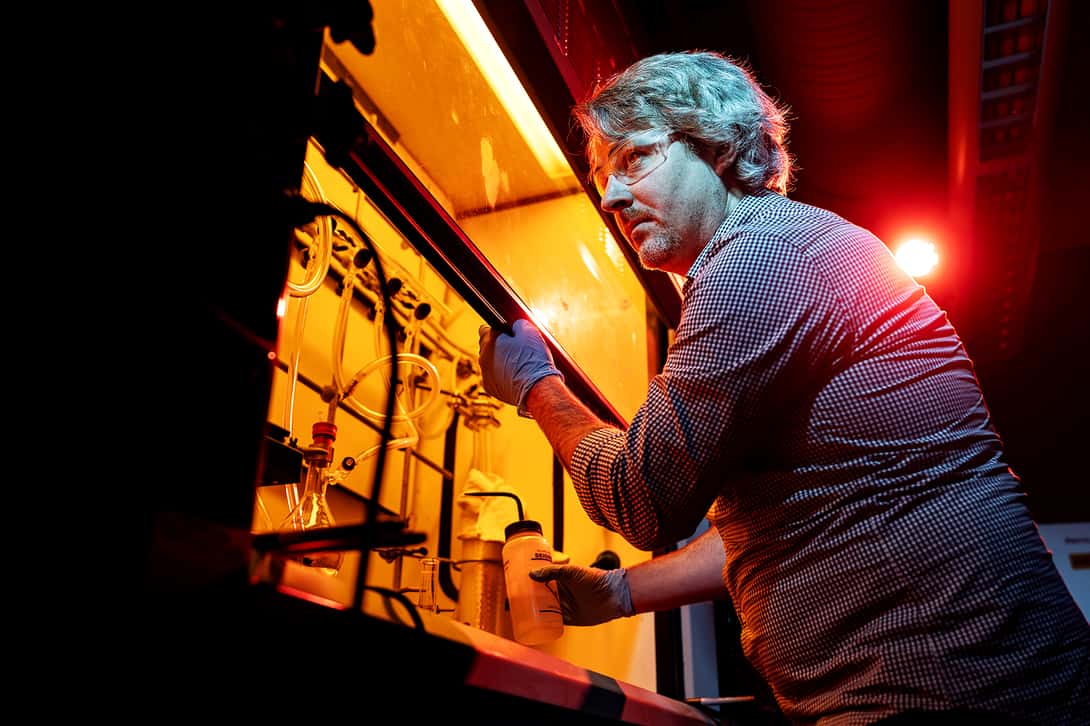
Inside Colby science labs, a chemistry professor is taking a deep dive into the origin of life on earth, a biology professor is searching for ways to prevent age-related muscle atrophy, while another biology professor is learning how DNA protects itself from damage.
These scientists, Assistant Professor of Chemistry Reuben Hudson, Associate Professor and Chair of Biology Dave Angelini, and Assistant Professor of Biology Yee Mon Thu, are asking important questions through their research. One thing that’s exciting, they said, is that their search for answers is supported by major grants from Maine INBRE, the IDeA Network of Biomedical Research Excellence.
Maine INBRE is a collaborative network of Maine educational and research institutions led by MDI Biological Laboratory and funded through the National Institutes of Health. The network supports and promotes science in Maine by creating a technically skilled workforce, providing research support to faculty investigators, and improving the research infrastructure available to participating institutions.
“Part of the structure of the grant is that I have scientific mentors that I can turn to and ask questions about the science, or help with publications and things like that,” Hudson said. “For a number of reasons, this has been an amazing sort of early-career grant.”
Learning about the origins of life
Hudson is a materials chemist with expertise in working on the synthesis of different materials, such as polymers, minerals, and metal nanoparticles. In the normal course of events, materials chemists spend their time in the lab researching and developing new, improved materials. But Hudson has taken a different path—one with implications on the very origins of life itself.
“There are all sorts of theories for how life might have emerged, and I never thought that this would be a field that I would be working in,” he said.
That changed a number of years ago when he worked as a visiting postdoctoral researcher in Japan and met another scientist who had a project with fascinating implications: studying what happens at hydrothermal vents, where superheated water from the depths of the Earth meets cold ocean water. The other scientist was trying to take carbon dioxide, which might be found in such hydrothermal vents, and turn it into small organic molecules that could become building blocks for life.
“I thought that was really interesting, but it has nothing to do with anything that I deal with. But the more we got to talking, I realized that there were reactions in water, and some of the training that I had was doing organic reactions in water,” Hudson said.
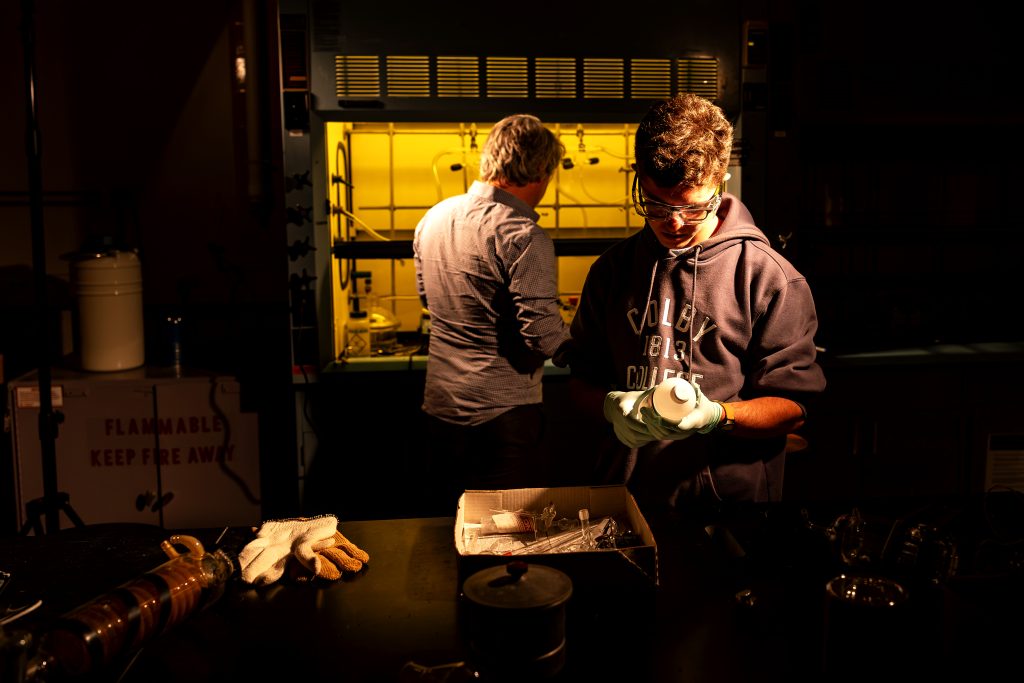

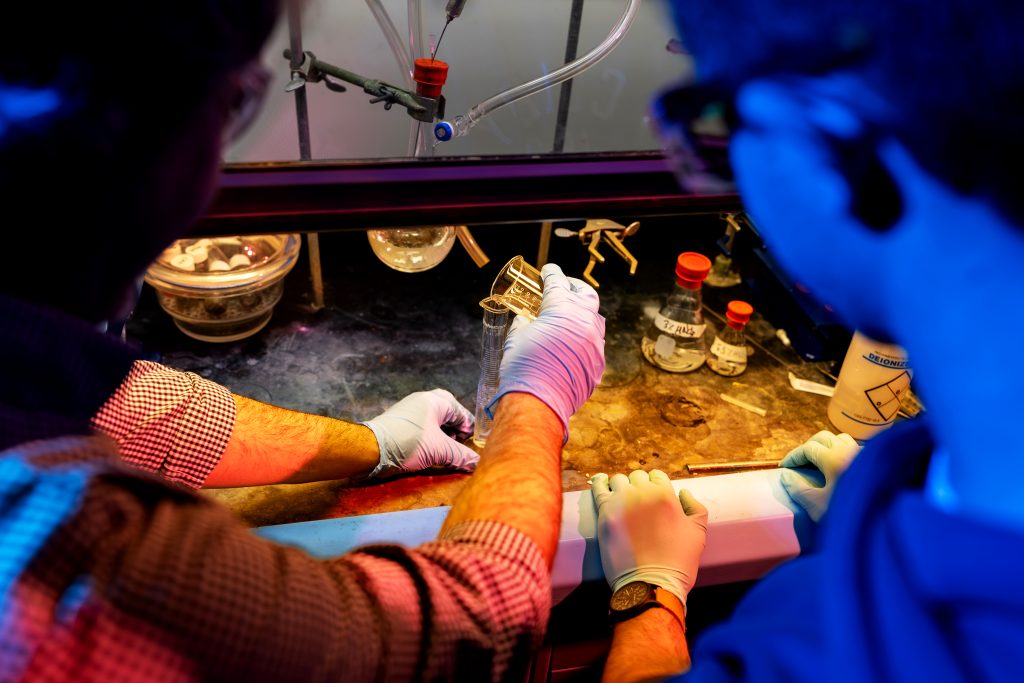
He joined a research team that was able to mimic conditions in the primordial vents. At Colby, he will continue to look at the chemistry that happens in the hydrothermal vents. He is in the third year of the INBRE grant, which has a maximum of four years. The grant provides about $125,000 per year for the project.
“It’s not at the point where we’re making cell membranes, or DNA, or anything like that. We are literally just making one to three carbon molecules,” Hudson said. “But that is a building block you could use to make these other components.”
Secrets of the soapberry bug
Through INBRE, Angelini will receive about $50,000 in funding to support two years of work on a project that studies the intersection of genes and the environment. His research focuses on the soapberry bug, which loses the ability to fly about three weeks into its month-long lifespan.
“The reason for this is that the kind of robust flight muscles that young adults have kind of disappeared in that time. And this is analogous to something that happens to humans as we get older,” Angelini said. “There’s a phenomenon called ‘sarcopenia,’ or age-related muscle atrophy. And my hope is that the bugs are a much more convenient system in which to study this, even more than other traditional lab models like mice.”
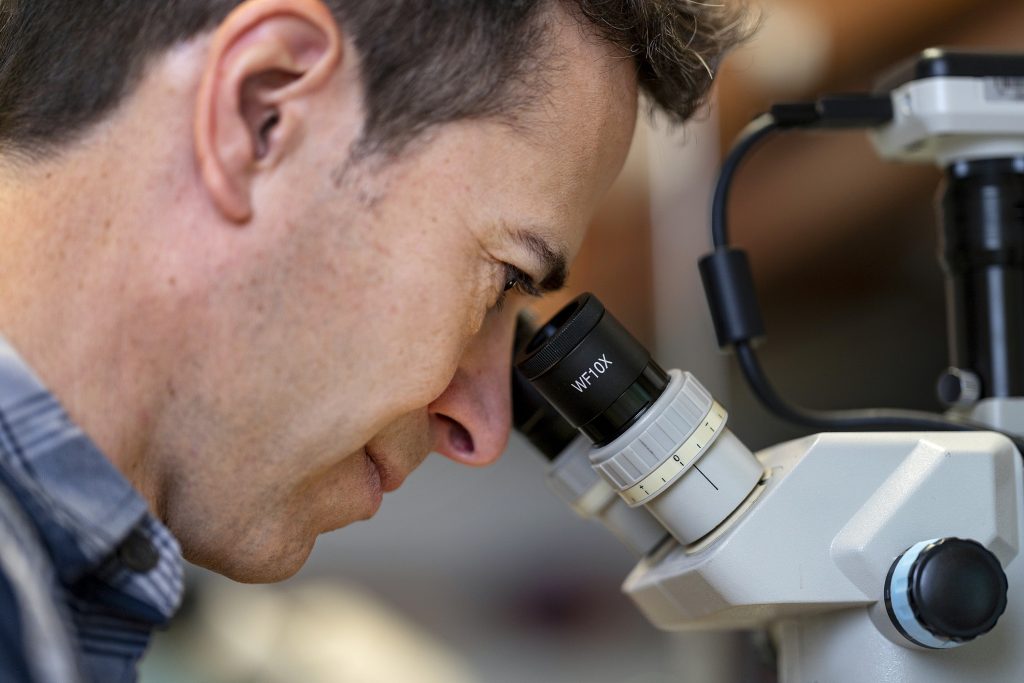

The grant funding will allow his lab to study comparative genomics and hire student researchers who will help with the project during the academic year.
“It’s easy to imagine there’s a big gap between bugs and humans,” he said. “But in principle, if you could take a drug or do something to manipulate a gene and prevent muscle atrophy as people age, that would be great. And that’s our real, long-term hope for this.”
Angelini looks forward to finding what the research will uncover, and he believes he and his lab are off to a robust start.
“This summer, even before the funding had kicked in, we were doing experiments looking to see whether, if we knock out certain genes, we can actually extend flight ability longer into life for these insects,” he said. “We’ve got preliminary data that suggests that’s the case, which is really exciting.”
Using yeast to learn about human mutations
Thu is in her fourth year of receiving grant funding through INBRE, with her current grant providing about $125,000 per year. Through her work, she is striving to shed light on aspects of genetic mutations, especially one that will help increase understanding of an aspect of cancer.
In her research, Thu is focusing on Mms21, an enzyme crucial for DNA repair and genome stability. “We are trying to understand the role of this enzyme,” she said.
To look more closely at it, she and her students are using baker’s yeast as their study model. Like human cells, yeast cells are eukaryotic, meaning they contain a nucleus and other organelles. Despite the vast differences between humans and yeast, some cellular pathways that make life possible function similarly in both organisms. Because of this, yeast cells can be used as a genetic model to study human mutations.
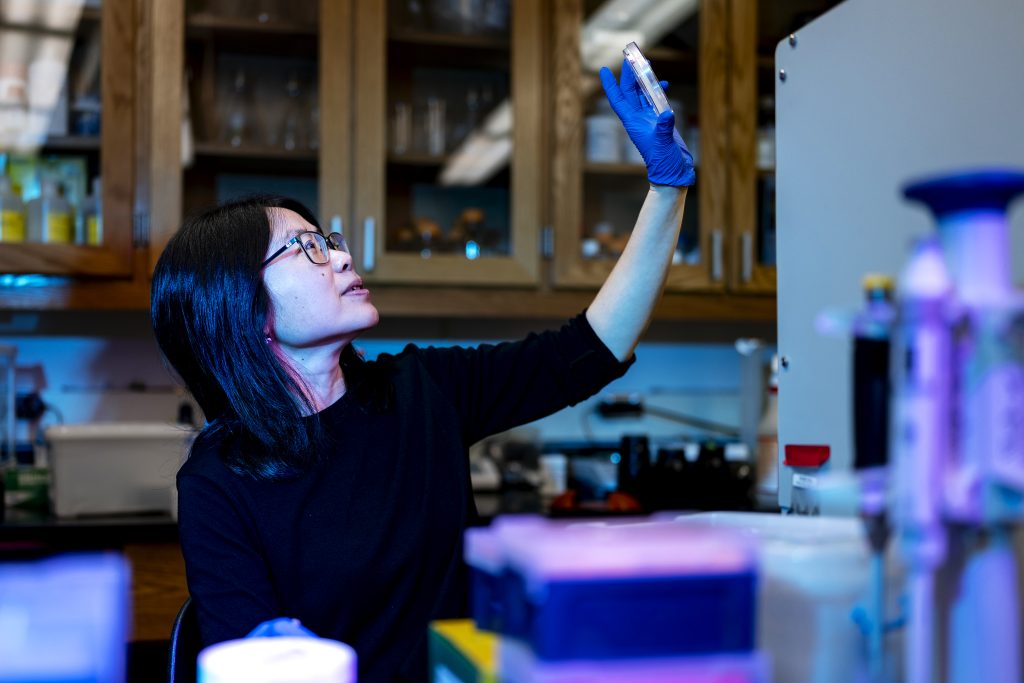
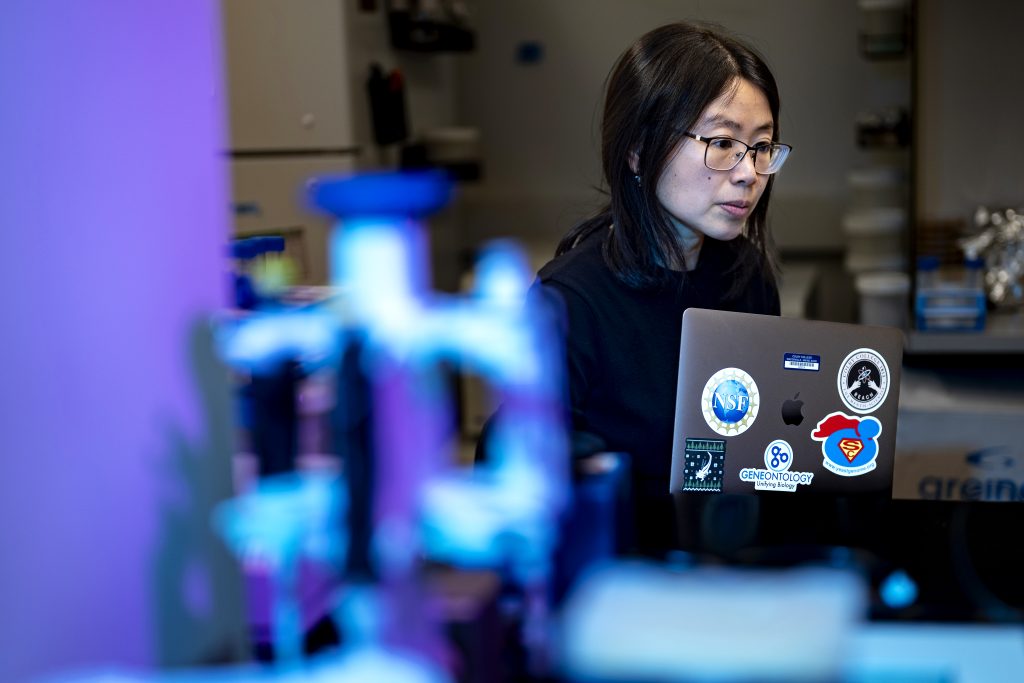
Among the discoveries they have made so far is that removing just a small amount of amino acids from the enzyme can have a big impact on cell growth, slowing it down substantially. They also know that Mms21 has a role in resisting challenges cells may encounter during DNA replication, and are learning more about why that is the case.
“We’re hoping to understand the basic biology behind Mms21,” Thu said.
One of the goals of Maine INBRE is to provide research and training opportunities for young scientists, and with the help of the grant, Thu was able to bring two students last October to the Buffalo DNA Replication, Repair, and Cell Cycle Symposium at the University at Buffalo. The students had the opportunity to present their research to other scientists, and told Thu, “it wasn’t as scary” as they had thought.
“It helps them see how supportive the scientific community can be,” the professor said.


