The Hazards of Dust from a Drying Lake
The National Science Foundation will fund a grant to study the effects of dust from the Great Salt Lake
Utah’s Great Salt Lake is immense, covering a land mass larger than the state of Rhode Island.
It’s also rapidly drying up, with the rivers that once fed it largely getting diverted for agriculture and other purposes before arriving in the lake.
And because the lake has been the site of mining and other industrial activity, that development has led to a big problem: clouds of potentially toxic dust that are blown off the newly exposed lake bed and sent swirling into the air for many miles around.
Associate Professor of Earth Sciences Bess Koffman is part of a group of scientists from Colby and two other institutions working to learn more about the wind-blown dust and how it affects the people, animals, and plants in its path. Their research just got a big boost from the National Science Foundation, which will fund a three-year grant of $898,000 to study the impacts of dust from the drying Great Salt Lake on agriculture and ecosystems.
“As the water dries, the mud that is now turning into dust and blowing up in the atmosphere is carrying elevated levels of a variety of metals that can be toxic to people and to organisms in general,” Koffman said. “These metals potentially could be impacting people’s health.”

Although people who live in the Great Basin region are becoming more aware of the risks carried by the Great Salt Lake dust, and recent studies and headlines have emphasized the “scary” concentrations of arsenic and other chemicals found in it, there are still many questions to be answered.
Koffman’s project aims to explore some of those questions through a combination of greenhouse trials, field research, and dust-transport modeling. She and her colleagues will expand the impact of the work by hiring high school science teachers to work as summer lab interns and develop curricula related to the project.
While the research will focus on one specific body of water, their work is part of larger and increasingly urgent questions about the persistent, decades-long state of aridification in parts of the U.S. West and around the world. Still, it has a simple, understandable goal.
“We’re really just trying to understand what’s happening, and what the implications are of the lake drying,” the professor said.
A multifaceted issue
Koffman, a geochemist and paleoclimatologist, is the lead principal investigator for the research project. She’ll start work next year in collaboration with co-principal investigators Sherry Pineau Brown, lecturer in the Department of Education at Colby; Shelby Rader, an Indiana University assistant professor in the Department of Earth and Atmospheric Sciences; and Derek Mallia, a research assistant professor in atmospheric sciences at the University of Utah.
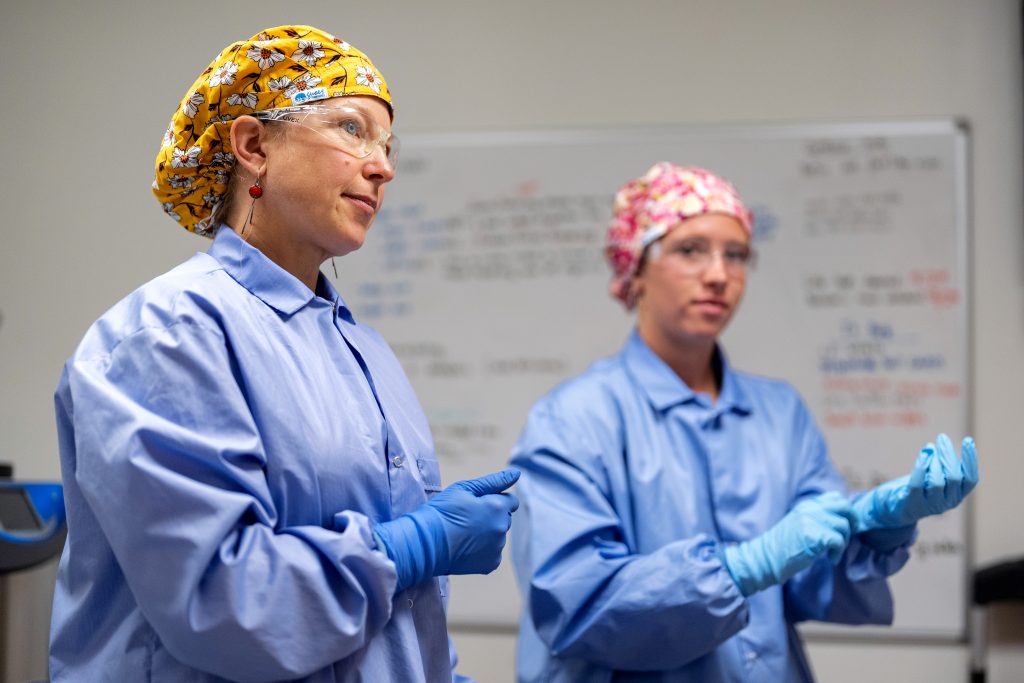
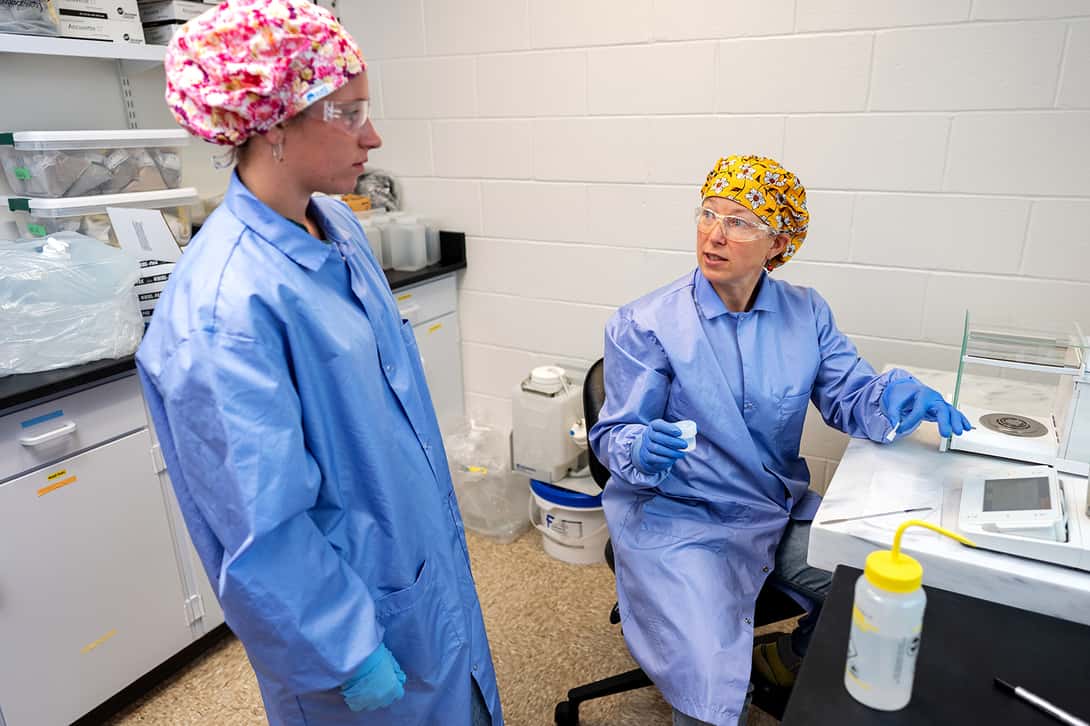
The idea for the project originated several years ago, when Colby’s Earth Sciences Department invited Rader to campus to talk about her research, which focuses on the interactions between geology, chemistry, and biology. She examines trace metals and heavy metal isotopes to try to track the elements through geological and biological processes and unravel the connections between them.
Koffman found the work fascinating, and it got her thinking about further possibilities. She and Rader began mapping out a research project that would showcase their strengths to learn more about the wind-blown dust. Later, Mallia joined them, adding his expertise in dust modeling to the mix.
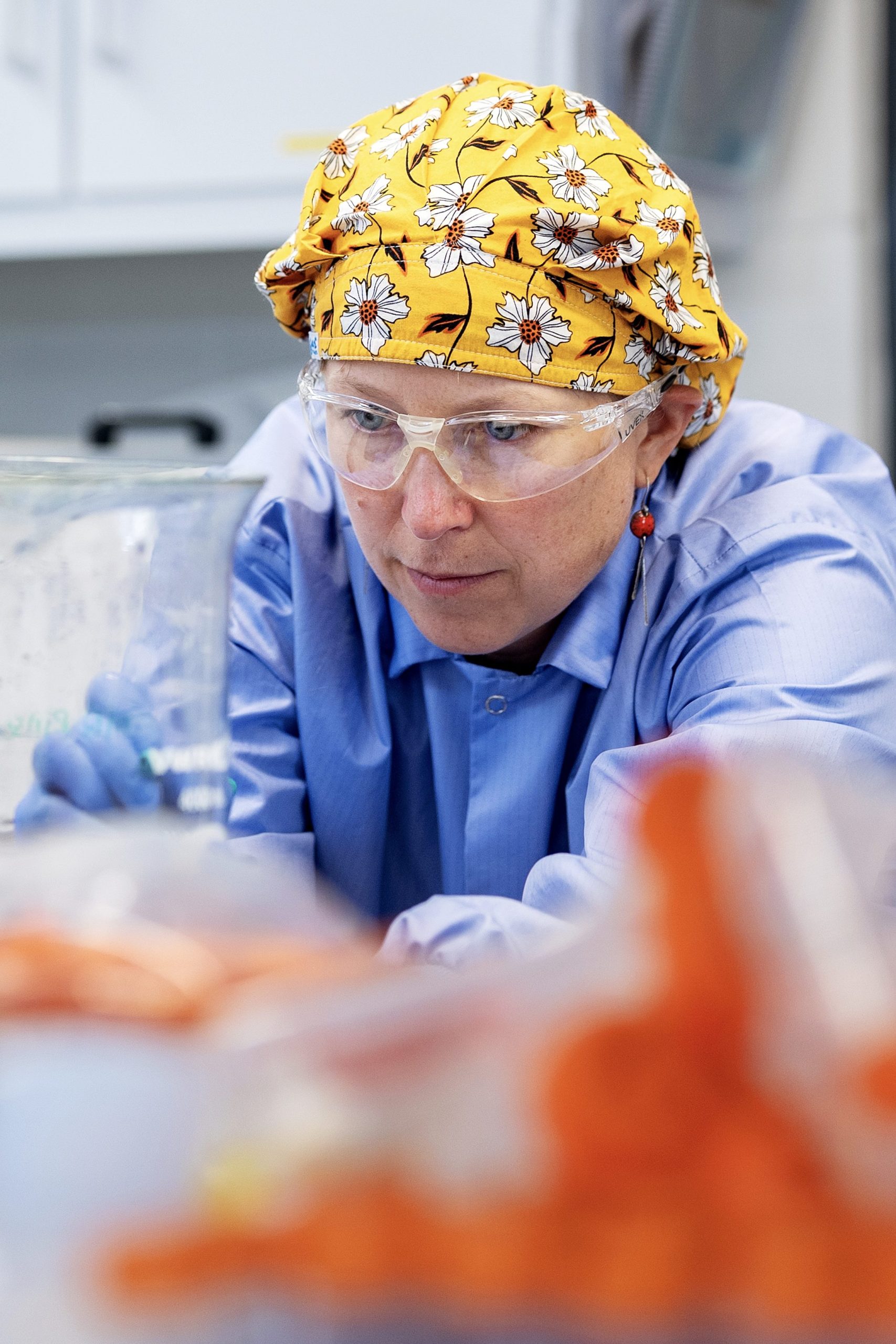

They want to measure how plants are taking up the metals in the dust, whether through their roots as the dust blows in and becomes incorporated into the soil or through their leaves via direct foliar deposition, Koffman said.
One of the ways they will do this is via greenhouse experiments. Rader and her students will grow sweet corn and alfalfa, two of Utah’s main agricultural crops, in a controlled greenhouse experiment. They’ll add Great Salt Lake dust containing such metals as lead, arsenic, copper, and mercury to their roots or leaves, and then measure the metal levels in the plant tissue after a season of growth.
The team will also do fieldwork in Utah, measuring agricultural plants and native species growing along transect lines in the Great Salt Lake basin to find how much metal they are carrying.
“And then we want to see what some of the implications are based on the amount of dust that’s flowing from this dry lake bed, or playa, as it’s called, for agriculture and ecosystems,” Koffman said. “For example, the alfalfa is fed to cattle, and humans eat the cattle. So these metals could potentially be impacting people’s health through their diet.”
Air pollution is also a concern in the Salt Lake area, with the dust particulates also very harmful to health.
“It’s a multifaceted issue,” Koffman said.
For her part, Koffman will measure the geochemical composition of soils and the dust material. Through the grant, Colby has the funding to hire a postdoctoral scientist to help lead the project and work with undergraduates in the lab to do the measurements.
Learning about teaching
Another co-principal investigator is Brown, the College’s coordinator of teacher education, who will study the impact of the teacher interns associated with the project. In her research, she studies educator resilience and “compassion satisfaction.”
Brown has learned how important professional learning networks and research practice partnerships are to teacher satisfaction, helping teachers feel like they’re building knowledge and are respected as professionals. As part of the NSF grant, Brown will evaluate what happens when the high school teachers spend the summer working and learning alongside their higher education counterparts. She described the concept as “co-learning,” something that is helpful to both professors and K-12 teachers.
While higher education faculty are content area experts, K-12 educators often have more training in pedagogy.
“Usually the [K-12] teacher will talk about how to teach different concepts, and higher-ed folks are like, ‘I never thought of it that way,’” she said. “And so that’s really why I think of it more as co-learning.”

The research proposal went through a rigorous review process, including six ad hoc reviews by independent scientists and two National Science Foundation review panels.
“Based on the feedback, I would say the science was seen as being really relevant and important, especially given the water shortages and the fact that the lake has been drying so much lately,” Koffman said. “But some of the other aspects of the project were also really scientifically interesting to the reviewers, and to us as well.”
One of those is the idea that if plants are taking up certain metals in their tissues in proportion to what is being deposited on them, it may be possible to use plants to monitor dust in other places.
“To look at how much dust makes it to different regions by measuring the dust metals in the plants,” Koffman explained. “There’s been just a very small amount of research on this, so it’s definitely an area where there’s a lot more to learn.”


