A Front Seat to Innovation
Kirk Koenigsbauer ’89 helped build some of Microsoft’s most iconic products. Now, he has a front-row seat to the next frontier.
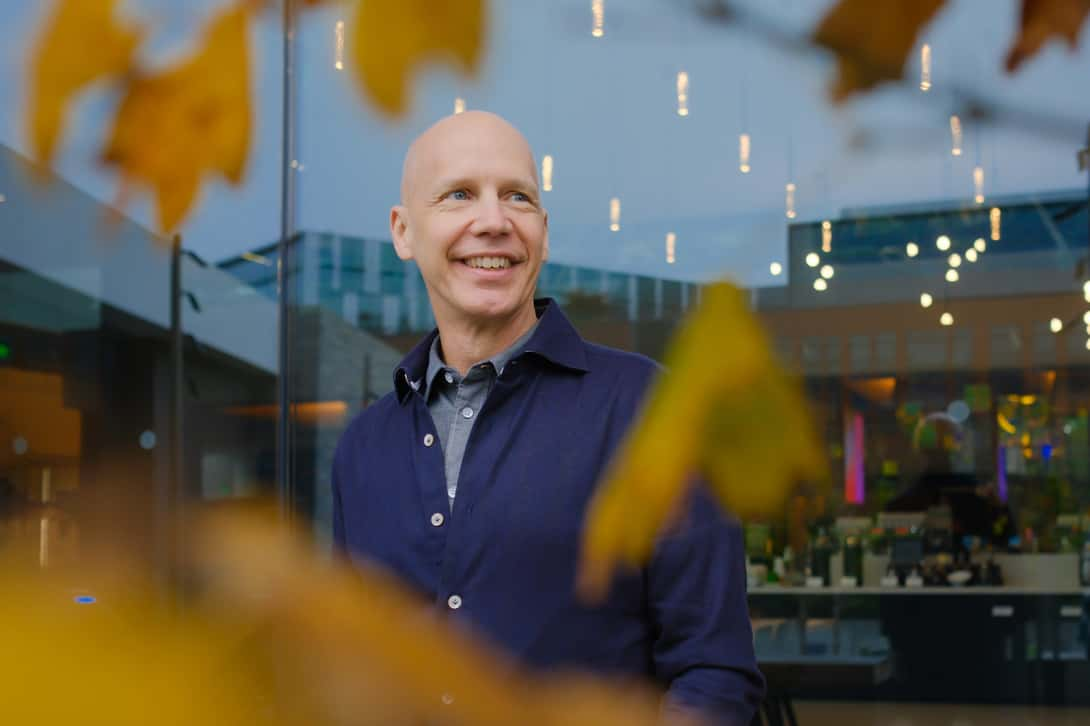
Kirk Koenigsbauer ’89, promoted earlier this year to president and chief operating officer of Microsoft 365 and Copilot, has built a 30-year technology career by bringing some of the most foundational software in our daily lives to market. In his new role, he is focused on Microsoft 365 Copilot and how AI is changing the way people work.
But Koenigsbauer isn’t a computer scientist. At Colby, he majored in American studies.
“It was a wonderful four years, and I loved everything about my time at Colby,” he said. “Where a liberal arts education really helped was diversity of thinking. It requires you to do research, to make an argument, to really engage and build that confidence of questioning your own assumptions. That fostered a lot of my curiosity in the tech space, and I’m glad I have that background because it really forces me to ask questions about the why and how.”
He started his career in consulting at Andersen Consulting—now the major consulting firm Accenture—because he loved to ask those kinds of questions. He also received his initial technical and information systems training there and worked with big-name Fortune 500 clients.
“I wasn’t an engineer, but I did have the skills from Colby to ask the right questions, and to communicate what the products and technology were doing for our customers,” said Koenigsbauer, who thought he’d do a stint in consulting before going to law school. “I really fell in love with the technical side there. It’s where I learned about programming, and I wanted more.”
Head West
Anyone in technology in the early 1990s knew: the West Coast was where innovation lived. And Koenigsbauer wanted to be a part of it. He landed his first job at Microsoft in 1992.
“I started in marketing, and then quickly moved over to product, eventually working on the core Office suite,” he said. “Then, when the internet hit, I moved to help build some of our initial consumer services, and really caught the bug of how the web would rewire all of our personal experiences.”
‘Natural language has become a powerful interface to computing. … But using AI well still requires rigor—framing the problem, supplying relevant context, and knowing how to judge a good result. Those are habits a liberal arts education develops.’
Kirk Koenigsbauer ’89
Koenigsbauer loved Microsoft, but he was interested in what Amazon, then a mere startup, was doing in the space. He joined Amazon in 1998, when it was still an online bookstore, building a range of products and services as e-commerce took off. “Amazon taught me a lot about customer centricity, how to move really fast, and build internet-scale systems,” he said.
By the early 2000s, he returned to Microsoft, and he’s worked there through some of technology’s most transformative moments of the past few decades, from the commercialization of the internet to smartphones, Software-as-a-Service (SaaS), and now AI.
“What’s kept me excited is the chance to help build products through several major shifts in computing—from desktop software to internet services, the cloud, and now AI. Each transition changes what’s possible and what customers expect. You get to draw on what you’ve learned while being willing to rethink how things should work.”
Constant change and innovation
The internet democratized access to commerce and communications, and then mobile phones changed everything again, he said. The fast-paced nature of the job has kept him interested and engaged.
“It’s energizing because AI is changing both how people interact with software and what software can do for them. We’re moving from asking questions and getting answers to delegating work to agents that can use tools and carry out tasks. That forces you to rethink the product, the underlying tech, and the business model. You have to keep questioning your assumptions, which is one of the things I enjoy most about this industry,” he said.

In his new role, he’s focusing on Copilot, Microsoft’s AI assistant built into Microsoft 365.
Said Koenigsbauer, “The models are becoming much more capable, but building a useful product takes more than a powerful model. You have to connect it to the right business context, make it safe and secure, and evaluate how reliably it performs real tasks. As AI takes on more work, you also have to be clear about where people review the results and which decisions remain theirs. The opportunity is enormous, but no one in tech should promise a painless transition. Helping people build new skills and redesign how they work is a central part of the job.”
Liberal arts, now more than ever
With AI, Koenigsbauer believes it’s more important than ever to lean into the strengths of a liberal arts degree.
“Natural language has become a powerful interface to computing. You can describe what you want to accomplish without having to write code or being a power user, which opens up the tech to many more people. But using AI well still requires rigor—framing the problem, supplying relevant context, and knowing how to judge a good result. Those are habits a liberal arts education develops. As AI becomes more capable, domain expertise, critical thinking, and judgment become even more important.”
While technology is dramatically different today than when Koenigsbauer graduated, one thing has remained constant: A commitment to people first. Today, he leads an organization of several thousand people worldwide.
“My Colby experience helped me so much as a leader, especially as my responsibilities have grown,” he said. “It’s my job to hire the brightest and most competent people I can, and inspire them with a sense of mission and vision beyond the paycheck. A liberal arts education gave me the ability to communicate well, but it also taught me that I’m not always going to have all the answers, and it’s only together that we can move forward. I think, like anyone, my career was a combination of preparation and luck that came together at the right time, and Colby certainly prepared me for that.”


