Bottled History: Resurrecting a Shipwreck’s 19th-Century DNA
How two brewers turned a scuba hobby into a scientific breakthrough for the New York craft beer scene
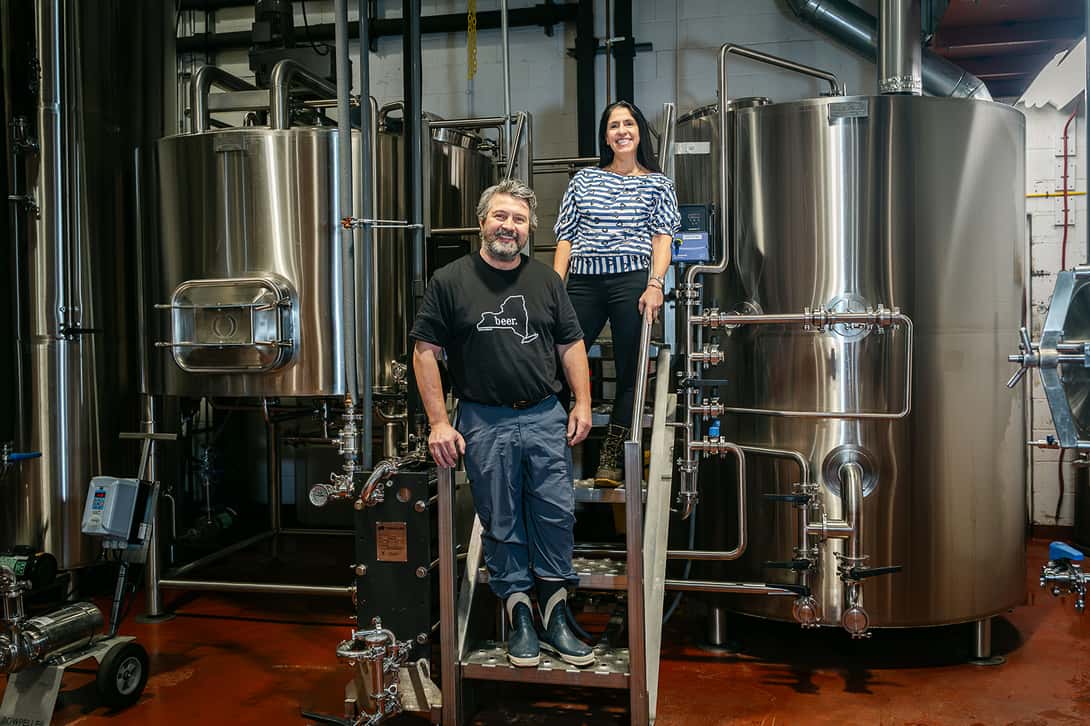
Most shipwreck divers dream of finding buried treasure. For brewer Jamie Adams ’96, finding intact beer bottles became an obsession. At Saint James Brewery in Long Island, N.Y., you can taste what 130-year-old beer might have tasted like with their Deep Ascent ale, which uses yeast rescued from the shipwreck of the SS Oregon.
Deep Ascent started with a gift certificate to a local dive shop. After graduating from Colby, Adams took a job as a Wall Street trader—though it didn’t stop him from setting up a home brew operation in his Upper East Side apartment. After 9/11, he lost his job and found himself unsure what to do next. “I didn’t know what I was going to do, and scuba diving was the last thing on my mind. I’m from Long Island, and my mother bought me a gift certificate to a local shop. It’s a big community here,” he said.
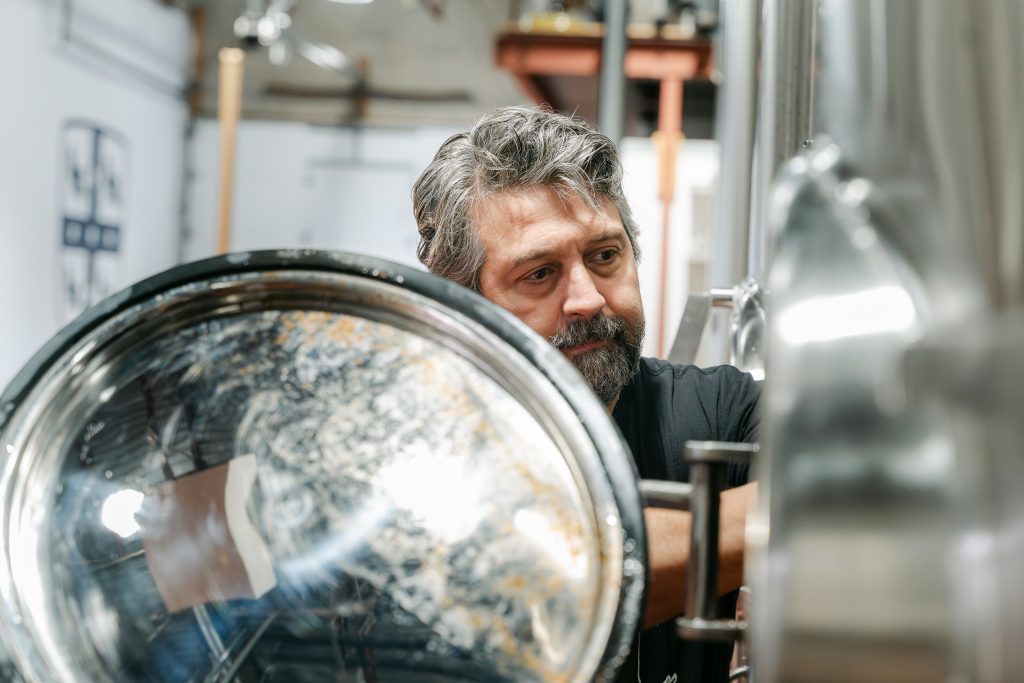
He was immediately hooked after his first class, going deeper into technical certifications, adding a dry suit, nitrox, and challenging terrain such as cave and wreck diving. By the time the couple launched Saint James Brewery in 2010, Adams was an active member of the local scuba community.
“I’ve done all the wrecks up by Alexandria Bay, the ghost fleets down in Florida, all over the place,” he said. “But what’s so cool about our shipwreck beer is that it’s from right here off of Long Island. When these great, grand old ships would come to New York Harbor, they’d skirt the south shore of Long Island, so there’s a lot of history here.”
A luxury liner lost at sea
Divers know the SS Oregon as a popular wreck due to its location—just 18 miles off the coast—and its depth of approximately 130 feet, the maximum for deep-diver certification. The ship, part of the Cunard Line, was designed for speed, winning the Blue Riband transatlantic prize in 1884 before sinking after a collision in the Sound. “This was a luxury liner, almost 520 feet long,” Adams said. “It broke into two pieces, and the main piece is still 300 feet long.”
The seafloor moves with tides and storms, occasionally exposing parts of the ship. “Every once in a while, the sand moves and opens parts of the shipwreck. We knew where everything was, including the first-class dining cabin, because we had maps. I thought, if I could get my hands on one of those [bottles], I could make beer from it,” he said.
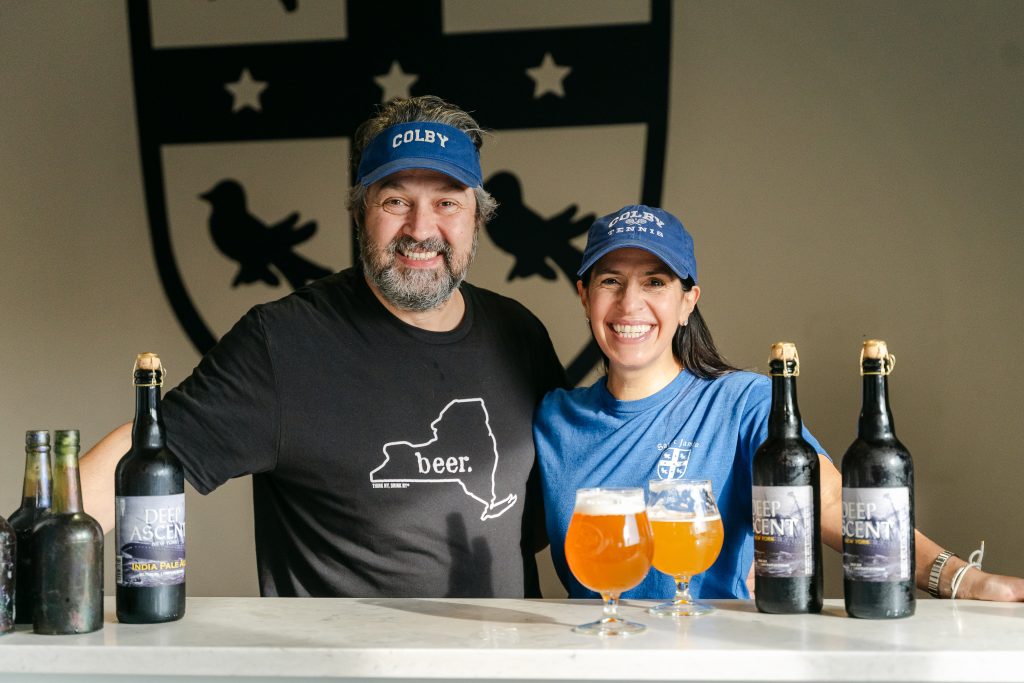
The expedition team dredged near the first-class dining cabin. “I remember in March 2017, one of the guys had been down there, and he said, ‘It’s open,’” Jamie said. “We were able to recover fresh, intact bottles. This particular yeast strain had been underwater for 130 years.”
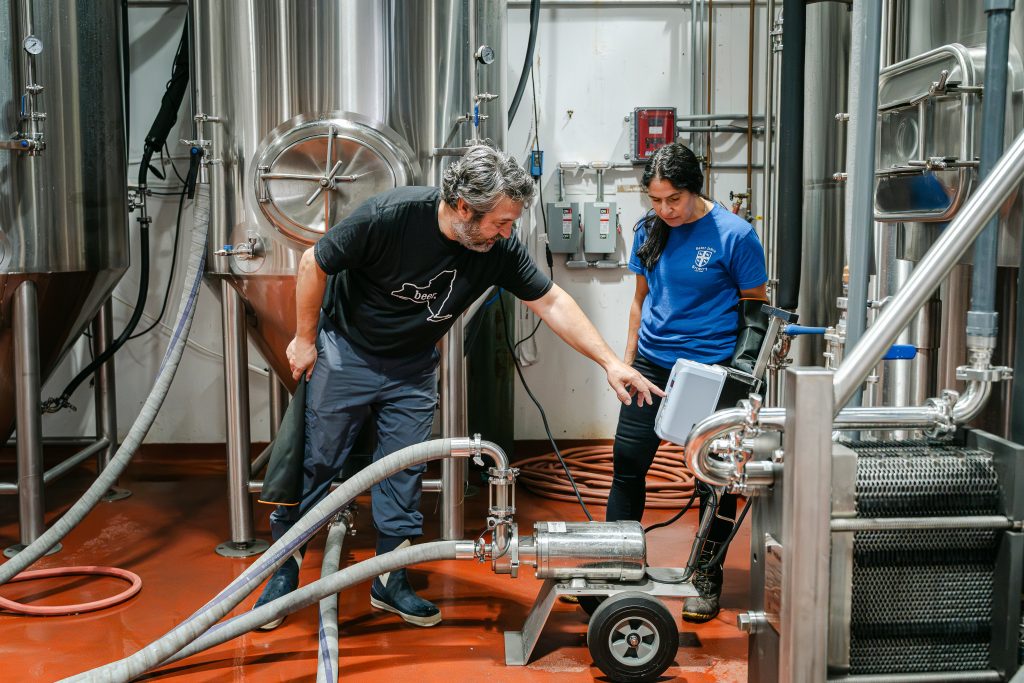
Adams runs the brewery alongside his wife, Rachel Kleinman Adams ’96. They partnered with a microbiologist to isolate and propagate the yeast. It took years to produce something that would make good beer. “Being underwater that long, the yeast had transformed from a viable beer producer to something that was surviving,” he said. “It took years to get it back to making beer again.”
Unraveling the scientific mystery of 130-year-old yeast
To make beer, brewers combine grain with water (wort), and yeast transforms the sugar into alcohol through fermentation. “Think of spaghetti, which is a complex carbohydrate, versus simple glucose,” Adams explained. “Yeast has the ability to eat both, but we had to train it to build back up to using something more complex, like barley.”
While the bottles were intact, the labels were gone, leaving a guessing game regarding the original beer style. A history major at Colby, Adams tracked down beer-making information from the time period.
“What made it challenging is that the bottles themselves were so valuable that they were often recycled between breweries. We started with the most popular beers from the time, which would be Guinness, Allsopp’s, and Bass,” he said. “Once we narrowed it down to those, we began to ferment the yeast.” He wanted Deep Ascent to stay true to its roots. “I tried to keep it classic to what would have been made at that time,” he said. “Our original is a pale ale, in the style of Bass Pale Ale.”
Deep Ascent makes a splash
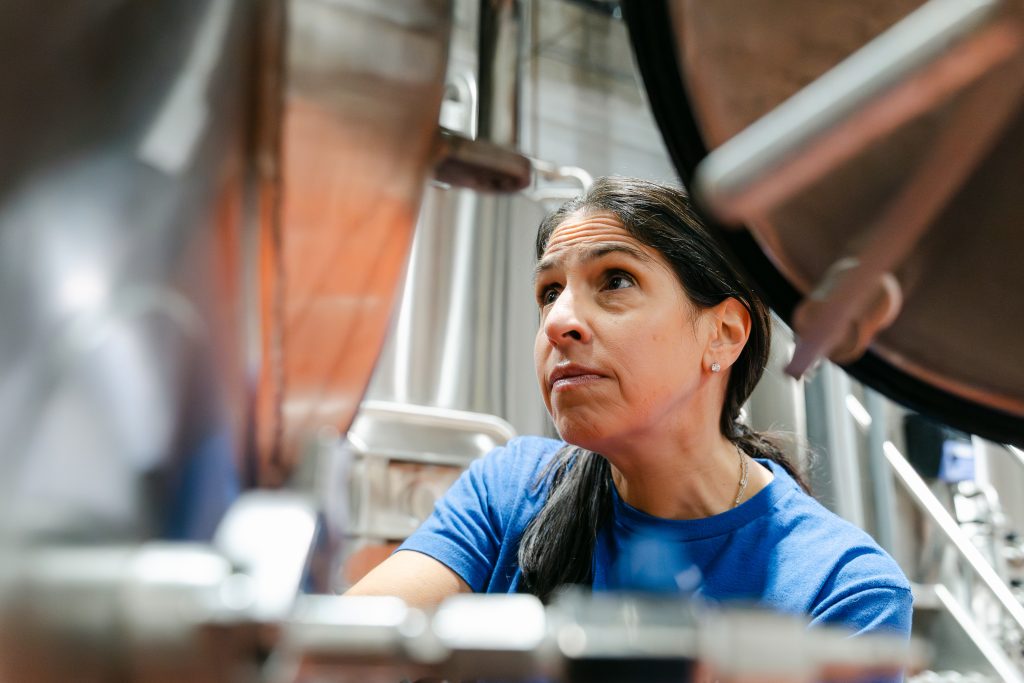
The buzz from the shipwrecked beer created an eager fan base. “When the bottles did come out, people were so excited,” said Rachel Adams, who manages sales and marketing. “I think the beers really speak for themselves. They’re beautiful, clean, and uncomplicated, and people love them so much.”
What started as a passion project became a major business success. “We’re doing a lot more business now, and a lot of it has to do with Deep Ascent,” Rachel Adams said. “Our tanks are 10 times bigger than they were when we first started because people are so interested in it.”
Beyond Deep Ascent, Saint James offers traditional beers, winning awards for their Cream Ale and Apple Ale. “My goal as a brewer is to showcase what local farms can do,” Jamie Adams said. “With Deep Ascent, we’ve kind of pushed the envelope a little bit with IPAs while keeping the classic English-style beers the yeast is from.”
Jamie Adams never expected to be a brewer. “When I was at Colby, I took a summer position on Wall Street, and that was what I thought I wanted to do,” he said. “But when we decided to open the brewery, I realized Colby gave me the confidence to go for it. Rather than having a specific skill, I learned how to figure it out.”
Rachel Adams agreed: “As we get bigger, we have the tools to understand the craft, but also the business side. We’ve grown slowly but steadily, and our focus is on community,” she said. “You never know where life will take you, and Colby really prepared us to be successful in a lot of different areas of our lives.”