Meet a Colby Doctor Who Diagnoses Mystery Illnesses
Dr. Chaz Langelier ’00 uses cutting-edge genomic techniques to find answers to unexplained infectious diseases
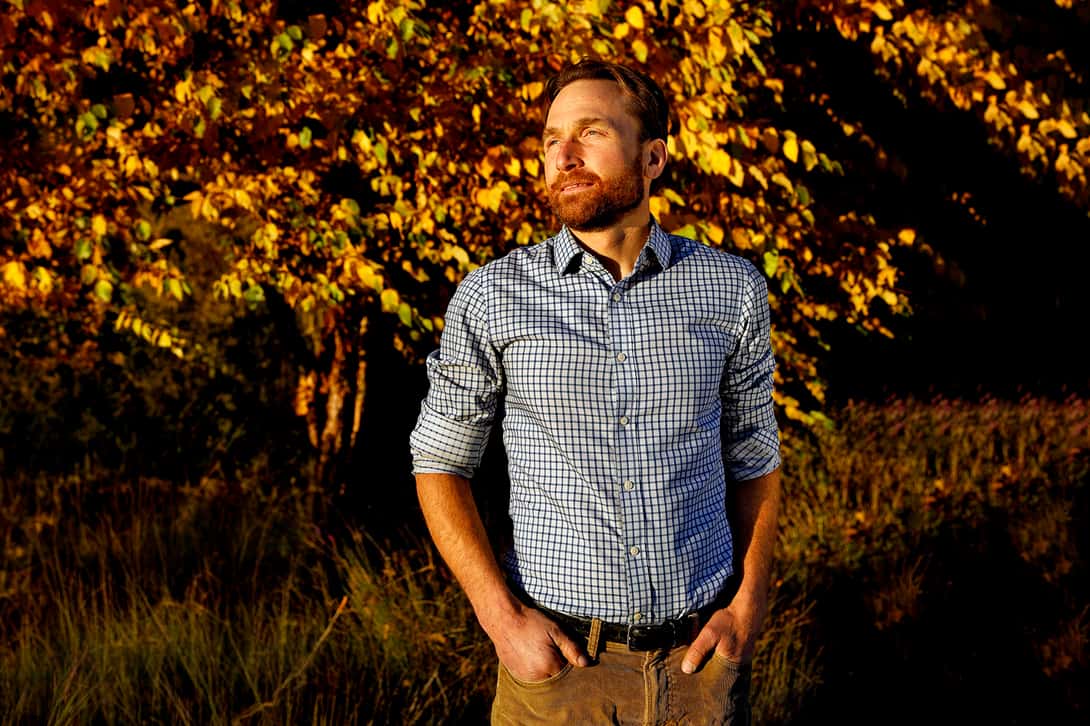
For a patient, one of the scariest things a doctor can say is, “We don’t really know what’s causing this.”
Dr. Chaz Langelier ’00, a practicing physician and associate professor of medicine at the University of California, San Francisco, is working to change that. He’s coauthored more than 100 studies on infectious diseases. His team at UCSF uses a genetics-based diagnostic technique that can tell doctors what pathogen they’re battling—and how a patient’s immune system is responding.
“I was really struck by the frequency and severity of respiratory infections as a medical student, where in many cases, people would be hospitalized, but no one could figure out what caused it,” said Langelier. “They would get treated with antibiotics, and either get better or they wouldn’t.”
The same is true of sepsis, when the body experiences a systemic shutdown in response to severe infection. One out of every three patients who dies in a hospital has a sepsis diagnosis, adding up to 1.7 million adults in the U.S. each year. “A large fraction of those cases don’t have any explanation,” said Langelier.
As a chemistry major, Langelier first became interested in infectious diseases from his microbiology courses with Professor of Biology, Emeritus, Frank Fekete. “He really showed me how cool and exciting microbiology can be,” he said. “Much of my foundational understanding of biology, chemistry, and biochemistry came from my Colby professors. The availability and accessibility of professors at Colby is unique and outstanding, and played a key role in my trajectory to becoming a physician scientist.”
The Colby foundation
As Colby moves toward a massive investment in public health and the sciences, Langelier’s story is a timely reminder that a liberal arts foundation is well-suited to building a career and focusing a life on medicine, healthcare, and improving individual lives and communities.
While at Colby, Langelier spent a summer doing chemistry research at the University of Utah, where he later enrolled for his graduate studies. “I was able to have some incredible research experiences both on campus and off,” he said.
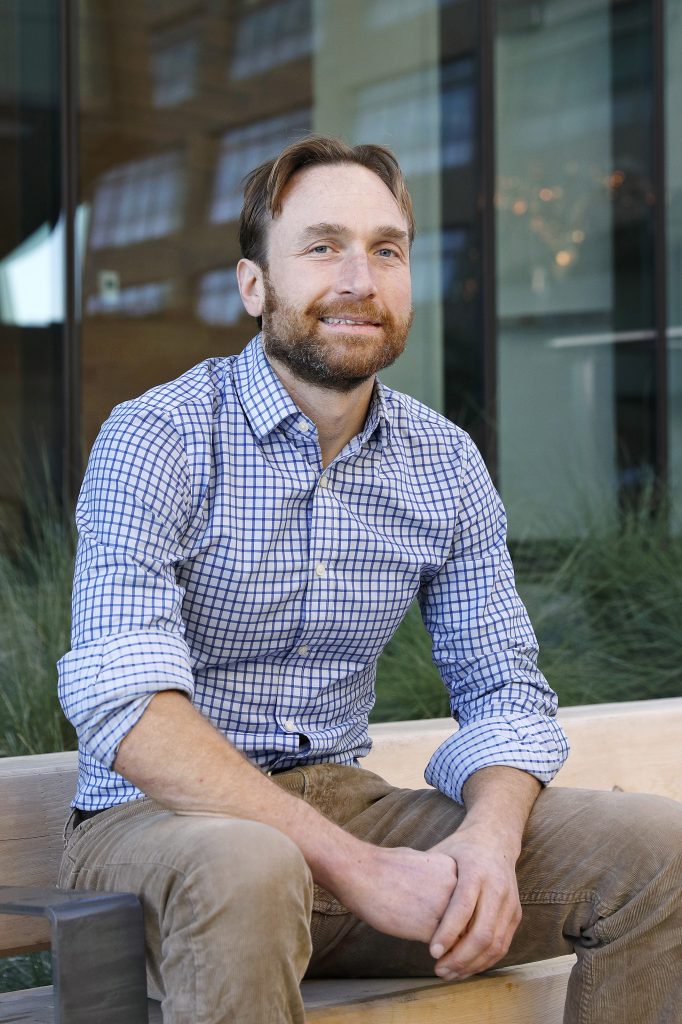
It took two life-changing volunteer experiences for Langelier to realize that medicine was his calling. First, six months building homes with Habitat for Humanity in Costa Rica and Oregon. Then, he spent several months working at an HIV/AIDS clinic in Uganda.
Said Langelier, “My experience with Habitat for Humanity was my first recognition of how unevenly distributed resources are in the world, but Uganda was another level of eye-opening. I really saw firsthand how big of an impact infectious diseases have on human health. The idea of having a profession where I could directly help people in such an immediate way was so exciting and important to me.”
Graduate studies in Utah
After returning home from Uganda, Langelier applied to medical school at the University of Utah, where he completed both his Ph.D. and M.D., focusing on infectious diseases. There, he researched under Dr. Wesley Sundquist—recently named a Time 100 Most Influential People for 2025 for developing the groundbreaking HIV drug lenacapavir—to complement his clinical experience. “I didn’t appreciate it at the time, but being a part of that lab definitely taught me all of the small steps that lead to making groundbreaking discoveries,” said Langelier.
But Langelier wasn’t satisfied with a singular approach to infectious disease. He expanded his interest from HIV/AIDS to malaria and then to a diversity of microbial pathogens, including SARS-CoV-2. “There’s so much potential for doing clinical research as a way to bridge the basic scientific understanding of a disease with more direct clinical implementation,” he said.
He landed at UCSF for an internal medicine residency and infectious diseases fellowship, where he learned how to use metagenomics and computational methods to understand the cause of infectious diseases that previously had no explanation. “Ten years ago, it was really cutting edge to do viral pathogen surveillance and discovery using metagenomics, and in many ways, it still is, and I still find it exciting,” said Langelier. “Our goal was to provide answers for diseases or syndromes that didn’t have a microbiologic explanation, ranging from identifying causes of meningitis to viruses associated with oral cancer or respiratory infections.”
Today, his lab focuses on three different areas: infectious disease diagnostics, understanding host-pathogen biology, and epidemiologic surveillance of emerging pathogens. That way, they can understand not just the microbes underlying infectious diseases, but also map out a patient’s immune response to infection.
“This type of dual host microbe profiling is a technique that helps us understand key infectious diseases, like how Covid-19 disrupts the immune system, and how that changes as one ages,” he said. “We also take that a step further, so from a single blood test or respiratory sample, we can predict someone’s likelihood of severe disease to guide care and interventions.”
Langelier pairs this approach with real-life clinical scenarios, studying patients across the country and around the world to understand the biology of respiratory infections and sepsis toward a goal of developing better diagnostic tests and identifying new treatment approaches. Said Langelier, “Using this single technique of metagenomics, we’re able to get an incredible amount of data in terms of cause of disease and patient response so that we can understand key determinants of outcomes and build better diagnostic tools.”
Langelier credits his time at Colby with starting him down this path. “Without a doubt, I learned the fundamentals there, from chemistry to computer science,” he said. “It was such an amazing time in my life.”


