Becoming Scientists
Students in Christina Cota’s biology lab get the hands-on experience necessary for ‘doing science’ after they graduate
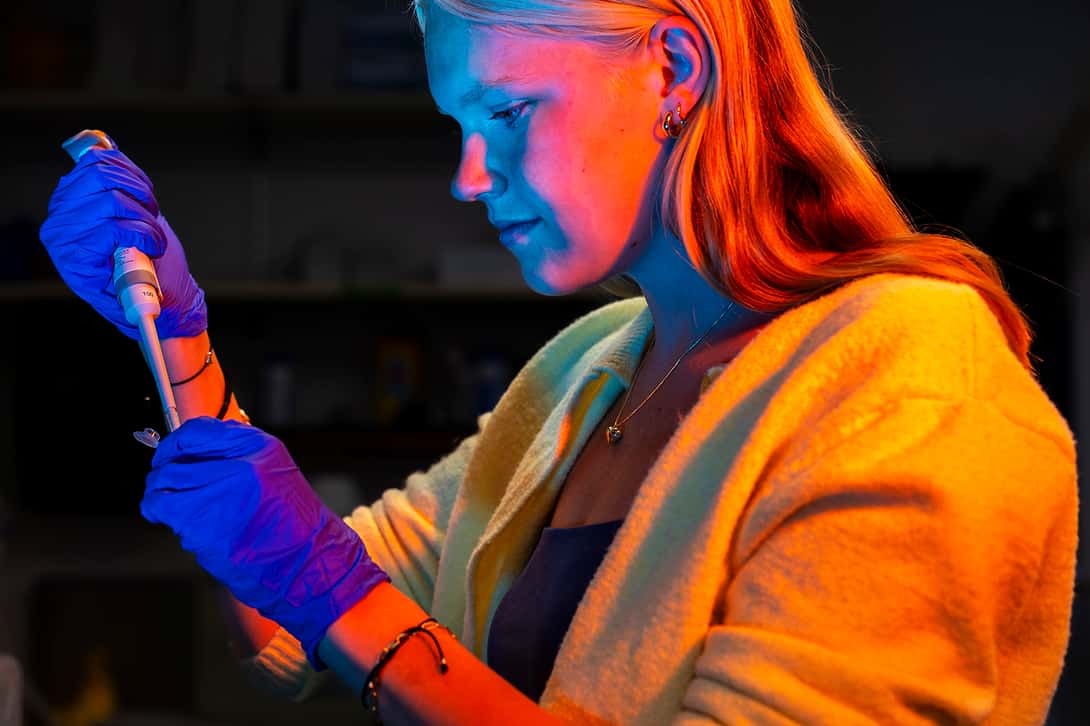
The students who spend a lot of their time in Assistant Professor of Biology Christina Cota’s lab have a special bond—the kind that is rooted in shared experiences and a passion for learning.
After all, who else knows the singular joy of hunting for sea squirts in the cold ocean underneath the Allen Island docks? Or spending late nights together in the lab, watching over each other’s experiments? Or translating cancer research into animations that can be understood by a wide audience? Or going to conferences where they are often among the few undergraduate students presenting their work?
Cota’s students have done all of this and more, leading to many “aha!” moments of discovery as they learn firsthand if “doing science” is the right path for them.
Small class sizes, big opportunities
At Colby, all students benefit from small class sizes and the opportunity to work closely with professors who are as excited about research as they are about teaching. Many students studying the sciences, including those in Cota’s classes and lab, find out more about graduate school or what a career in science can offer them. Just the experience of going to high-level conferences can be a determining factor, said Dave Angelini, associate professor of biology and chair of the department.
“For students who are interested in going on to graduate school, being able to go to a conference and see people who are students, and professors, and post-docs at R1 [high-level research] institutions, seeing that environment, it is very, very helpful in terms of career planning and networking,” Angelini said.
Students think so, too. In labs and classes, they learn how research works, how to form and test a hypothesis, and how to manage issues and problems that may arise in the process. Olchey Tchavyntchak ’25, a biology major with a concentration in biochemistry, was a research assistant in Cota’s lab. She’s now working at the Multi-Regional Clinical Trials Center of Brigham and Women’s Hospital and Harvard University in Cambridge, Mass.

“Before college, I didn’t know much about the academic research process, and just getting to know about that has been really rewarding,” Tchavyntchak said. “We’ve been to conferences and meetings where it was really good just getting those exposures—I think that makes students feel supported and prepared for the next step.”
Doing, and communicating, science
For Cota, it’s important that students have the chance to learn and practice skills they will use in science careers, including understanding how to ethically and effectively do research on Ciona robusta, more commonly known as tunicates or sea squirts.
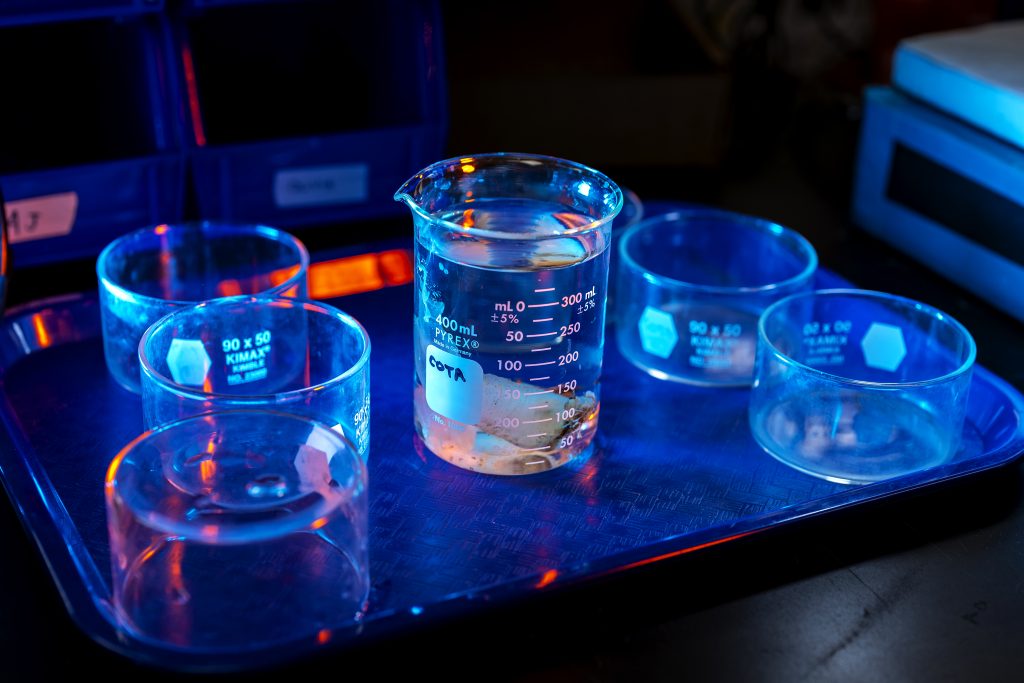
Ciona was one of the first genomes to be sequenced, which means there are many resources available for students to do genetic, genomic, and computational biology research on the animals. Some students may discover that this kind of work isn’t for them—which is an important part of the discovery process, too.
“By definition, biology is the study of living things, and that’s all living things, not just the living things that we’re comfortable with thinking about. There are lots of wonderful things that come with that, and then there are some things that you really have to think about,” Cota said. “You don’t want to take a big job at a research university or go to medical school and find out you are not comfortable doing all the parts of the job that are required. So that’s all part of what they’re learning.”
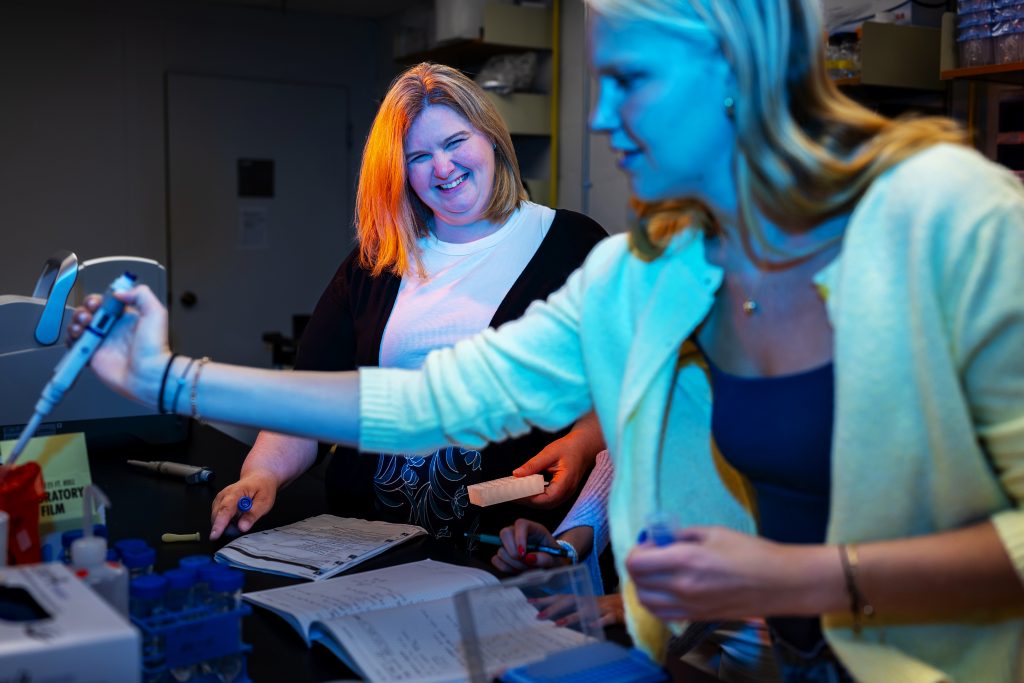
Something else she wants students to learn is how to communicate scientific ideas and research to the general public. Last year, in her course Biology of Cancer, students worked to learn and tell the story of a specific cancer by making a video.
Cota asked the students to envision the audience for their video as a patient or a family member of someone who had been told they had cancer. Students worked with Dexter Thomas, a journalist and documentary filmmaker who came to campus through the Goldfarb Center for Public Affairs, to bring their ideas to life.
“If you are a doctor standing in front of a patient, your patient needs to really understand what you’re saying to them,” Cota said. “They’re in a vulnerable place. Maybe that’s the worst news they’ve ever gotten, and talking above their head in a way they don’t understand is confusing and scary.”
So it was important to be correct, clear, and compelling, and the students took the assignment very much to heart. The videos, which were between five and seven minutes, were shared at the Colby Liberal Arts Symposium and posted on YouTube. Even after they had turned in their final assignments, some students kept working on them simply to make them better.
“It turned out to be really amazing,” Cota said. “Across the board, they did things that I didn’t ask them to do. I didn’t ask them to make their own drawings and diagrams. Almost every single person had some level of animation. And for many of these students, they’ve never done anything like that before. They were really creative and thoughtful, thinking about things that mattered.”
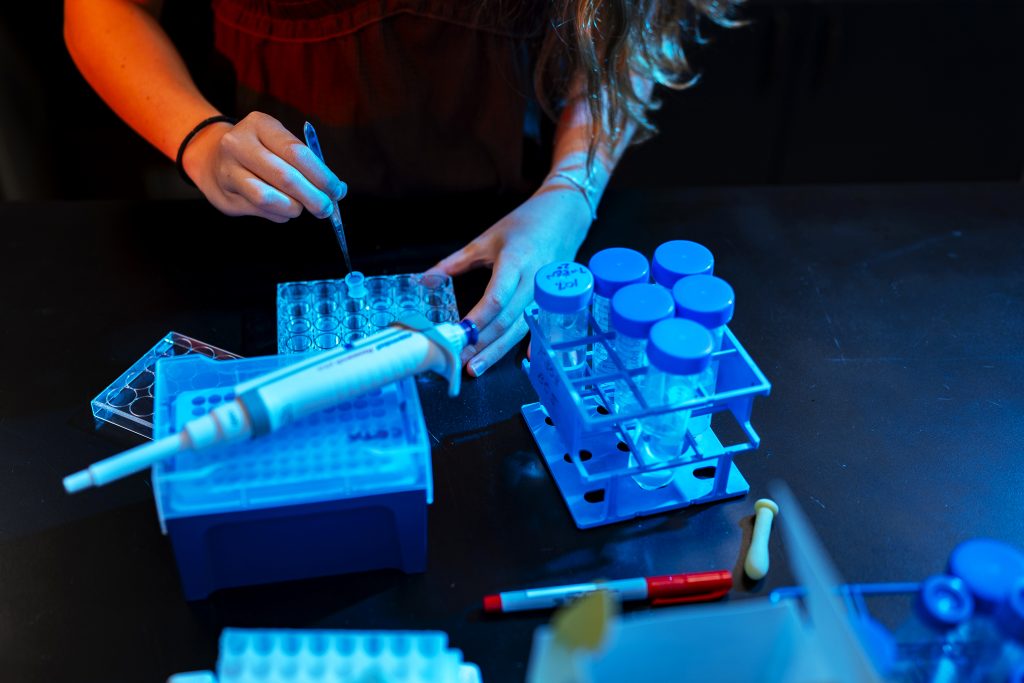
Olivia Lucia ’26, a biology major with a concentration in neuroscience, was in the class. She and her course partner chose to focus on acute lymphoblastic leukemia, a cancer prevalent in children.
Lucia is interested in doing cancer research one day, and so the video project was especially relevant to her.
“When you find out that you have cancer, I just feel like it’s already an overwhelming time. You don’t want to be overwhelmed with even more information,” Lucia said. “That was the whole goal of this project, to make it digestible.”
Ultimately, everyone’s videos turned out great, she said, adding that the experience of making them was powerful.
“I’ve never had a project like this before where we had to create a video. It was challenging. We had to do our research, and then learn how to take information from something really complex to something super simple,” Lucia said. “I think everyone did a really nice job, and that we all surprised ourselves.”
‘Lots of opportunities’
Tracy Huynh ’25, a biology major now working as a research assistant in a sickle cell lab at Boston Children’s Hospital, was part of Cota’s lab all four years she was at Colby. She also went to national biology conferences, including the annual meeting of the Society for Developmental Biology in Atlanta, and worked on a cell division project at Princeton University for two summers.
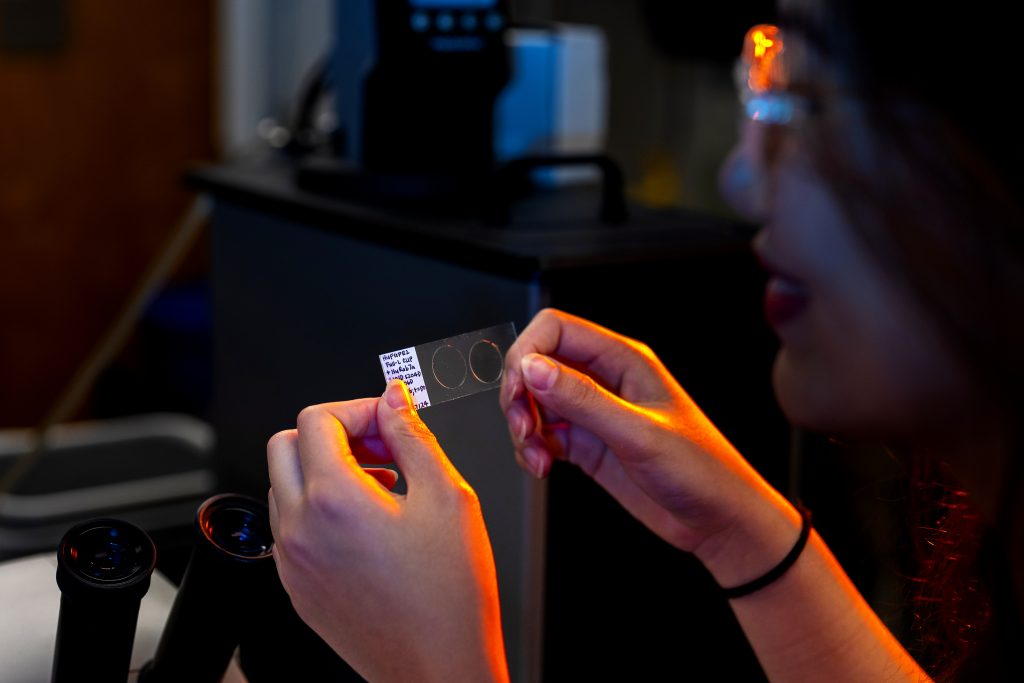
“I’ve had a lot of opportunities,” she said.
Though many of her classmates did their research with tunicates, Huynh worked in cell culture using mouse cells extracted from the skin.
“I’m more interested in cell division and how cells grow,” she said.
The work she did on campus is very relevant to what she is doing in Boston, and she said that Cota helped her figure out her path in science.
“It’s not just teaching and then showing us how to do experiments,” Huynh said. “I think our relationship with Professor Cota is more of a mentorship thing, and we got a lot of guidance from her.”

For Spinnaker “Spin” Blazak ’25, a biology major who’s now working in the field of healthcare technology, being a research assistant in Cota’s lab gave him practical, hands-on experience.
His work focused on Claudin proteins, which are found in organisms from tunicates to humans and are important for holding cells together. Blazak worked on mapping the Claudin protein gene to determine how it was specifically expressed in the Ciona embryos. It’s information that other students in Cota’s lab will be able to use to make further discoveries, such as finding out what happens to the heart and other cells if the protein is removed.
Blazak also enjoyed jumping into the cold Maine ocean to collect sea squirt samples and learning how to do science with the other assistants, who became close friends.
“It was my first experience in a research setting, so that was really cool,” he said of working in the lab. “It was fun and interesting learning all the different procedures and all the different biology that goes along with our research. It helped me connect the actual, physical research to what we’re learning about in classes. … And it’s prepared me very well for the job search, or graduate school if I decide to do that.”


