How a Handmade Baptismal Ensemble Shines Light on History
A Colby alumna’s Franco-American family heirloom is part of the Maine State Museum’s collection
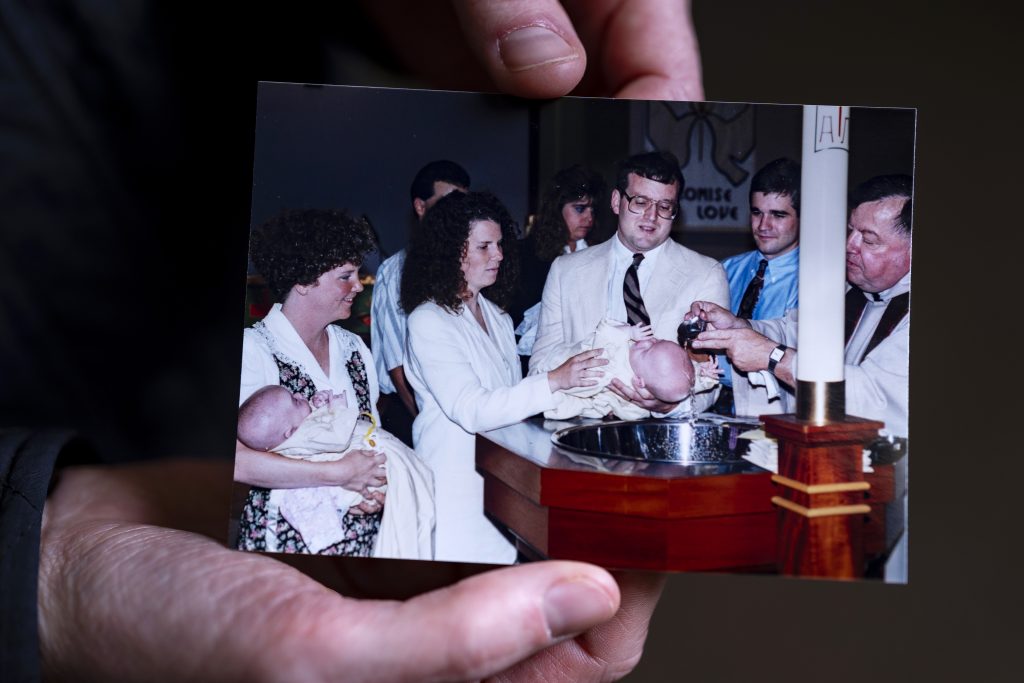
A treasured baby photo of Emily Tolman ’16 and her twin sister, Andrea, shows a priest pouring water from a baptismal font over one infant’s head, the girls dressed for the timeless ritual in elaborate, hand-embroidered gowns that sweep far below their tiny feet.
The day, and their attire, are special. What they wore to be baptized connected them firmly to a family tradition that started in the late 19th century, when their great-great-great grandmother, Maria Stella Lalanne Tartre, originally from Montreal, Canada, painstakingly made the multi-piece baptismal ensemble for her own 10 children.
Over the five generations that followed, the ensemble was worn by 148 babies, with the Tolman twins listed as Numbers 107 and 108. Tarte’s descendants have long appreciated it as a priceless family heirloom, and for years a designated family member served as a special “Keeper of the Robe” to keep it safe and make sure it reached relatives in time for baptismal ceremonies spread throughout Maine and the country.
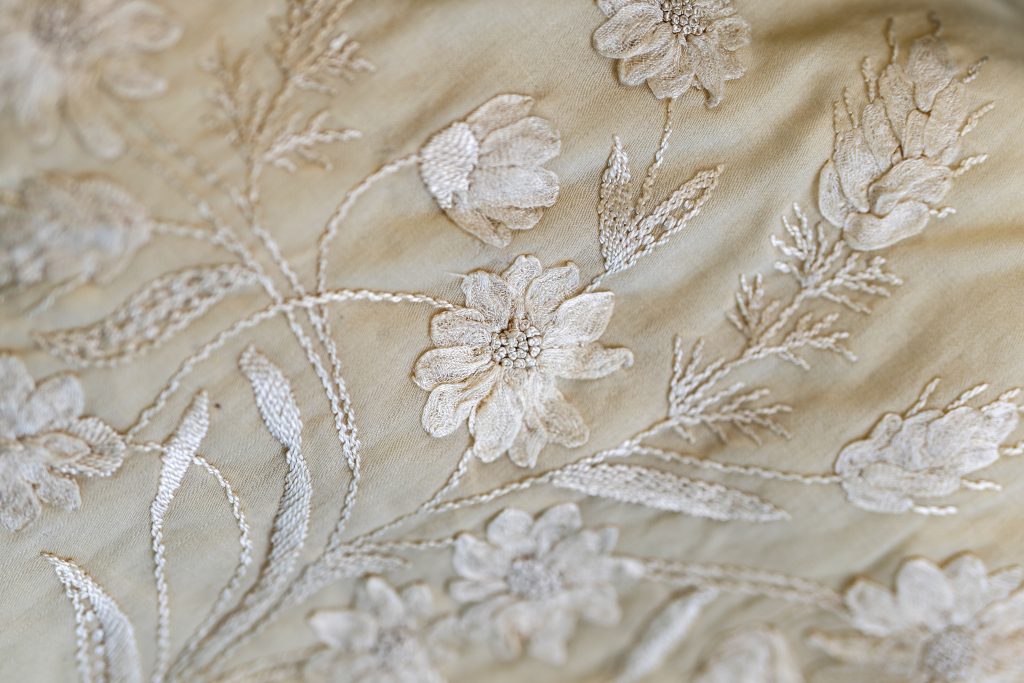
Now, the gown, cap, cape, and other pieces, ever so slightly yellowed by age (and, perhaps, baby spit-up), will be seen by a wider audience as part of the Maine State Museum’s permanent collection. There, the beautiful embroidered attire from the past will help tell the story of the state’s rich Franco-American heritage.
“It’s a fantastic piece of Maine history and Maine family history,” said Angela Goebel-Bain, the museum’s curator of decorative arts and history. “The family has photographs, and they had all this documentation through the years. We recognized right away that it was really important for us to preserve this.”
For Tolman, who as a student conducted research at the Colby Museum of Art and now works in the field of cultural preservation in France, this opportunity to preserve a family heirloom and cultural legacy brings her personal and professional worlds together.
“I think there’s a very human side to the Maine State Museum, where they care about the collection and its connection to Maine and its people,” she said.
A move to Maine for a better life
With more than a third of Maine’s population of French-Canadian or French descent, Franco-Americans have long played an important role in making the state what it is today. An important wave of French Canadian immigrants began moving to Maine from Québec in the 19th century in search of better work opportunities. They often settled in central and southern Maine mill towns, including Lewiston, Waterville, Augusta, and Biddeford, communities that soon included neighborhoods of immigrants often known as “Little Canada.”
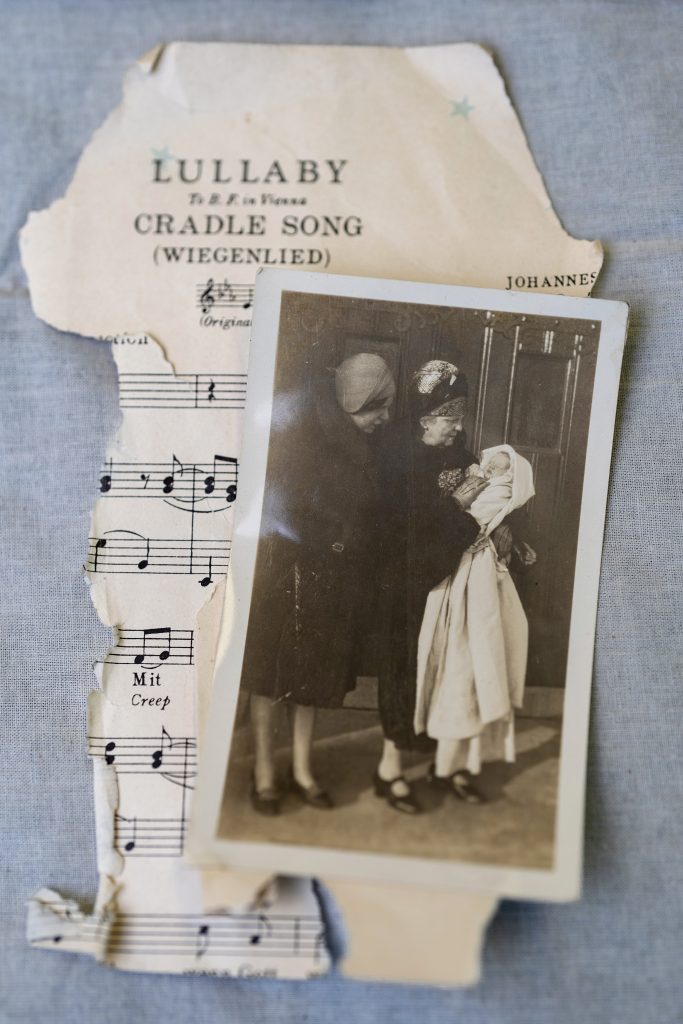
For the Tartres, originally from Montreal, their Maine destination was Biddeford. That’s where Jean Baptiste Edmond Tartre opened a grocery store in 1880 and built a large house, which he hoped to fill with children. He returned to Montreal eight years later to marry Maria Stella Lalanne, whose French-Canadian roots stretched deep—one of her ancestors had even fought under General Montcalm in the 1750s to defend New France against the British.
The newlyweds returned to Biddeford and, in 1889, had their first child, Charles Edmond, who was baptized in style while wearing the gown his mother had made. Jean Baptiste Tartre eventually expanded his business to three grocery stores and held a prominent place in the community. He became the first Canadian-born immigrant to be elected to the Maine State Senate, as well as the Republican senator elected from York County. In 1919 the family moved to Augusta so that Tartre could serve as assistant treasurer of the state of Maine. And of course, the baptismal gown came with them.
A ‘key piece’ of Maine’s Franco-American heritage
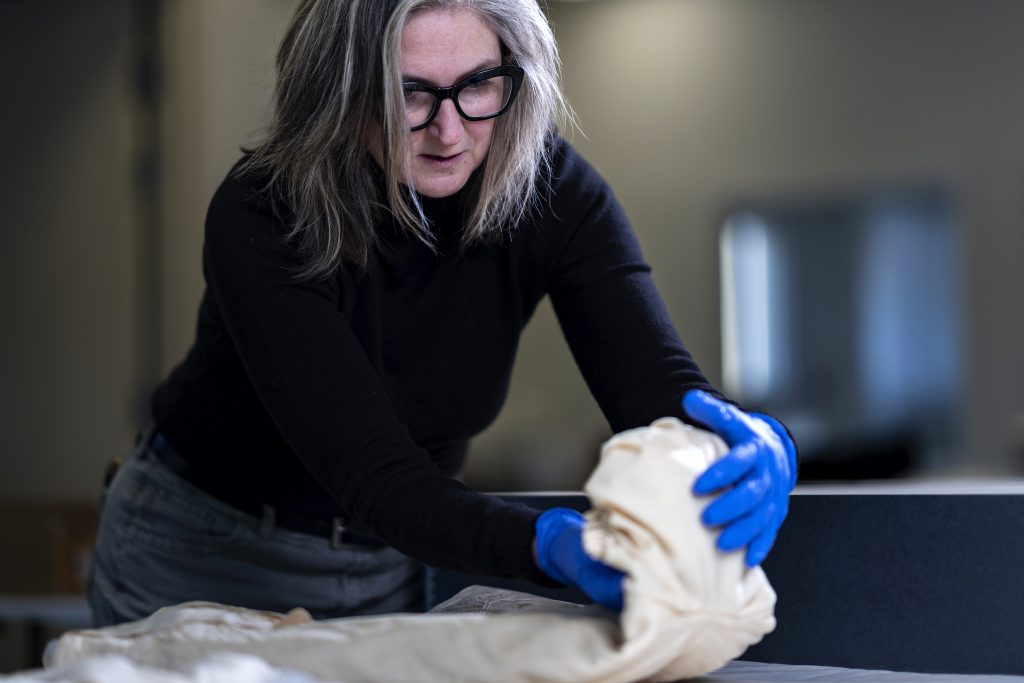
The Maine State Museum has been closed during a years-long major renovation of its home, the state Cultural Building in Augusta, and is not slated to reopen until 2026. Because of that, the ensemble is currently tucked away for safekeeping inside a temporary storage facility. Painstakingly created out of satin, silk, and fine wool imported from France, it belies its nondescript surroundings and is a testament to Maria Stella Lalanne Tartre’s craftsmanship and pride in her family.
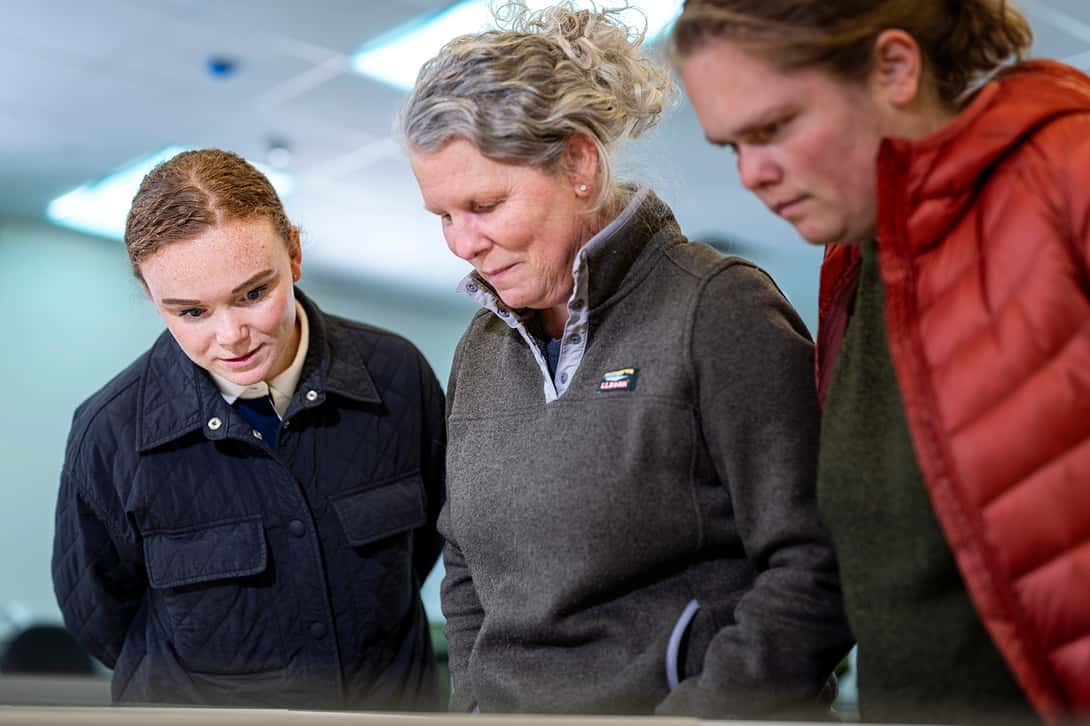
The gown has helped to knit the family together over the generations, said Tolman, who now lives in Paris. She appreciated having the chance to see it this spring on a visit home to Maine in the company of her great-aunt Jackie Lacasse and other family members.
“It’s amazing to see all these different pieces and the history of our state through the lens of these different objects,” Tolman said. “The funniest part to me was seeing my family as part of Maine history.”
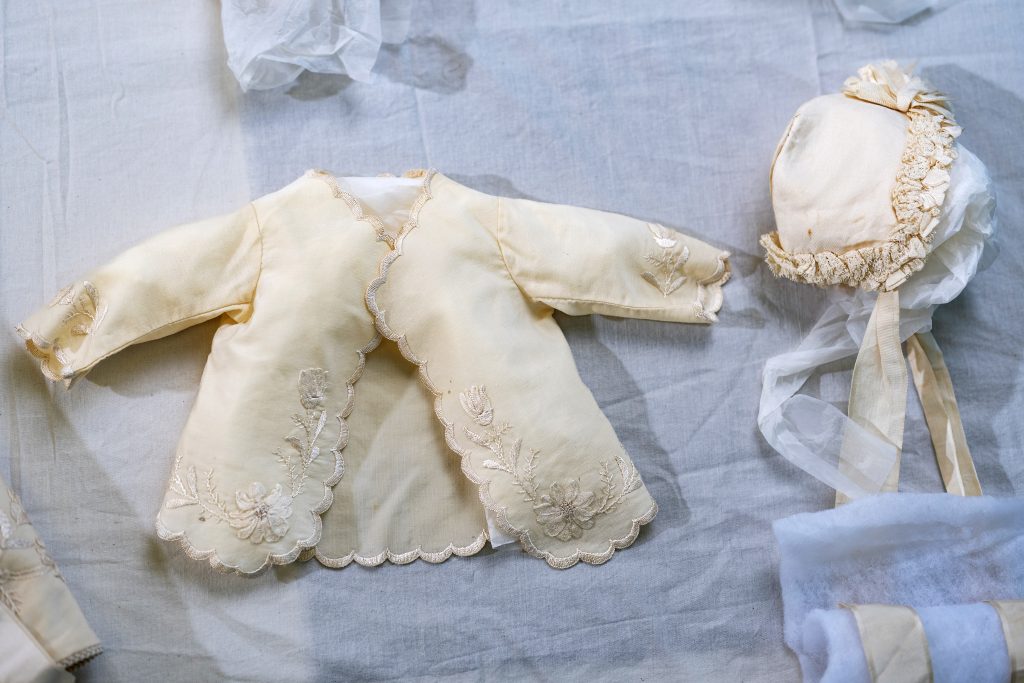
The baptismal ensemble, handmade by Maria Stella Lalanne Tartre in the late 19th century, has been worn by 148 of her descendants.
But that’s exactly what it is, said Goebel-Bain. Even though Franco-Americans are very important to Maine’s culture and history, that importance has not always been seen and showcased. When the Maine State Museum’s current iteration began in the 1960s, its focus was on rugged occupations like logging, granite quarrying, and shipbuilding.
“We really have very few things from the Franco community. We’re starting the process to build that … [the baptismal ensemble] is a really key piece of that for us,” the curator said. “It tells a different story. It’s a family story, a community story about their lives in Biddeford, and a story about how families evolve and send people out into the world.”
Keeping the connection alive
For Tolman, who has lived in France for nearly five years, it has been fascinating to have an inside look at how an object can tell a story that resonates far beyond her own family.
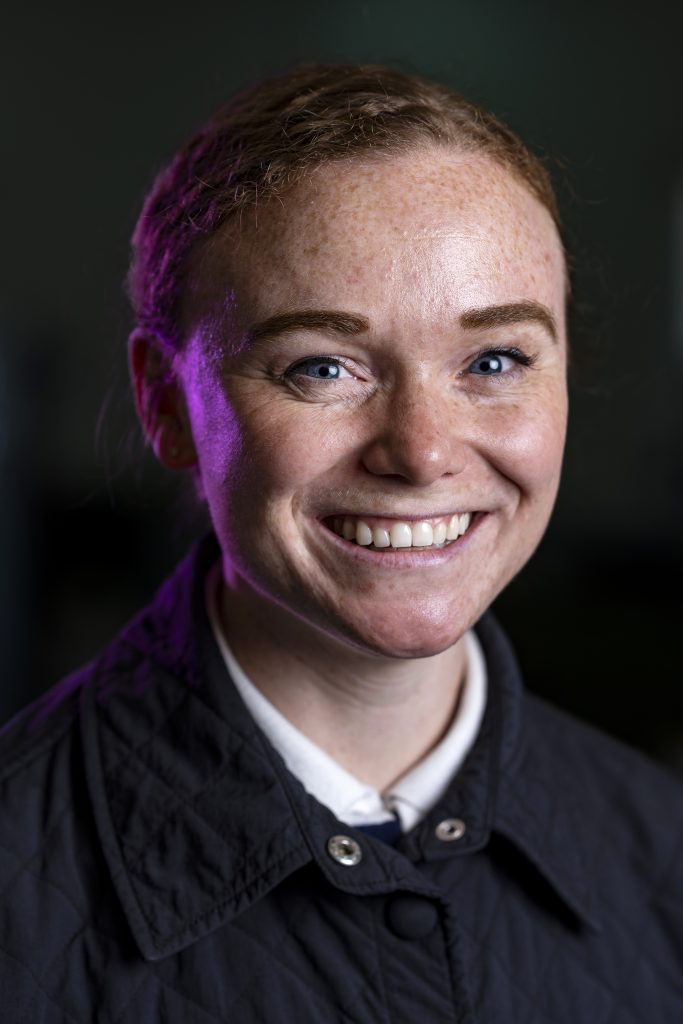
At Colby, she was a standout track & field athlete and a neuroscience and Russian studies double major. She also did internships as a publication assistant in Moscow, Russia, and as a researcher for the Colby Museum of Art. After graduation, she took her time weaving together her many skills and interests into a career.
First, Tolman, who always loved art, got a master’s in art history at the University of Kent in England. It was a program that involved time both in the UK and in Paris, a city she adored. Then, like many people, she had an epiphany during Covid that led to a change.
“Research was great, and I loved it, but it felt like I was disconnected,” she said. “I realized what I wanted to do was connect with people.”
She went back to school to study arts management, this time in Talence, France, at the KEDGE Business School. From there, she took a position doing marketing campaigns and social media management for a company that promotes digital art, and then was hired to be the internal communication coordinator for the International Council of Museums in Paris.
The ICOM is a non-governmental organization dedicated to the promotion and protection of cultural heritage. Among other duties, Tolman’s coworkers create lists of endangered cultural objects around the world that are at risk of being looted or damaged. In conjunction with national committees, the ICOM releases “red lists” of endangered objects from places like Ukraine and Syria.
“It’s very rewarding,” Tolman said.
Through her work, she understands just how important it is to conserve cultural objects like her family’s baptismal ensemble. And she appreciates the care Maine State Museum professionals like Goebel-Bain are taking with it, as well as their sensitivity to the ensemble’s importance as a family heirloom.
“They’re gathering the family’s story behind it, and they’re planning on creating a guest book so that when members of the family go and visit, they can sign it and talk about their experience, and keep that tradition of the robe alive,” she said. “So even though we can’t be baptized in it, we can still have that connection, which is really amazing. I love that they’re allowing all of us to keep that history alive in a way.”