Learning from the Trees
At a joint field school, Colby and UMaine researchers use tree-ring science to unlock stories of climate, landscape, and human impact
Trees don’t speak in words, but they can tell a story if you know how to listen.
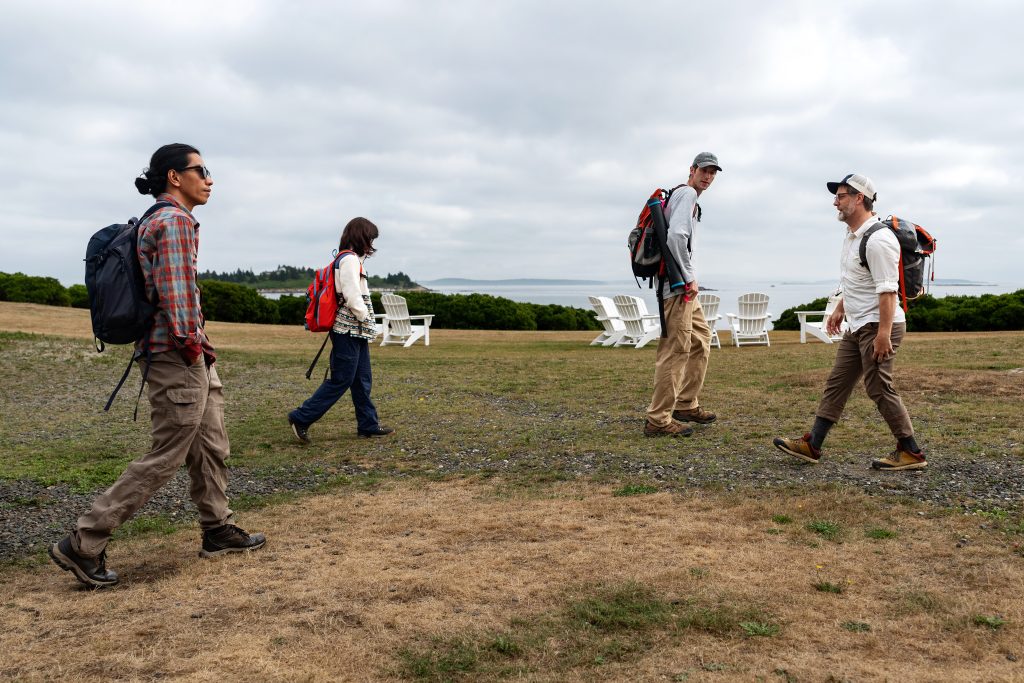
A group of students from Colby and the University of Maine learned how to hear what the trees are saying, and why it matters, during an intensive weeklong dendrochronology field school on Allen Island in late summer.
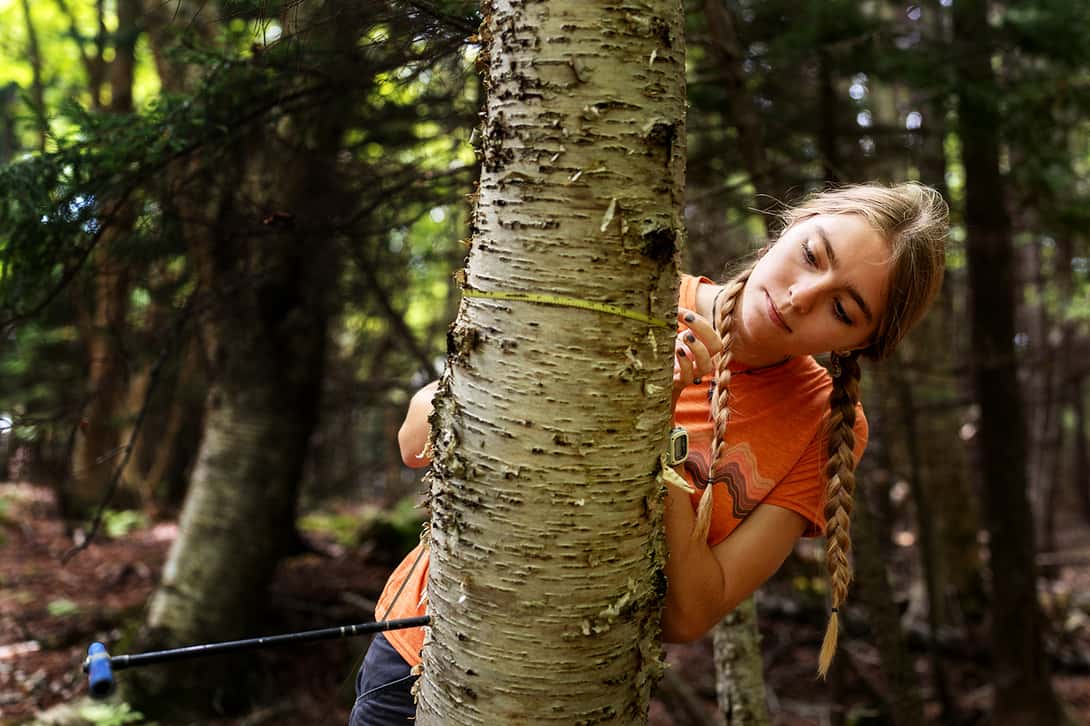
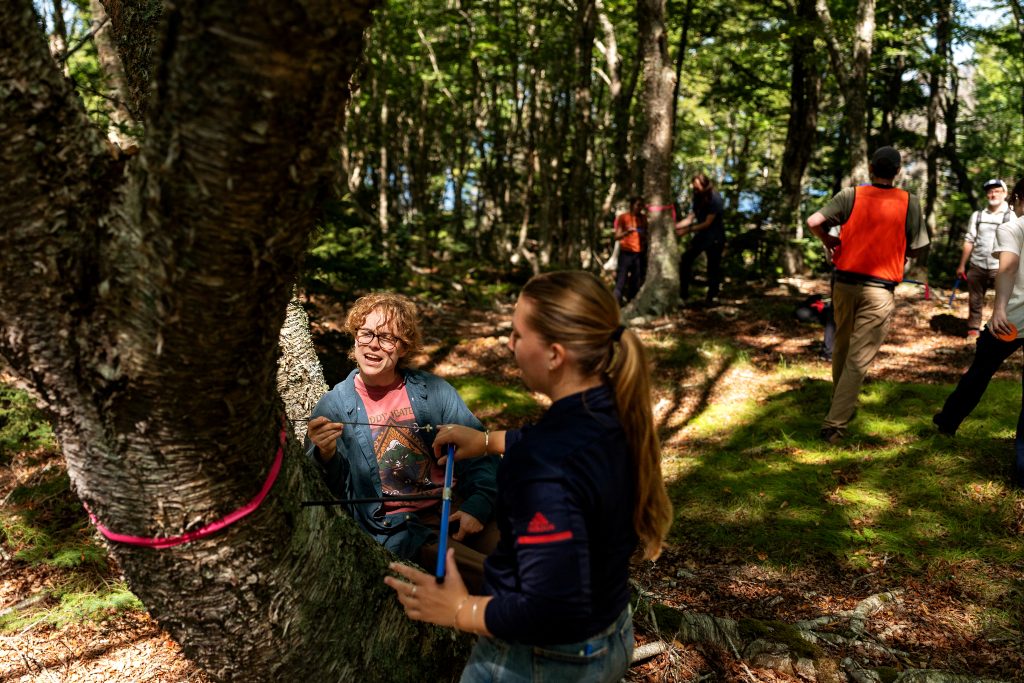
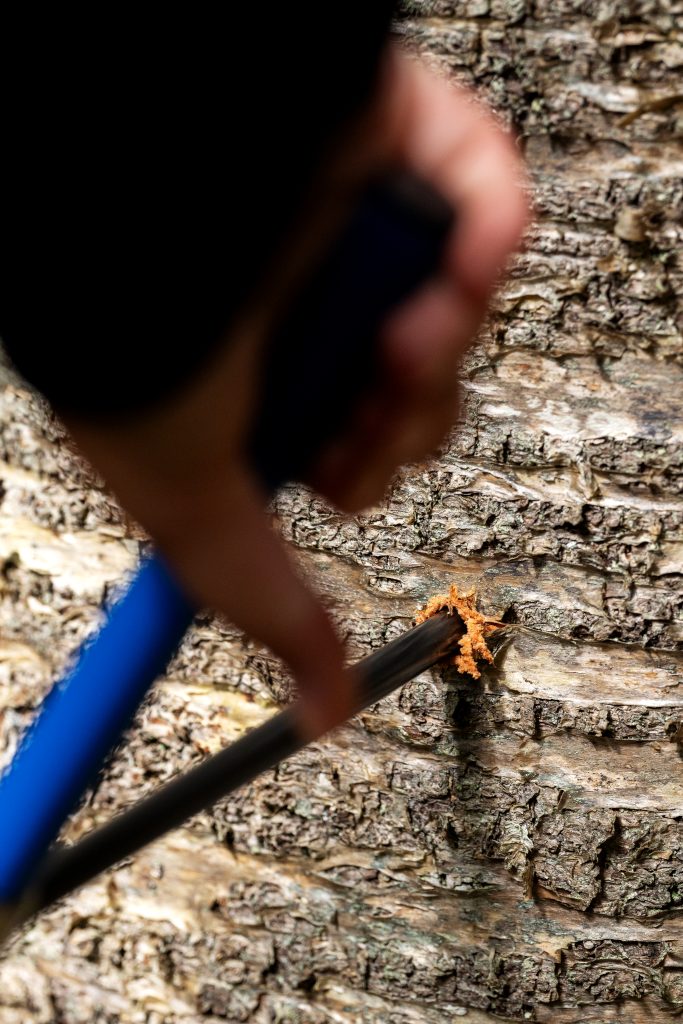
As they cored yellow birch and spruce trees to collect samples, sanded them, and analyzed them to learn about climate trends and other aspects of forest ecology, it was evident that the students were deeply engaged in the hands-on work.
So were the professors, who relished the chance to immerse themselves and their students in learning how the study of trees can reveal past climate patterns, human history, and more. The fact that the inaugural joint Colby-University of Maine dendrochronology field school was taking place on an island made it even better.
Five miles from Port Clyde in Muscongus Bay, Colby’s Island Campus, encompassing Allen and nearby Benner islands, serves as a center for multidisciplinary student research, environmental monitoring, and creative inspiration.
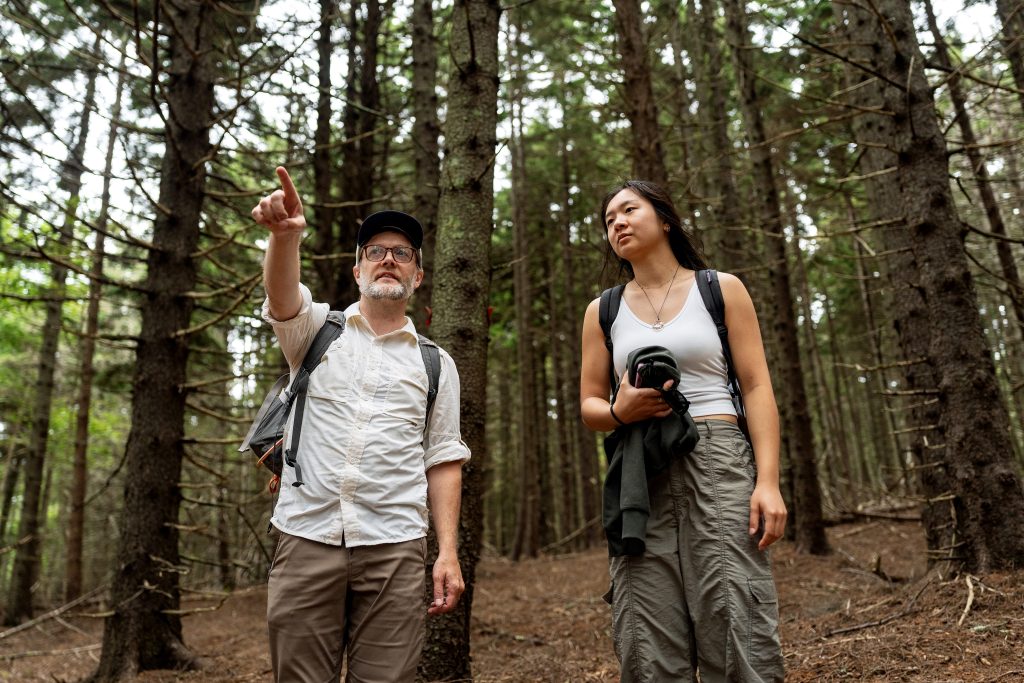
“There are 400 acres of interesting forest here that has questions we can start to answer using dendrochronology tools,” said Justin Becknell, associate professor of environmental studies and department chair, who helped lead the school. “And having everybody here, and building a little community of scholarship for the week is pretty cool.”
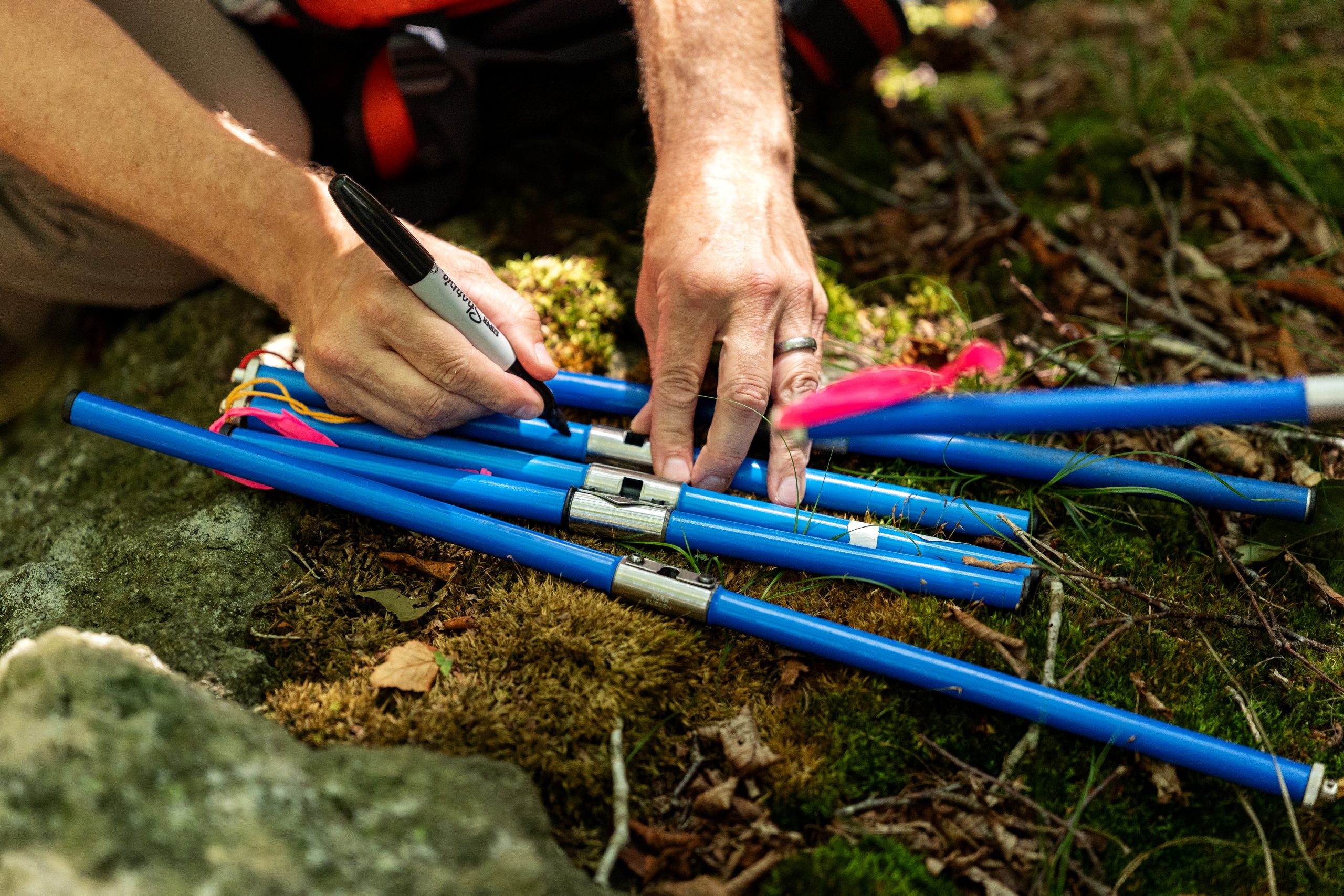

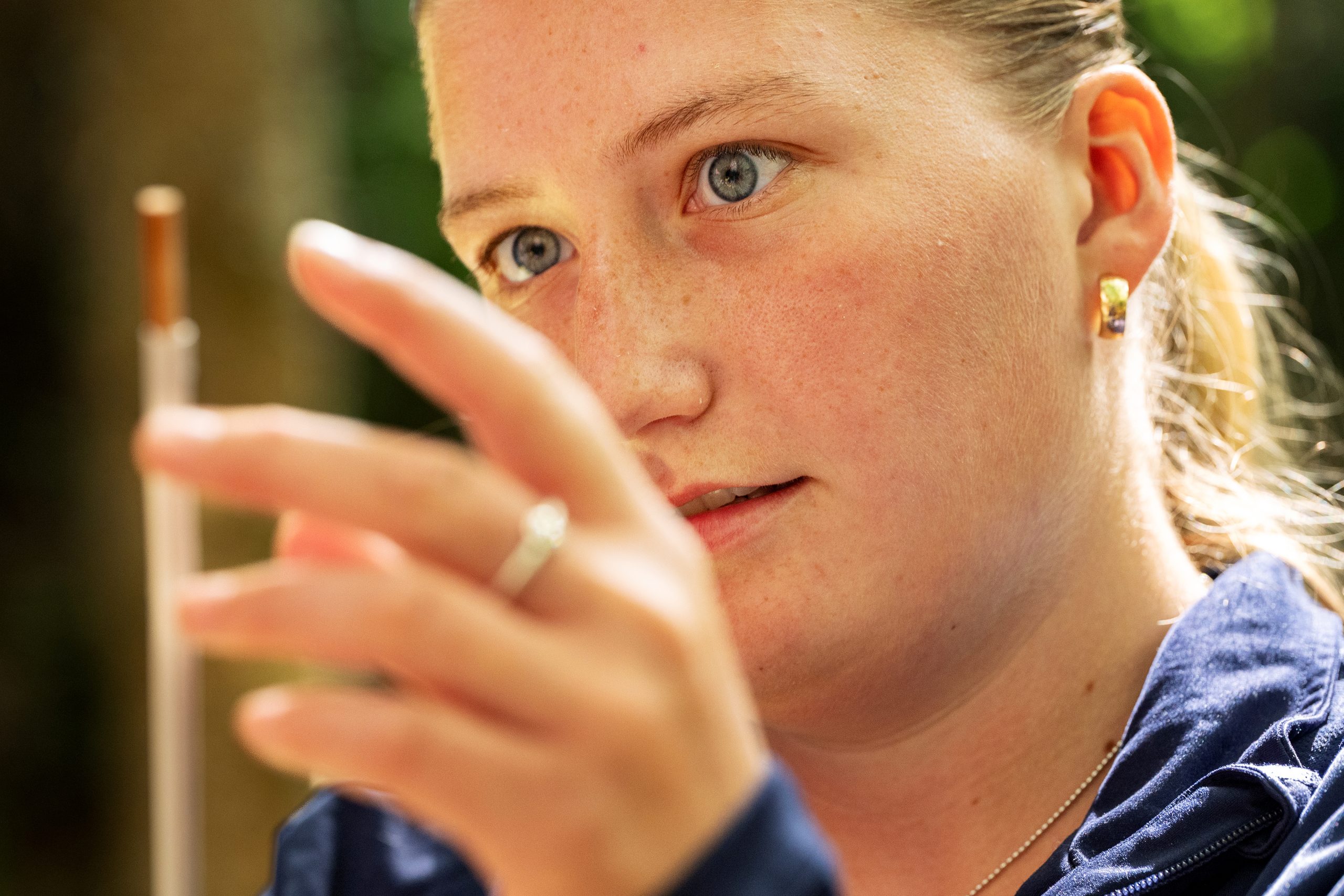
Dendrochronology, or tree-ring dating, is the century-old science of dating tree growth rings to the calendar year in which they formed. It was first used to determine the age of archaeological sites in the American Southwest and has helped people better understand both human history and natural events such as volcanic eruptions, earthquakes, infestations, droughts, and forest fires.
The science is accurate because certain trees grow in a predictable pattern each year, and when a tree is cored, its annual growth rings are visible. By comparing the widths of rings to the rings of other measured trees, it’s possible to determine the tree’s age.
But counting the rings and dating the trees is not the most important part of what scientists do when they examine them, Becknell said. Rather, measuring ring widths and examining patterns of ring-width variation provide a lot of information that can often be used to extrapolate broader data and trends.
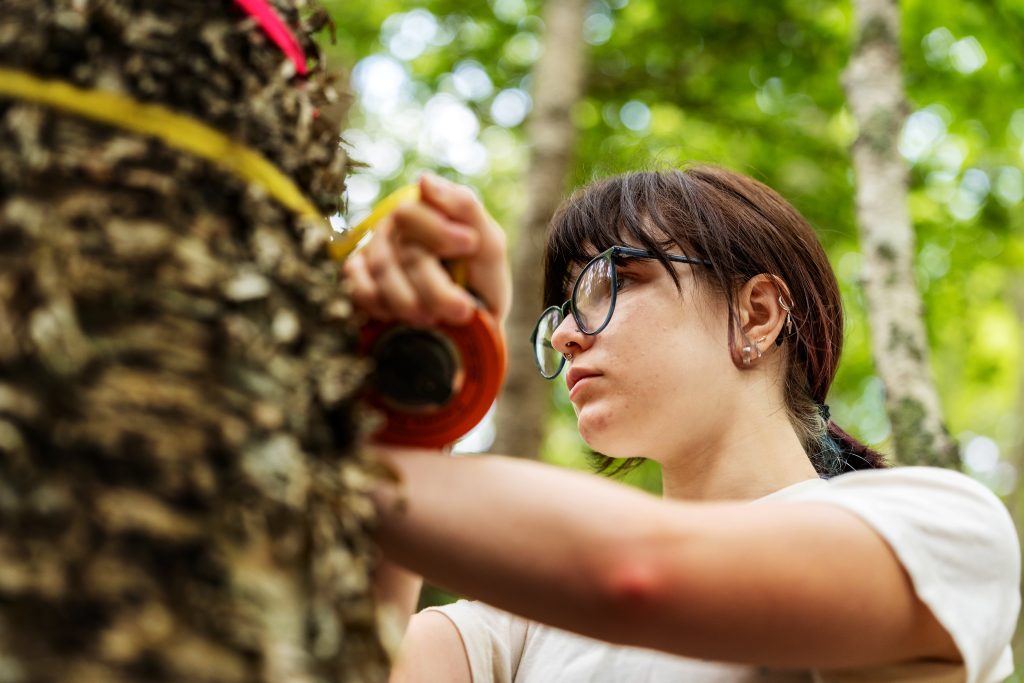
Esmé Erdo ’29 takes a diameter of a birch tree after coring it.
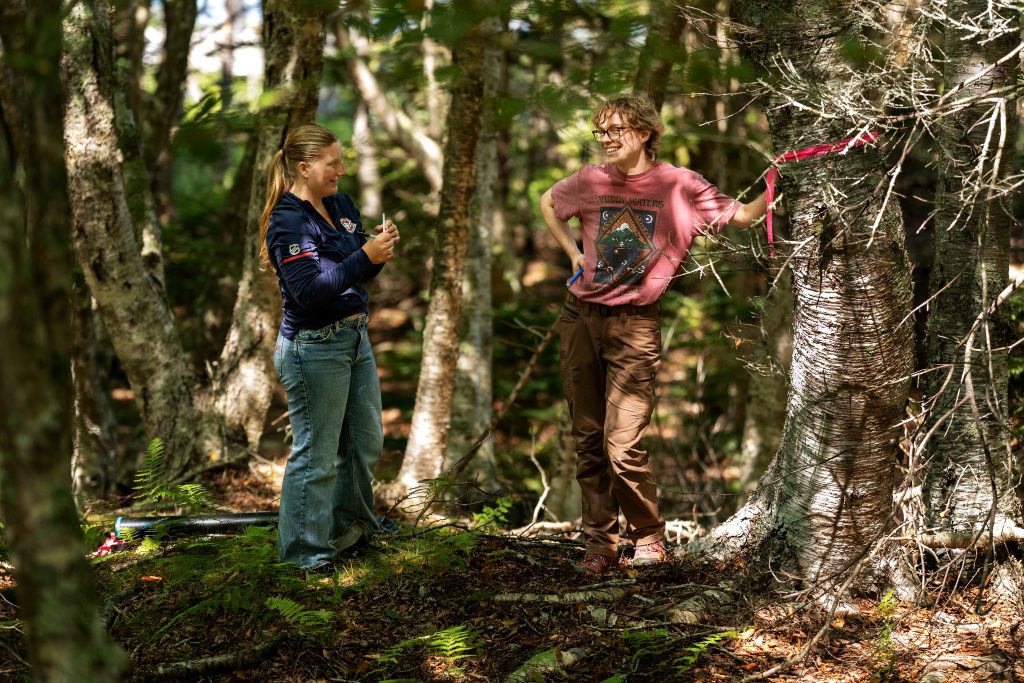
“This tree is 100 years old—how has its growth changed over the course of its life? Did it have periods when it grew fast and then slow? Did it grow consistently the same amount every year for its whole life?” he asked. “That gives us clues to how this forest has evolved and its disturbance history. Were there big blowdowns? Were there logging events around this tree? Were there pest infestations, climate changes, drought years, wet years? We can look at patterns in growth and find evidence to answer all of those questions.”
Myth, history, and 200-year-old yellow birches
The idea of the field school took root in summer 2025, when Becknell was on Allen Island conducting fieldwork with two University of Maine scientists, Colby Bosley-Smith, a doctoral student in the university’s School of Forest Resources, and Shawn Fraver, a professor of forest ecology.
The gathering of scientists became an opportunity to answer one of the long-standing questions about Allen Island—just how old were its oldest trees? It’s a question with resonance, because the trees on Allen can help tell the story of the Maine coast.
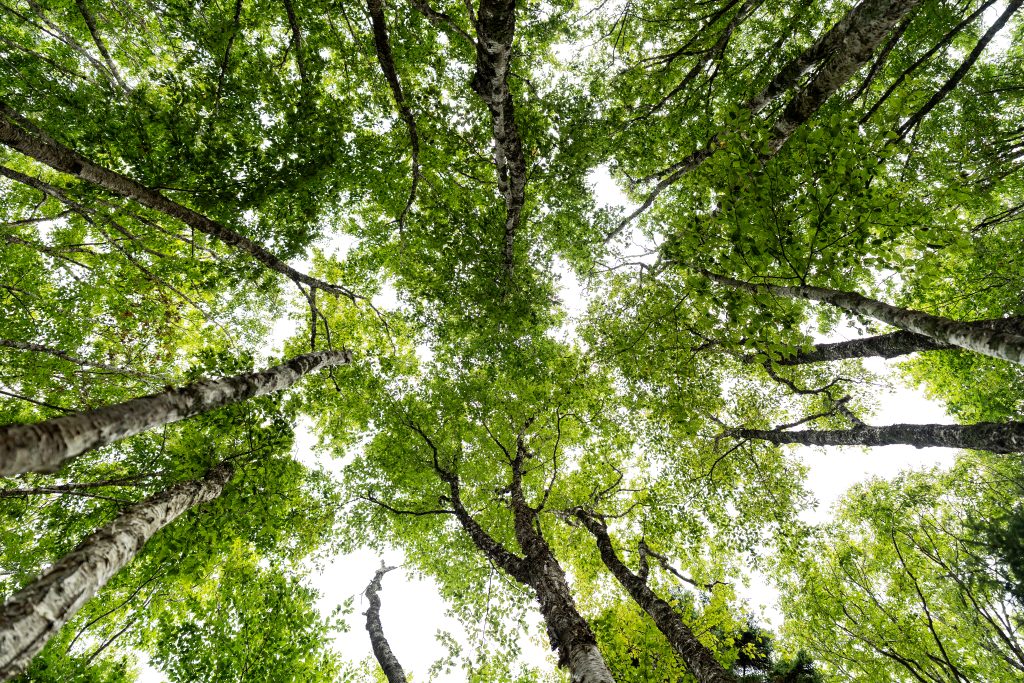
Today, the island is heavily wooded, with dense spruce forests and mature yellow birches. In the 1600s, European settlers began harvesting wood on Maine’s coastal islands. On Monhegan Island, located about five miles south of Allen, members of the British Royal Navy harvested tall, straight Eastern white pines to use as ship masts.
By the 1800s, settlers and shipbuilders had cleared many islands, the dark spruce forests giving way to agricultural fields and sheep pastures. It wasn’t until the early 20th century that trees began to grow again.
On Allen, though, a stand of large, gnarled yellow birches looked to have somehow escaped colonial axes. Just how old were they and the other trees? Could they predate George Waymouth (or Weymouth), an English explorer and colonist who landed on Allen in 1605 and stayed there with his crew for two months? It’s a captivating thought, and definitely caught Betsy Wyeth’s imagination when she purchased the island more than 40 years ago.
But the scientists were skeptical. Fraver, who Becknell describes as the “senior statesman of dendrochronology in northern New England,” did not think the trees were 400 years old.
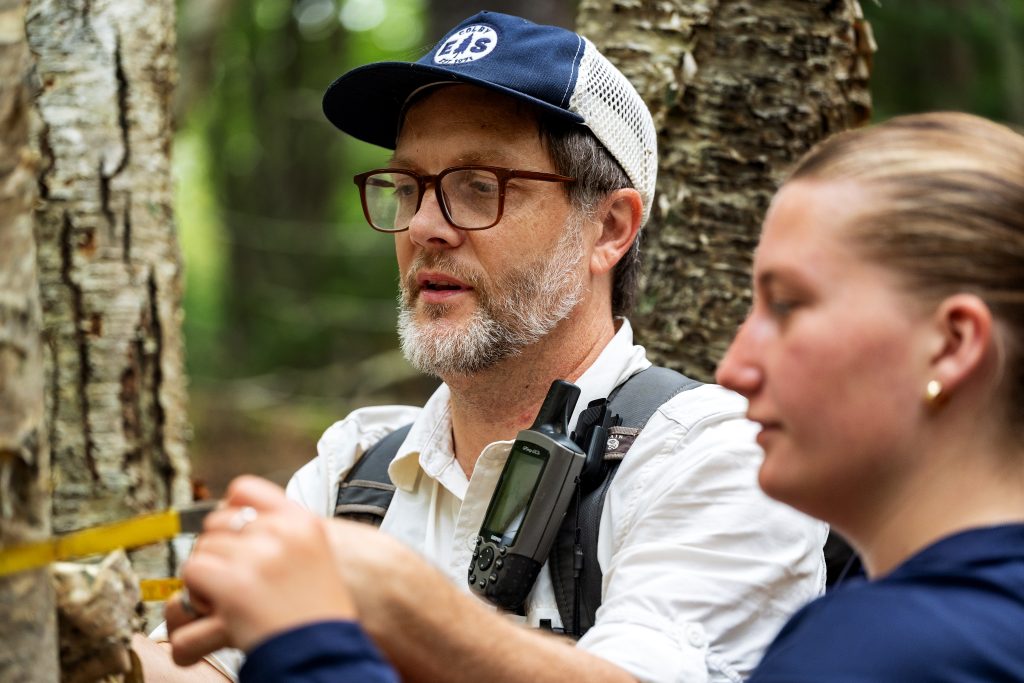
They decided to find out. Becknell, Bosley-Smith, and Fraver took core samples from some of the birches, mounted and sanded them, and went to the island lab to examine them under a microscope. They learned that the yellow birch trees were old—one was almost 200 years old—but certainly did not predate the European explorers and settlers.
Still, the exercise fired their imaginations in a different way.
“We had a really magical moment,” Becknell said. “We realized we had everything we needed to run a field school, a dendrochronology field course, right here.”
For Whitney King, the Dr. Frank and Theodora Miselis Professor of Chemistry, this is exactly the kind of scientific inquiry that Colby is thrilled to host on the Island Campus.
“We’ve got this amazing place, this diversity of trees, these interesting questions, and these tools to do the analysis,” King said. “Allen Island is now becoming a place where world-class scientists can come and do serious work.”
Learning in the forest and the classroom
During this summer’s field school, Colby students worked side by side with graduate students from the University of Maine in the island’s forests and classrooms to learn more about dendrochronology.
Fraver was enthusiastic about the collaboration with Becknell and the College.
“Dendrochronology is simply enjoyable—looking at tree rings is something that virtually everyone can understand,” Fraver said. “But what the students are learning is that when you look deeper and deeper, it’s really incredible what kind of inferences you can make about the past. It’s much, much more than counting rings, right? We’re trying to assess past sheep grazing, deer browsing, wind disturbances, growth rates, and tree-to-tree competition. And it always amazes me how well the tree rings lend themselves to answering those types of questions.”
For Bosley-Smith, one interesting facet of the field school is how undergraduate and graduate students came together regardless of their experience with and understanding of dendrochronology.
“It’s cool to see everyone helping each other and working together,” she said. “I think that’s kind of a unique thing. You don’t often get this nice mix of students.”
Mar Wiltz, a master’s student in forest ecology at the University of Maine, sat next to Rachel Hernandez ’27, a science, technology, and society and studio art double major, who is minoring in environmental studies. The students used computer software to measure tree-ring widths in a yellow birch core sample.
“It’s a lot harder to see in hardwoods than in conifers, but it’s an exciting challenge,” Wiltz said, adding that the week had been fun. “To get to talk to people who are just learning this and just getting into it is so refreshing. There are so many new perspectives that students have who are coming from different disciplines.”
For Hernandez, the field school was a fascinating, full-circle moment. She was an Island Fellow last summer when Becknell and the other scientists dated the yellow birch trees, and it was the first time she had ever heard of dendrochronology.
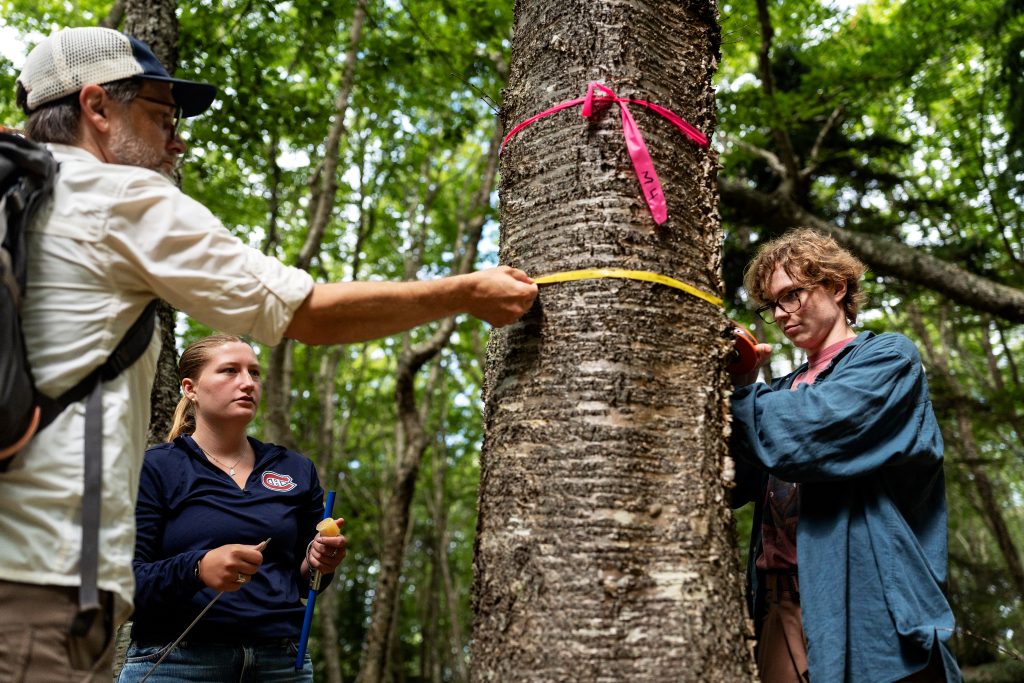
“It’s really interesting to learn and get hands-on experience in such a niche field,” she said. “I’m getting to see the whole process.”
Esmé Erdos ’29 appreciated the opportunity to do fieldwork and to get to know the island, which she visited for the first time.
“In my intro classes, a lot of the work you’re given has a set answer at the end, so it’s fun to do something that’s more like actually gathering data and information,” she said, adding that the week has been illuminating. “I definitely want to go into ecology of some kind. I could definitely see myself learning more about plants and trees. It’s just so interesting, and I’ve learned so much.”